

Shares of Chinese startup MiniMax, which went public only on January 9 of this year, have soared by 400 percent. The company, founded only in December 2021, suddenly finds itself in the same league as established Chinese internet giants such as JD.com and Kuaishou. How did this happen?
What sets MiniMax apart from the competition?
MiniMax is a Shanghai-based company focused on developing so-called multimodal artificial intelligence. This means that its models do not understand only text, but also work with images, audio, and video at the same time. This is precisely its greatest advantage over competitors that focus, for example, only on text models.
The company is behind a whole range of products. Talkie is an app for international markets where users can chat with AI avatars of celebrities, from Donald Trump and Taylor Swift to Elon Musk. In July 2024, Talkie ranked among the most downloaded entertainment apps in the US, with approximately 11 million monthly active users. A counterpart called Xing Ye is available for the Chinese market.
Another flagship product is Hailuo AI, a platform for generating text, music, and video. Since September 2024, it has offered the video-01 model, which creates videos from text descriptions. Hailuo became the most popular model of the week on the OpenRouter distribution platform thanks to its low price and compact size.
MiniMax is also developing Speech, a voice model supporting more than 30 languages, and MiniMax Music 2.5 for generating music. Its latest language model, M2.5, released in February 2026, can handle coding and complex reasoning, and in some respects rivals Anthropic's Claude Opus 4.6 model. The M3 model is also coming soon.
Surging revenue and a Hong Kong listing
The figures for 2025 are impressive. Revenue rose by 159 percent to $79 million, while analysts had expected only $71 million. More than 70 percent of revenue came from overseas markets outside China. The consumer subscription segment grew by 143 percent, while enterprise and developer services performed similarly.
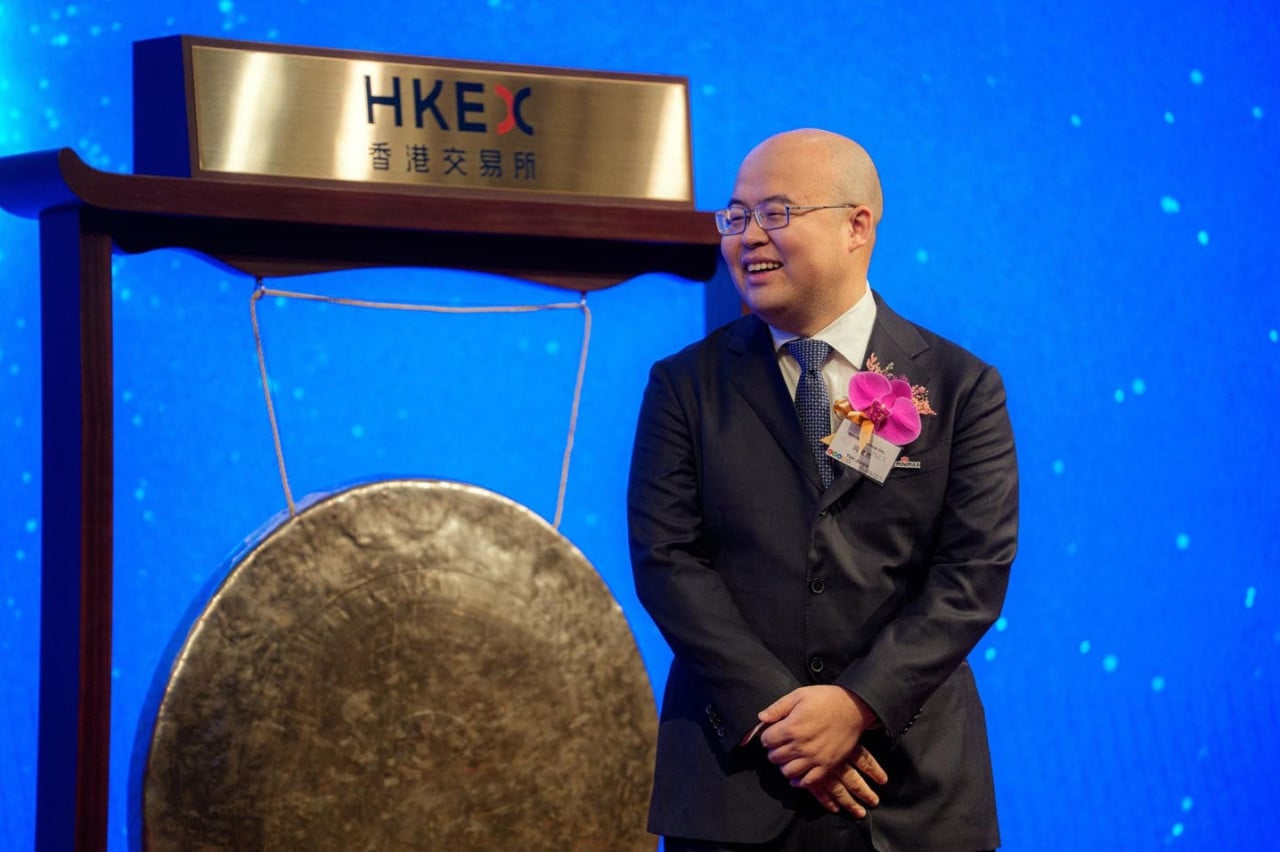
In January 2026, MiniMax listed on the Hong Kong Stock Exchange and raised more than $600 million. The company's market value now exceeds $33 billion. For comparison, the company has more than 200 employees and serves over 236 million users across its consumer products.
Of course, not everything is rosy. MiniMax is still losing money. Its net loss for 2025 reached $1.87 billion, compared with $465 million a year earlier. However, most of the loss stems from changes in the value of financial instruments rather than operating activities. Investors know this and are deliberately looking elsewhere—to the company's growth potential.
Founder's wealth exceeded $7 billion overnight
Behind MiniMax is Yan Junjie, its 37-year-old founder, chairman, and CEO. He co-founded the company in 2021 with Yang Bin and Zhou Yucong, all of whom were formerly computer vision researchers at SenseTime. Following the release of the 2025 results, Yan's wealth jumped to $7.8 billion, more than double what it had been before the company went public. He became a billionaire only in January 2026, when the company listed. The pace at which his fortune is growing is staggering.
Yan is optimistic about the future of AI. "Demand on our platform will grow to entirely new dimensions," he said when announcing the results. He believes that artificial intelligence will gradually transform from a tool into a "colleague on the level of a co-worker". The areas where he sees the greatest opportunities include coding, office productivity, and video generation.
Global ambitions and legal problems
MiniMax does not want to remain merely a Chinese company. Its goal is to become a global AI platform. Its new customers include Ivan Zhao's productivity software Notion, which uses the M2.5 model for its AI agents.
But global expansion also brings complications. In September 2025, Disney, Universal, and Warner Bros. Discovery filed a copyright infringement lawsuit, specifically alleging that Hailuo AI imitates their protected characters. And in February 2026, Anthropic accused MiniMax, along with other Chinese companies, of using thousands of fake accounts to generate more than 16 million interactions with the Claude model in order to "distill" its knowledge into their own models.
Can a company growing at such a pace and with such ambitions overcome these obstacles? China's AI world is moving at a speed that is forcing the rest of the world to reassess its assumptions.
Source: techinasia.com


