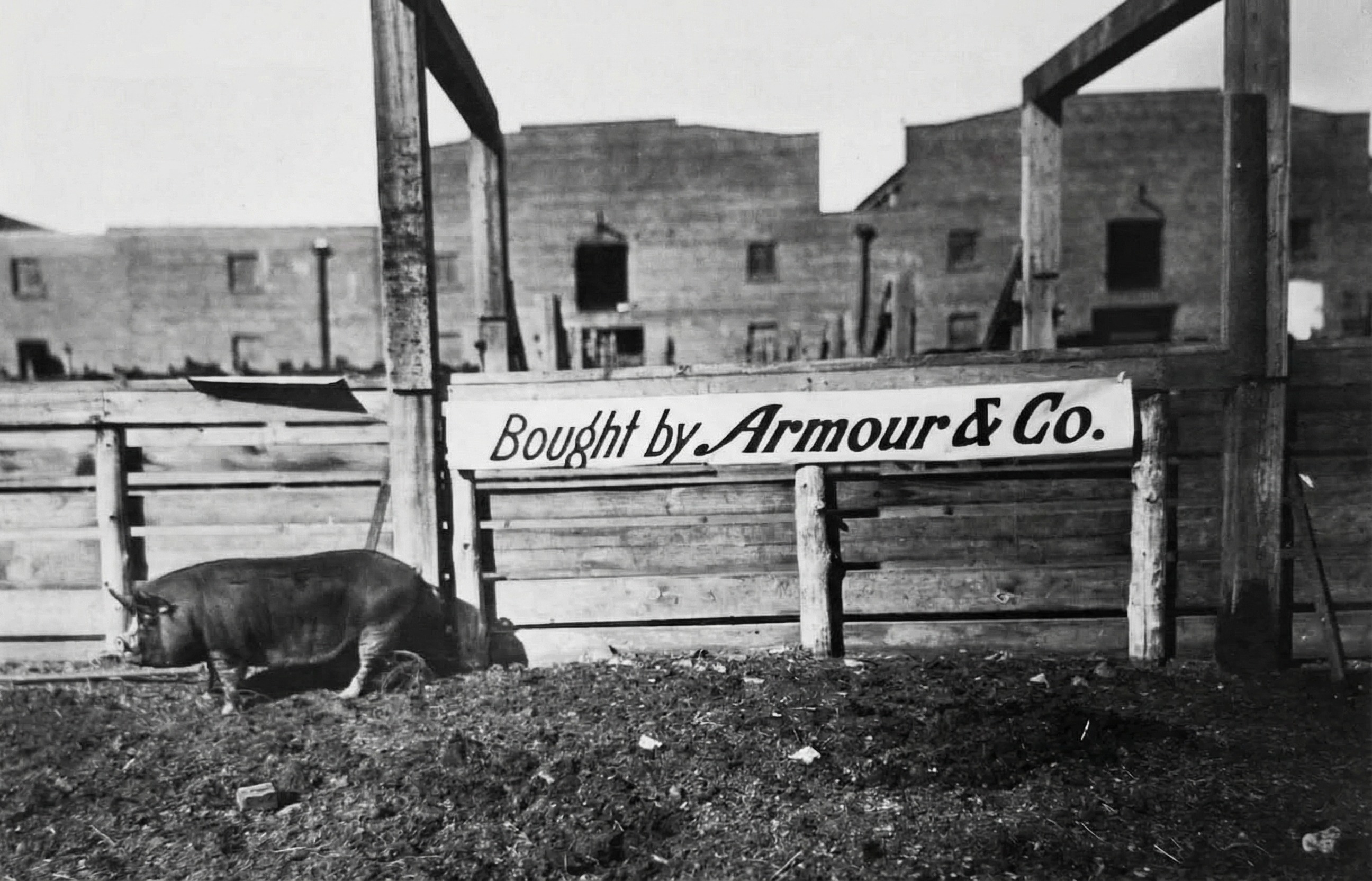
... In this pen (opening image), the champion boar from the National Feeders and Breeders Show in the first decade of the 20th century looks a little lonely. Because the pens for pigs and sheep were located directly east of the horse and mule barns, the buildings in the background are most likely those wooden barns that burned down in 1911.
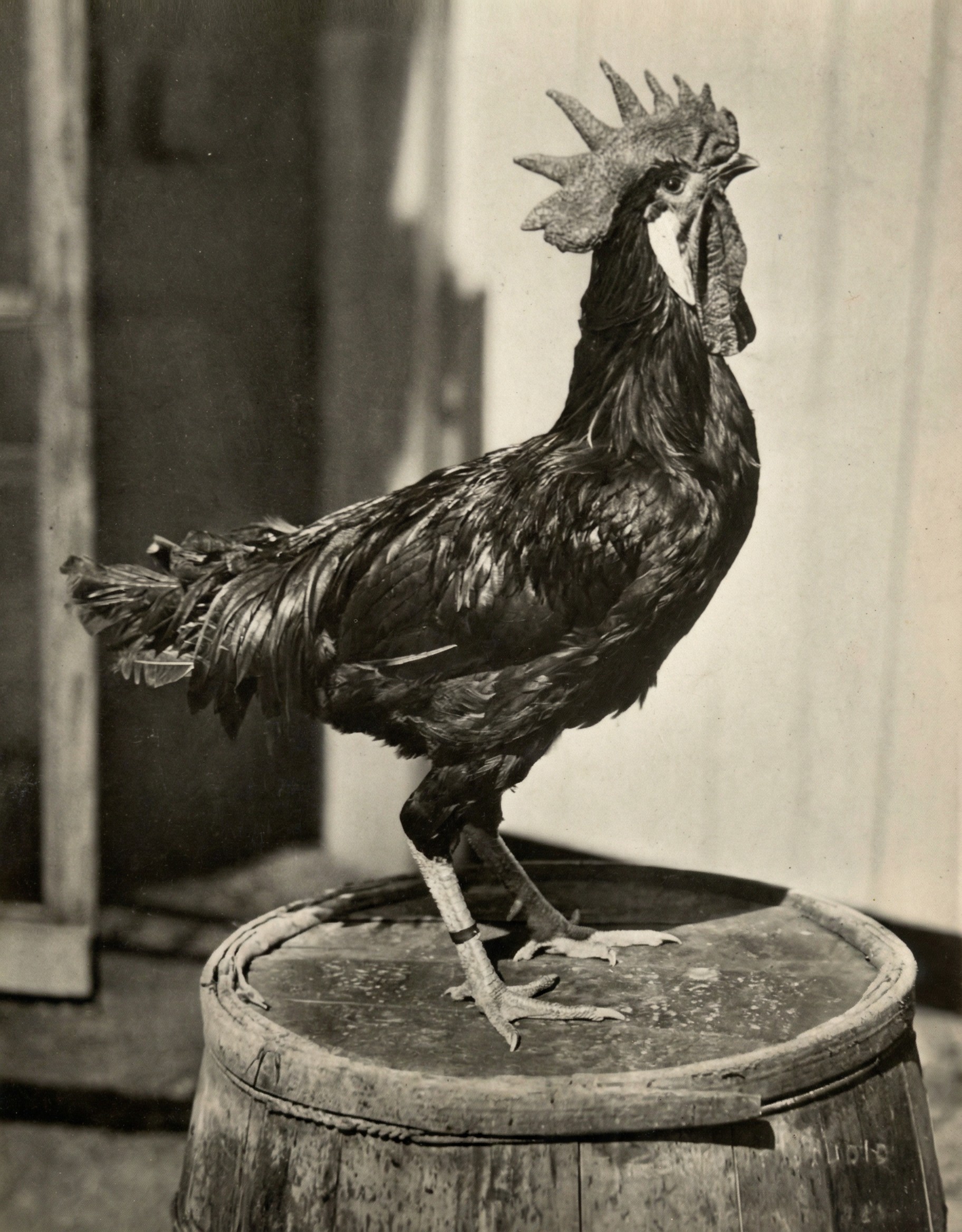
Only the trainers themselves knew how they got their prized rooster to stand on a barrel and pose for a photograph. The National Feeders and Breeders Show—or the Southwestern Exposition and Fat Stock Show and Rodeo—featured judging of poultry as well as pigs, sheep, goats, cattle, calves, and horses.
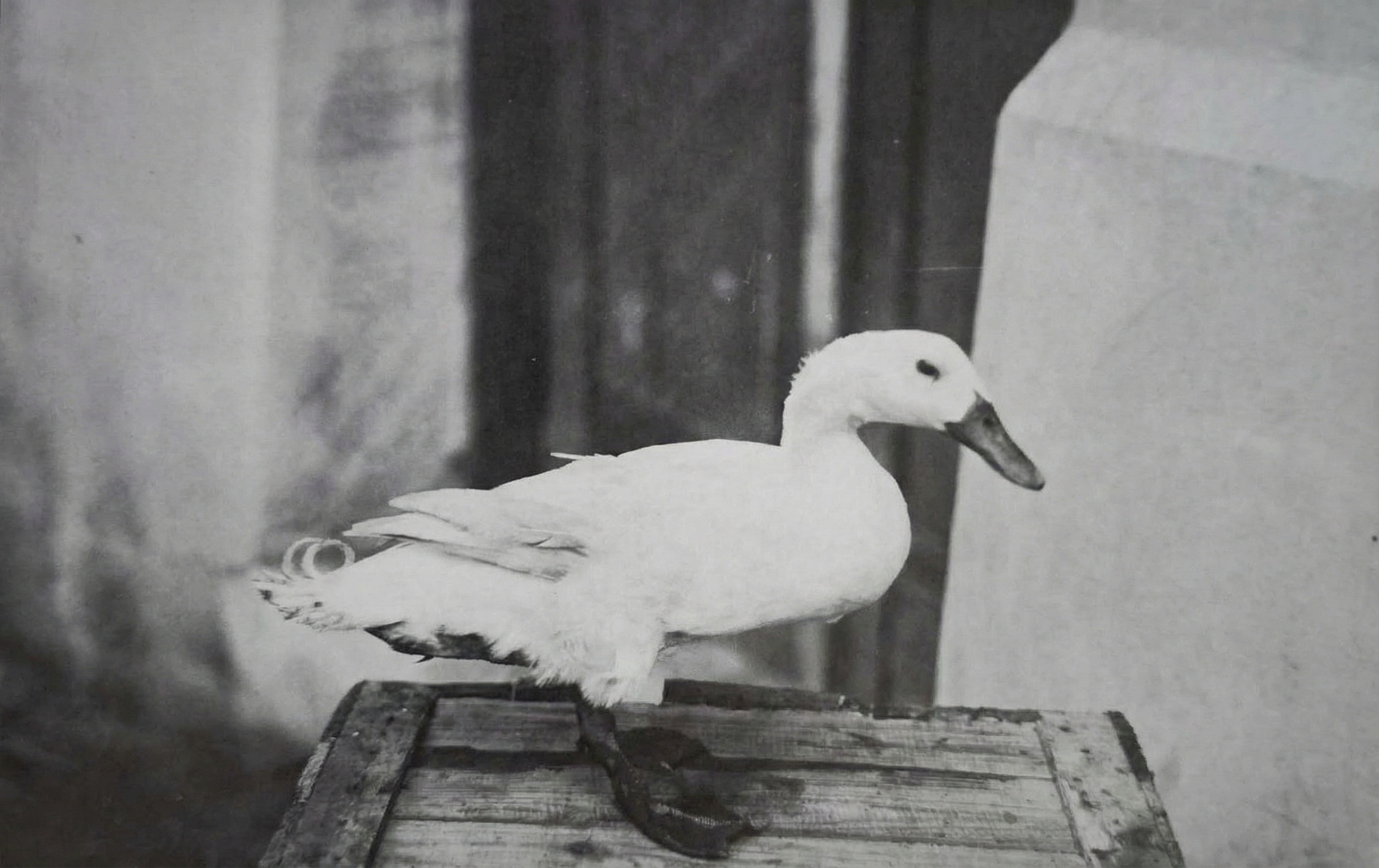
This is the one-year-old champion duck at the stock show. The annual judging of all kinds of animals at this show provided young people with an important arena, in addition to the State Fair held every October in Dallas, where they could enter their animals.
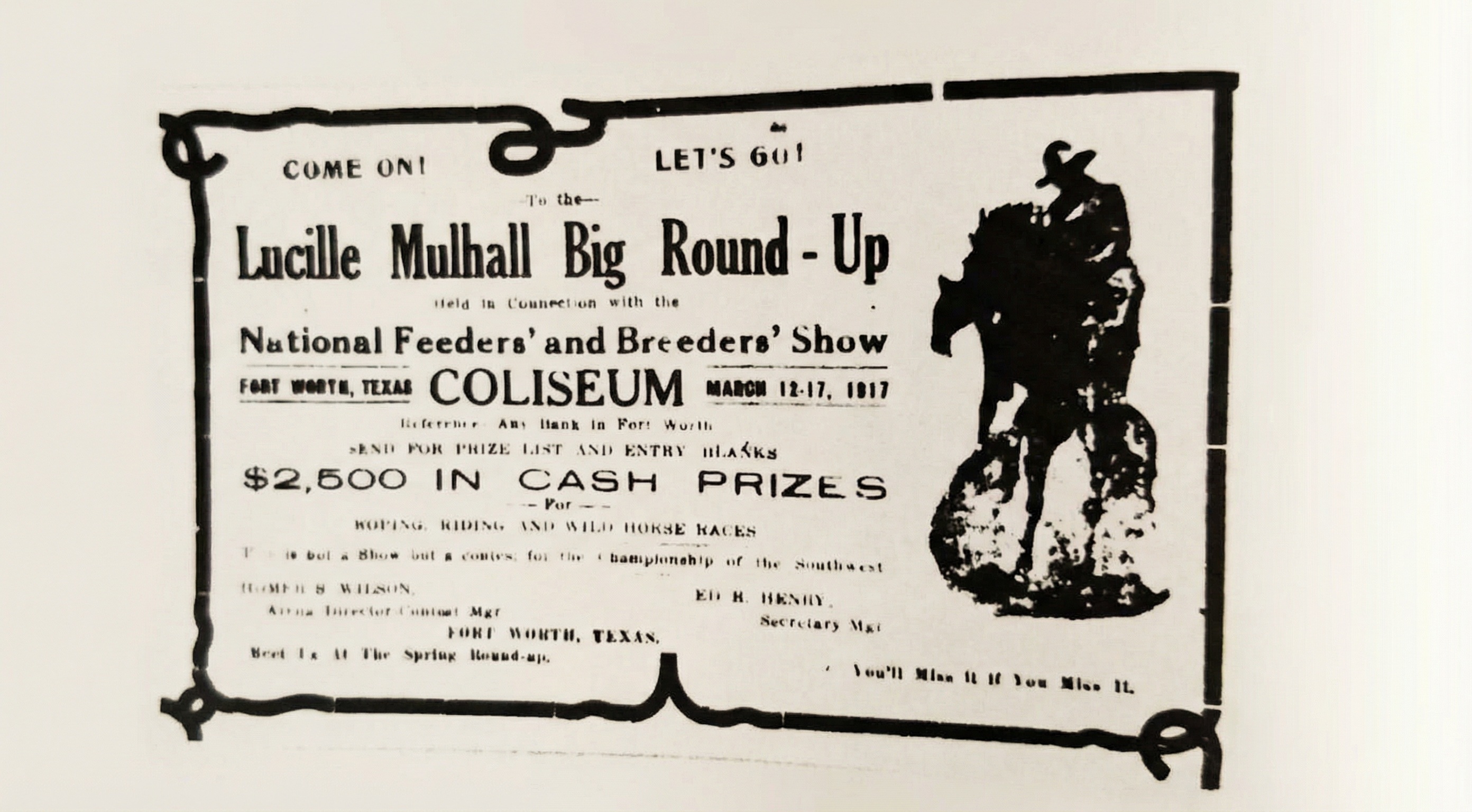
There is some controversy over whether the first indoor rodeo at the coliseum took place in 1917 or 1918. Those years marked the transition from “shows or performances” to competitive contests for prize money, or “rodeos.” Although a competition was held in 1917, it was only after that show, during preparations for 1918, that the name was changed to the Southwestern Exposition and Fat Stock Show and Rodeo, with the final term coined specifically to describe the competitive event.
The very first competition known as a rodeo to be held indoors took place in 1918 at the ten-year-old North Side Coliseum during the annual stock show and drew large crowds. The organizers even changed the name from the National Feeders and Breeders Show to the Southwestern Exposition and Fat Stock Show and Rodeo to acknowledge the importance of the event.
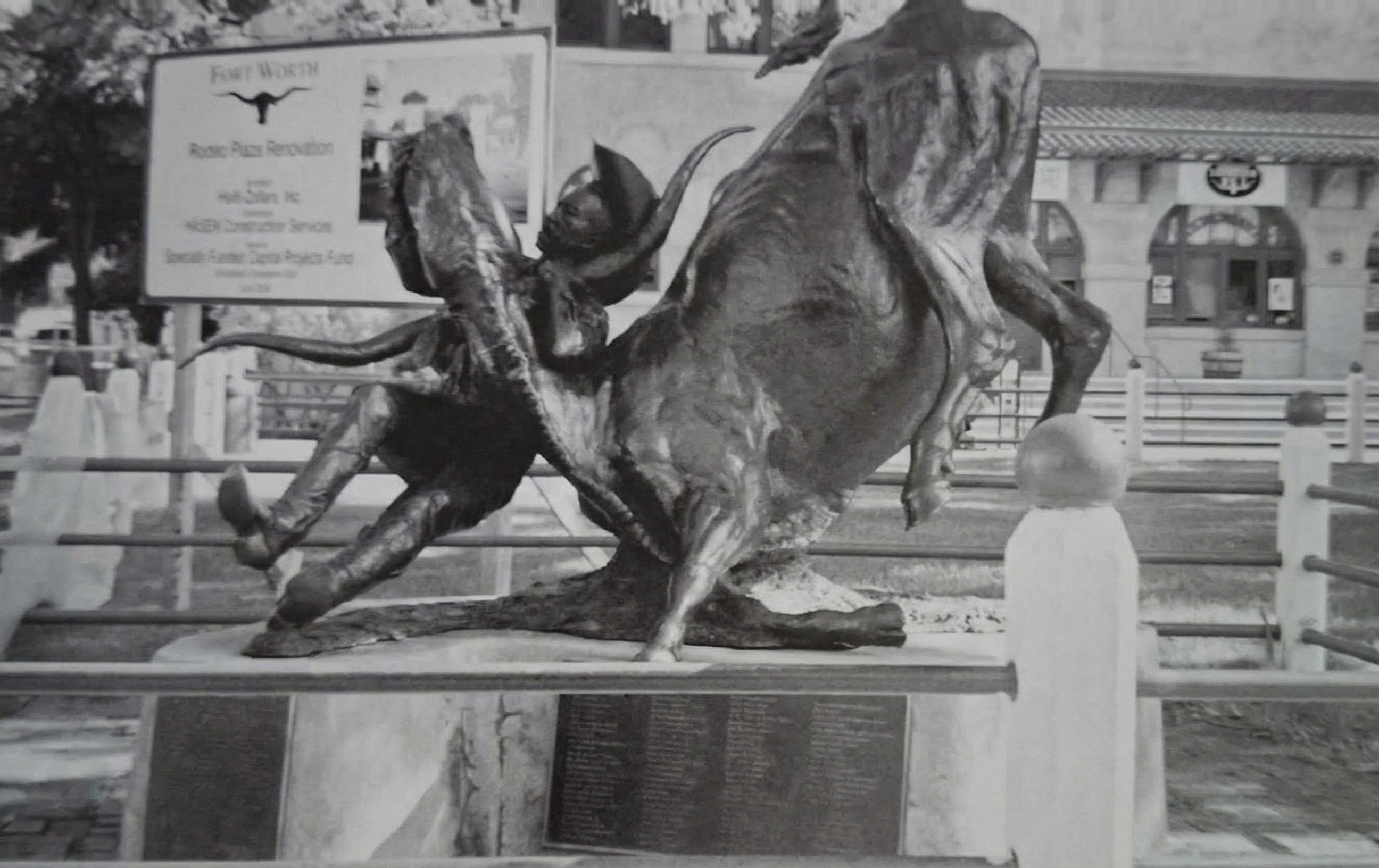
This bronze statue of Bill Pickett, an African American cowboy who pioneered the rodeo sport of bulldogging, or wrestling a steer to the ground by its horns, stands in front of Cowtown Coliseum near the two towers marking the entrance to Rodeo Plaza. Pickett literally bit the steer on the lip to distract it enough that he could turn its head and force the animal to fall to the ground with its legs stretched straight forward. Pickett became the first African American cowboy inducted into the National Cowboy Hall of Fame in Oklahoma City.
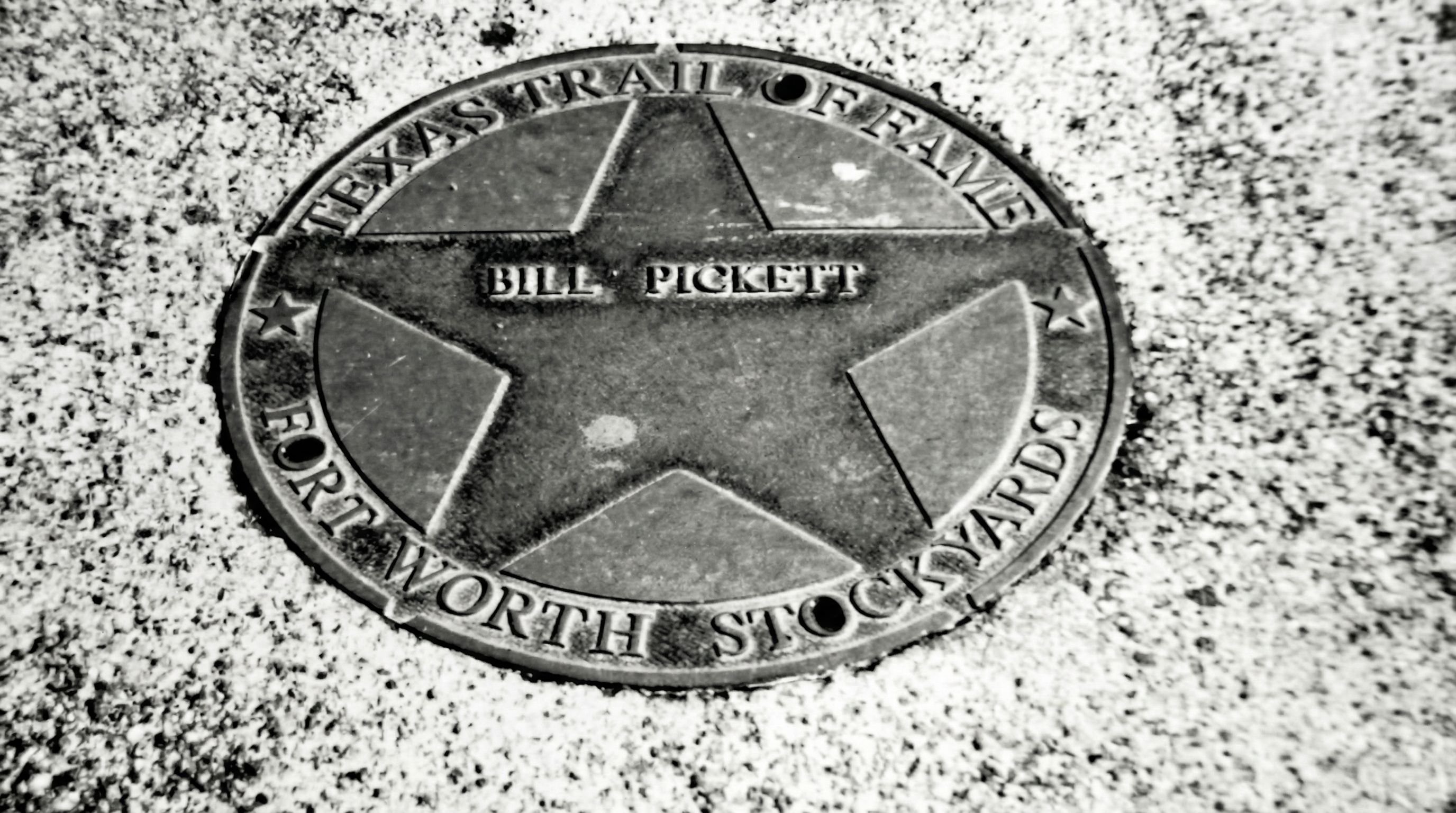
These “Texas Trail of Fame” medallions are scattered along the sidewalks throughout the Stockyards area. Bill Pickett earned his for inventing the rodeo sport of bulldogging. He performed this trick as a stunt in a traveling Wild West show for many years.
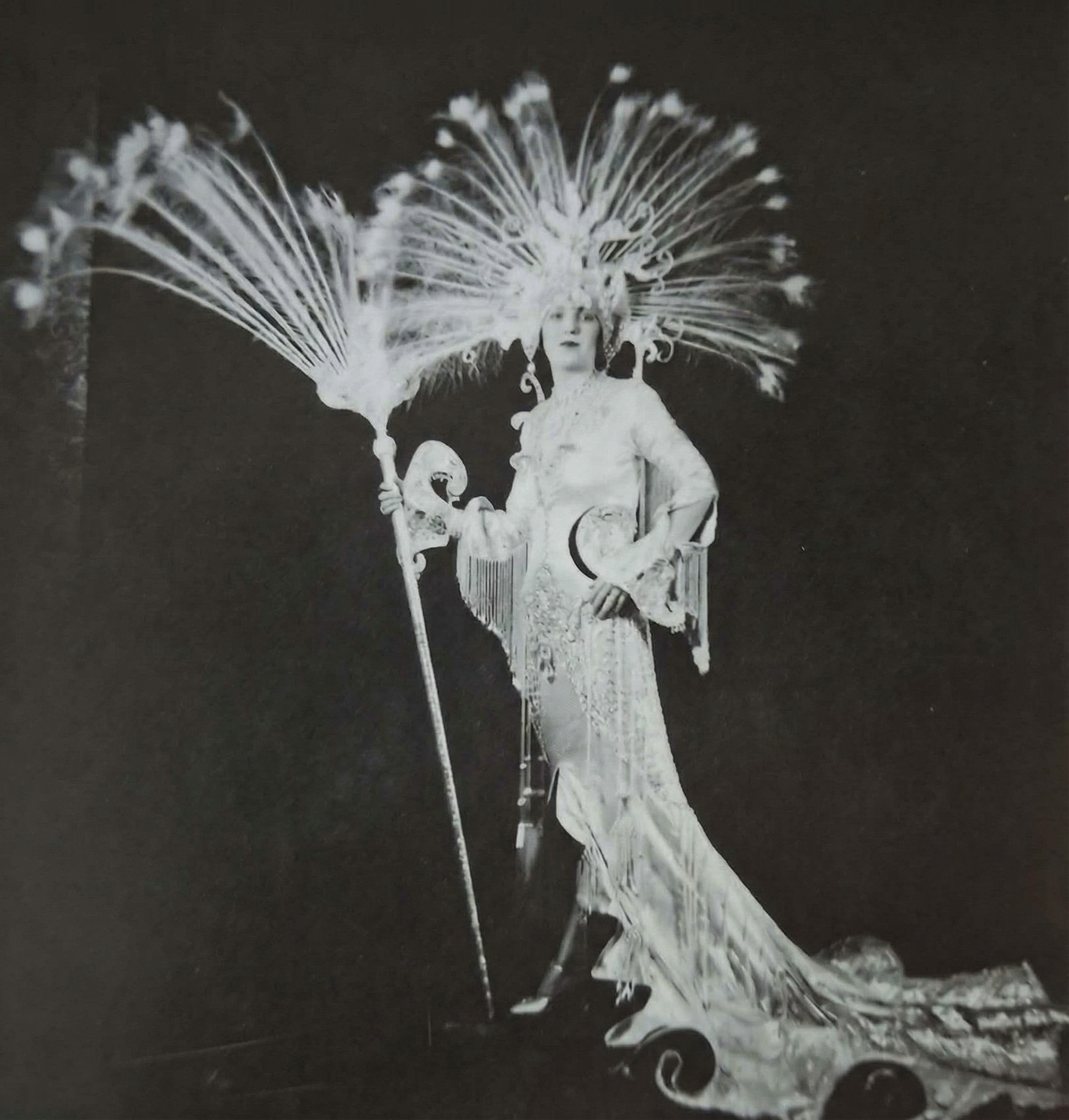
Kirmis Queen Pansy Walker reigned during the stock show on March 10, 1928. “Kirmis” is a Dutch term derived from the words “kerk” (church) and “mis” (Mass) and referred to a celebration held on the anniversary of a church’s founding. The annual festival included feasting, dancing, and sports. Fort Worth residents held a Kirmis every year during the stock show and selected a queen.
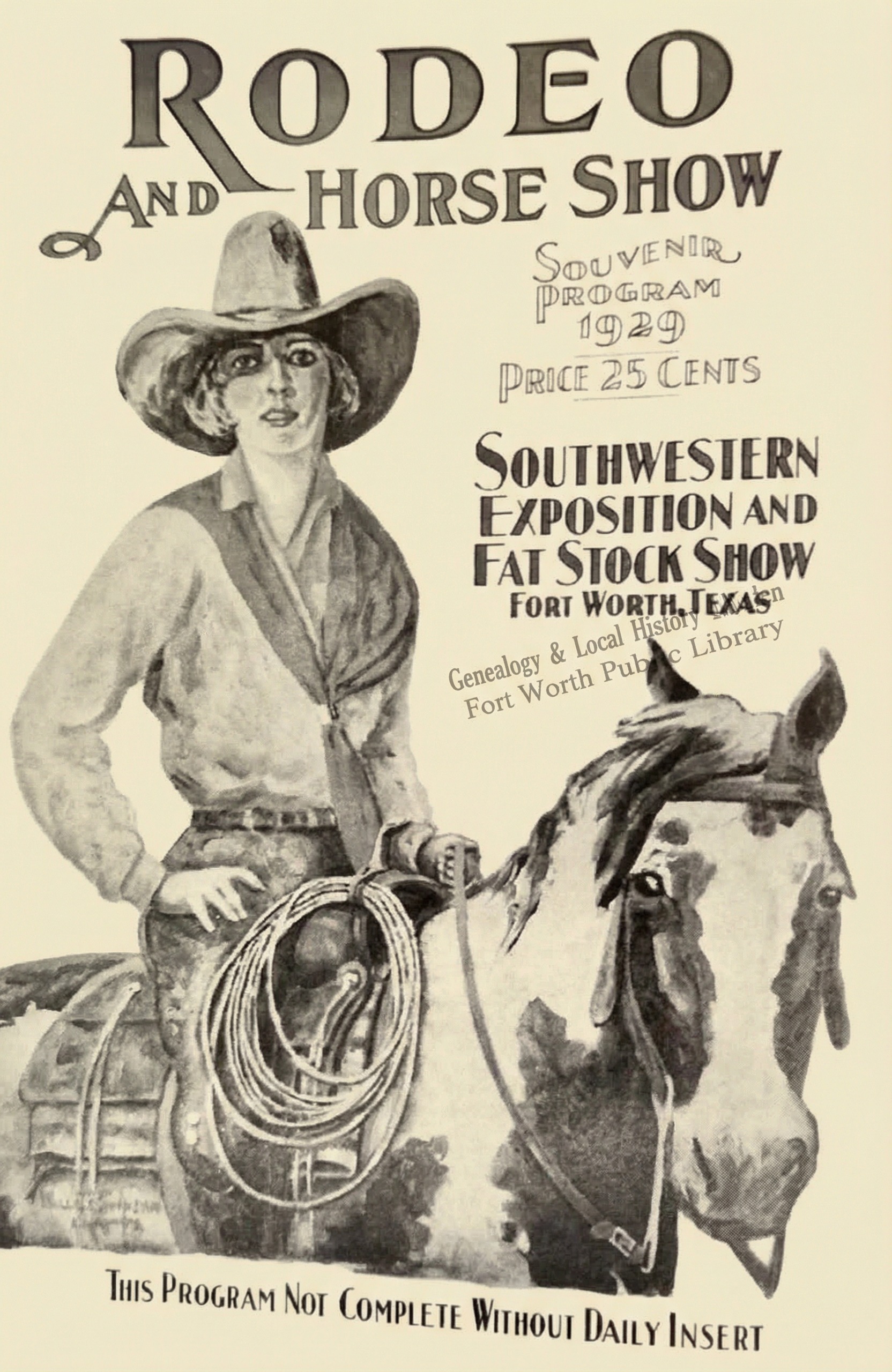
The colorful annual programs for the Fat Stock Show, as locals called it, became collectors’ items. Cowgirls competed in barrel races at the annual rodeo, leaving bull riding, bronc riding, and bulldogging to the cowboys. All participants were free to ride in the Grand Entry before each performance or competition. The events were held in the coliseum, located directly west of the Livestock Exchange Building.
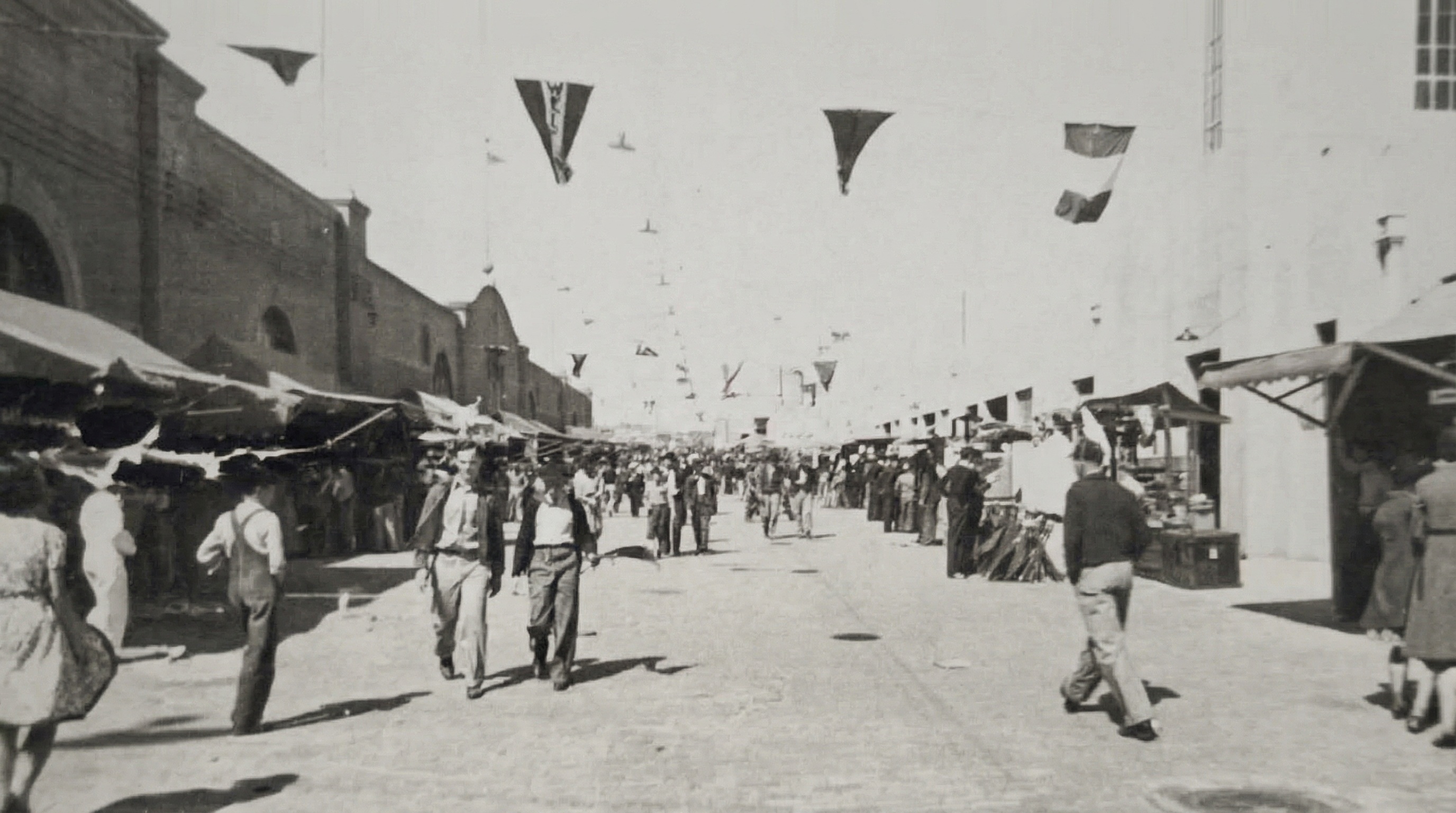
The wide aisle between the horse and mule barns provided an excellent location for the midway at the March 1930 stock show in the Stockyards. This midway, with its booths and attractions, was thus located directly across Exchange Avenue from the coliseum, where the rodeo events were held.
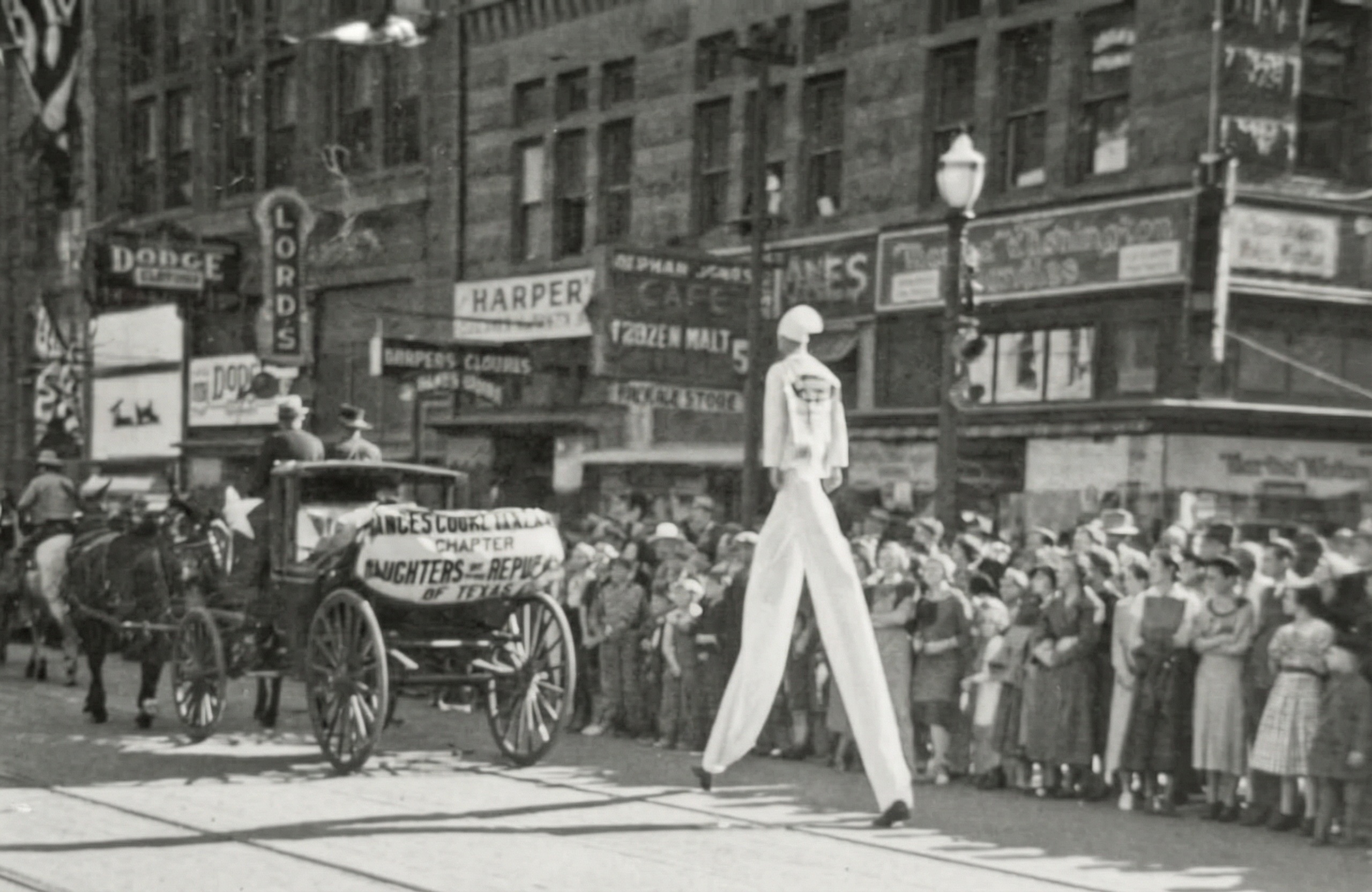
Men on stilts can certainly attract a lot of attention in a parade. Every year at the beginning of the stock show, the organizers held a parade in downtown Fort Worth to convince local residents of the fun they could experience at the annual stock show and rodeo. It seems that anyone who wanted to could take part in this parade on March 13, 1936. The float in front of the man on stilts was sponsored by the local chapter of the Daughters of the Republic of Texas.
...to be continued...