This year's edition of the popular consumer electronics trade show CES 2026 in Las Vegas unveiled several long-awaited innovations. One of the most closely watched players in the market was NVIDIA, which certainly lived up to the audience's expectations. Its CEO, Jensen Huang, spoke about plans to bring AI from the software environment into the real physical world.
While the world of robotics once seemed very far removed from reality, the rise of artificial intelligence is bringing it increasingly into focus. NVIDIA is one of the most influential companies in this field, and according to CEO Jensen Huang, we are now on the verge of a “GPT moment for physical AI.” Its new models, powerful computing platforms, and partnerships with leading robotics companies represent a milestone in the development of intelligent machines. These machines can now not only think, but also act in the physical world.
A new generation of Cosmos and GR00T models
The foundation of the entire initiative is a set of open AI models that NVIDIA has made available to developers and companies around the world. These tools are intended to help them train robots faster and more accurately. But how exactly?
According to NVIDIA, the physical world is highly unpredictable, and collecting real-world data on a wide variety of mechanisms and principles is an extremely time-consuming process.
However, by making the NVIDIA Cosmos Transfer 2.5, Predict 2.5, and Cosmos Reason 2 models available, companies and developers gain access to useful synthetic data. This data is collected from training on videos, real-world situations, and 3D simulations. According to NVIDIA's promotional video, Cosmos makes it possible to use a unified representation of the world without robots actually having to be present in it during training.
The NVIDIA Cosmos Transfer 2.5 and Predict 2.5 models give developers the ability to generate realistic synthetic data and thus simulate robot behavior in a virtual environment governed by standard laws of physics. The open Cosmos Reason 2 model allows robots and robotic devices to see and understand the world around them, while the Isaac™ GR00T N1.6 model is specifically designed for humanoid robots.
Crucially, the company has also opened these models to the wider community. They are available through the Hugging Face platform, making them an accessible tool for developers around the world. They can therefore integrate them directly into their projects without major complications.
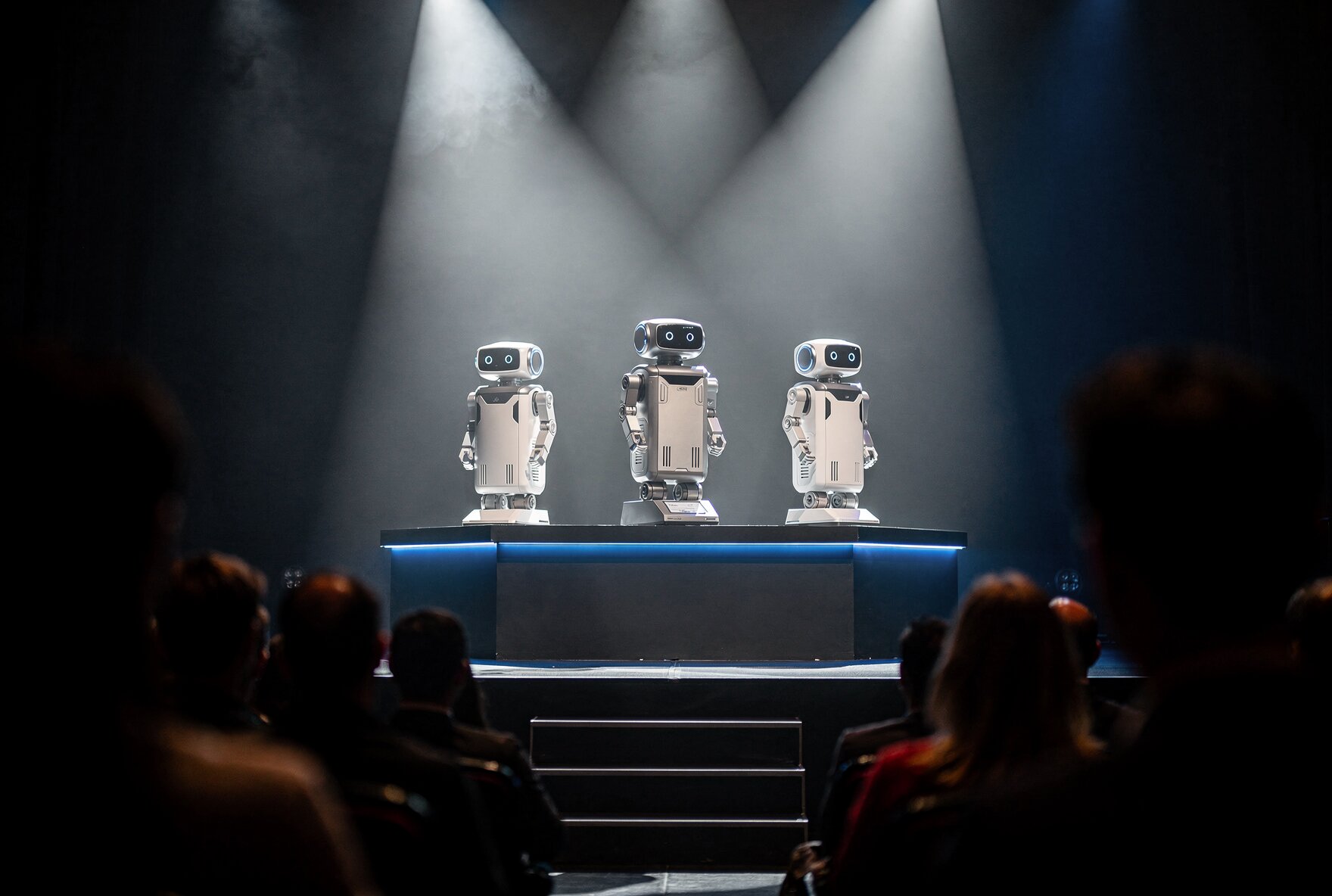
From general-purpose to specialized robots
According to Jensen Huang, Jetson AGX Thor processors and open physical AI models are the key to creating an ecosystem that can help global industry leaders achieve smoother and more advanced development. Thanks to these new technologies, NVIDIA is already accelerating the next wave of robotics.
In the current robotics revolution, NVIDIA is working alongside several partners that are gradually moving AI from laboratories into the real world. For example, Boston Dynamics, which develops advanced humanoid robots such as Atlas, uses powerful NVIDIA Jetson Thor computing modules and open models to train robots. This teaches them how to perceive their surroundings, control complex movements, and perform tasks that were previously only possible for humans.
In this way, Richtech Robotics is developing a mobile humanoid for precise navigation and manipulation in industrial environments, while LG Electronics has introduced a new home assistant designed to help with everyday household tasks.
In healthcare, NVIDIA's tools and models are used, for example, by LEM Surgical, where they serve to train autonomous surgical arms for precision operations.
All these examples illustrate that NVIDIA's innovations are not merely a theoretical concept. They form a real ecosystem in which breakthroughs are already being made in the world of robotics, potentially transforming healthcare, logistics, and manufacturing.
An environment for thorough testing
NVIDIA also introduced additional tools that can save developers time and money. A long-standing challenge in robotics is fine-tuning software before a robot is actually deployed in the real world. Isaac Lab-Arena is designed to help test robotic skills before deployment. It is a simulated environment that verifies how well robots understand tasks and whether they can perform them reliably.
Another useful tool is OSMO, which unifies the various parts of the development workflow, from model training to deployment on robotic hardware.
What does this mean for the future?
The new wave of physical AI shows that changes in robotics may gain momentum faster than expected. We are no longer talking only about isolated prototypes or pilot projects. With NVIDIA's robotic processors, powerful computing tools, and open models, a much broader audience than ever before will gain access to development. And it is precisely faster innovation and easier training that could launch a rapid revolution in the world of robotics.