Fort Worth residents have always shown a willingness to contribute whenever called upon to support worthwhile projects—anything that would move their city forward and make it bigger and better. Today, we rely on federal funding to carry out major initiatives, but in the 1880s the City Directory boasted: “Everything in Fort Worth is accomplished through private contributions, and its citizens set an unequaled example in matters of public interest.” Even the very term “subscription” transformed the simple act of contributing to a collection into an investment in the future. From the very beginning, Fort Worth built an enviable reputation as a city full of people who make things happen. In 1887, the Quanah Advance wrote: “A little Fort Worth time, money, and courage are all it takes to make anything succeed.” At about the same time, the Houston Post put it this way: “Fort Worth owes no one anything for what it has accomplished. This city built itself.” Asking for a legislative appropriation or federal grant before embarking on a major project simply was not the Fort Worth way. Well into the 20th century, costly projects were financed by aggressive fundraising campaigns, including the Texas Spring Palace, the Swift and Armour packing plants, Camp Bowie, and the General Motors assembly plant. There were also many other instances in which citizens contributed without any promise that they would ever see a cent returned. The future was what mattered.
It all began with thinking big—a willingness to undertake seemingly impossible projects with enthusiasm that was as admirable as it was bold. In 1890, the Fort Worth Gazette proudly called Fort Worth “the boldest city in Texas.” Forty-six years later, Will Rogers echoed those words in his own way: “Fort Worth never turned down a good thing, because Fort Worth has both heart and sense.” Howard Peak called it “the Fort Worth spirit.”
In practice, “public subscription” meant passing the hat and collecting contributions large and small, with the amount of the contribution being beside the point. Every citizen was invited to become part of a worthwhile project. Fort Worth residents were united in their desire to see their city grow into a great metropolis. The call usually came at a series of public meetings where supporters announced the goal and rallied support for the project. Some contributors put down money on the spot, while others pledged larger donations for a later date. For the duration of the campaign, the funds were held by a leading local newspaper, one of the major banks, or the Chamber of Commerce. Contributors were not guaranteed reimbursement if the project failed. They contributed out of faith and the conviction that good things would come. They were betting on Fort Worth’s future. As little Fort Worth grew into a metropolis and the cost of public works rose exponentially, fundraising campaigns evolved into bond issues, usually underwritten by New York firms. Although bonds guaranteed a return on investment, they had to be approved by voters and depended on local investors, which was essentially the same as the old collections at public meetings.
The promotion of the city was usually led by one of the legendary figures in its history: B.B. Paddock in the late 19th century, Amon G. Carter for much of the 20th century, and Bob Bolen in the modern era. Paddock set the standard by using his Democrat and Gazette newspapers to promote the arrival of railroads and industry in the city. One Texas editor lamented: “Hell is full of newspapermen who worked themselves to death promoting some backwater without enough support to feed a grasshopper.” Fort Worth was no such place. Paddock and the other city fathers were determined to put Fort Worth on the map and make it bigger than Dallas. Paddock’s career overlapped with that of his successor, Amon Carter. In 1912, both were members of the Chamber of Commerce and worked to attract new industry to Fort Worth. They came up with the slogan “We’re for Smoke,” signaling that a little air pollution was a good thing. In 2006, Mayor Emeritus Bob Bolen declared: “Cowtown remains a city that gets things done... May we never lose that spirit.” The leading newspapers, of course, tirelessly fostered this enterprising spirit, contributed generously themselves, and conducted fundraising campaigns on their pages. Paddock’s Gazette and Carter’s Star-Telegram always stood behind every major fundraising drive.
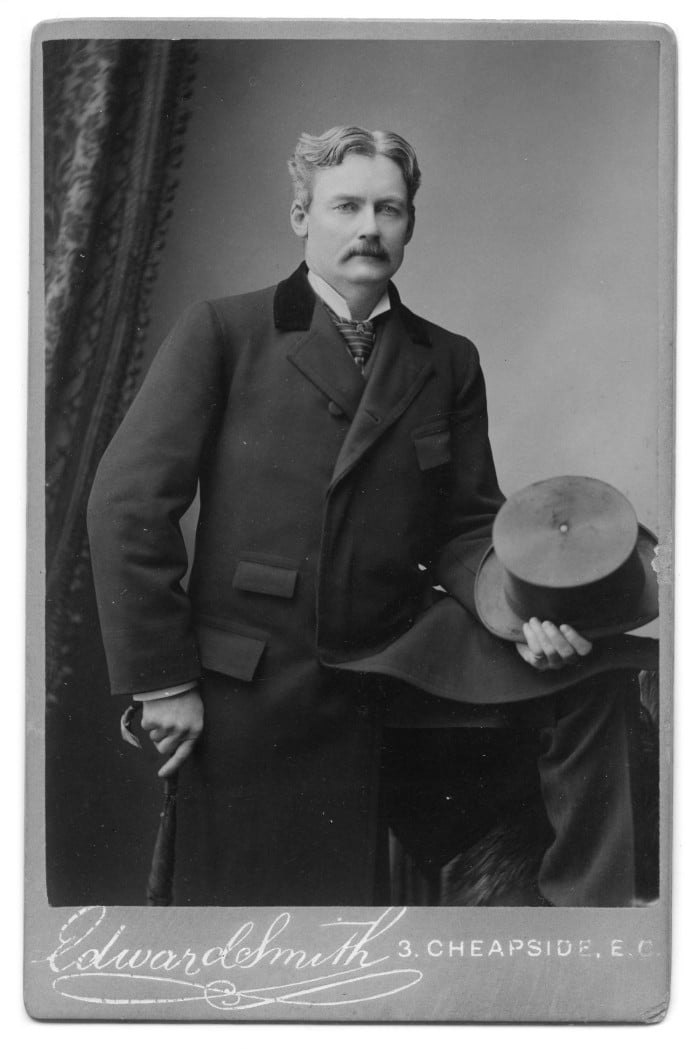
Fort Worth residents’ enthusiasm for major public projects was almost boundless. At some mass meetings in the 1880s, when railroads were being lured to the city, a packing plant was being developed, and a water system was being built, project supporters collected pledges at a rate of one thousand dollars per minute. On one occasion, B.B. Paddock, John Peter Smith, and their friends raised $100,000 in a single evening. Pledging, however, was one thing; actually paying was another. Some pledges required a little follow-up persuasion.
The first fundraising drive in Fort Worth’s history concerned the county courthouse. After Fort Worth took the title of county seat from Birdville, it set about constructing a suitable place from which to administer the county. Colonel Middleton Tate Johnson donated land atop the bluff, and forty-one citizens contributed a total of $2,700. Construction began in 1860 but was interrupted by the Civil War. The building, completed only after the war, burned down in 1876. The population, then numbering only two thousand people, once again dug deep into its pockets and raised the $60,000 needed to construct a new courthouse.
In the spring of 1876, citizens gathered again, this time to bring the railroad to town. Without this vital connection to civilization, the city was in danger of drying up and disappearing. At a series of well-attended public meetings, citizens subscribed $25,000 and formed the Tarrant County Construction Company to lay the final miles of track into the city. In the years that followed, attracting additional railroads became the number-one priority for local boosters. The money raised went into joint-stock companies with the magic word “railroad” in their names and the promise of future wealth for everyone involved. Project supporters called this money a “bonus” for the railroad; critics called it extortion. Years later, the Chamber of Commerce admitted that Fort Worth had literally “bought every railroad it ever got.” This generosity included a $75,000 “subscription” in 1880 to attract the Gulf, Colorado & Santa Fe to the city. The entire amount was raised in just three days. John Peter Smith himself contributed $5,200. B.B. Paddock later recounted how he and Khleber Van Zandt called a public meeting and locked the doors until the money had been raised. Paddock, of course, had a good story for every historical event, usually with himself in the leading role. Another fundraising drive in April 1881 raised $25,000 for the Fort Worth & Denver City and was led by the usual group: Paddock, Ephraim Daggett, Walter A. Huffman, Joseph C. Terrell, and Carroll M. Peak. When they reached their goal, one Dallas newspaper wrote: “The people of Fort Worth are rejoicing.” In the following years, they did it again, raising $40,000 for the Fort Worth & Rio Grande and $75,000 for the Cotton Belt. Fully $27,000 of the bonus for the FW&RG was subscribed in the first four hours alone. The city fathers were convinced that no price was too high and no railroad demand too extravagant. In 1881, the Fort Worth Democrat wrote: “During the past six months Fort Worth has contributed nearly $200,000 through public subscriptions to various projects,” a truly remarkable achievement for a city of only seven thousand residents. Sometimes those of lesser means needed a little persuasion, but civic pride was a sensitive point not only when it came to railroads, but also a hospital or public library. In 1883, a group raised $14,000 in three hours to build a hospital exclusively for Texas & Pacific employees, which eventually became St. Joseph’s Catholic Hospital. Railroad magnate S.B. Hovey once declared that if there were a political party called “For the Good of Fort Worth,” he would be a founding member. He would have had plenty of company.
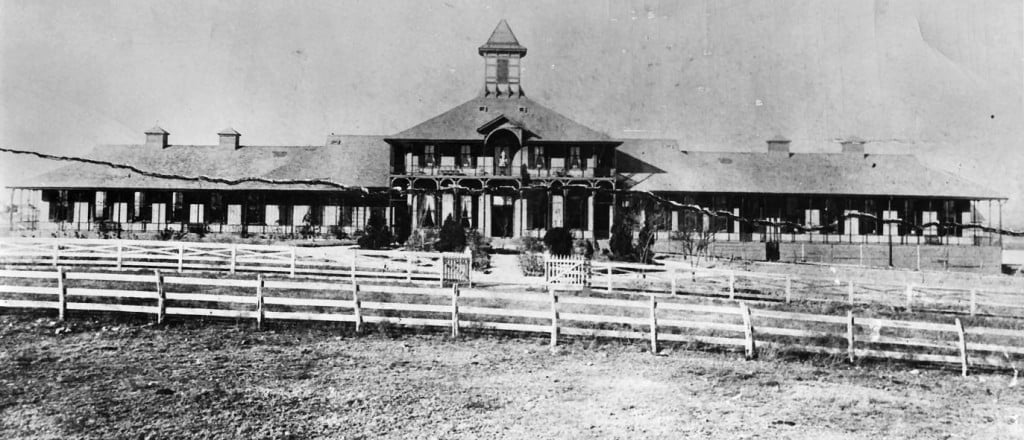
Other worthwhile ventures during the same years prompted Fort Worth residents to dig deep into their pockets. In 1878, the first “free bridge” across the Trinity was built, with half of the total $6,000 cost coming from subscriptions. John Peter Smith led the contributors with $300. Another sixty-nine businesses and individuals contributed amounts ranging from $5 to $100.
The economic boom of the 1880s made it easier to raise money through fundraising campaigns. The true test of public spirit came in hard times. When an economic depression struck the country in the 1890s, Fort Worth residents nevertheless raised money for a packing plant, a brewery, and a cotton mill. While others retrenched during hard times, Fort Worth citizens stepped on the gas. They looked down scornfully on Dallas’s caution and compared themselves to Chicago as a great regional metropolis.
Fort Worth’s fondness for calling fundraising meetings prompted the Dallas Herald to remark mockingly: “The citizens of Fort Worth never do anything without a public meeting.” It was not only the wealthy who answered the call; farmers and merchants crowded shoulder to shoulder with bankers and “capitalists.” Someone like Robert McCart or B.B. Paddock always opened the meeting with a rousing speech about the “invincible spirit of Fort Worth.” Then came the call for “subscriptions.” In 1890, $125,000 was raised to build a new city hall. The principal contributors included cattleman Jake Johnson, General R.A. Cameron of the Fort Worth & Denver City Railway, developer Humphrey Barker Chamberlin, banker Michael C. Hurley, and Sallie Huffman, the widow of Walter Huffman. No one said contributors had to be men. Each of them contributed at least $1,000.
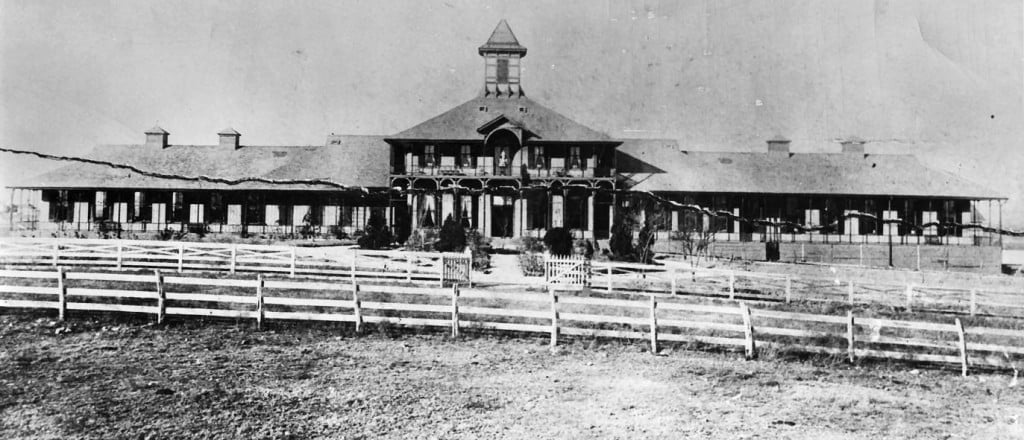
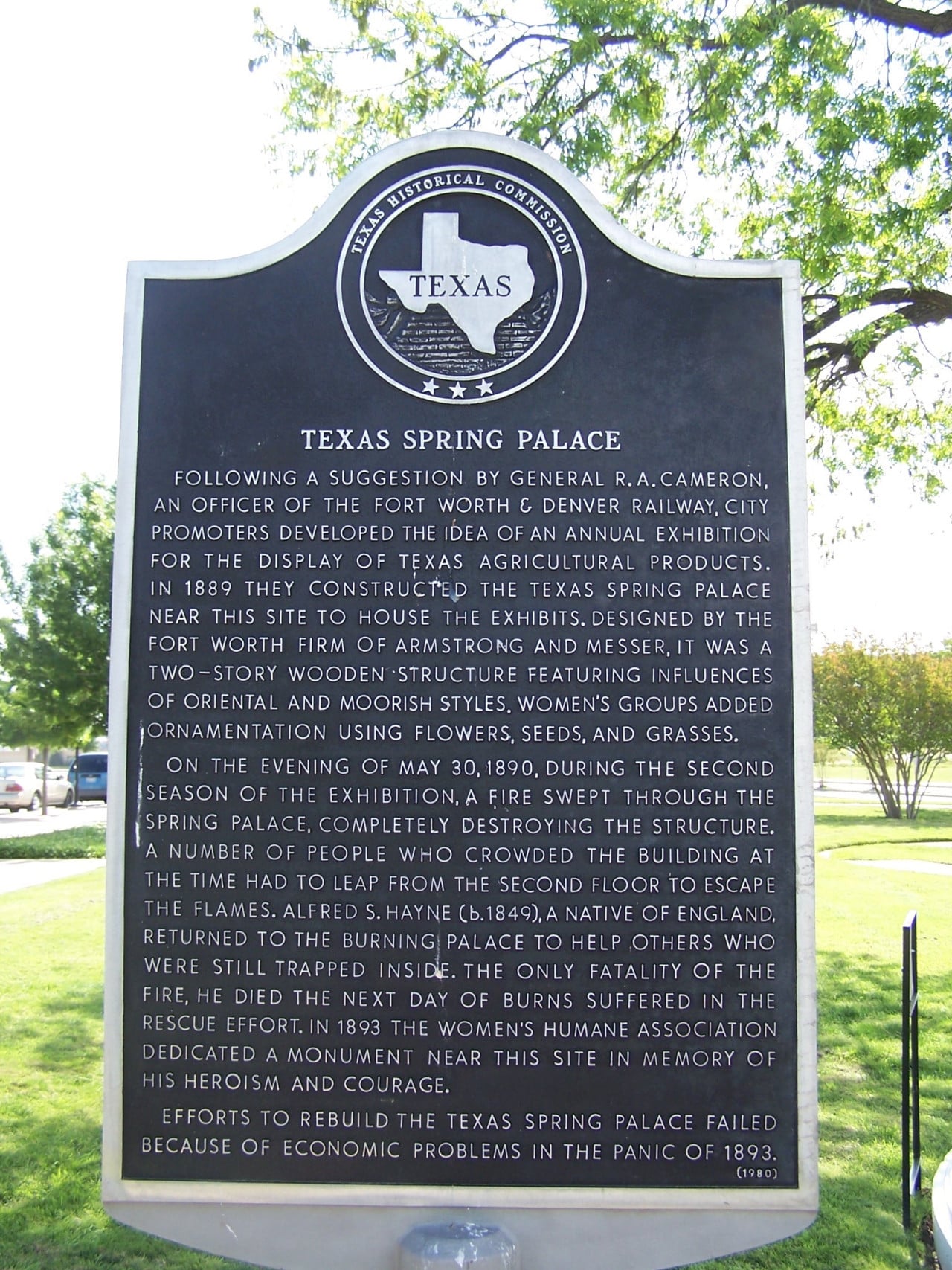
Perhaps the proudest moment was the construction of the Texas Spring Palace in 1889. From beginning to end, it was a purely local project. Even before 1889, Fort Worth regarded itself as a regional metropolis, something Howard Peak called “putting on big-city airs,” but pretending was one thing and staging an exposition comparable to the New Orleans Cotton Palace (1884) or the Sioux City Corn Palace (1887) was another. The closest equivalent held in Texas up to that time was the annual State Fair in Dallas, and it enjoyed the support of the state legislature. The Fort Worth Spring Palace had no such official backing. The idea, conceived in the winter of 1889, called for a magnificent display of Texas’s natural wealth, with exhibitors from across the state. The first meeting to gauge interest was held on January 16. Two hundred men and women came to hear the proposal. The organizers explained their plan, estimated the cost at $50,000, and promised that the exhibition would be bigger and better than the Corn Palace, which had cost $30,000 to build. The dramatic moment came when they asked all supporters to stand. As one man (and one woman), everyone in the hall rose to their feet.
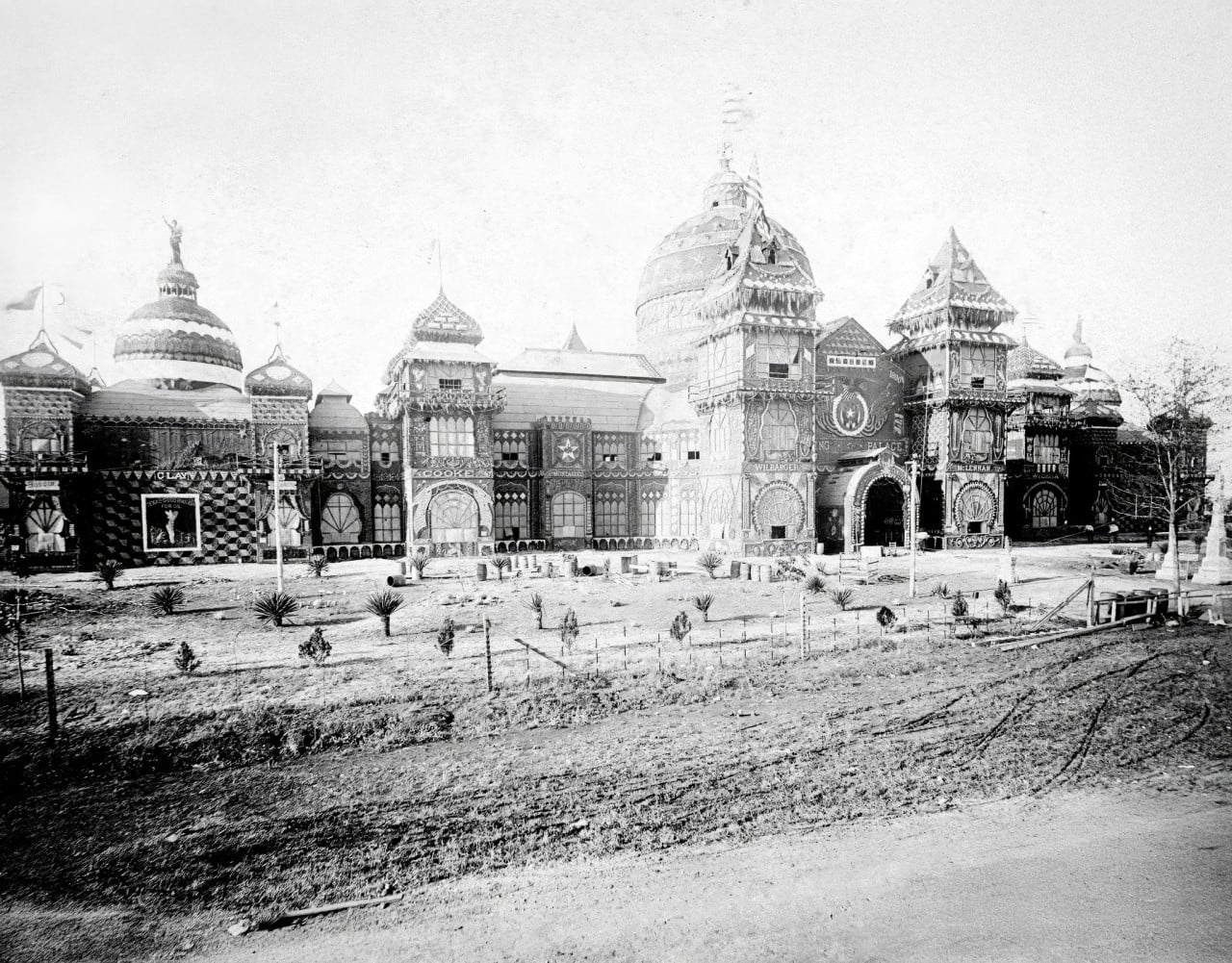
promote the state of Texas, attract new settlers and investors, and celebrate the region’s agricultural wealth.
A Committee of Fifty was established to draw up the bylaws of a private corporation called the Texas Spring Palace Company. It then issued $100,000 worth of stock at $10 per share. A ten-member “soliciting committee” was appointed, and its members fanned out across the city to sell shares. They approached every private citizen and every business. Even saloon owners were “solicited” and contributed generously. The Committee of Ten raised $8,800 on the first day alone. After subscriptions reached $25,000, the shareholders elected a board of directors headed by B.B. Paddock, chosen partly because he was Fort Worth’s foremost citizen and partly because he had launched the campaign with an $800 donation. Paddock appealed to his fellow citizens not to view the money as “a gift or contribution, but as an investment” in Fort Worth’s future. Although contributions were also obtained from residents of Tarrant and other counties across the state, and the railroads contributed as well, most of the funds came from the city, which then had barely 23,000 residents. Even more remarkably, Fort Worth was simultaneously raising funds for the Union Stockyards and two railroads (the Fort Worth & Rio Grande and the Fort Worth & Northwestern). “Soliciting committees” canvassed the population for each of these campaigns and raised more than $40,000 for the Northwestern road alone. Fort Worth residents were in danger of subscribing themselves into poverty!
The local construction firm Thomas J. Hurley & Co. won the building contract with a bid of $26,000. It even pledged to return $2,000 of that amount by purchasing stock of the same value. The Texas Spring Palace opened as promised on May 10, 1889, and enjoyed a successful run, averaging 3,000 visitors a day, until it closed on June 27. When the accounts were settled, it ended with a $40,000 deficit, which did not deter the board of directors from committing to a second season. The call to action went out again in 1890 and raised $50,000 to renovate and expand the building. Although the Spring Palace again ended at a loss after its fiery demise on May 31, 1890, project supporters immediately began talking about rebuilding it “bigger and better than ever,” and there is no doubt that Fort Worth residents would have subscribed again.
The Spring Palace proved to the doubters that Fort Worth was a city of BIG thinkers and BIG doers. More than one visitor was heard to say, “What boundless faith the people of Fort Worth have in their city!” or something similar. President John F. Kennedy put it a little differently in November 1963: “There are no faint hearts in Fort Worth.” The Spring Palace put Fort Worth on the national map and strengthened the city’s ambition to become the regional center of “West Texas.” It also pioneered marketing techniques that became standard for future exhibitions: statewide advertising, advance ticket sales, railroad excursion fares, extensive newspaper coverage, the use of historic rivalries to increase attendance, and the engagement of top performers as entertainment. The Spring Palace investors may have lost their shirts, but the general feeling at the end of the day was that the benefits to Fort Worth were worth the price.
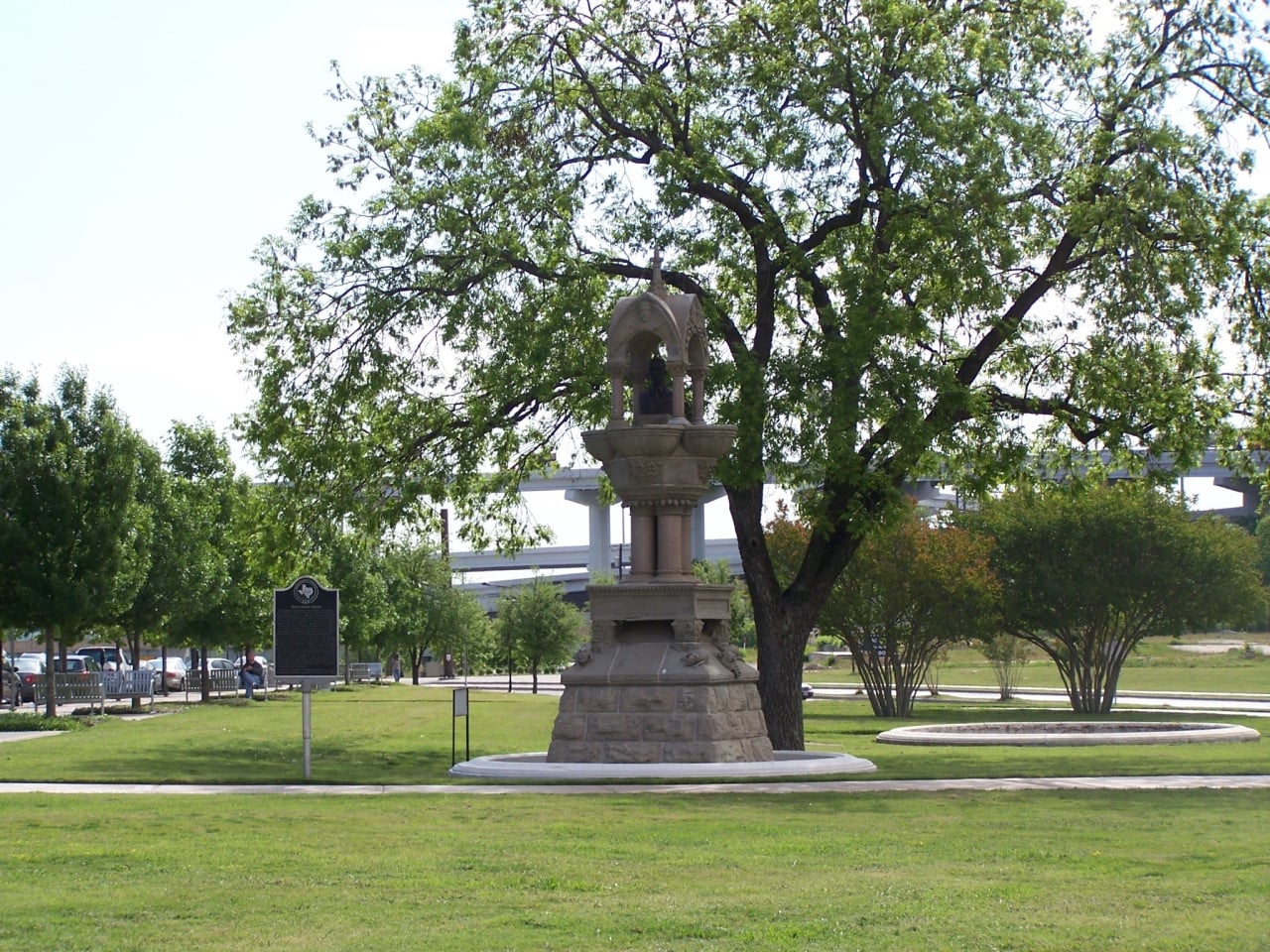
Three years later, another fundraising drive raised $1,437 for a monument to Al Hayne, the hero of the Spring Palace fire. The Women’s Humane Association led the campaign to erect the twenty-six-foot-tall monument, which has stood for more than 130 years.
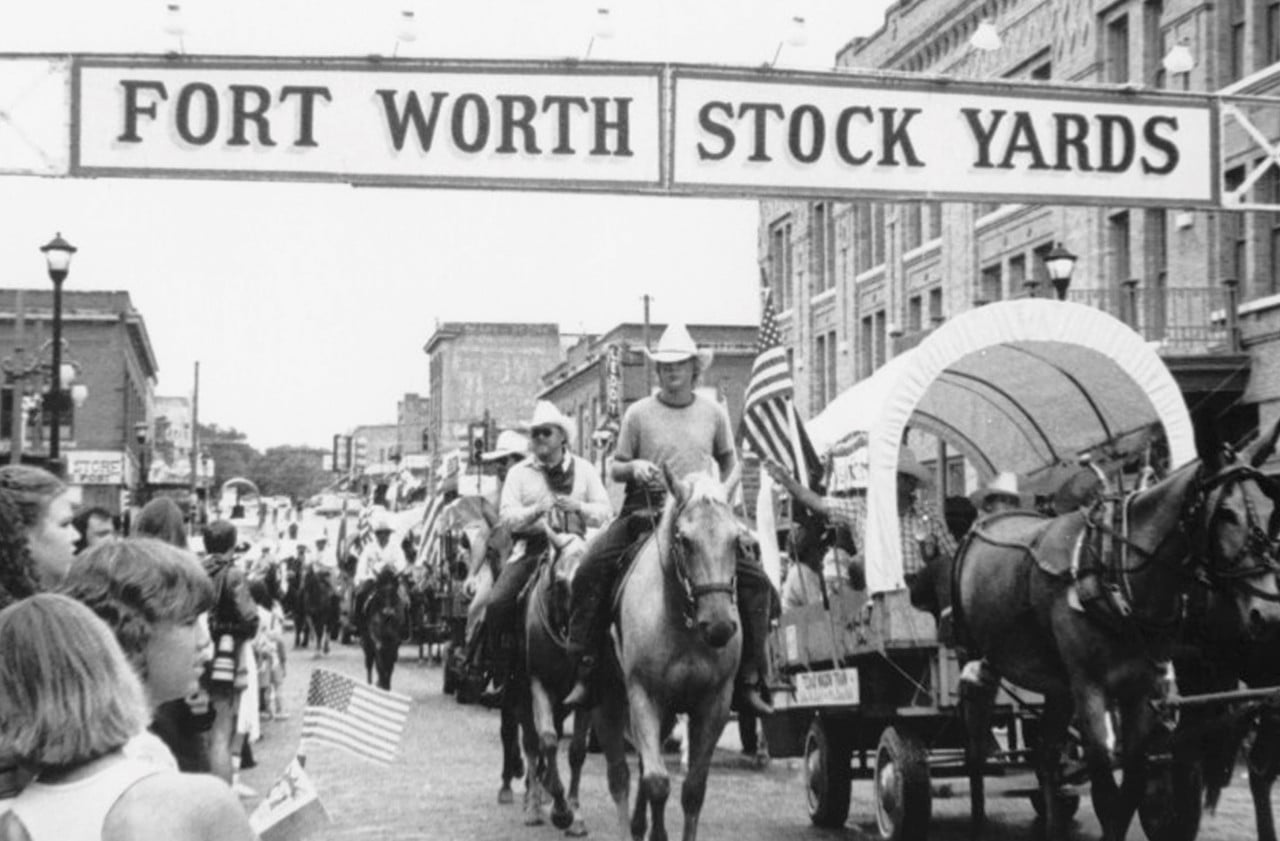
Another fundraising drive was needed to make “Cowtown” Fort Worth’s permanent nickname. From the very beginning, citizens were willing to contribute to bringing cattle drives through the city. Over time, this came to include rail connections for transporting the animals to market and, eventually, slaughterhouses for processing beef locally. In 1882, the Fort Worth Packing Co. was built with $6,000 raised in another fundraising drive, prompting the city directory to boast: “Everything in Fort Worth is accomplished through private contributions.” Twenty years later, Swift and Armour were attracted to the city in the same way, creating what B.B. Paddock called “the cornerstones of future greatness.” The cost of doing business had risen significantly since the first packing plant was built. The city pledged Armour $200,000, and the Fort Worth Stockyards added another $400,000. When Swift showed interest, the city persuaded the two friendly rivals to split a $100,000 subsidy. The Stockyards and North Fort Worth then sweetened the offer further.
Before the deal was closed, a certain fatigue with fundraising began to show. Citizens were still paying off the debt for the 1895 courthouse, and the economy was only beginning to recover from the worst depression in the nation’s history. In the packing-plant fundraising campaign, the first four days brought in nearly $41,000, but donations then slowed to a mere trickle, prompting campaign leader Judge G.W. Armstrong to grumble that in earlier days the goal would have been met in the first hour. The city’s leading newspaper played its part by spreading a rumor that Dallas intended to steal the prize. The Chamber of Commerce eventually took charge of the campaign, brought organization to it, and put pressure on every labor and business group in the city. On October 7, 1901, the Chamber issued a desperate appeal to all public-spirited citizens, warning that Fort Worth would fall back into insignificance unless the necessary money was raised. It worked, bringing in the final $15,000. The Fort Worth Register gave this latest fundraising campaign a fitting headline: “Fort Worth Has Never Failed.”
More projects followed in subsequent years, but none matched the packing-plant campaign until 1910, when the city fathers turned their attention to bringing Texas Christian University “home” to the city where it had begun in 1873 as Add-Ran College. The school was located in Waco, but it had recently burned down, so the board of trustees was open to relocation, and that was exactly the opening Fort Worth needed. A vigorous fundraising campaign raised $200,000 from churches, businesses, and private citizens in eleven weeks. Campaign leaders resorted to the usual tactics of shaming the wealthy and raising the specter of Dallas stealing the prize. Mayor W.D. Davis called contributing a “civic duty.” Once again, it was a mass movement. Major landowners in the southwest part of the city pledged land, and the Northern Texas Traction Company promised to build a streetcar line to the campus. On June 30, 1910, Fort Worth closed the deal with Texas Christian University.
Over the years, as projects grew along with the funds required, Fort Worth residents were also willing to assume bond obligations. In 1884, the city issued $200,000 in bonds to purchase the municipal waterworks, followed by a $320,000 bond issue for street improvements. In 1891, Tarrant County launched a $400,000 bond campaign to pay for a new courthouse, and in 1915 the city and county joined forces to build a new county jail. Bond campaigns were not as emotionally charged as collections at public meetings, with contributors’ names published in the newspapers, but they depended just as much on the public getting on board.
When World War I arrived in 1917, Fort Worth once again stepped up. The city fathers, led by B.B. Paddock, Robert McCart, Ben E. Keith, and Mayor Elisha T. Tyra, offered the U.S. Army more than 400 hectares on the heights west of the city practically free of charge. In exchange for establishing a training camp on the land, Fort Worth pledged to build all the necessary infrastructure out to the camp: a streetcar line, sewerage, and electrical connections. Fort Worth’s gift became Camp Bowie. The government spent $1,953,000 to build it and subsequently an average of $1,150,000 a day to operate it. The sudden population increase of 46,000 new residents caused some social tension, but virtually everyone agreed that the benefits outweighed the costs.
Patriotism and civic engagement were displayed again in 1918 during the government-sponsored Liberty Loan campaign to support the war effort. Many of those who had already contributed to bringing Camp Bowie to the city purchased war bonds. They included the Texas & Pacific Coal Co. ($100,000), Sheriff Sterling Clark ($300), and employees of Bewley Mills ($3,000).
As the 20th century progressed, Fort Worth residents retained their willingness to contribute in good times and bad. In 1936, Amon Carter mobilized citizens to create the “Frontier Centennial” celebrating Texas independence. He was determined that Fort Worth would stage a bigger and more spectacular celebration than Dallas, and he succeeded. Two million visitors passed through the Frontier Centennial before it closed on November 15. Despite the impressive attendance, producer Billy Rose went significantly over budget. The investors, not all of whom had pockets as deep as Amon Carter and his friends, lost their shirts. Nevertheless, Fort Worth opened its wallets again for a second season in 1937.
Today they are called “public-private partnerships,” but the proposition is the same: contribute and everyone wins. This is still how massive projects with enormous price tags, such as Alliance Airport or Texas Motor Speedway, are financed. This is how things are done on this side of the Trinity. In local mythology, Fort Worth has always followed a different path from its sister city to the east, which grew largely through public money and eminent domain. This “Dallas way” is part of their own mythology. Fort Worth mythology says that we have always been willing to dig deep into our pockets for worthwhile projects. The arrival of the New Deal in the 1930s, which opened the federal floodgates, may have changed the reality, but it did not change the mythology. Only the name changed. A Star-Telegram columnist gave it a new label several years ago: “The City That Runs on Pro Bono.”