Desert View Point. This place has a special meaning for me because it was the very first spot at the Grand Canyon where I ever stood—a few years ago, when I visited the Grand Canyon for the first time.
Since then, I’ve returned several times, and every time this place affects me just as much as it did the first time. This time, I wanted to be here with my daughter, show it to her, and share the experience together. And in my opinion, Desert View is definitely the best starting point before you set out to explore the rest of the Grand Canyon.
A few words about the Grand Canyon before we begin
If you’ve never heard of the Grand Canyon (which I doubt), here’s the short version—it’s an enormous canyon in northwestern Arizona, carved by the Colorado River over millions of years of continuous erosion. The canyon is more than 446 kilometers long, up to 29 kilometers wide, and over 1,800 meters deep. These are numbers you can’t truly comprehend until you’re standing there in person.
What fascinates me most about the Grand Canyon is that the rock layers visible in the canyon walls reach back almost two billion years. At the very bottom, near the river, are the so-called Vishnu Schist—some of the oldest exposed rocks on the planet. At the top, along the rim where you stand, is the Kaibab Limestone, about 270 million years old. The entire canyon is essentially an open geology textbook, with each layer telling a different story about what Earth looked like during different periods—from ancient seas and deserts to volcanic activity.
The canyon itself, as we know it today, began forming roughly five to six million years ago, when the Colorado River started cutting through the Colorado Plateau. Interestingly, however, some parts of the western canyon may be as much as 70 million years old—geologists still debate its exact age today.
The Grand Canyon has three main areas you can visit, and each offers a completely different experience.
South Rim is by far the most visited and accessible part. It is open year-round and is home to Grand Canyon Village, with all the amenities—hotels, restaurants, visitor centers, shuttle buses, and dozens of viewpoints along the rim. Most tourists (about 90%) visit the South Rim, and this is also where Desert View, which I’m writing about in this article, is located.
North Rim lies on the opposite side of the canyon. Although the two rims are only about 16 kilometers apart as the crow flies, driving between them requires a detour of more than 350 kilometers. The North Rim is much quieter, less touristy, and sits slightly higher, making it cooler and greener. The downside? It is closed in winter because of snow, and the access road is usually impassable.
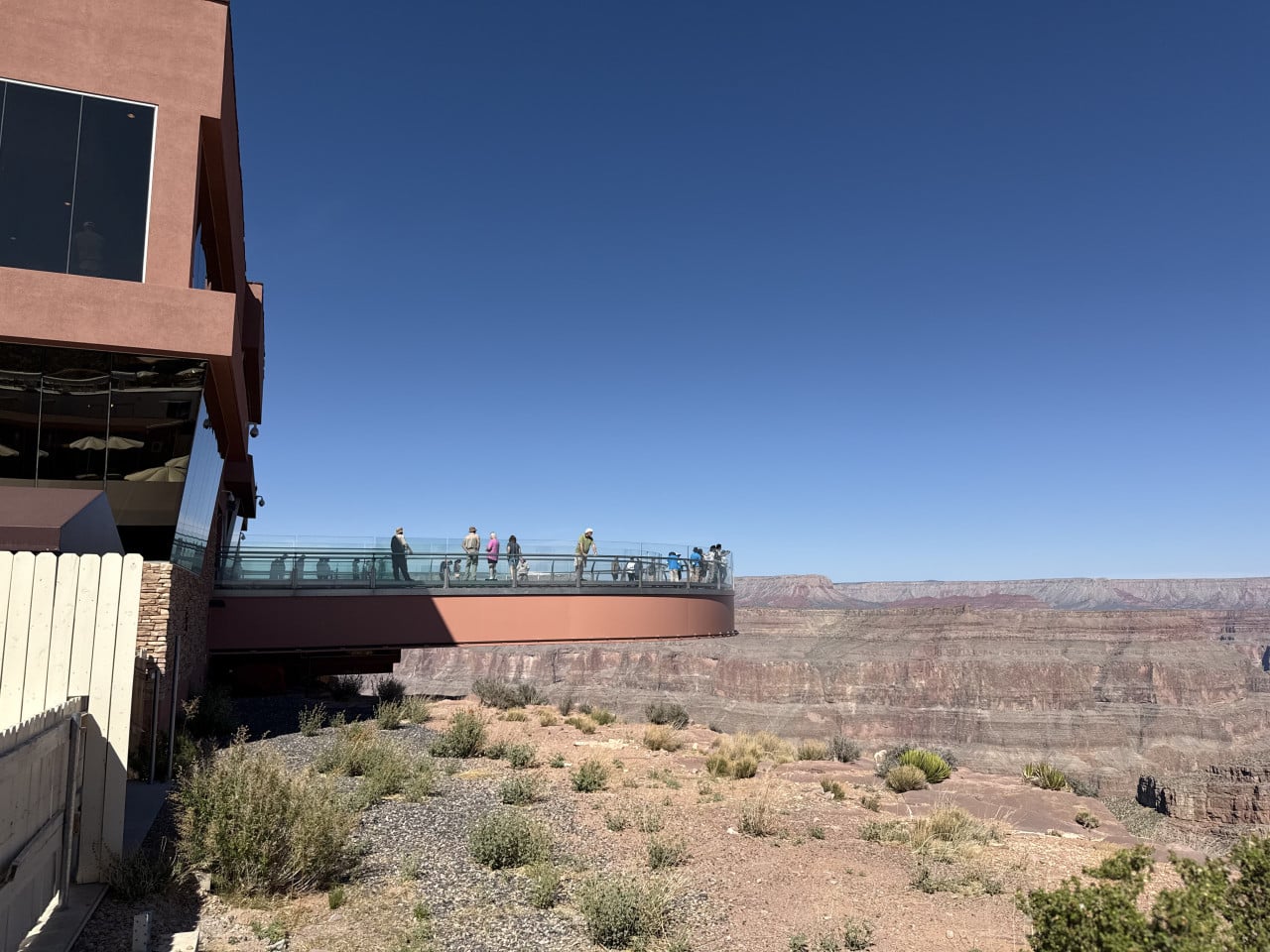
West Rim (Grand Canyon West) is part of the Hualapai Reservation and is best known for the famous Skywalk—a glass-bottomed walkway that extends 21 meters over the chasm, about 1,200 meters above the canyon floor. The West Rim is not part of the national park, and admission is considerably more expensive, but if you’re coming from Las Vegas (about two hours away), it is the closest option.
Arriving at Grand Canyon National Park
When you arrive on Route 64 from the east (from Flagstaff via Cameron), Desert View is the very first stop you reach. In my opinion, this is the most beautiful route because you drive through desert scenery the entire way and then suddenly—boom—you’re standing on the edge of one of the world’s greatest natural wonders.
At the park boundary, we were welcomed by the classic brown sign reading Grand Canyon National Park. Of course, we stopped and took a photo—it’s practically mandatory. The sign is simply iconic, and a photo beside it is part of every visit.
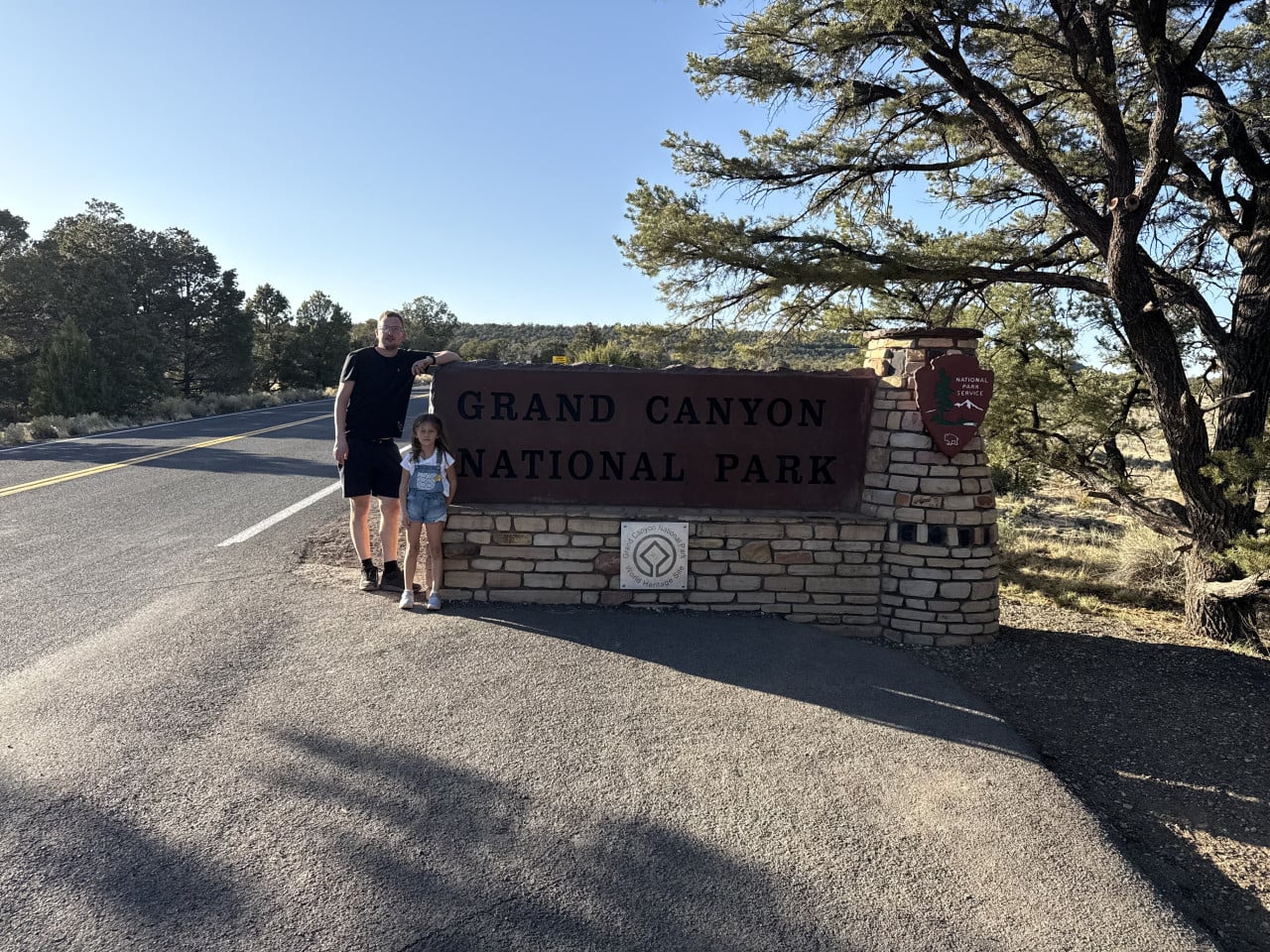
Admission to the park costs $35 per car (valid for 7 days), and with the America the Beautiful Pass, which costs about $80 per year, you get free admission to all national parks in the USA. If you plan to visit several parks, the pass is worth buying.
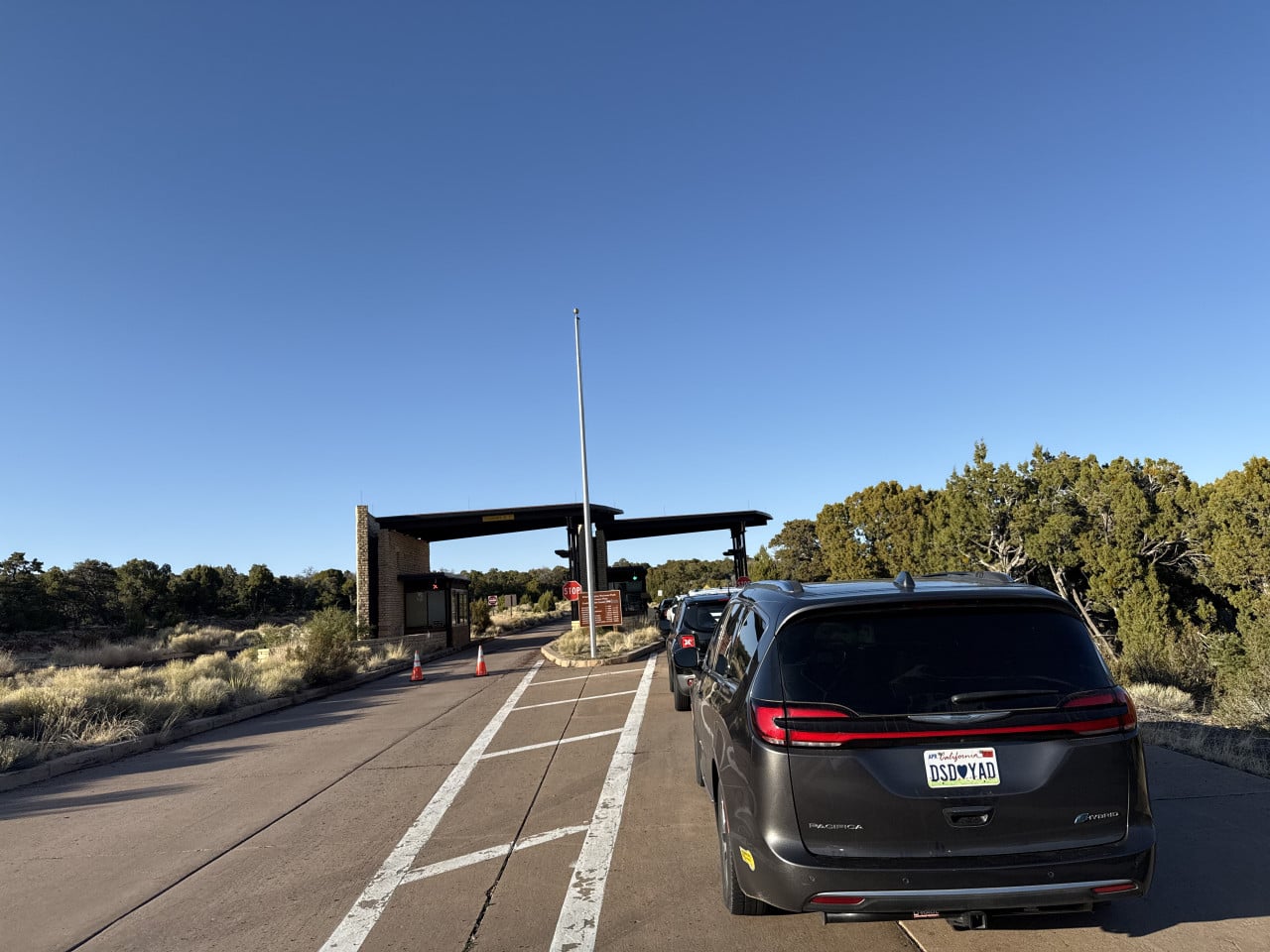
Desert View—parking and first steps
After a few minutes of driving through the park, we arrived at the Desert View parking lot. Right by the entrance is a stone Desert View—Grand Canyon National Park sign, where we took another photo.
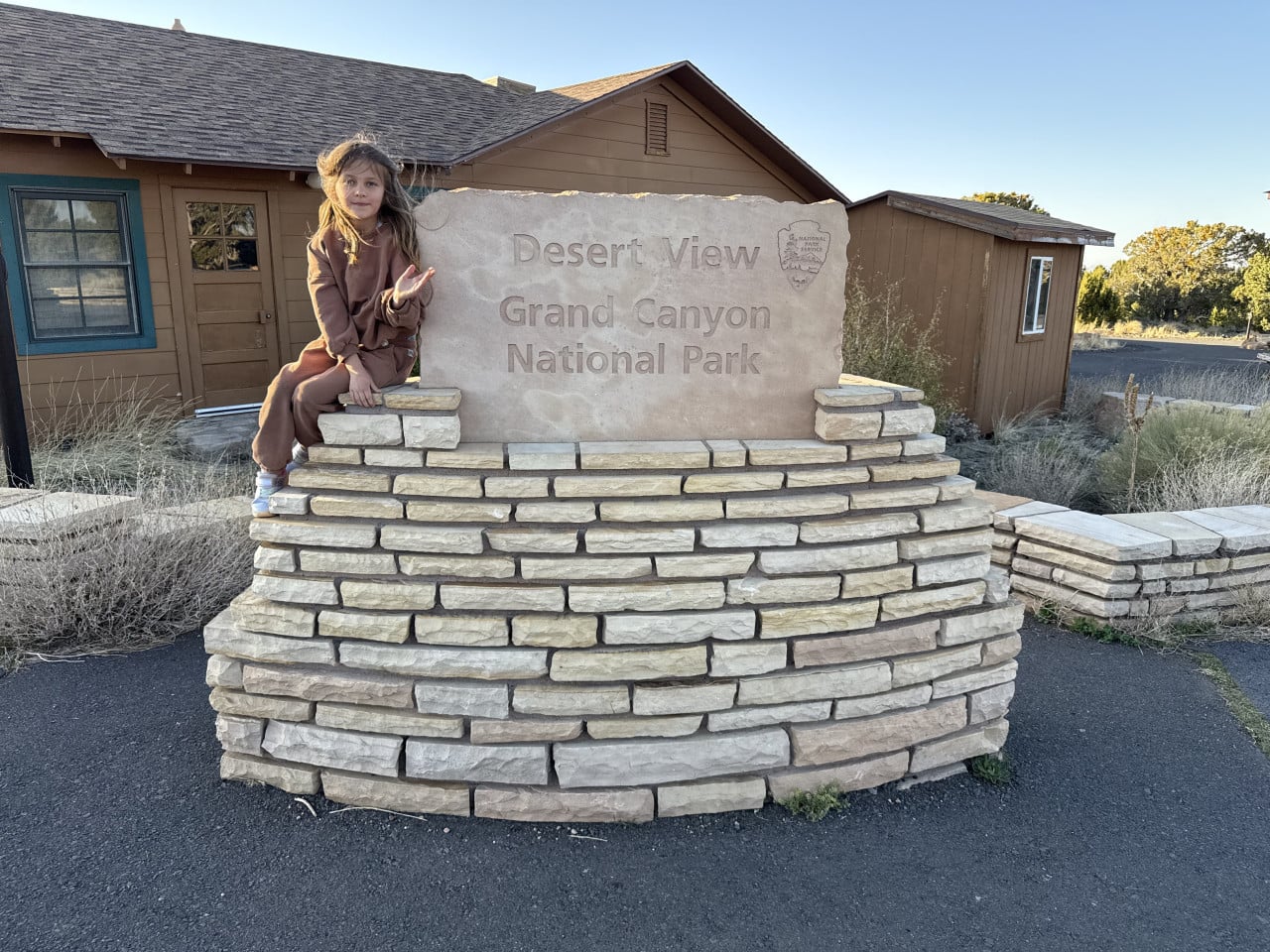
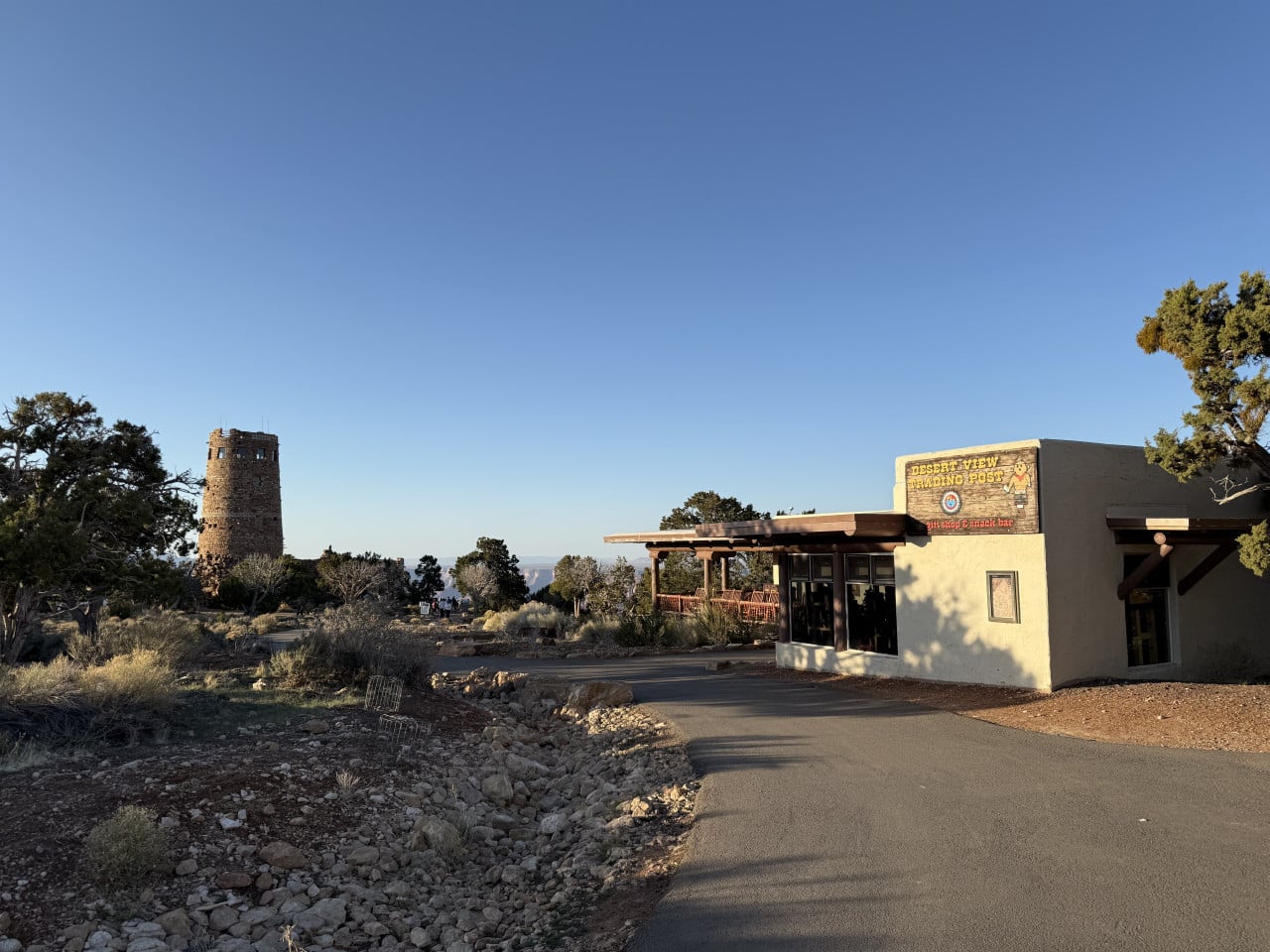
From the parking lot, it’s just a short walk (about a quarter of a mile) past the restrooms, General Store, and Trading Post to the viewpoint itself. By the way, one thing that always makes me happy in American national parks is the restrooms. They are practically everywhere, clean, and well maintained. It’s one of those classic American conveniences that someone from Europe quickly gets used to and then misses afterward.
Desert View Watchtower—a stone tower with a story
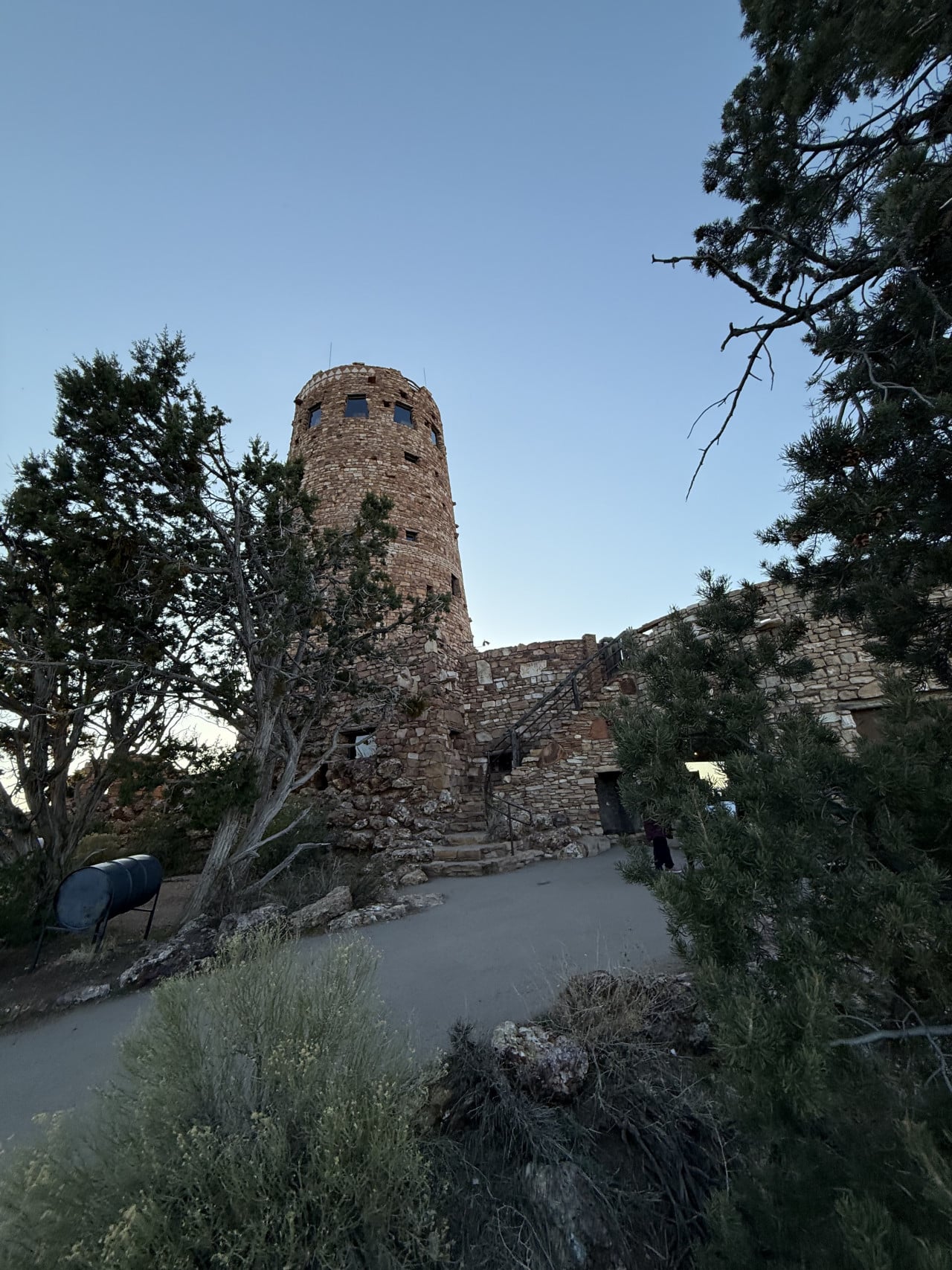
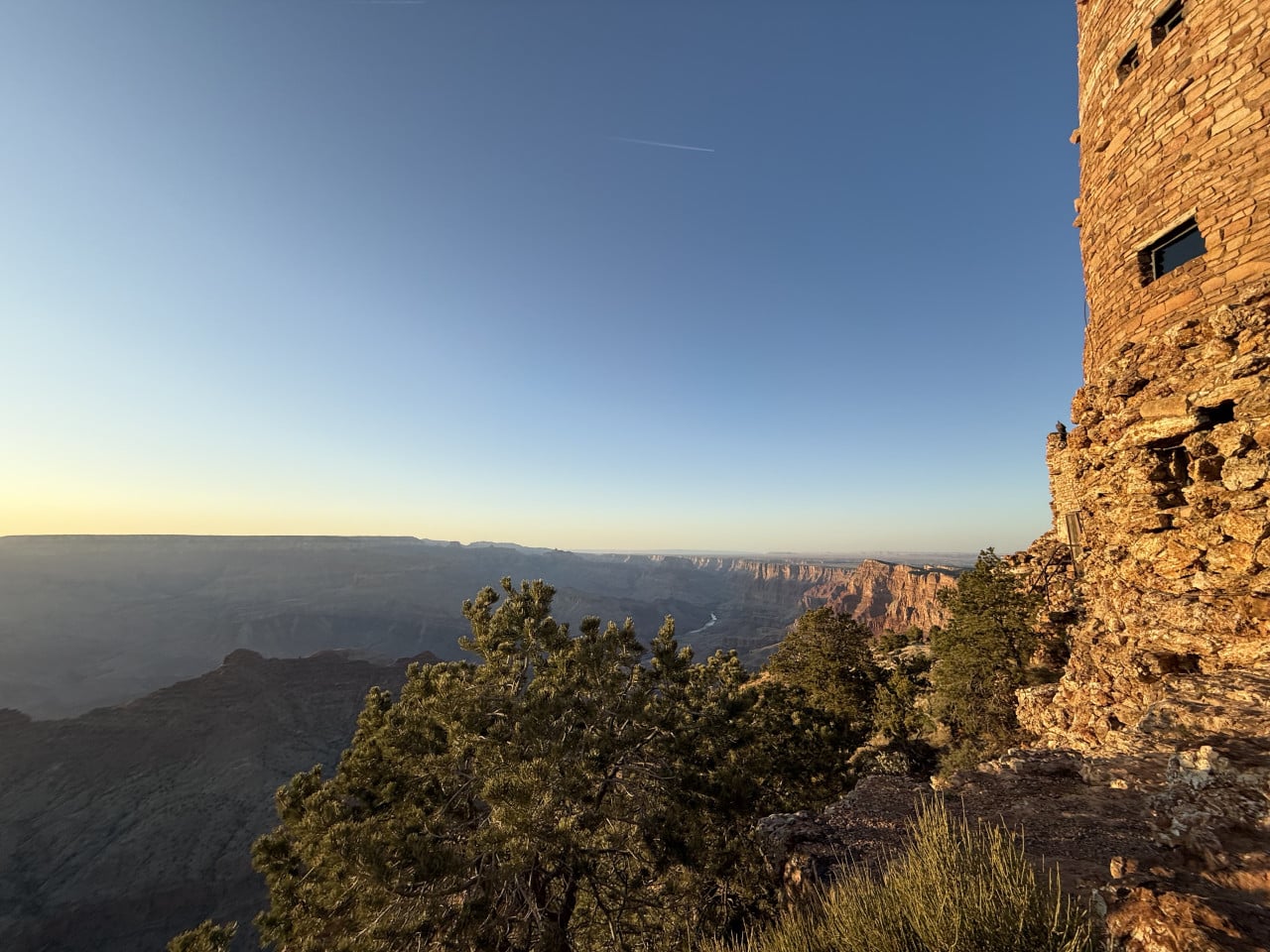
Right next to the Trading Post rises the landmark of the entire site—the Desert View Watchtower, a 21-meter-tall stone tower that looks as though it has stood here since time immemorial.
In reality, however, it is surprisingly “young”—it was built in 1932 by architect Mary Colter, who worked for the Fred Harvey Company. Colter was fascinated by the cultures of the Indigenous peoples of the American Southwest and designed a number of iconic buildings around the Grand Canyon, including Hermit’s Rest and Lookout Studio.
Before she began designing the tower, she spent six months studying archaeological examples. She explored the ruins of ancient Puebloan towers at Mesa Verde, Hovenweep, and Chaco Canyon, built clay models, and even had a 21-meter-high platform constructed so she could evaluate the views from the proposed height. The result is a structure that blends so perfectly into the surrounding landscape that, at first glance, it is difficult to tell where the natural rock ends and the human creation begins.
Inside the tower, you’ll find murals by Hopi artist Fred Kabotie that tell stories and legends of the Hopi people—including the famous legend of the Snake Clan, in which a young man travels down the Colorado River inside a hollow tree trunk. The walls also feature copies of petroglyphs from various places across the American Southwest, which may be the only surviving records of them because the originals have since been destroyed.
An interesting detail—the ground floor of the tower contains a room called the Kiva Room, named after the traditional ceremonial spaces of Indigenous peoples. It has a unique fireplace with a large panoramic window overlooking the canyon in place of a chimney. The smoke is carried away through a concealed side chimney—an ingenious solution Colter designed so that nothing would obstruct the view.
The tower has 85 steps and four floors. Colter deliberately left the top floor undecorated so that the interior would not distract from the panoramic view of the canyon. From the top, you can see the Colorado River, the Painted Desert stretching toward the horizon in the direction of Navajo and Hopi lands, and, on a clear day, more than 150 kilometers into the distance.
Today, the tower hosts cultural demonstrations in spring, summer, and fall, during which artists from tribes traditionally connected with the Grand Canyon create their work directly in front of visitors.
The viewpoints and that view
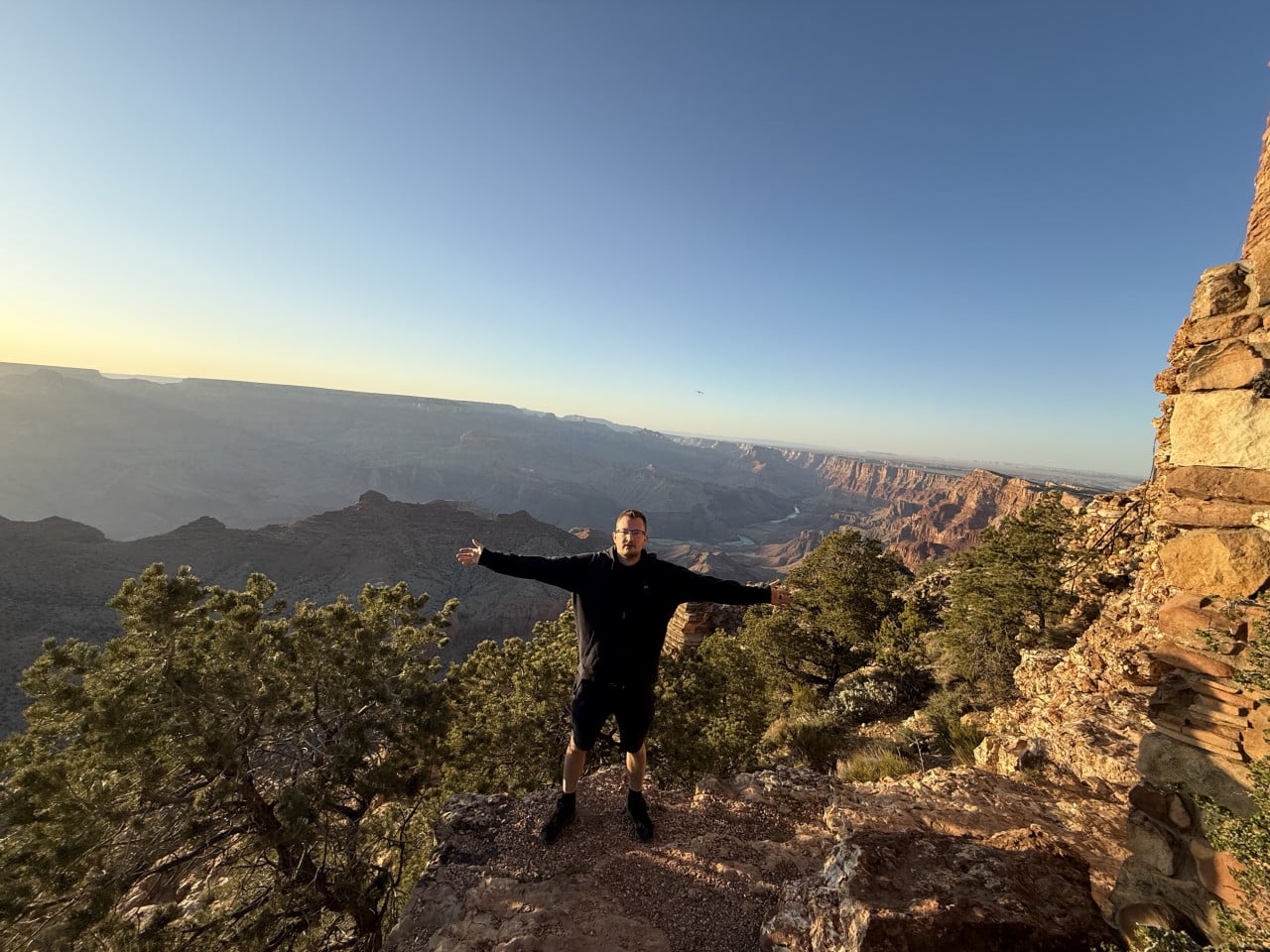
From the parking lot, we first headed right, where there was a developed viewpoint with a railing and a telescope (coin-operated, naturally).
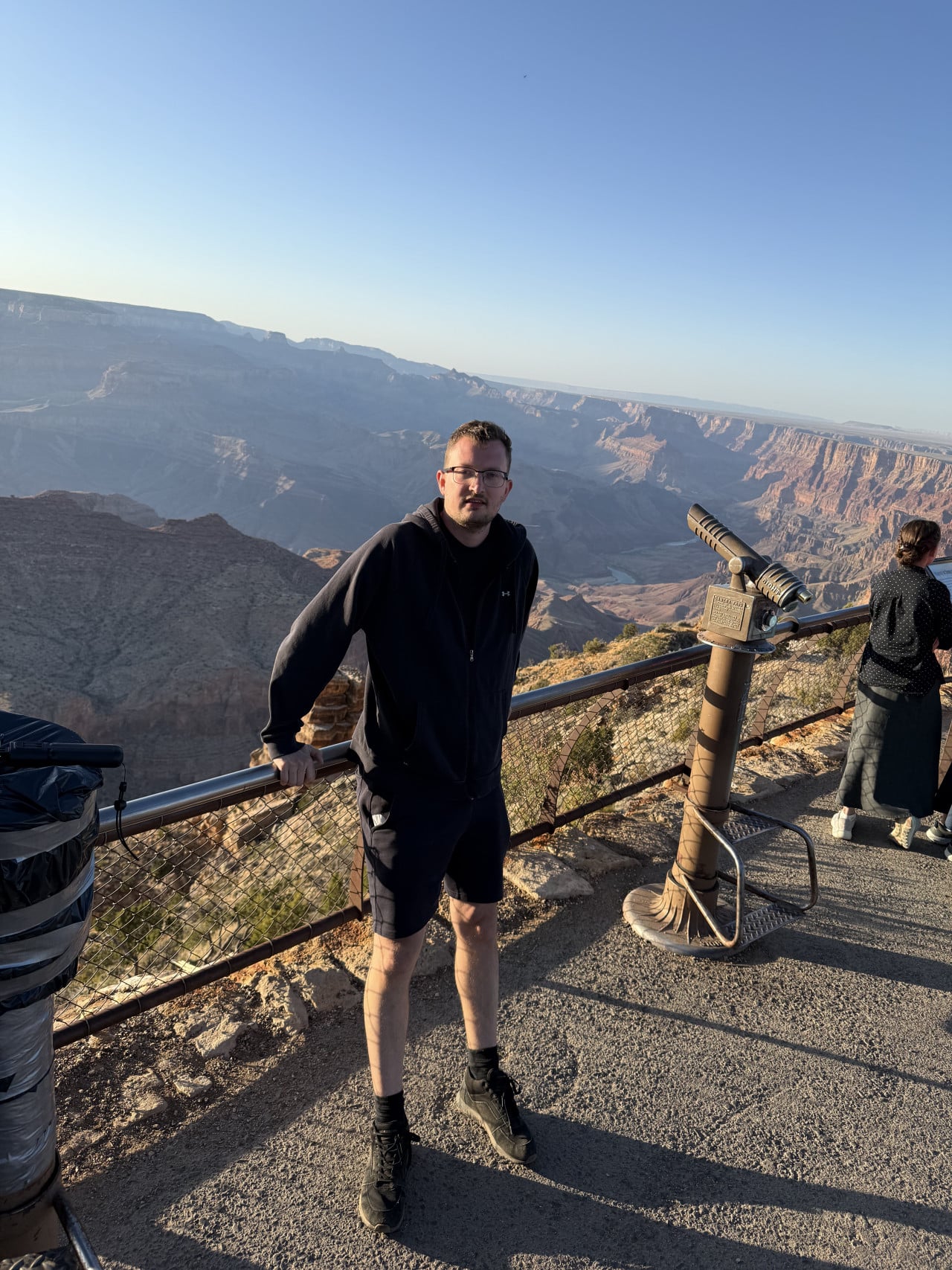
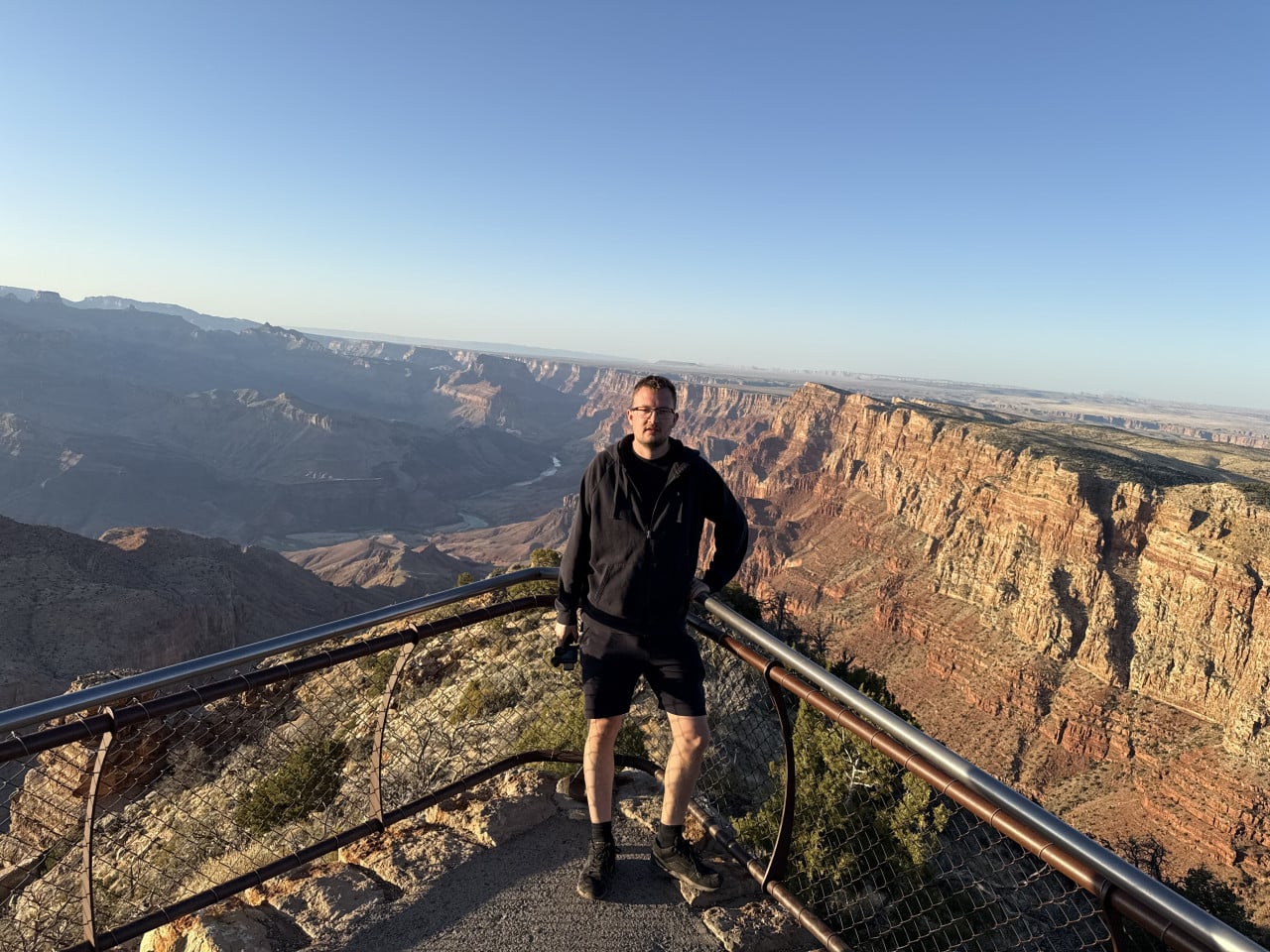
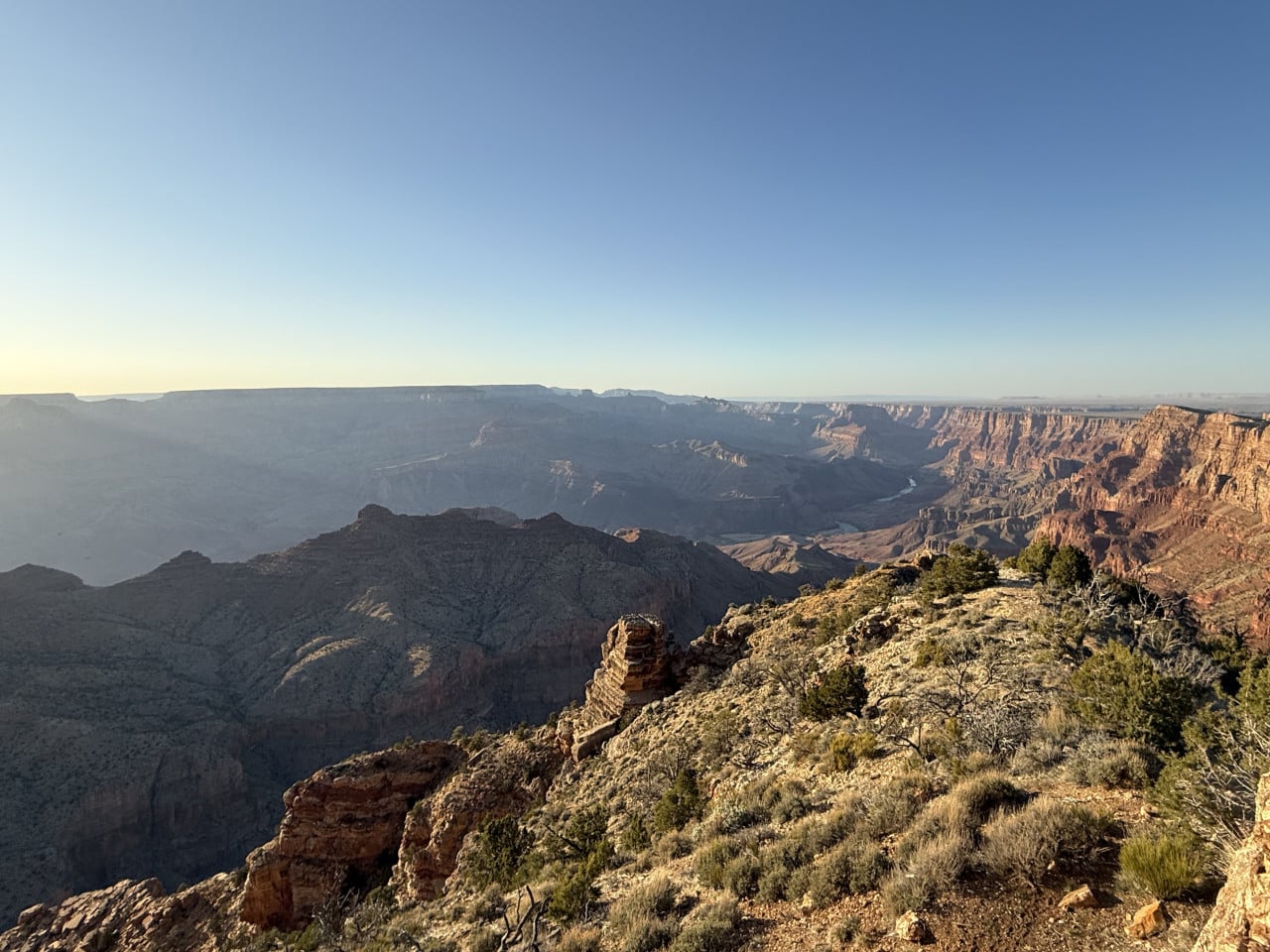
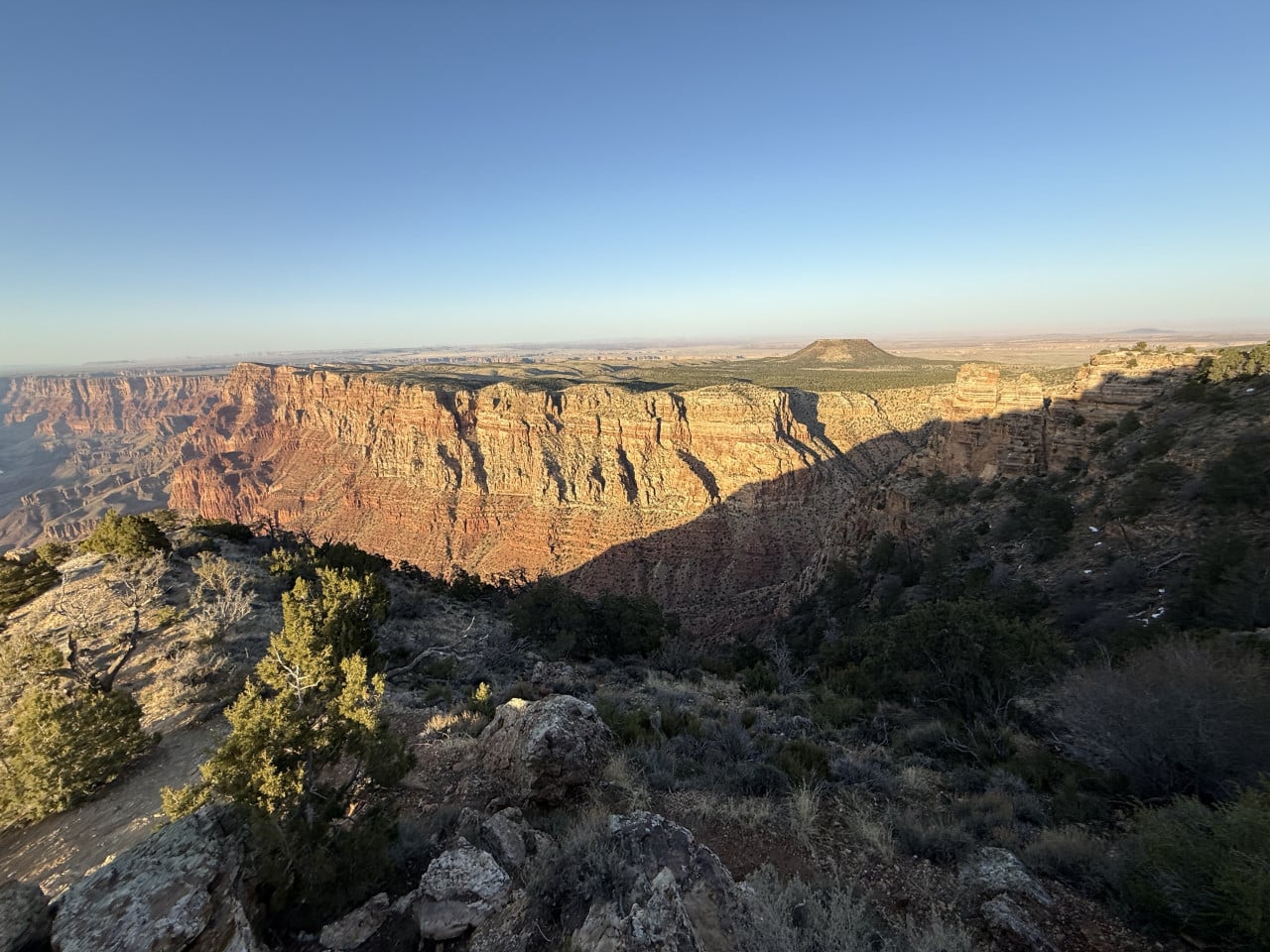
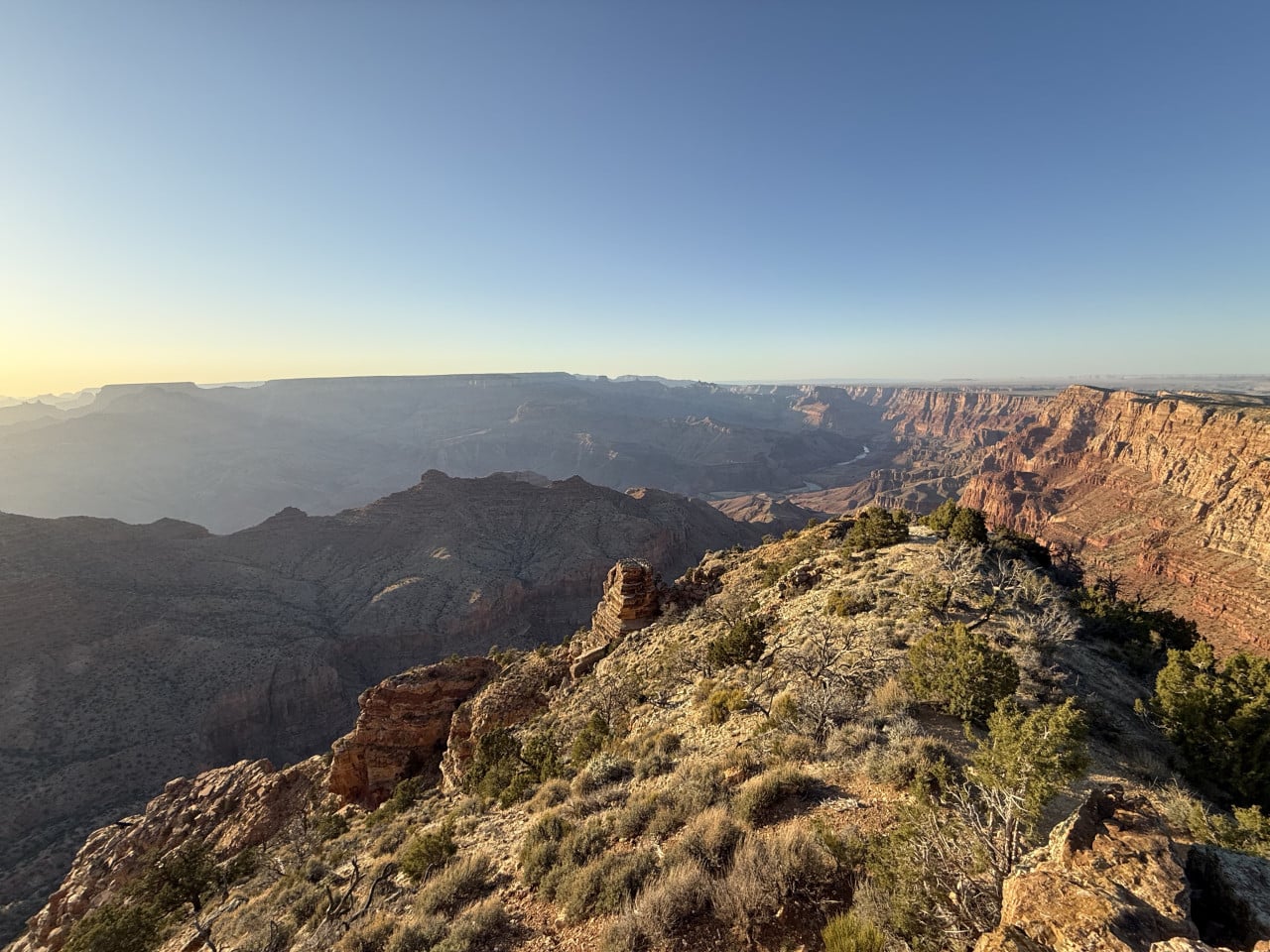
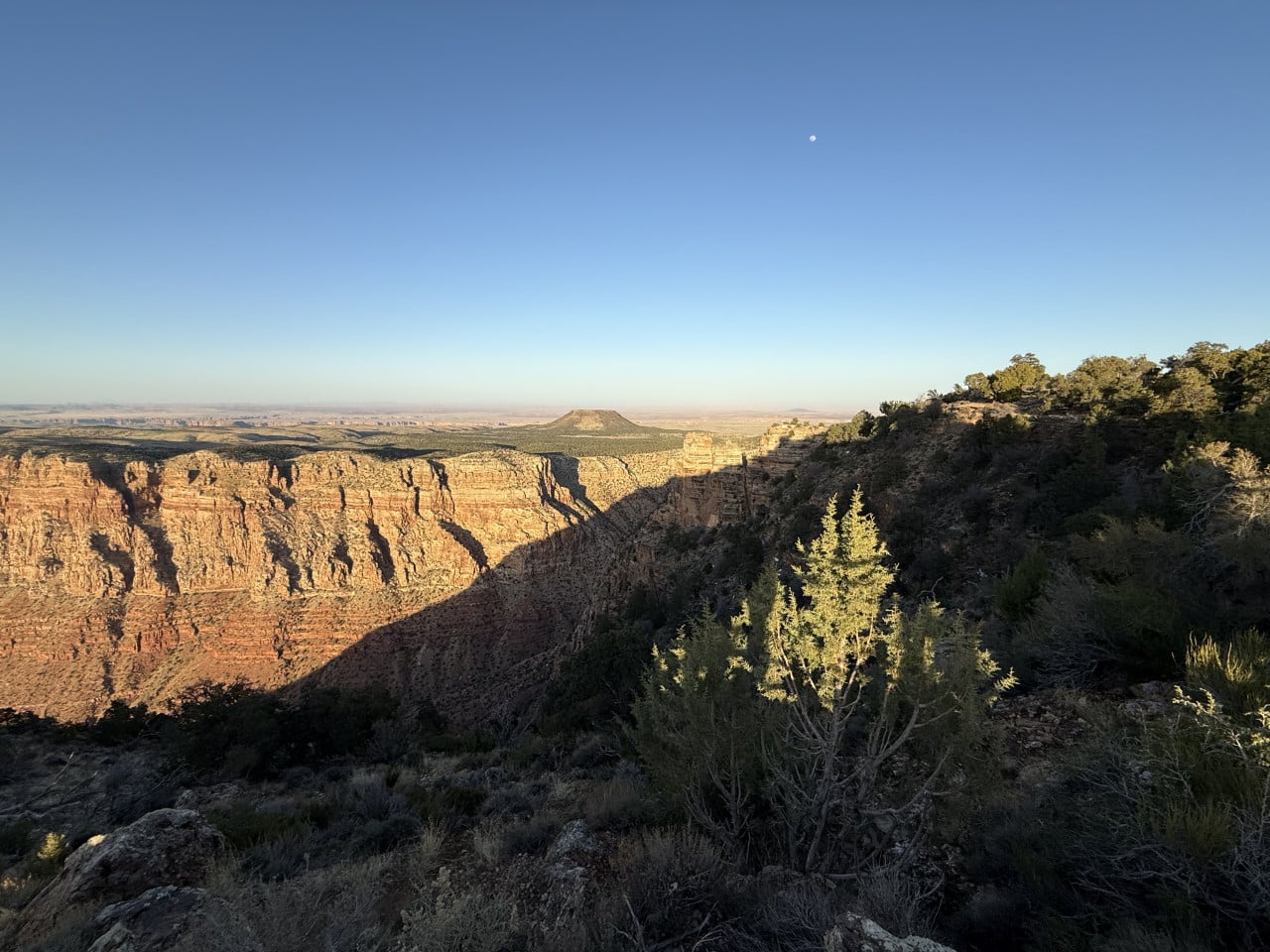
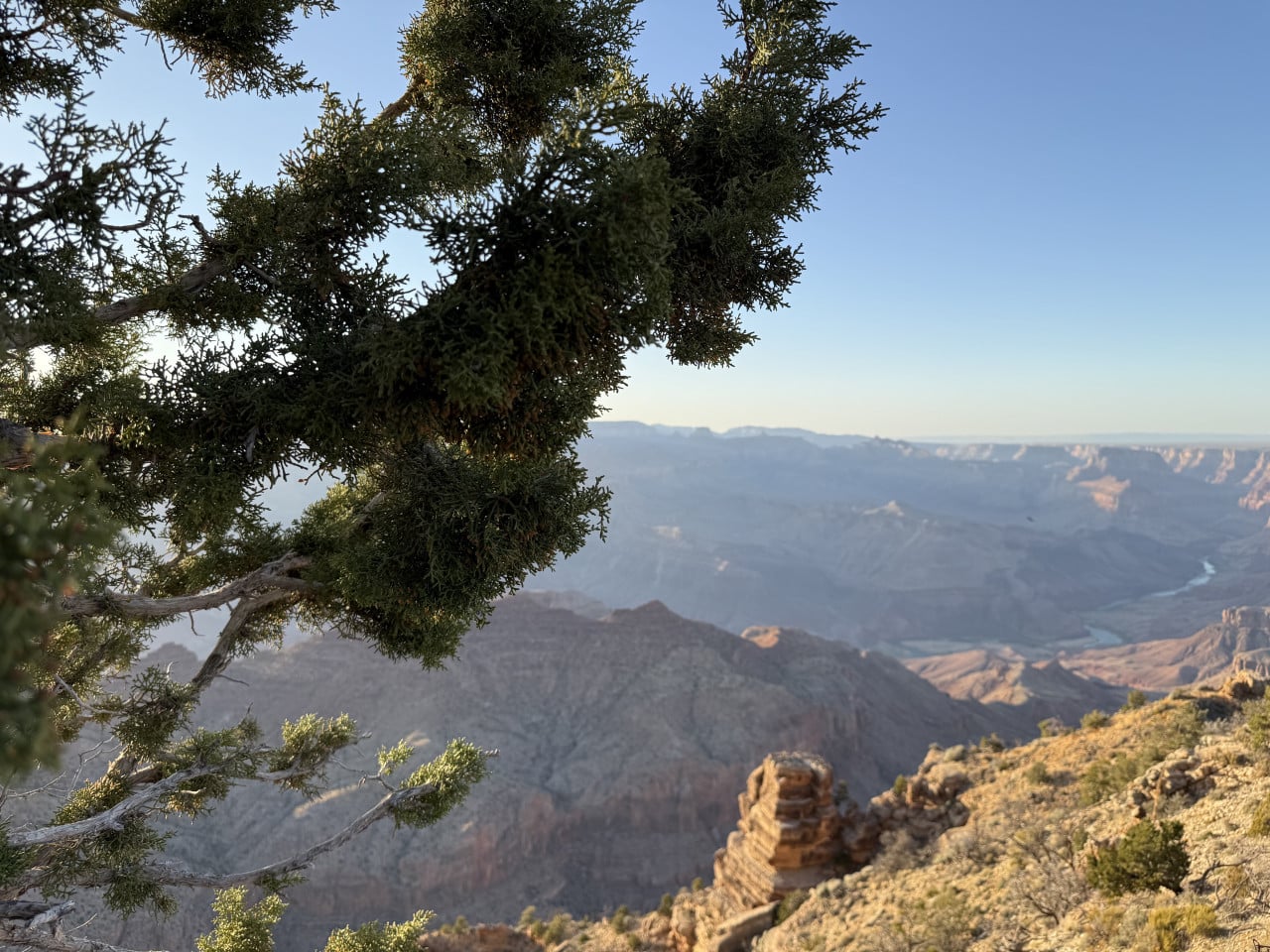
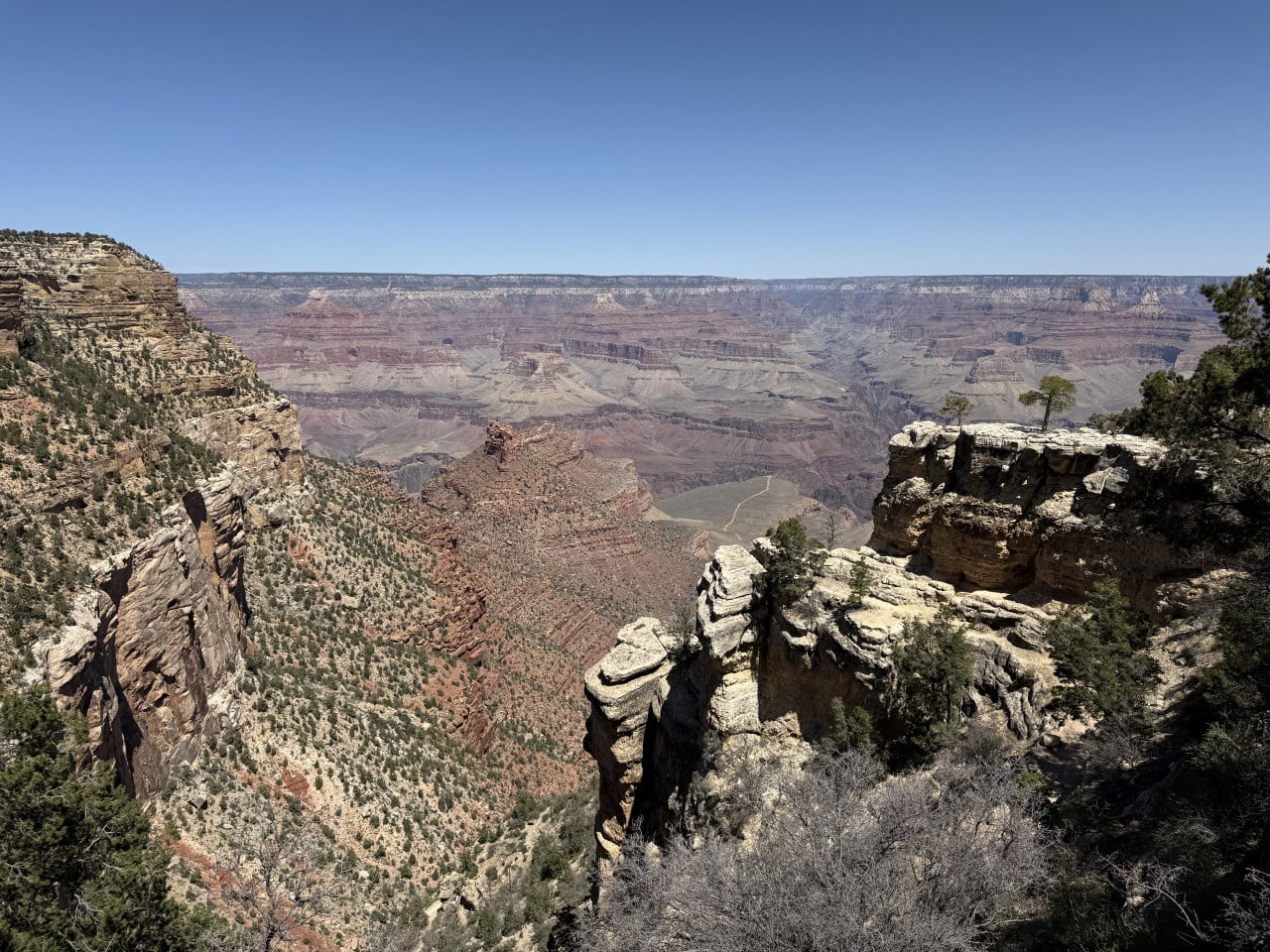
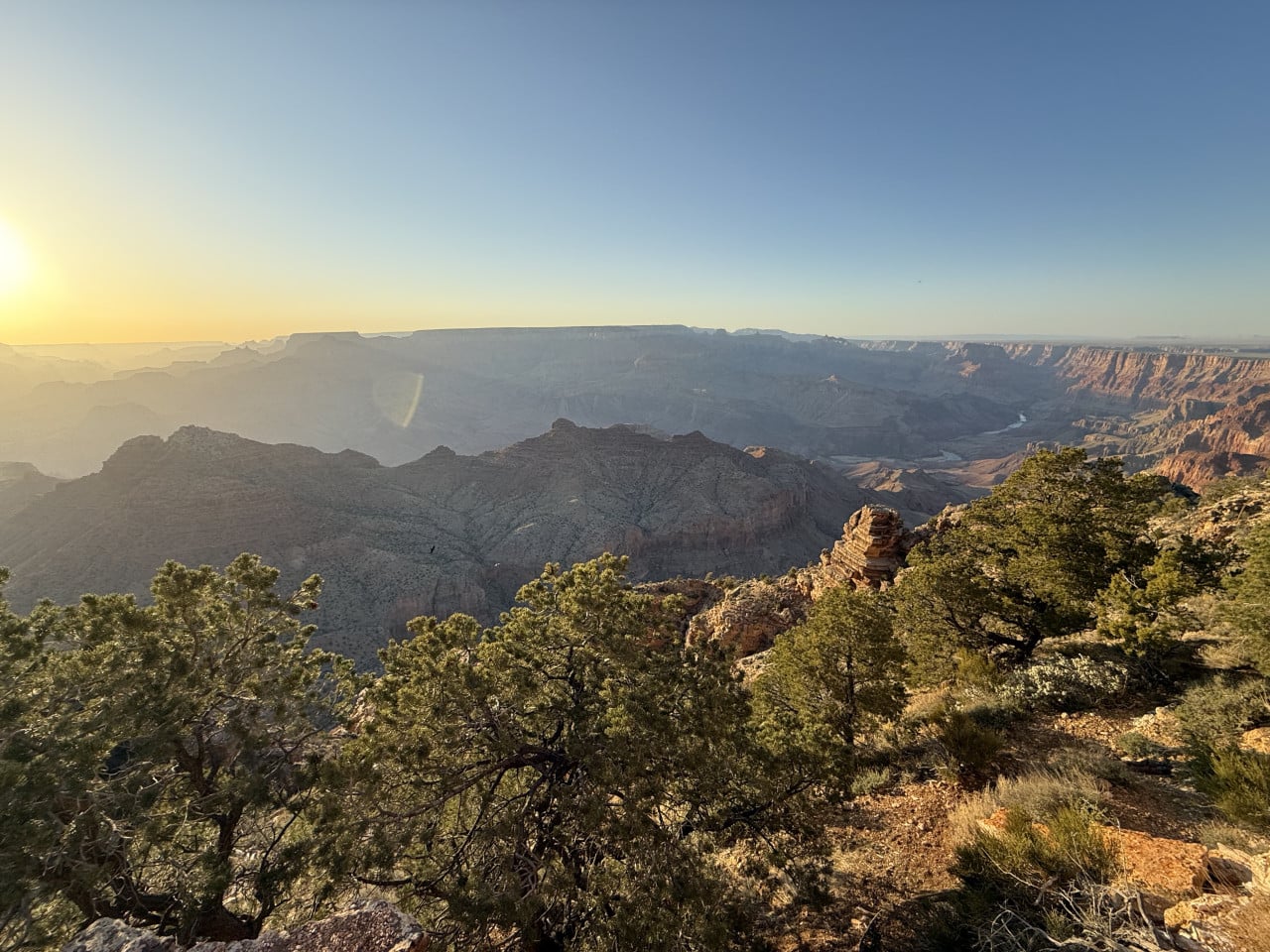
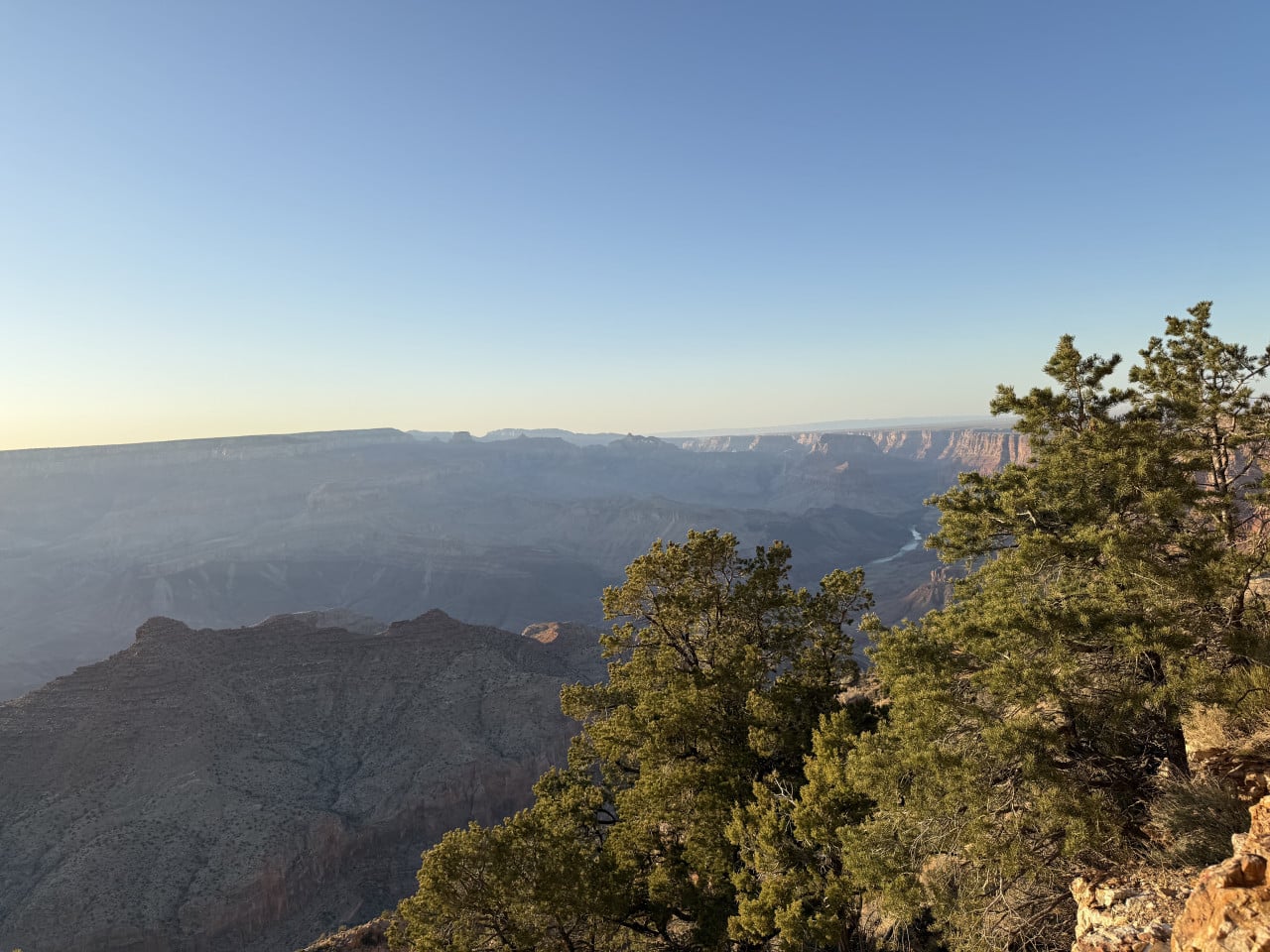
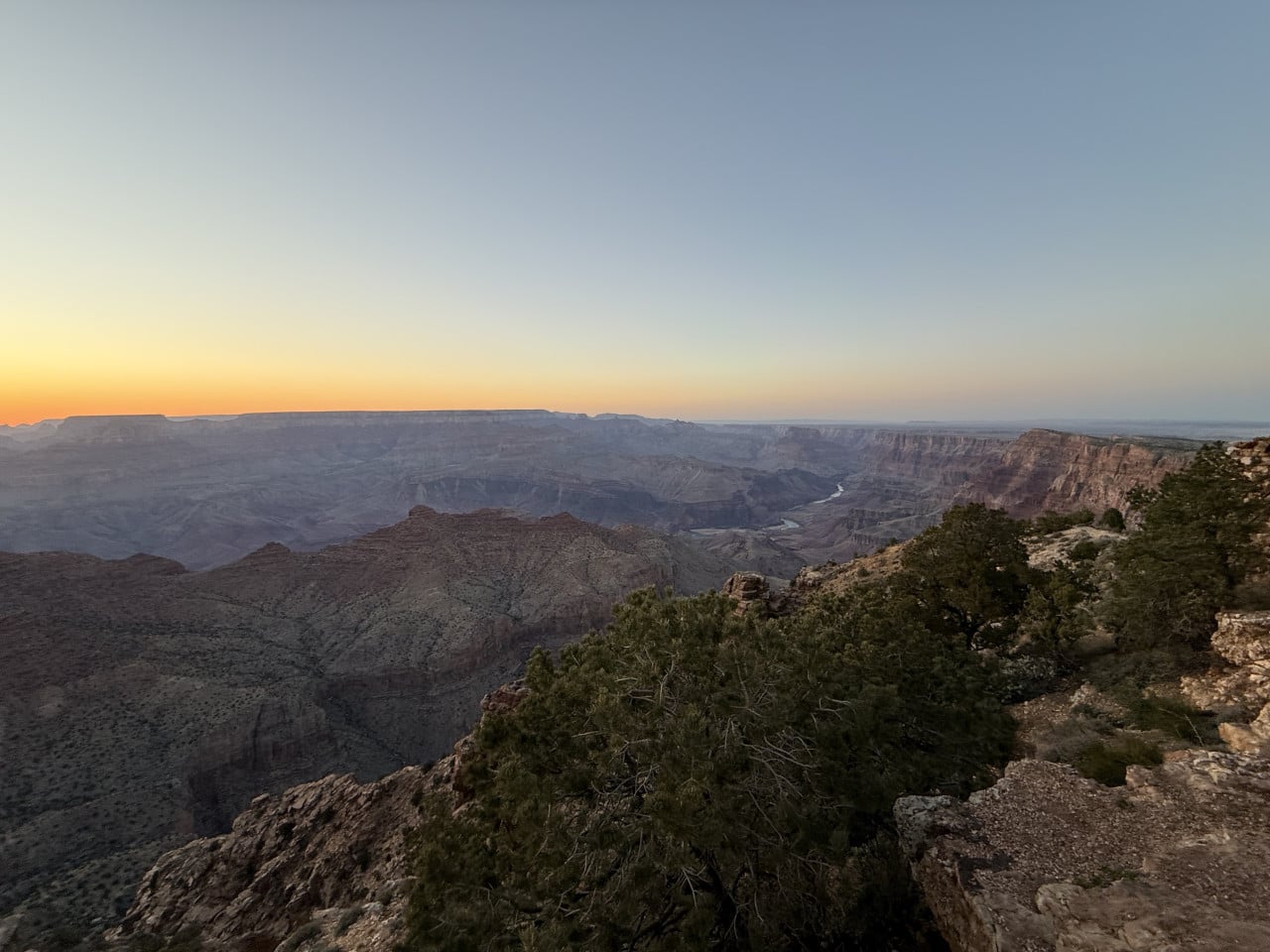
The view from here is absolutely breathtaking. You can see the layered canyon walls in every shade of red, orange, and brown, while far below, the Colorado River winds through the canyon—the same river that created all of this over millions of years. There were also informational signs describing the geological layers and several historical events, including tragedies that occurred here.
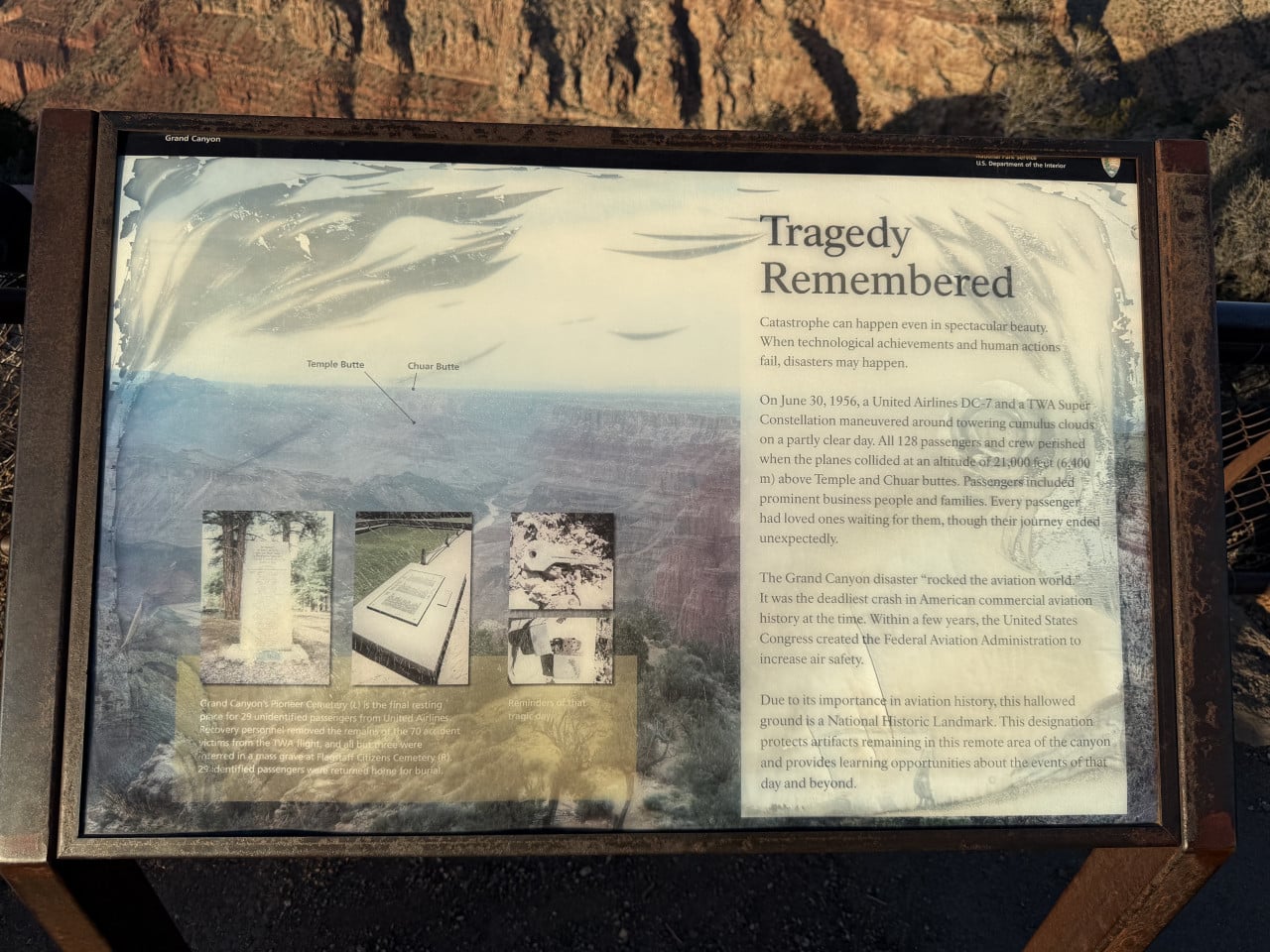
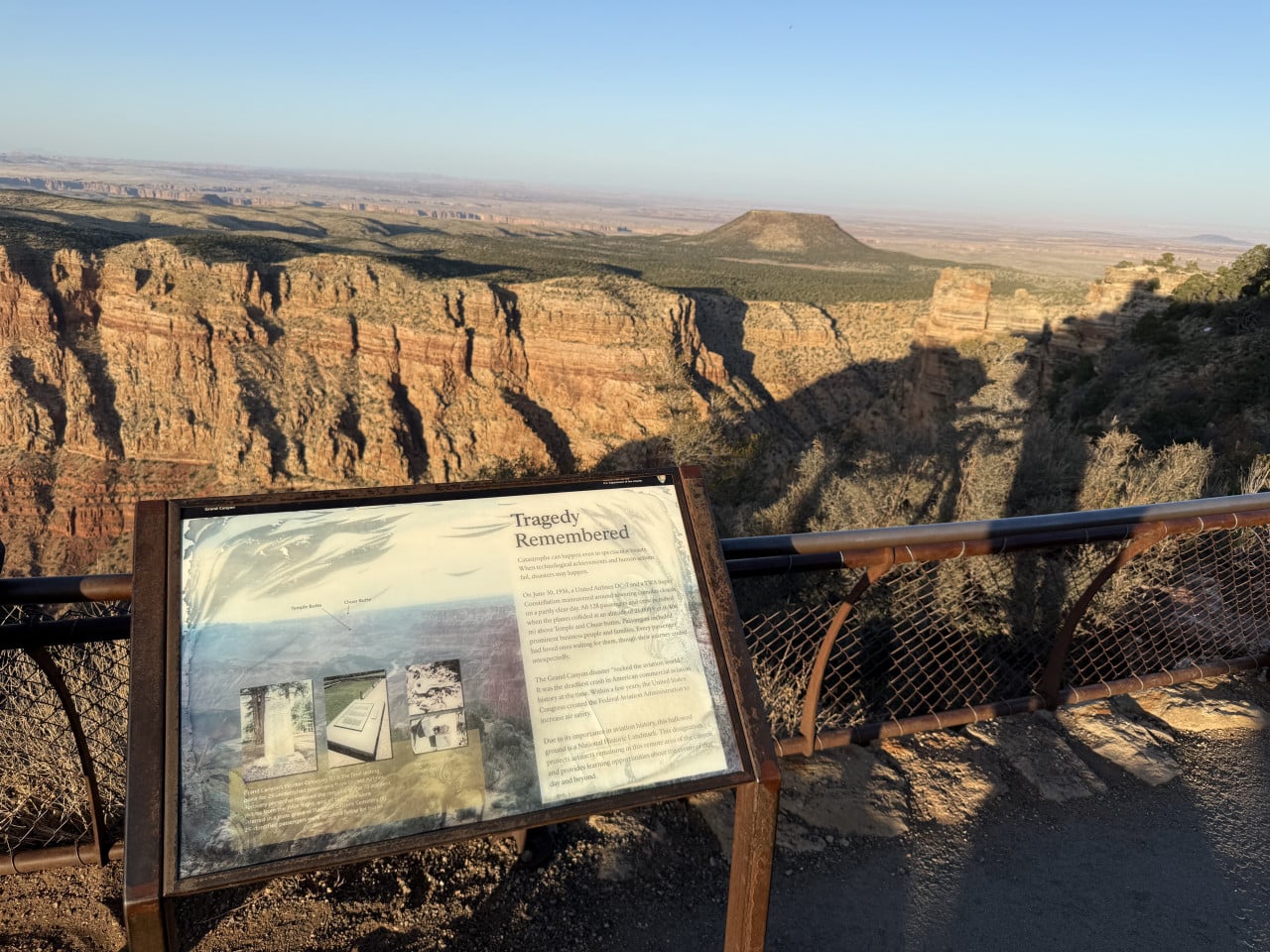
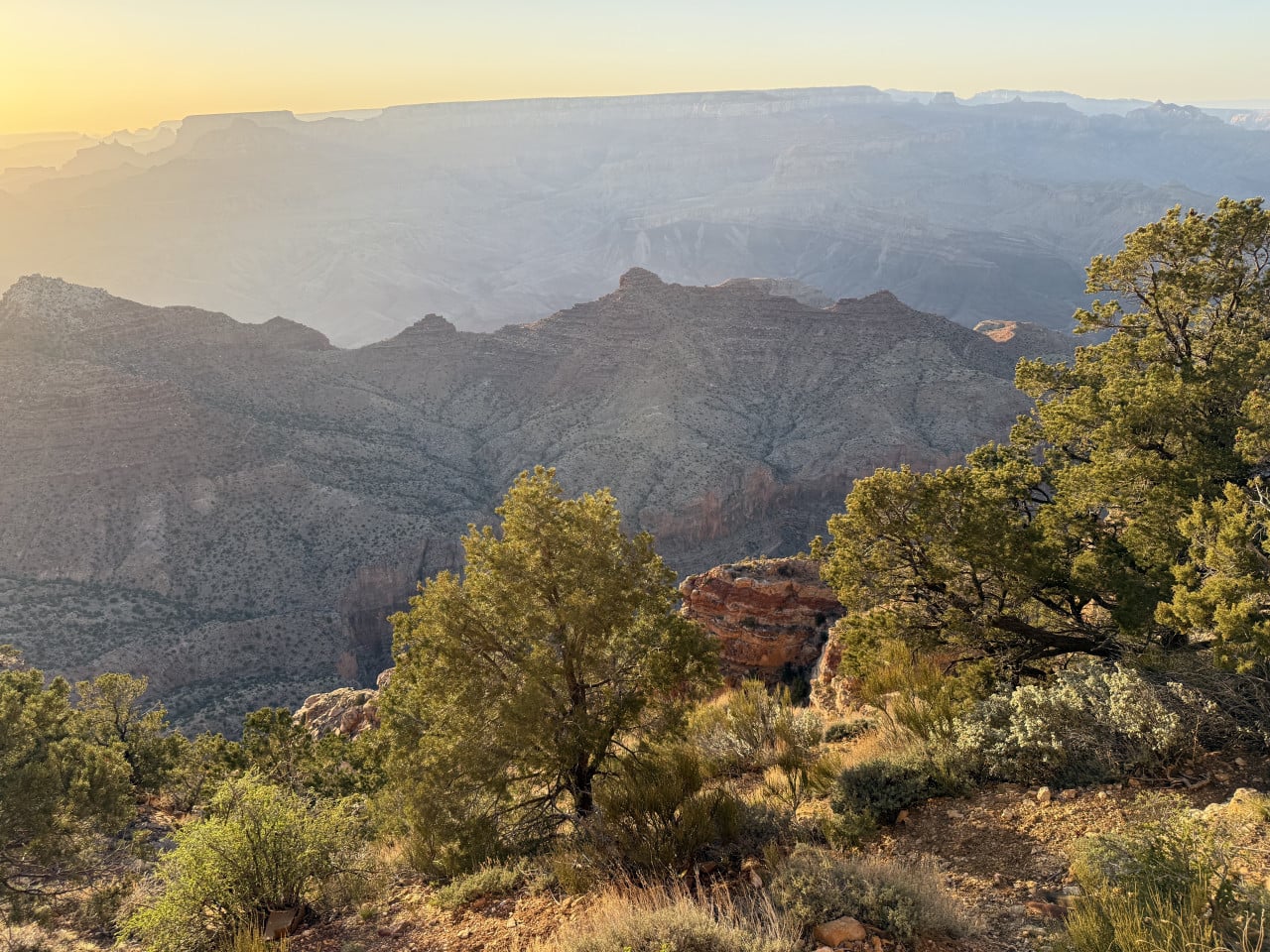
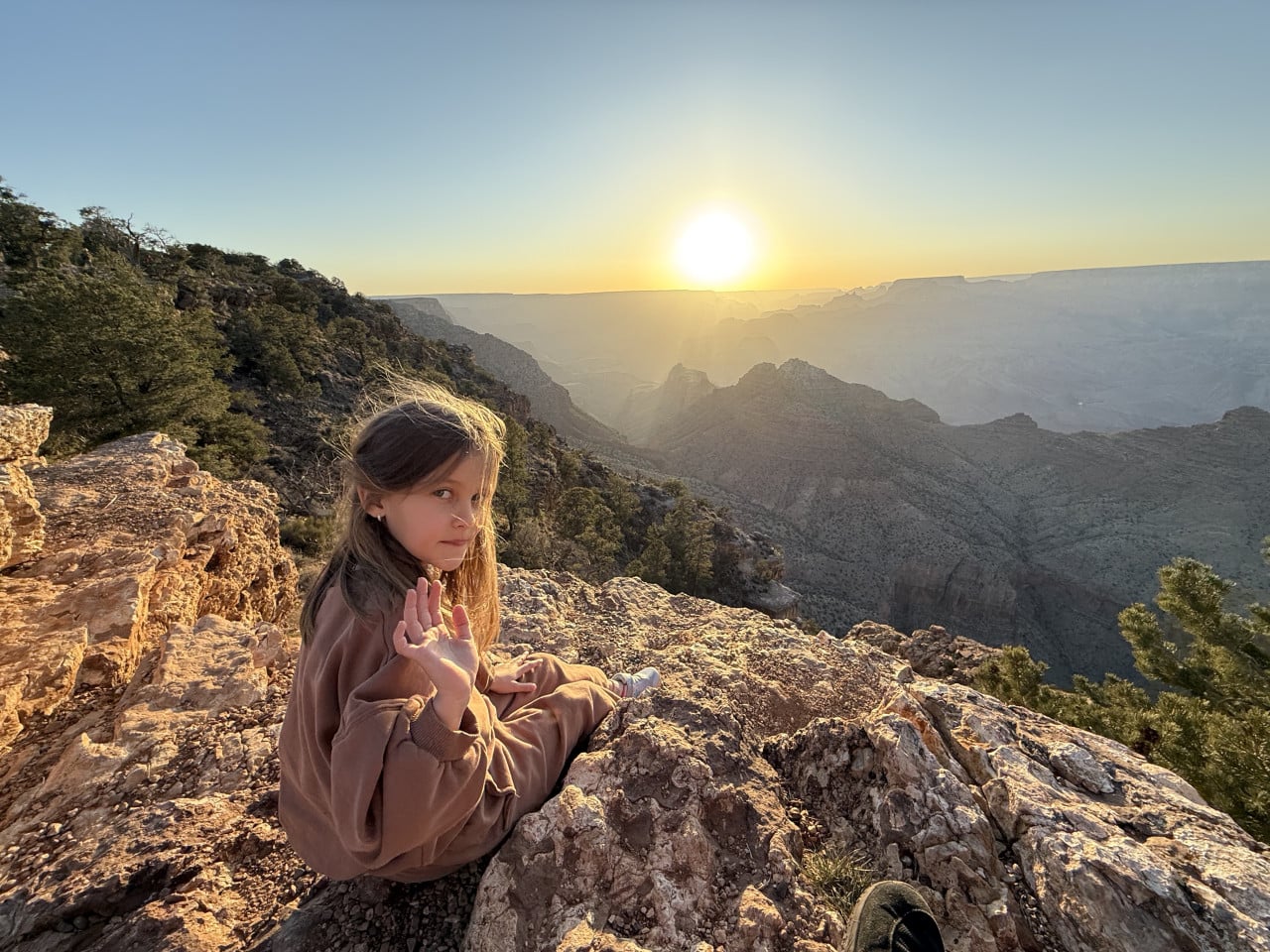
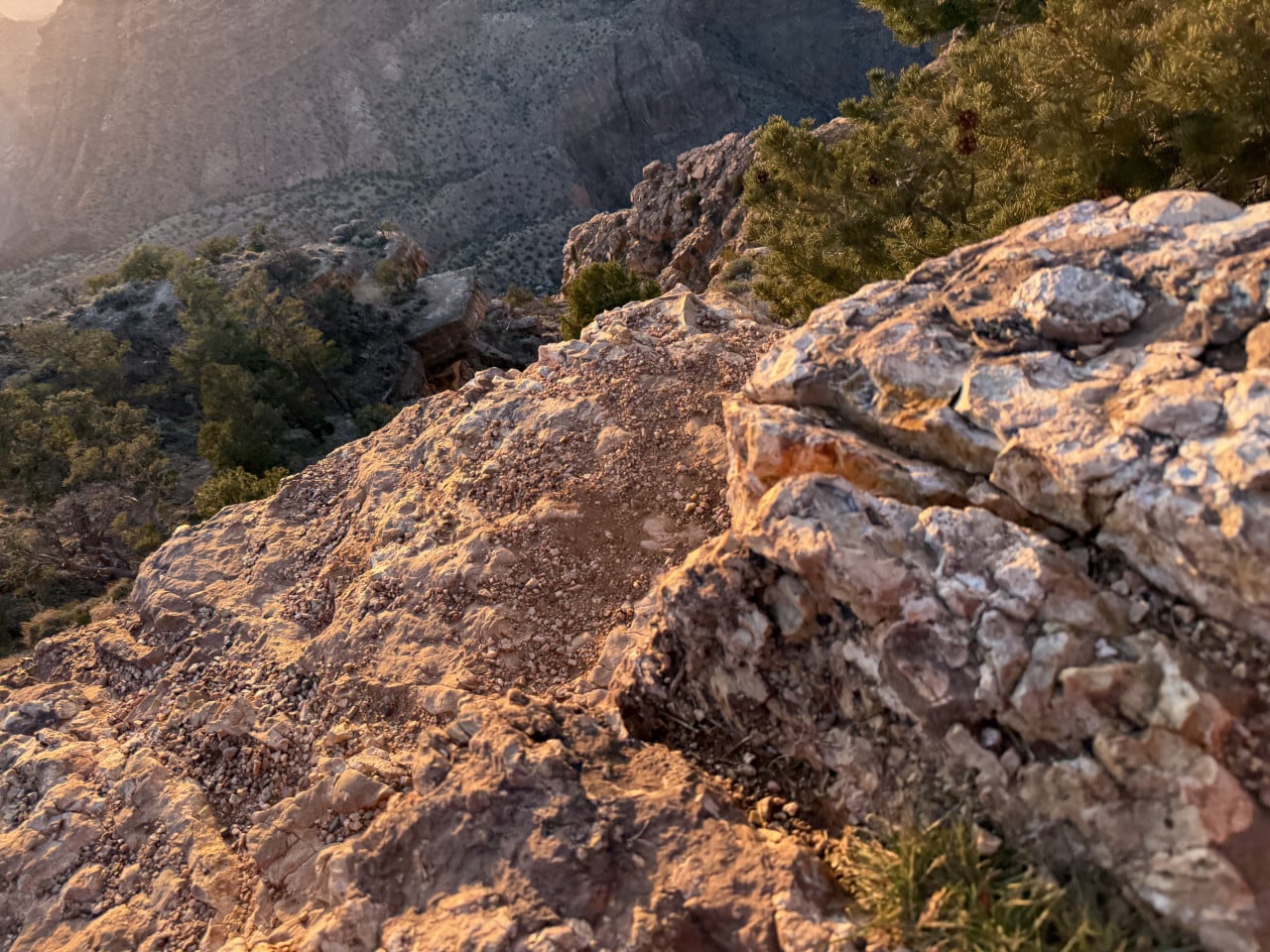
Then we headed farther to the left, and this is where things became truly adventurous. We reached a place where the paved path ends and the natural rocky rim begins—no railing, no fences, just bare rock and hundreds of meters of open air below you before the canyon floor.
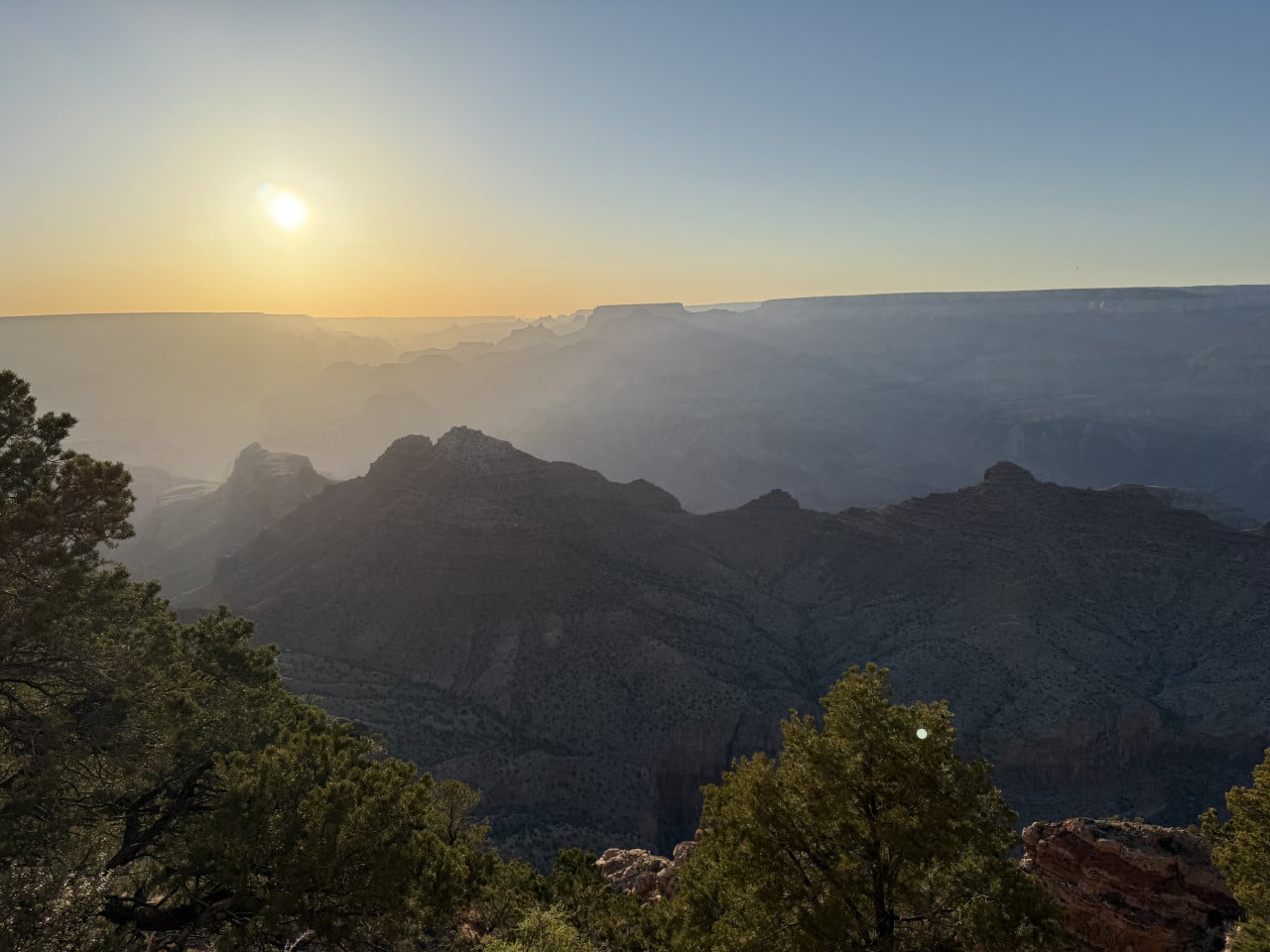
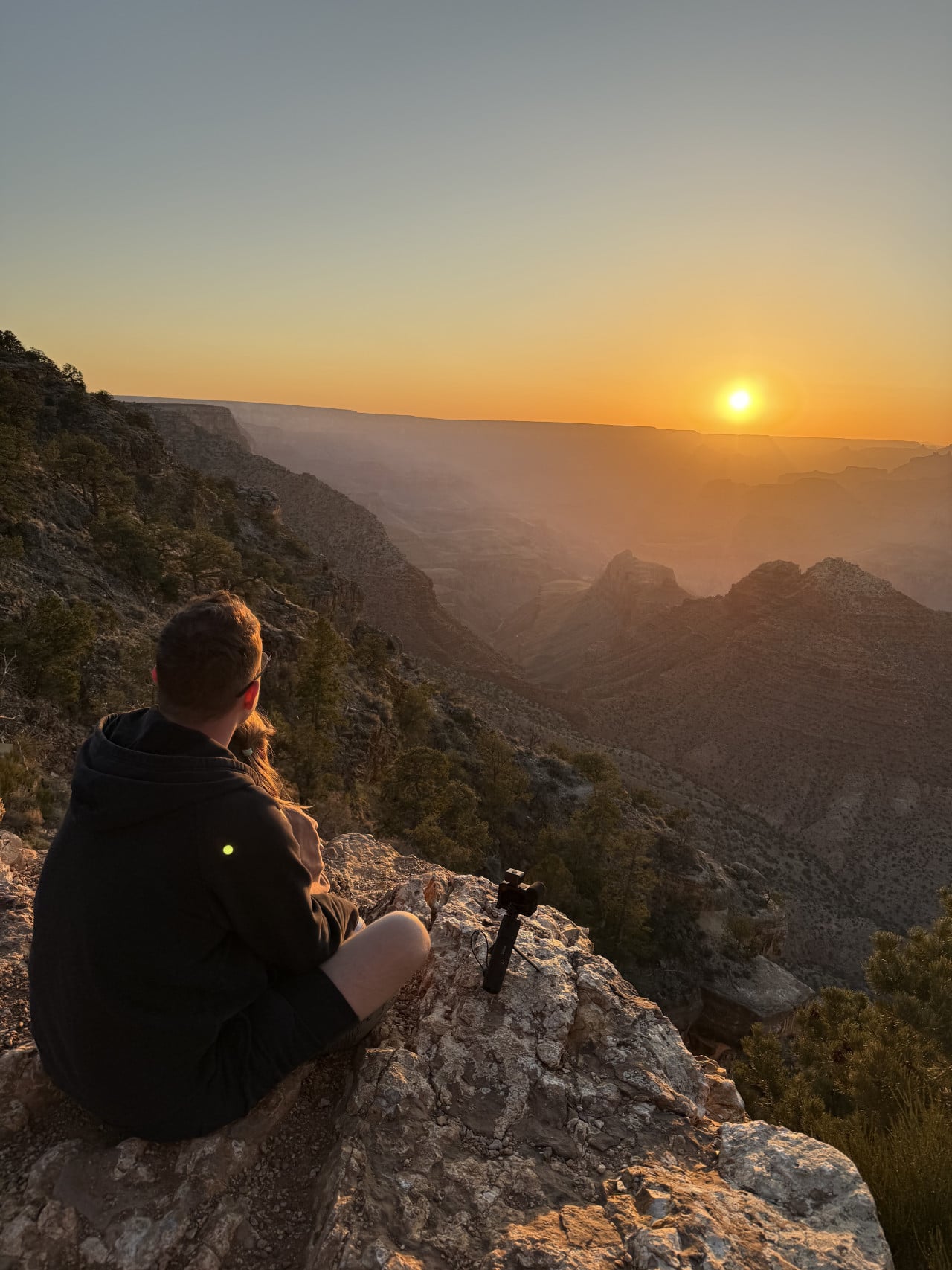
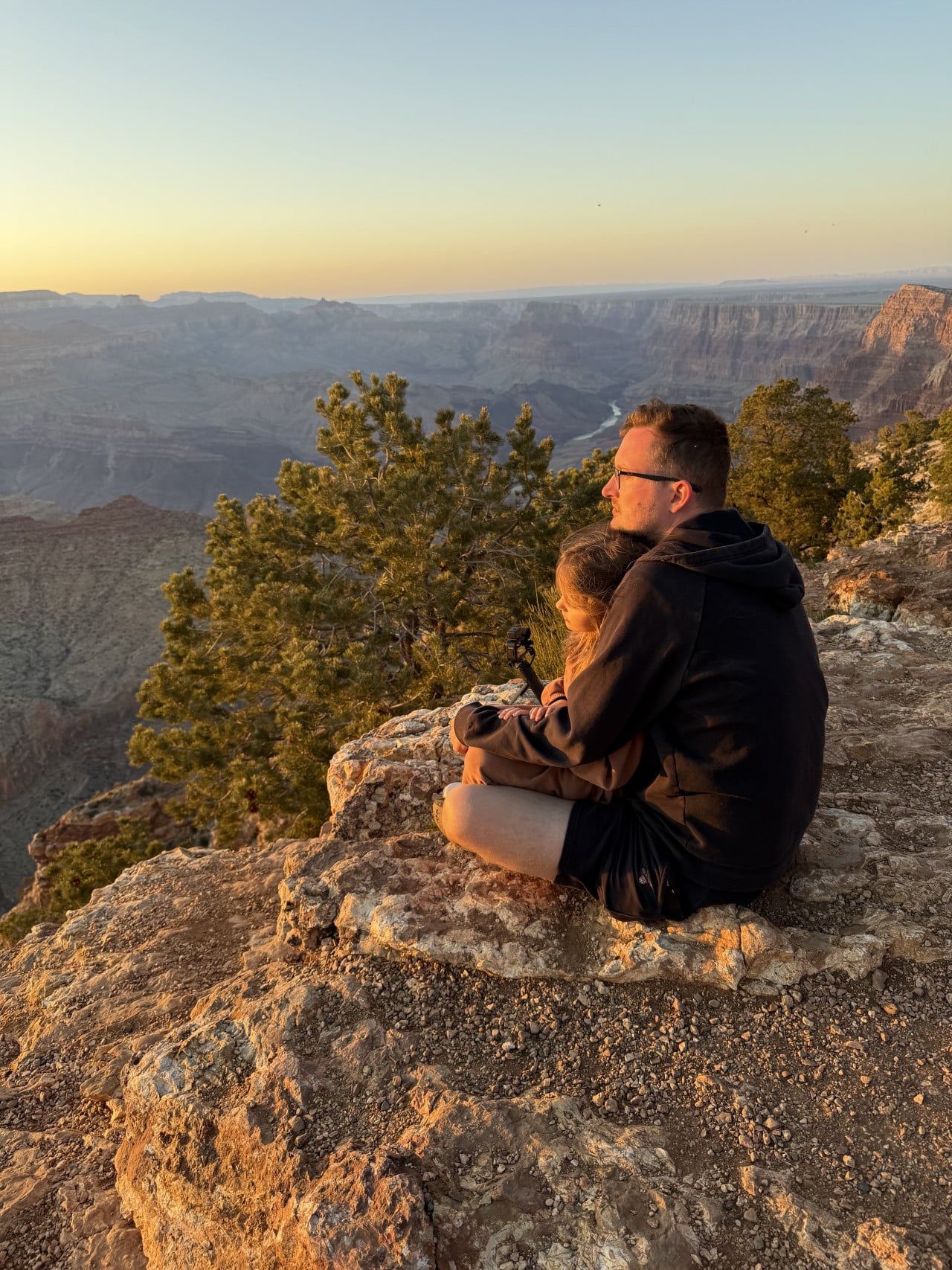
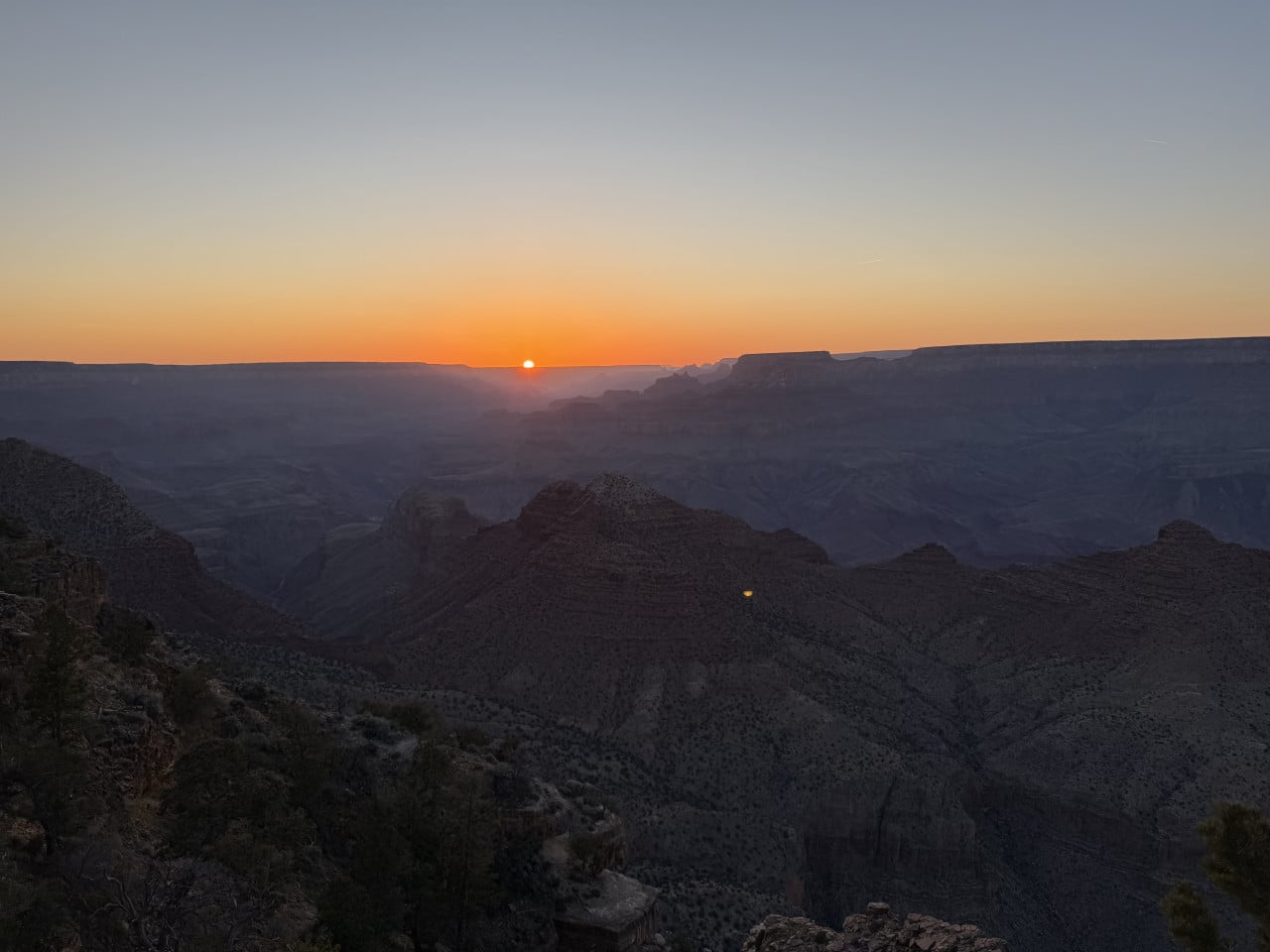
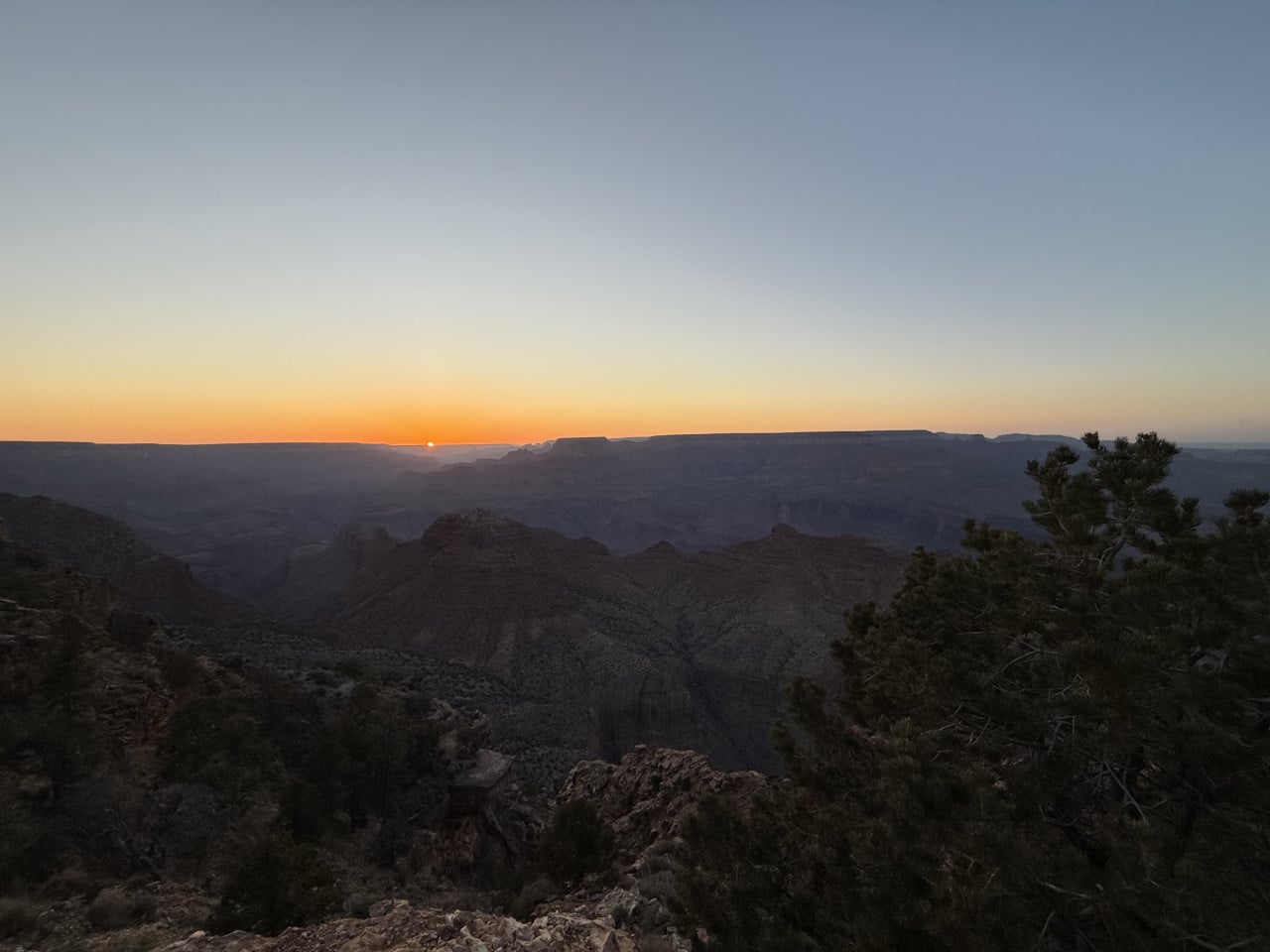
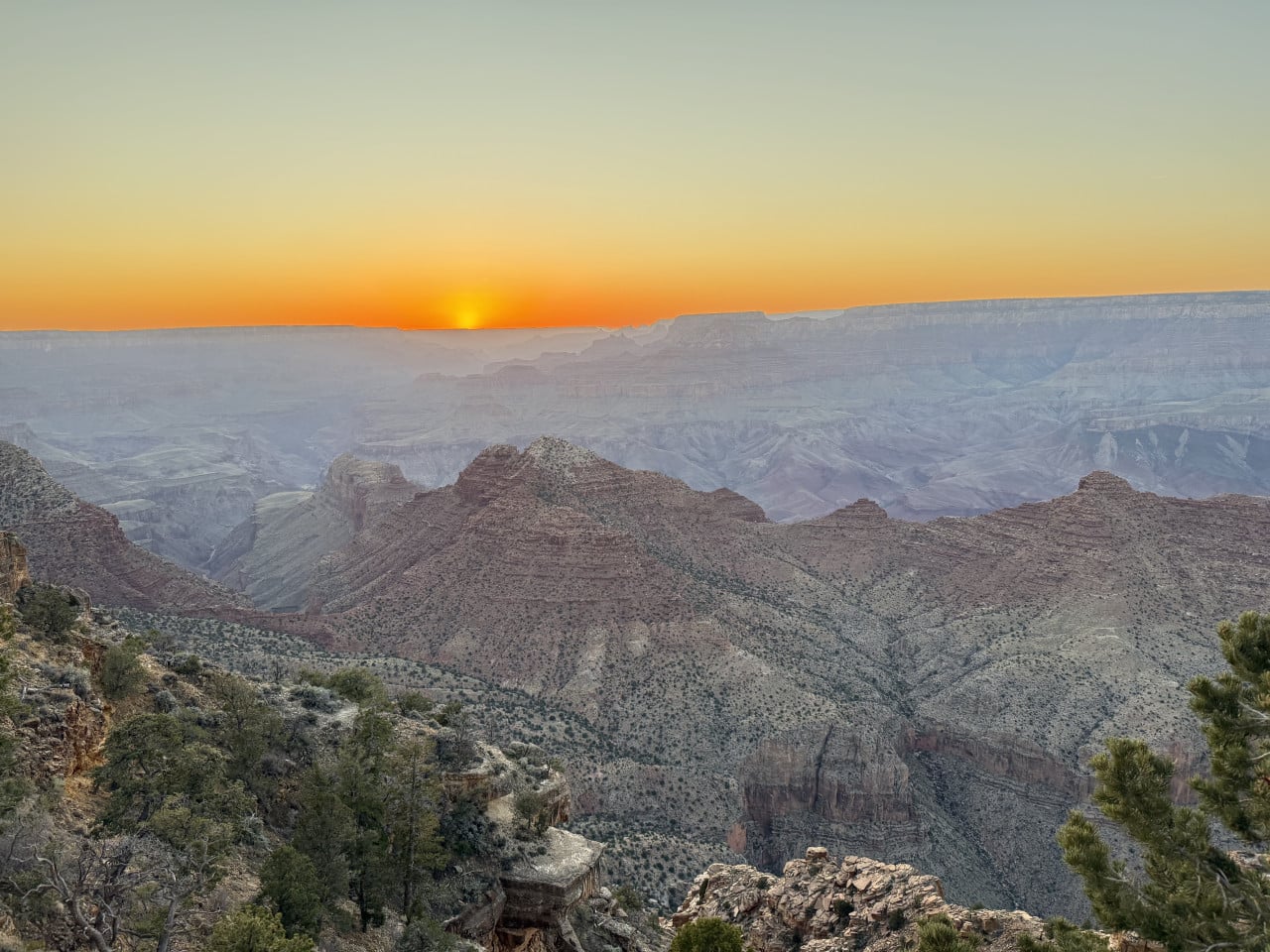
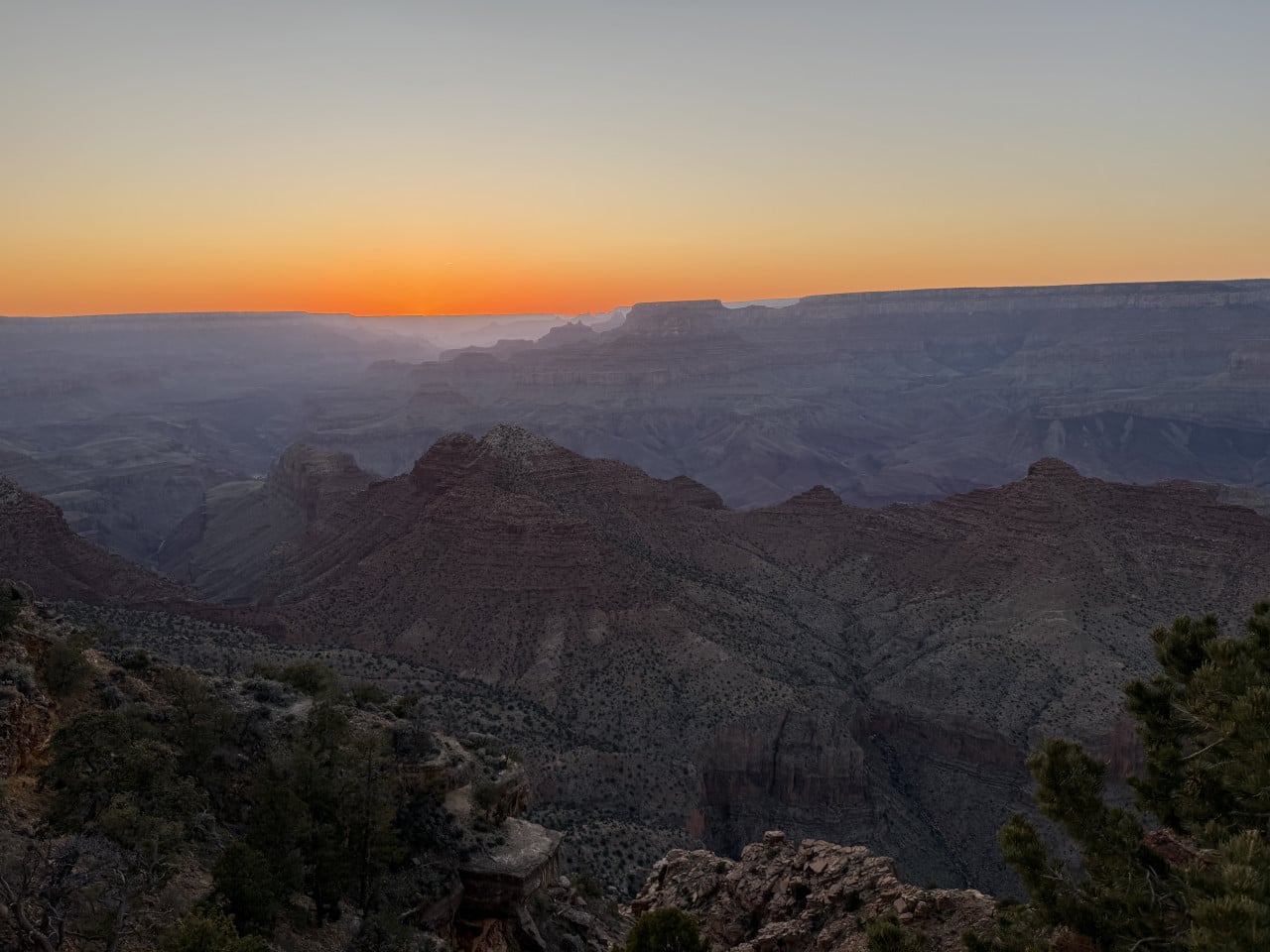
We walked around the entire area, including the tower, and eventually sat down right on the edge of the rock. The vast valley of the Grand Canyon lay beneath our feet. And this is where we waited for sunset.
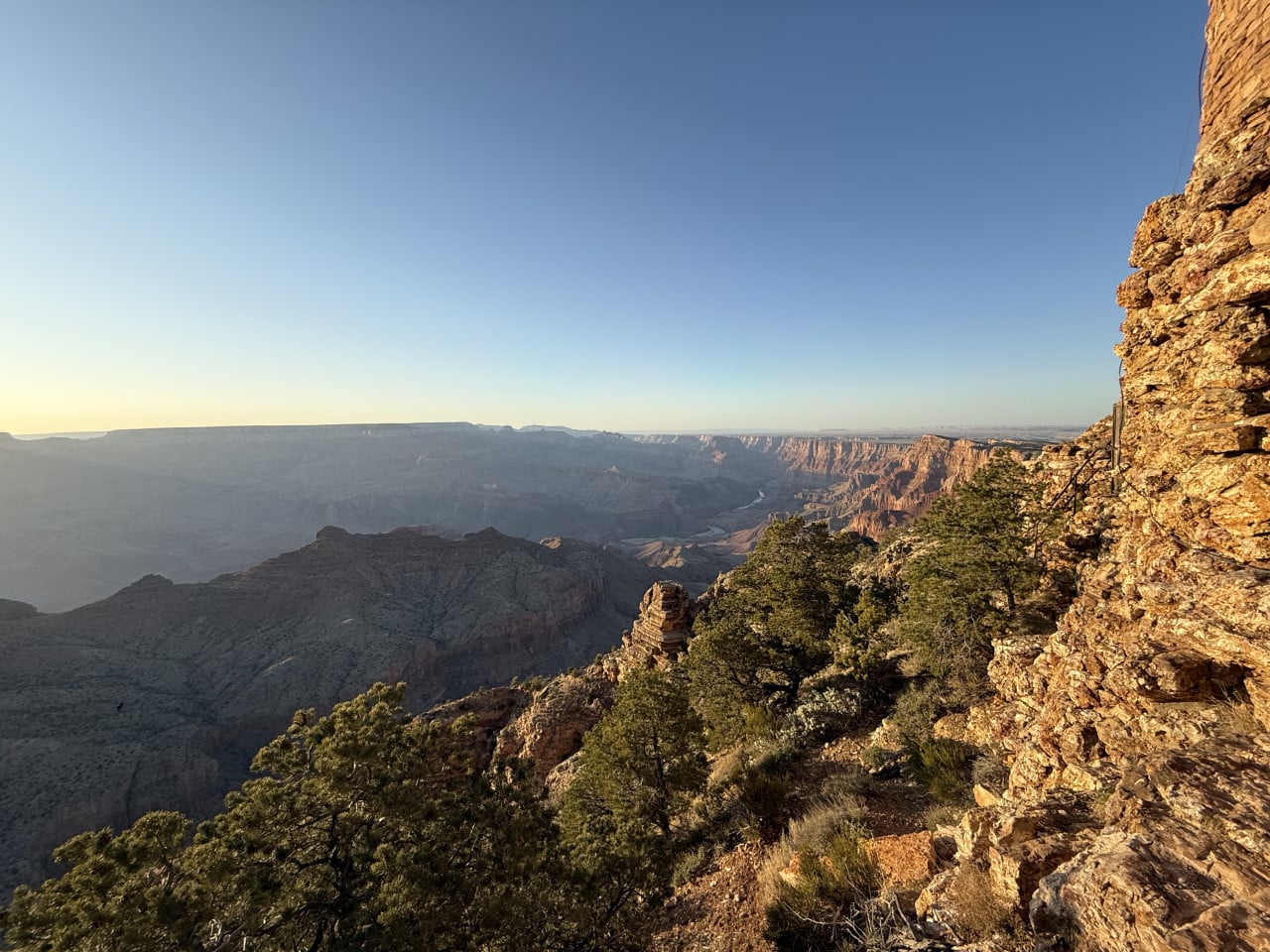
A sunset beyond description
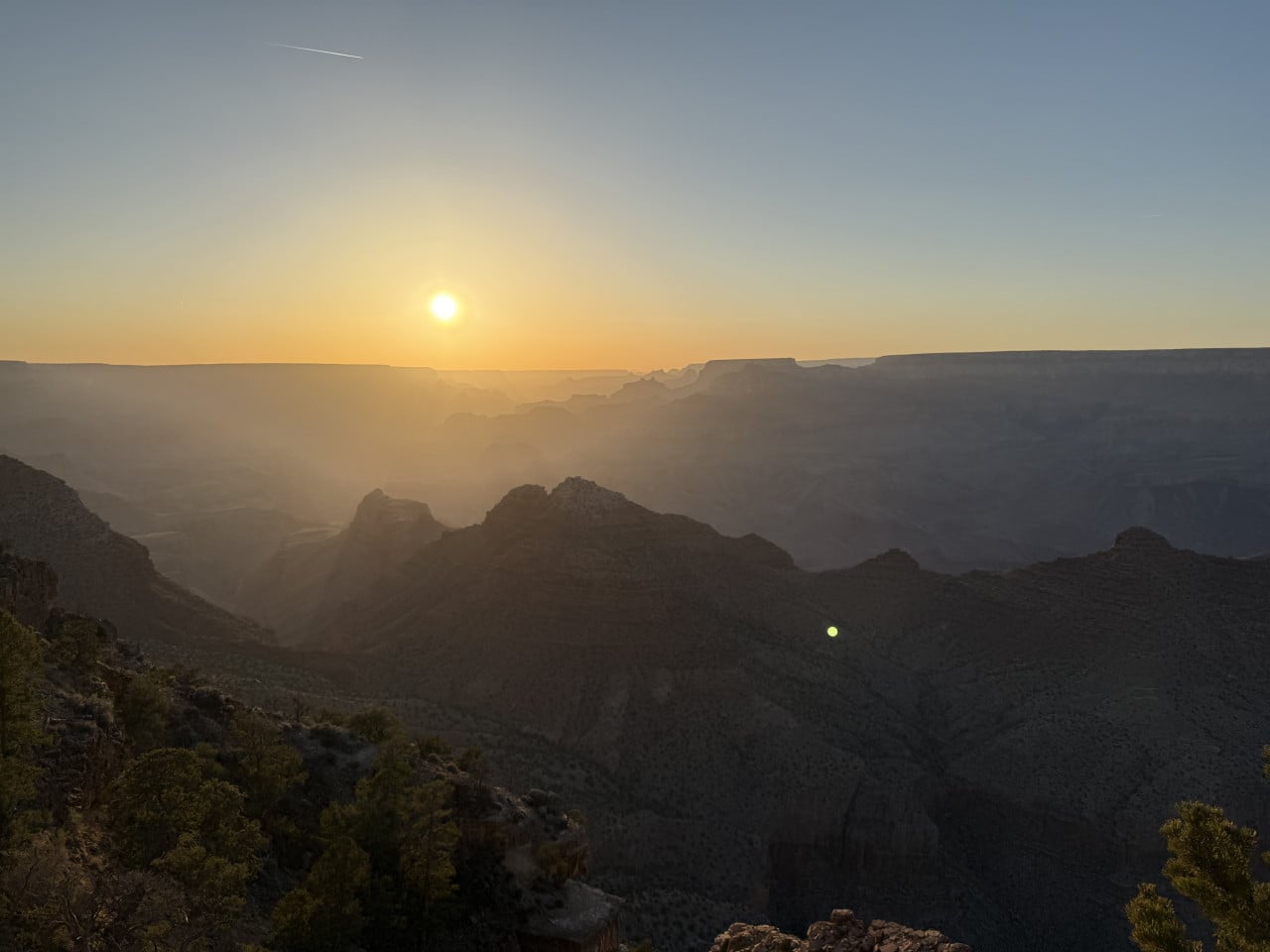
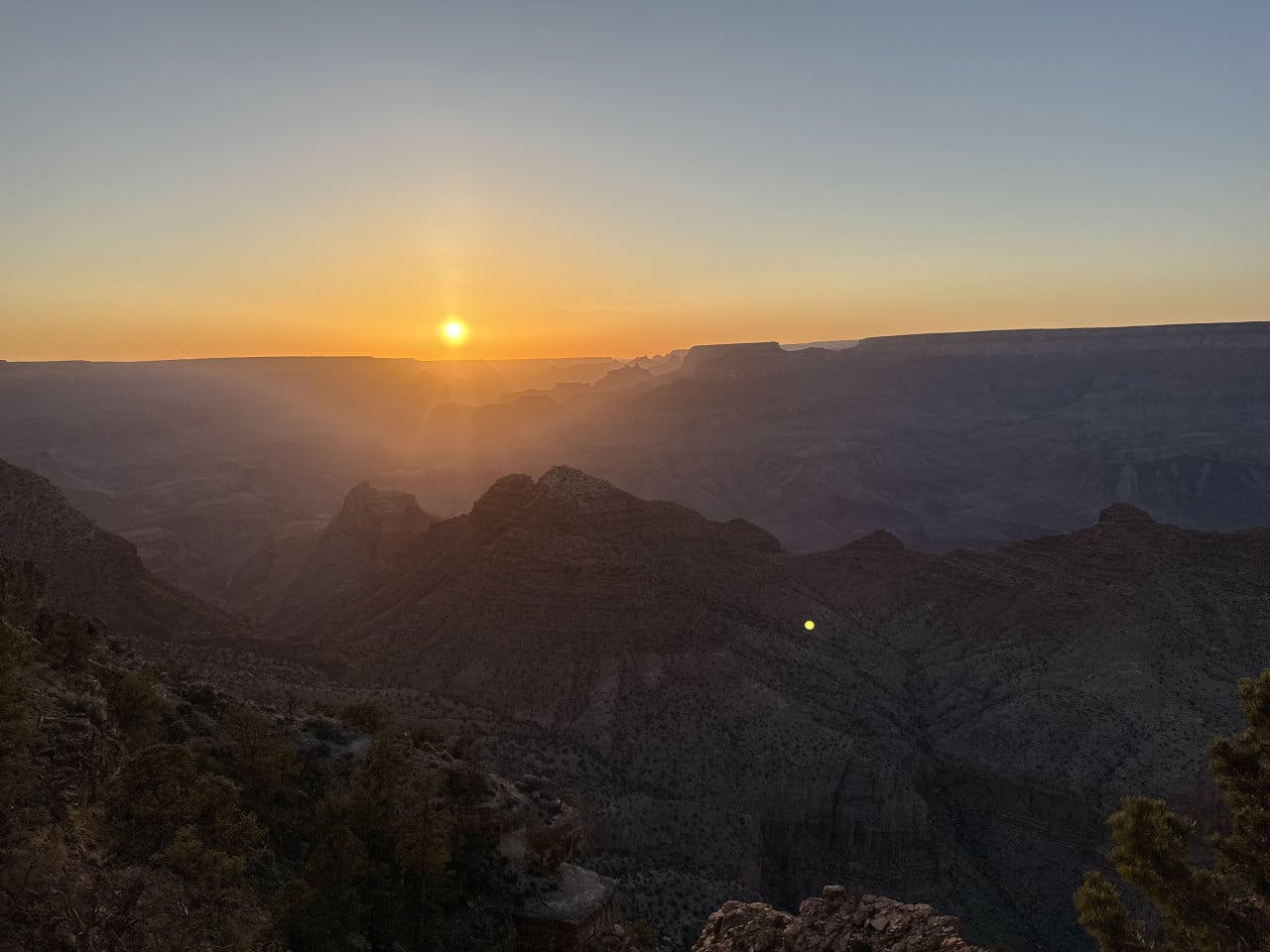
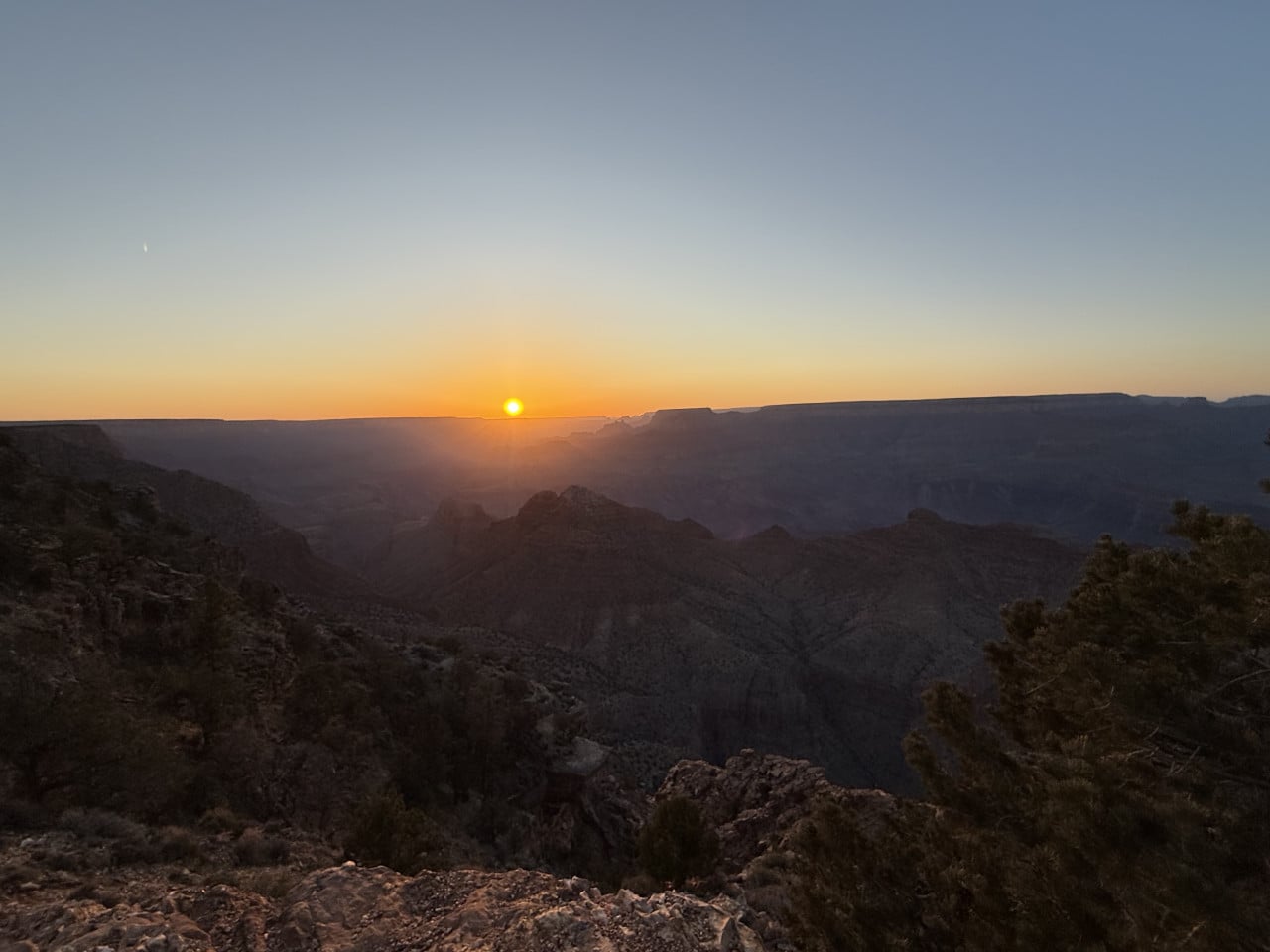
This sunset is the main reason I keep coming back here.
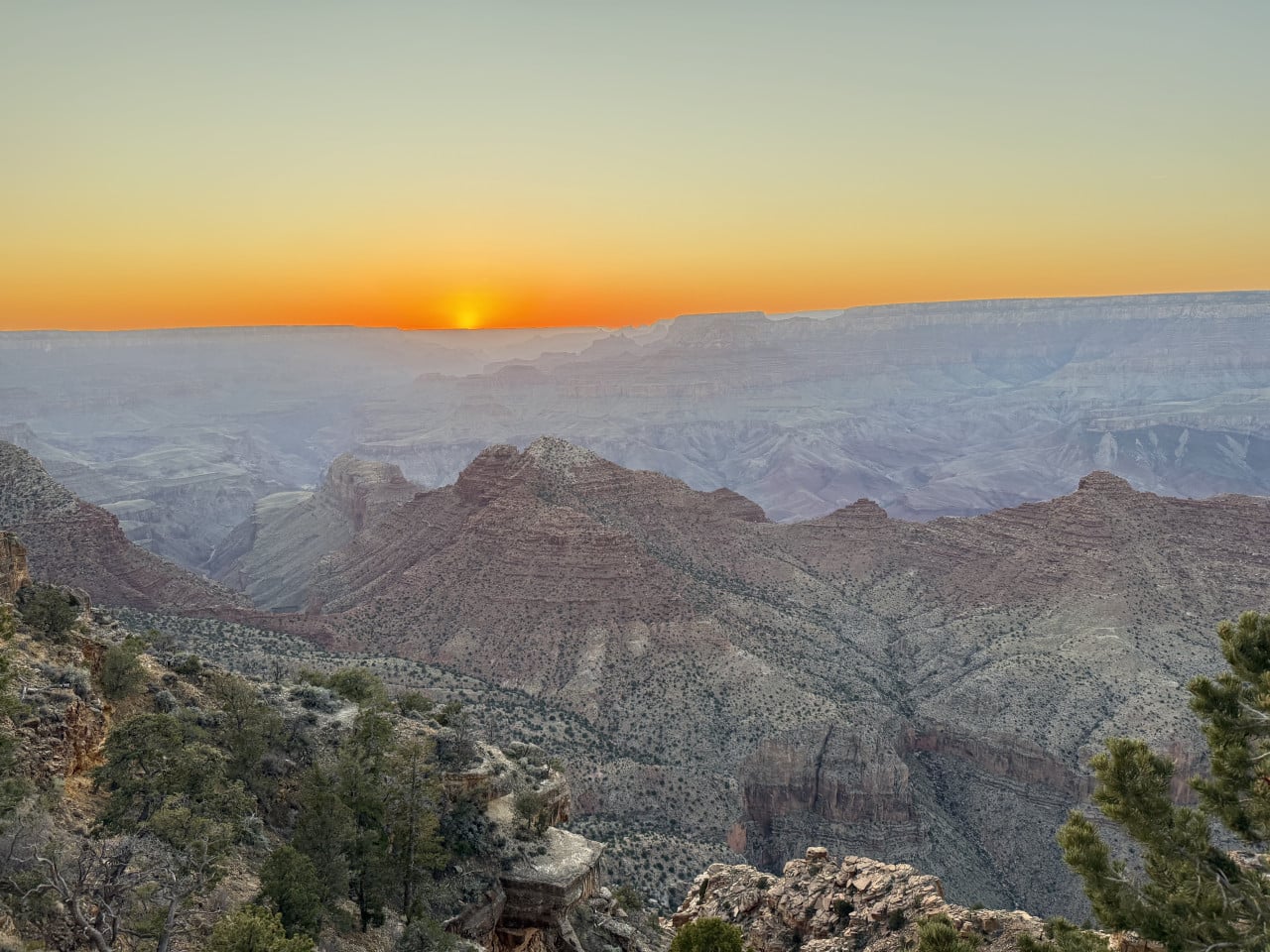
My daughter and I sat on the edge of the rock and watched as the sun slowly descended toward the horizon. The entire canyon gradually changed colors—from vivid reds and oranges through soft pinks to deep purples. The shadows lengthened, the rock layers faded one by one, and the entire immense chasm slowly sank into twilight.
It’s one of those moments when you simply remain silent because no words could ever do it justice.
What to watch out for: clothing and temperatures
One thing that surprised me on my very first visit, and will probably surprise everyone, is the temperature difference before and after sunset. Desert View is located at an elevation of over 2,260 meters, which is considerably higher than you might expect for a place in the Arizona desert.
We visited in April, and during the day, the weather was pleasant enough for shorts and a hoodie. But as soon as the sun set, the temperature dropped so quickly that I was grateful for every layer of clothing. During one of my previous summer visits, it was extremely hot during the day, but after sunset, it became so cold that I had to retreat to the car and turn on the heat. So if you’re planning to watch the sunset (or sunrise) at Desert View, bring a jacket—even in summer.
For context: nighttime temperatures at the South Rim commonly drop to around freezing in April, and even in summer, they hover around 5–10 °C at night. During the day, temperatures can easily exceed 25 °C, so the temperature swing is genuinely noticeable.
Practical tips for visiting Desert View
Desert View is about 40 kilometers (roughly a 35-minute drive) east of Grand Canyon Village. You’ll find free parking there (although it fills up quickly at sunrise and sunset), restrooms, a General Store with food and souvenirs, a Trading Post serving ice cream and coffee, and even the only Chevron gas station in the entire park. During the season, there is also a campground with 50 sites.
What you won’t find here, however, are hiking trails leading into the canyon. The nearest trailhead (Tanner Trail) is about 5 kilometers west near Lipan Point, and it is a very challenging route all the way down to the river—definitely not suitable for inexperienced hikers.
Why you should start here
I would definitely recommend making Desert View your first stop before continuing to Grand Canyon Village and the South Rim, especially if, like us, you’re arriving from the direction of Horseshoe Bend and the town of Page. It’s the perfect introduction to what awaits you—quieter, less crowded, and offering one of the best views in the Grand Canyon.
After sunset, we got into the car and continued west toward Grand Canyon Village, from where we explored the South Rim and hiked some of the trails the following day. But that’s a topic for another article.
If the Grand Canyon appeals to you and you don’t know where to begin—start here. At Desert View. And most importantly—stay for sunset. You won’t regret it.
PS: One more short story :)