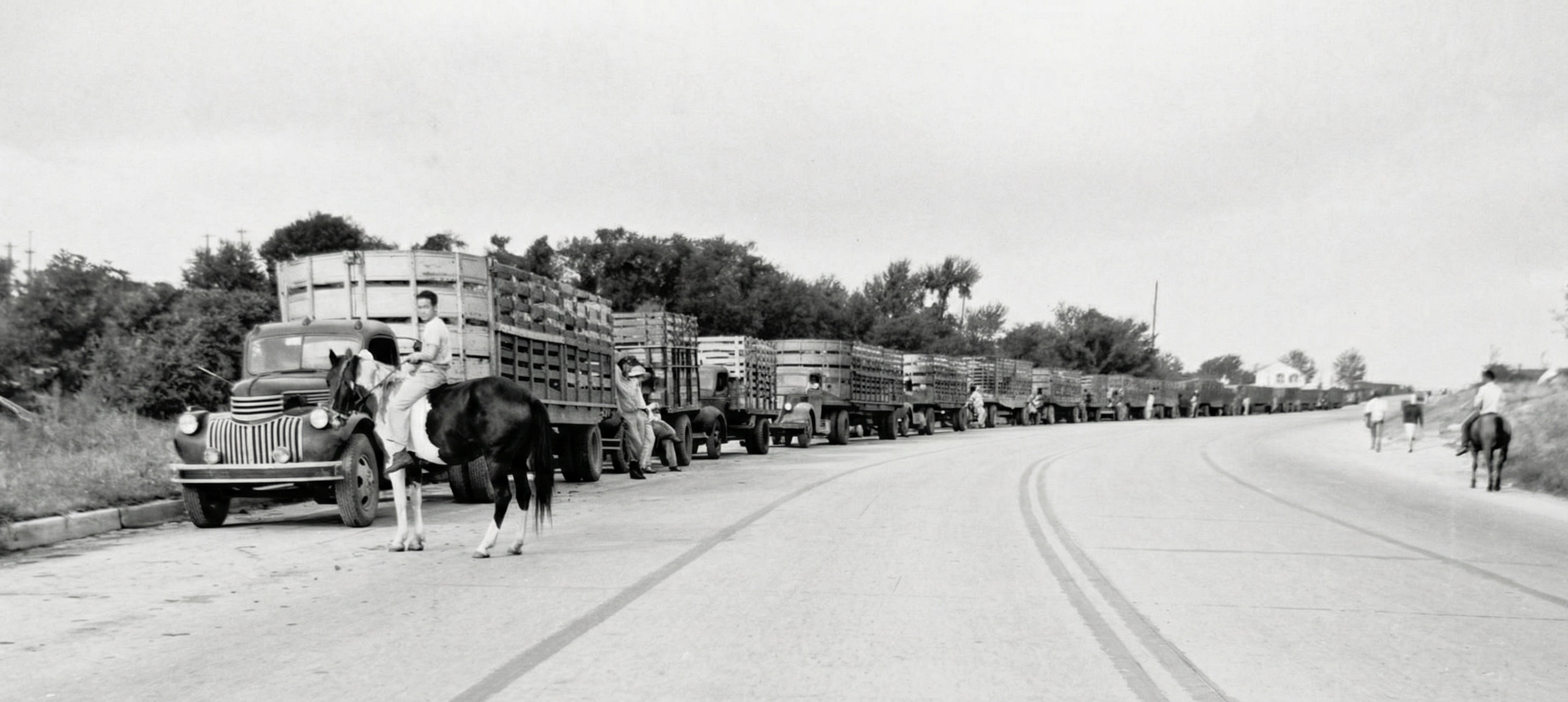
... After the end of World War II, most animals arrived no longer by rail but by truck, like those lined up on Twenty-eighth Street on October 17, 1946. By ten o'clock that morning, 1,121 trucks had been unloaded. The boy on horseback apparently decided that he wanted his photograph in the Fort Worth Star-Telegram.
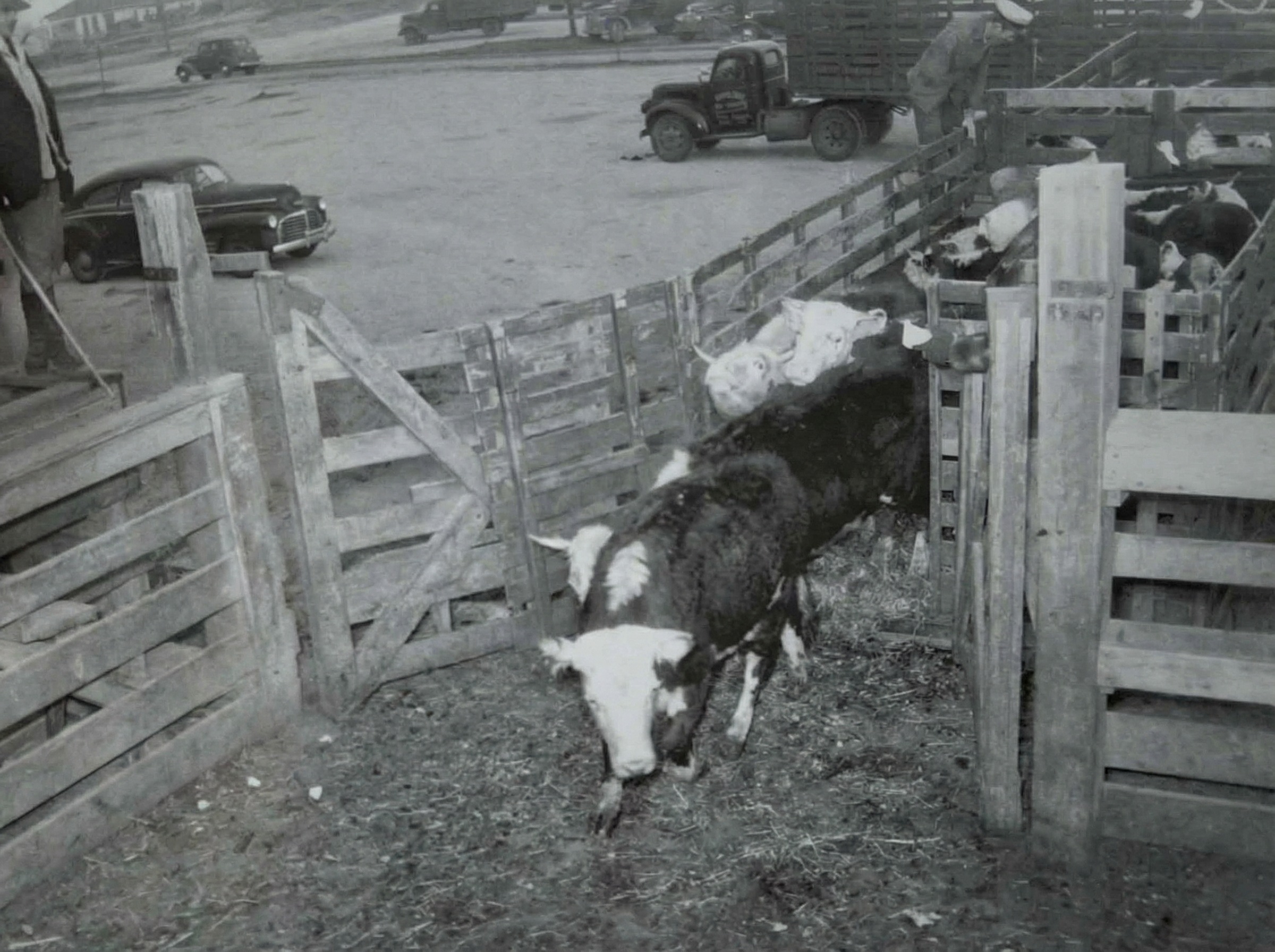
A shipment of Hereford cattle arrived at the loading dock at the north end of the stockyards on January 28, 1946. The war was over, gasoline rationing and price controls had been lifted, and hundreds of farmers and ranchers began bringing their animals to market. Huge shipments became commonplace.
By 9:30 a.m. on September 4, 1951, a total of 9,536 cattle and calves had been unloaded at the Fort Worth Stockyards, the largest shipment of cattle since the fall of 1949. The Labor Day weekend probably allowed operators who had other jobs to find time to bring one or two cows to the stockyards for sale. These operators turned their animals over to their commission agent, went home, and waited for a check to arrive in the mail.
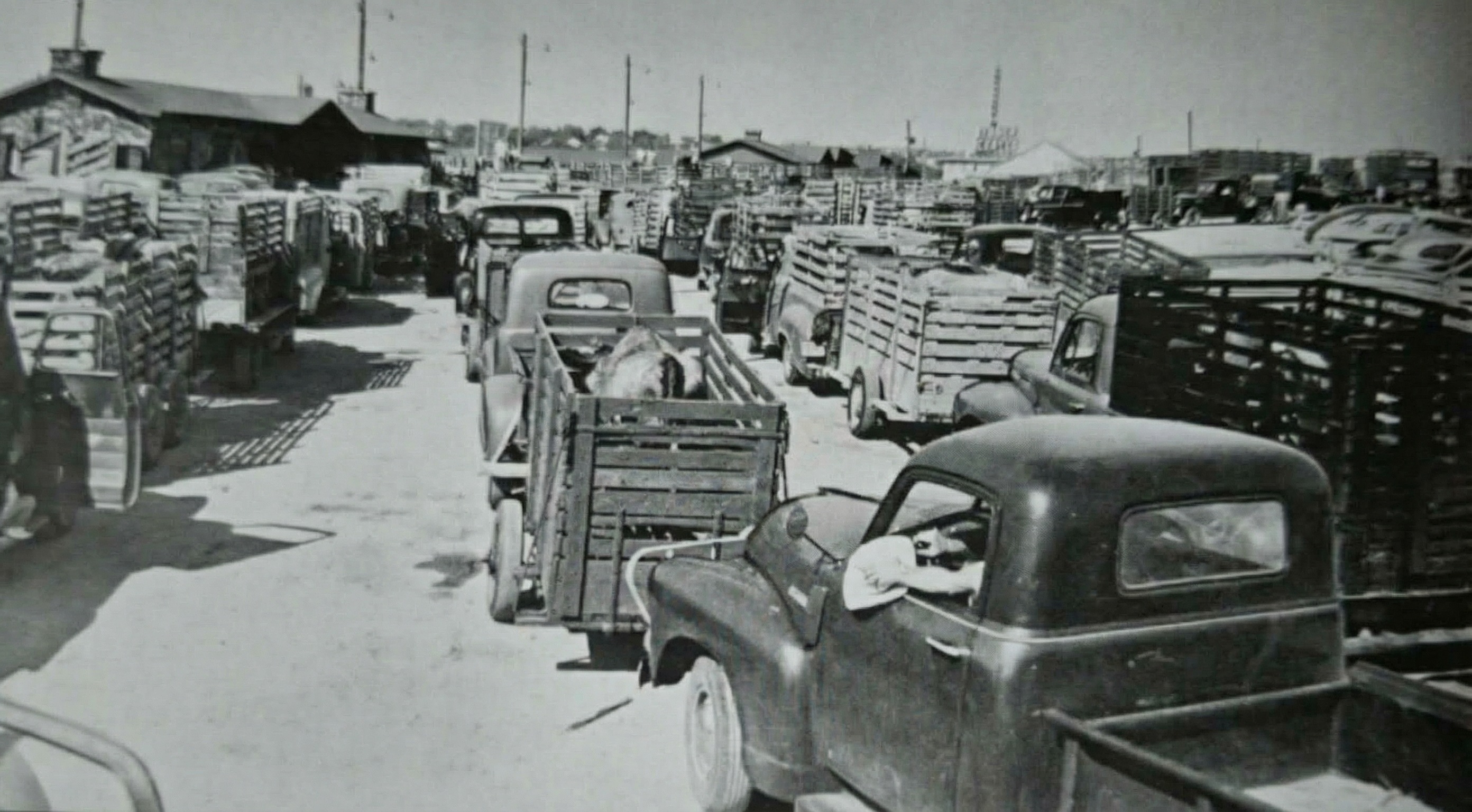
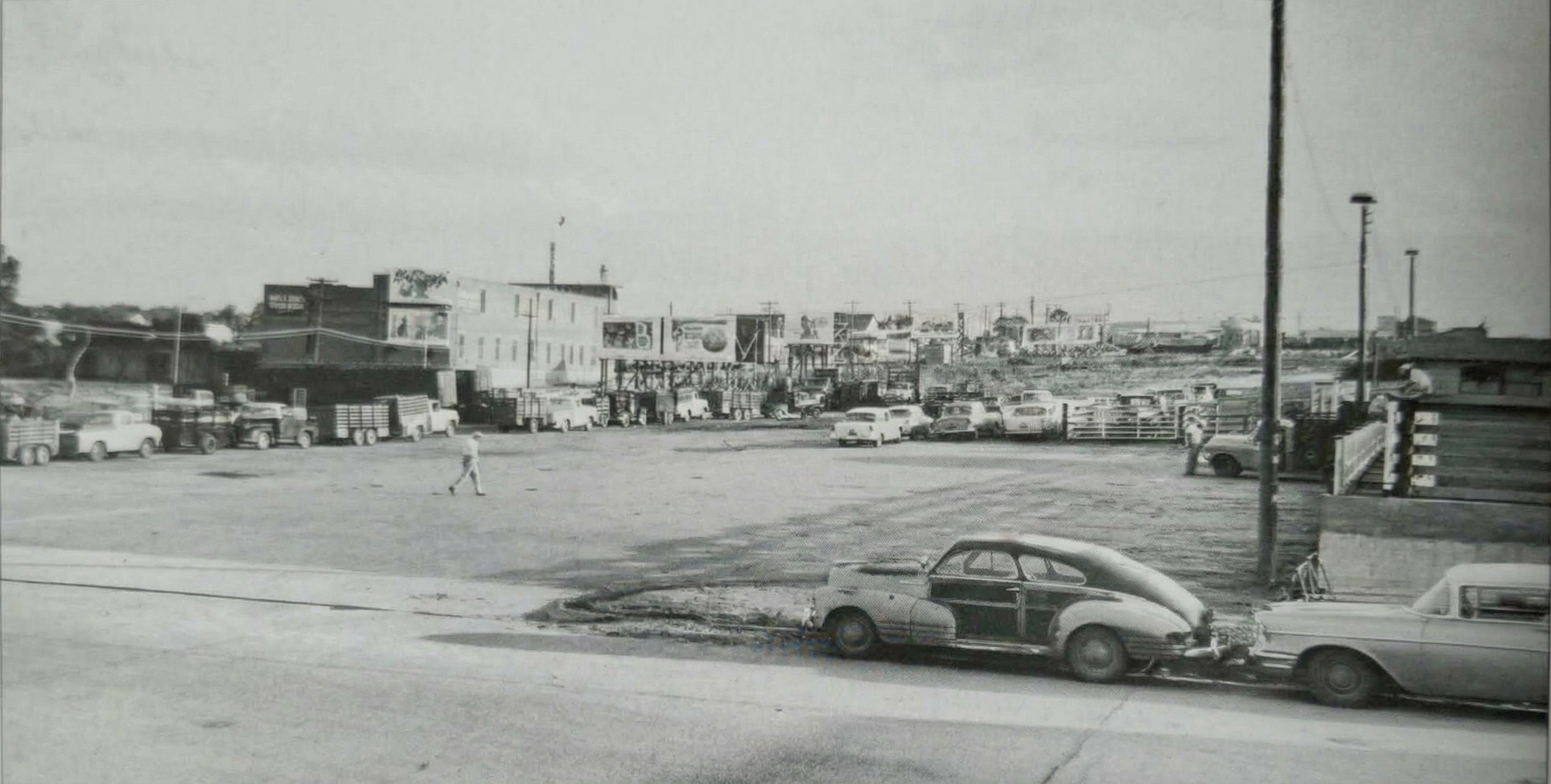
Pickup trucks line up to unload at the far north end of the stockyards on July 22, 1960. (Most small farmers loaded their animals into a pickup truck or trailer to bring them to market.) By then, the Fort Worth Stockyards were already competing for revenue with smaller rural auctions. Larger markets such as Fort Worth were subject to price controls during the war, but smaller auctions escaped notice.
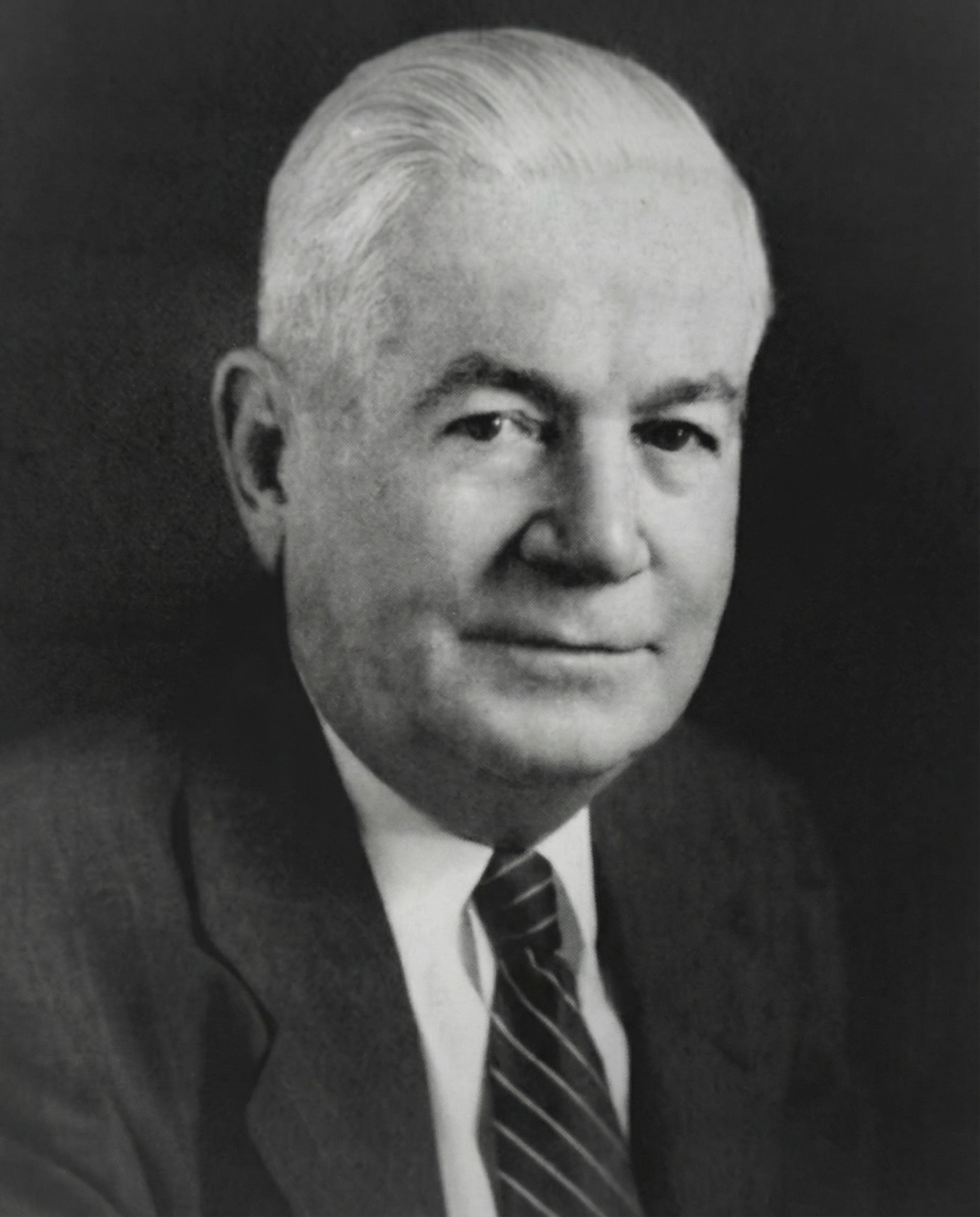
Al Donovan, who began working for Armour and Company in Kansas City, moved to Fort Worth in 1902 with a company that repaired railroad cars. In 1916, he became vice president and general manager of the Fort Worth Stockyards, a position he held until 1946, when he was promoted to president.
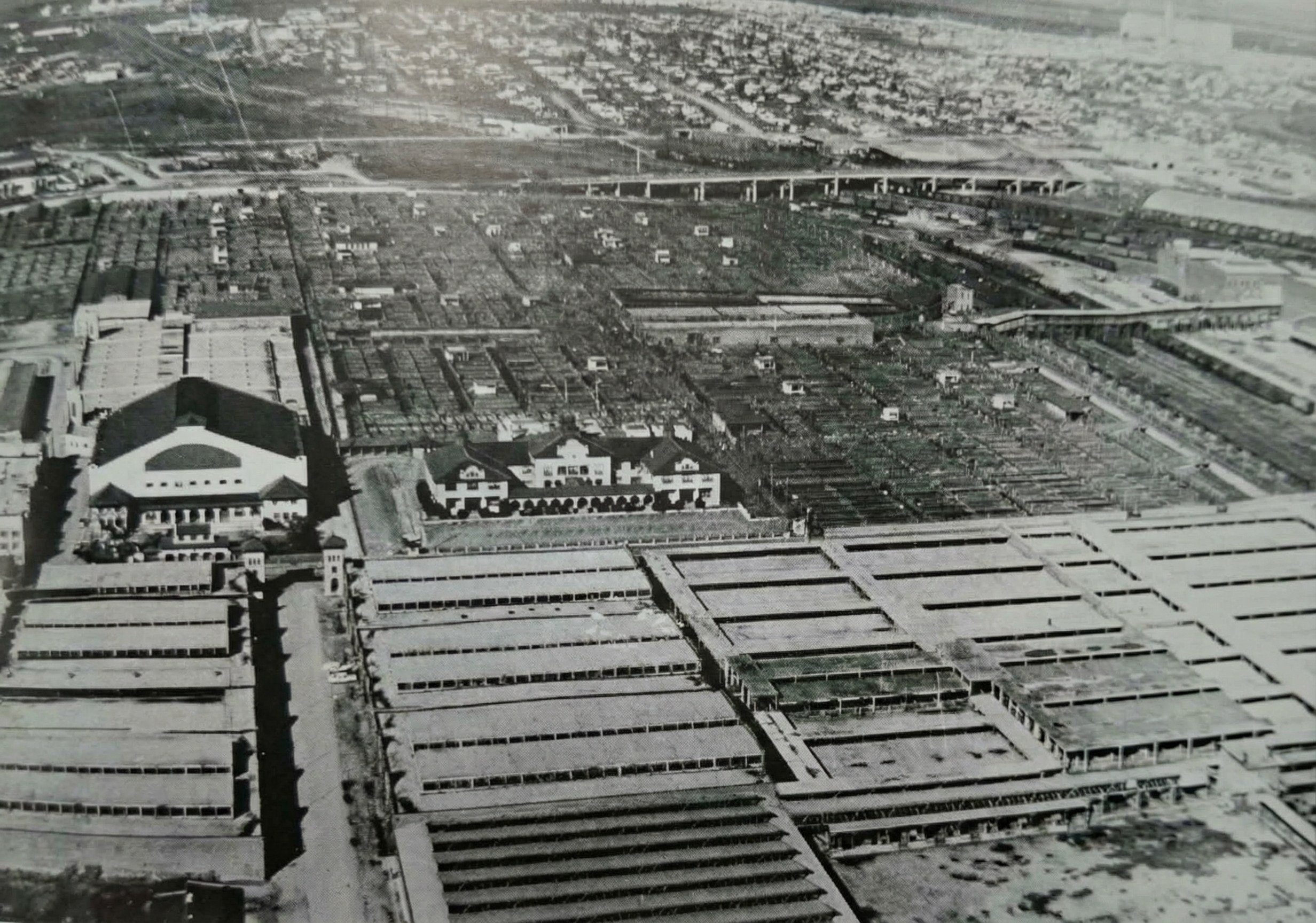
This is an aerial view of the stockyards from the 1940s, before the owners turned the front lawn of the Livestock Exchange Building into a parking lot. Mule Alley, with horse and mule barns on both sides, can be seen in the left foreground of the photograph. To the right of and behind the coliseum and the Livestock Exchange Building, at center left, are the cattle pens with the small offices of commission companies above them.
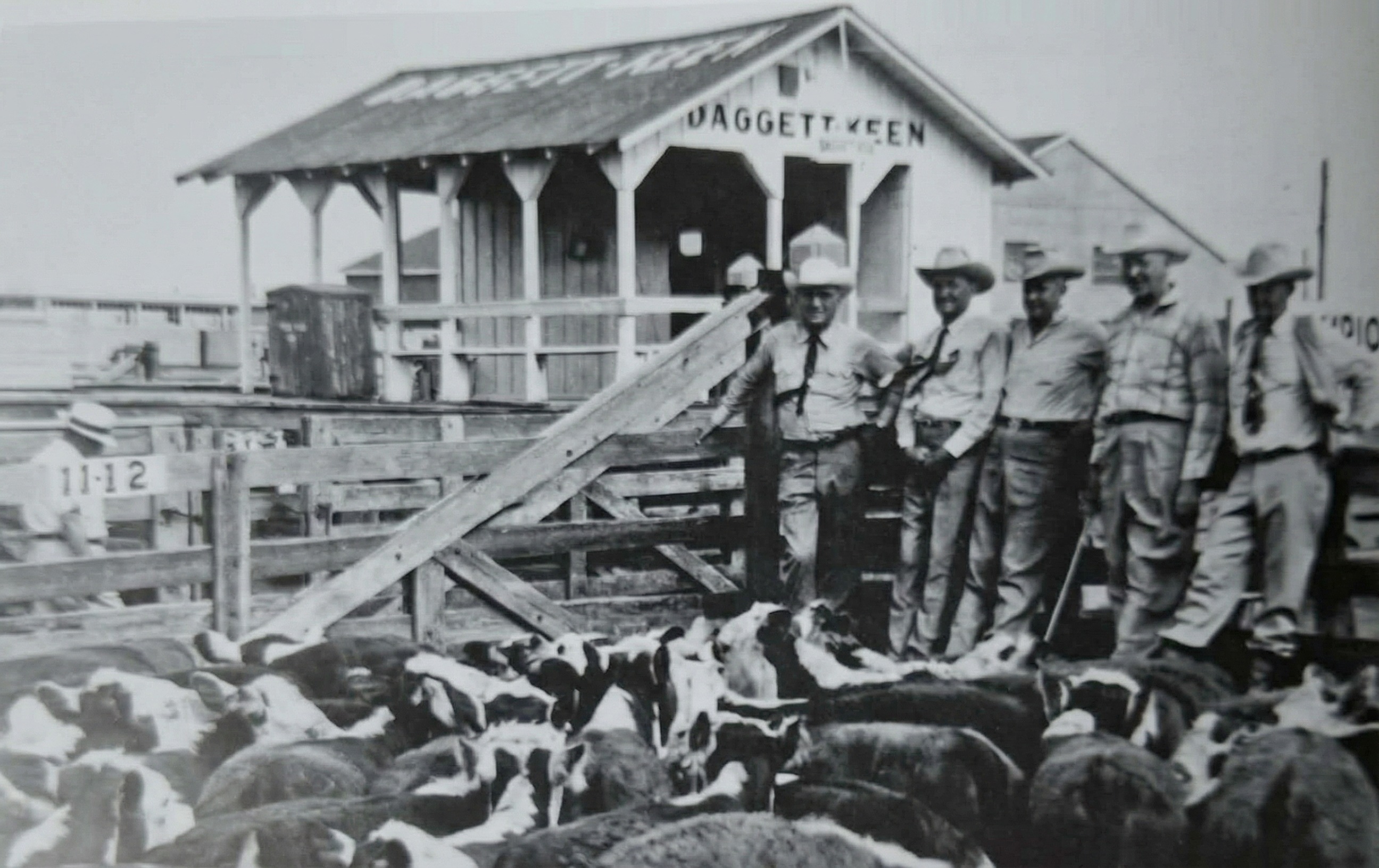
The occasion for this photograph in the office of the Daggett-Keen Commission Company was the first carload of 40 steers at the Texas Hereford Association Stocker and Feeder Show and Sale on May 11, 1956. The cattle were exhibited by the Waggoner Estate of Vernon, Texas, and represented at the sale by the Farmer Commission Company. Pictured from left to right are Henry Arledge, president of the Texas Hereford Association; Judge A. H. Brackeen of Palo Pinto, Texas; John Biggs, manager of the Waggoner Estate; Bill Pier, president of the Fort Worth Stockyards Company; and Tony Hazelwood, foreman of the Waggoner Ranch.
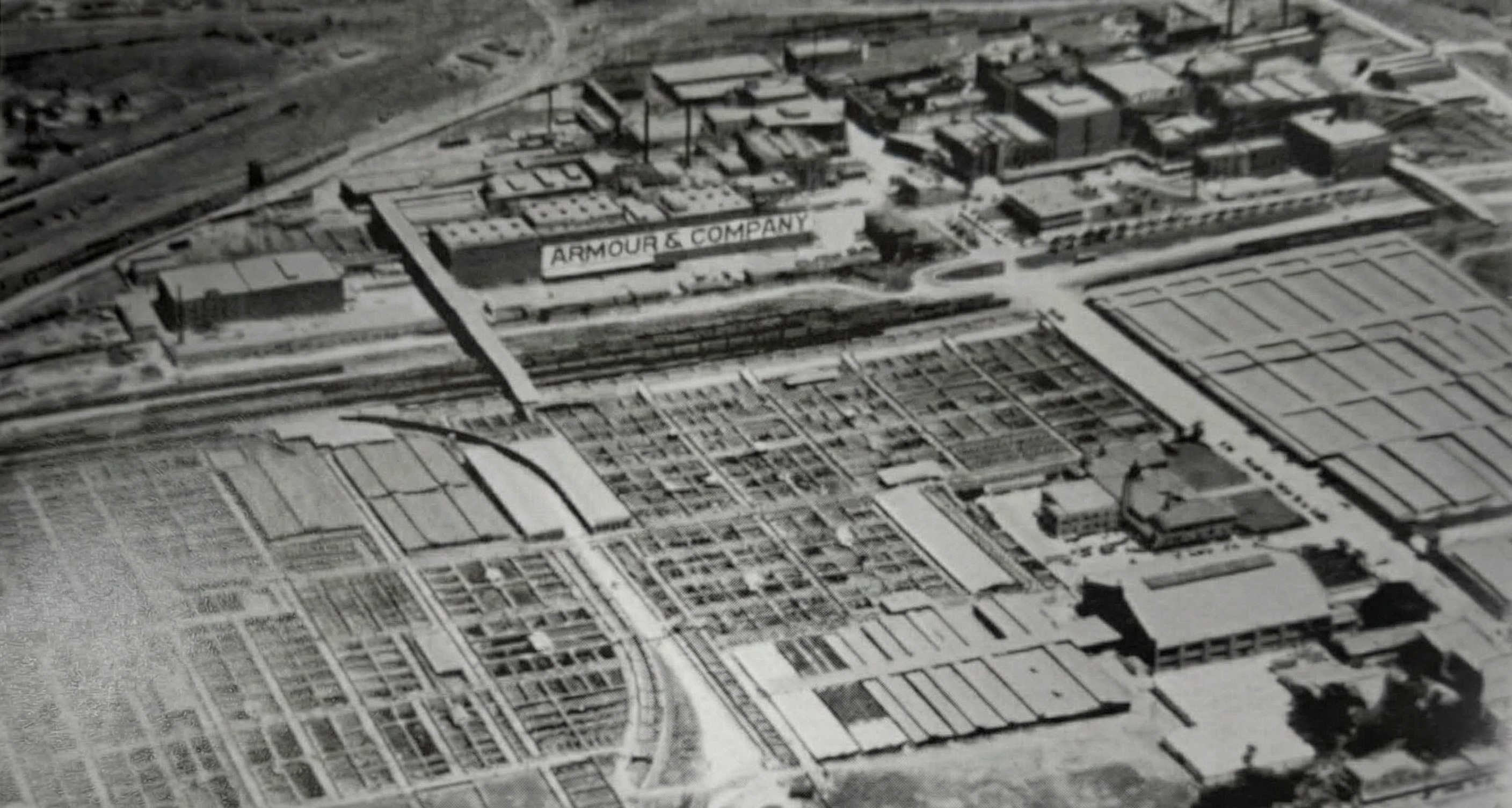
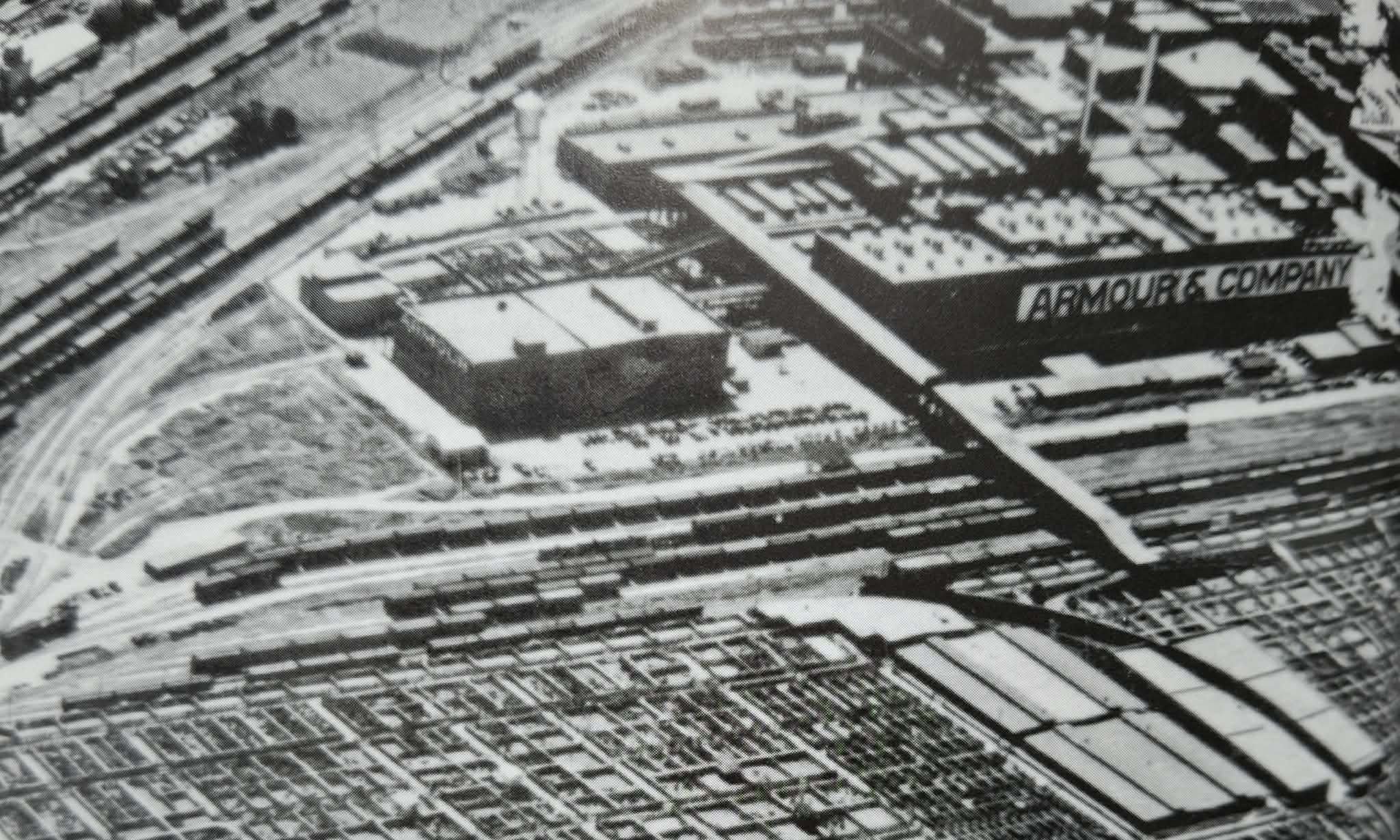
The coliseum, the covered pens behind it, and the Livestock Exchange Building beside it can be seen in the lower right corner of this panoramic photograph. The Armour and Swift meatpacking plants are at the top of the photograph, east of the railroad tracks. This large industrial complex was located approximately six kilometers from downtown Fort Worth.