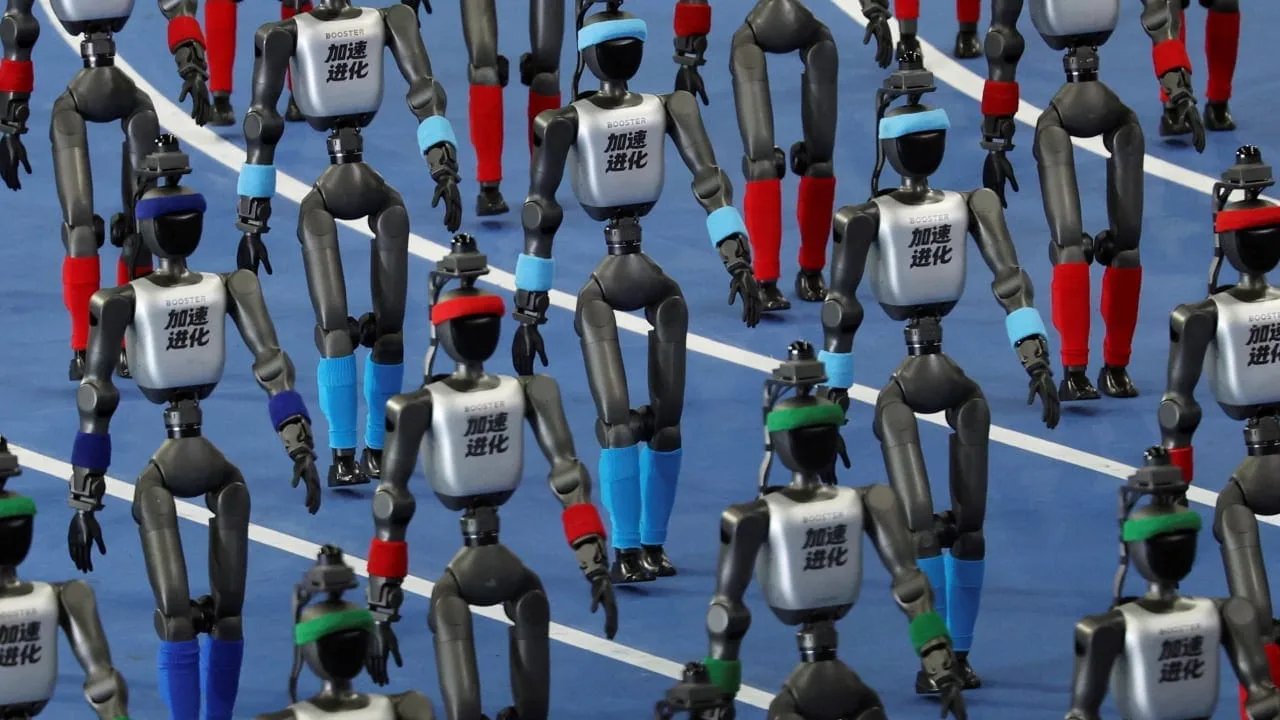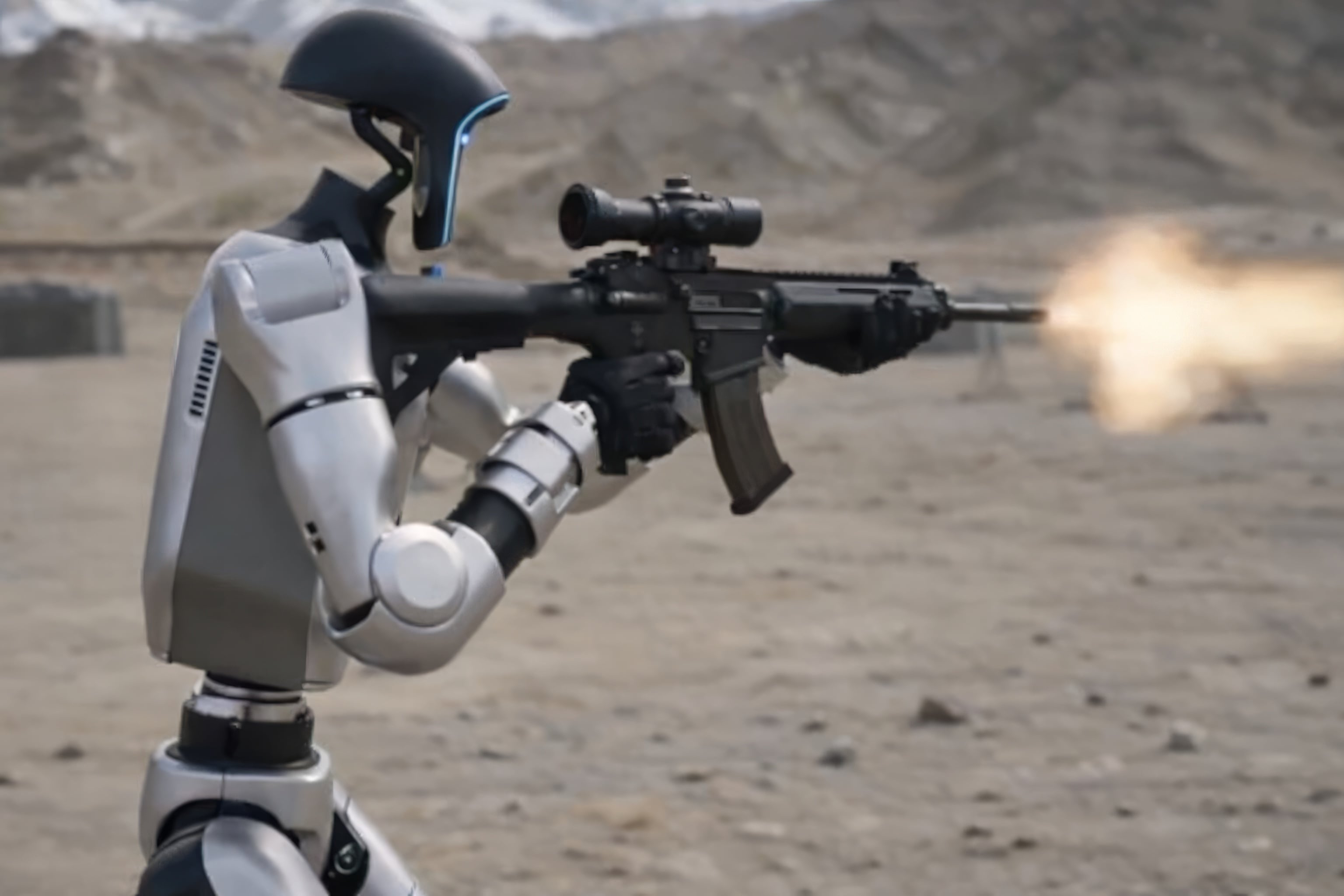
It started with a video that spread across the internet like wildfire. Humanoid robots carrying assault rifles, marching in formation—and a caption that left little room for doubt: “China officially begins training robots for military service.” Millions of people shared the footage, feeling that they were witnessing the beginning of a new era of warfare. But the reality is considerably more complex—and far more interesting.
Viral Video: Sensation or Hoax?
An analysis by the Grok AI tool unequivocally identified the video as artificially generated. There are no verified reports that Unitree humanoid robots have undergone live-fire tests with the Chinese military. Actual demonstrations of these robots? A dance performance at a Chinese New Year gala. Nothing more, nothing less.
This is not the first time similar footage has flooded social media. Reports previously circulated about AI robots patrolling the border with India along the Line of Actual Control. Those reports also proved to be exaggerated or false. Disinformation about Chinese military robots spreads with surprising regularity—and always finds a receptive audience.
What Is China Actually Doing?
But if we look beyond the viral hoaxes, the true picture of China’s military technology program may be even more troubling. Beijing is not betting on humanoid soldiers with rifles. It is betting on something far more sophisticated.
Researchers at Beihang University—one of seven institutions with direct ties to the Chinese military—are training drones using patterns found in nature. Specifically, they encoded the attacking behavior of hawks and the evasive behavior of pigeons into the AI systems of unmanned aerial vehicles. The result? A drone trained like a hawk neutralized its target in just 5.3 seconds. A patent for this technology was filed back in April 2024. And that is not all. Chinese scientists are also training AI systems using the behavior of ants, sheep, coyotes, and whales. Another team from Beihang University taught drones to see like eagles and fruit flies—to overcome the limitations of conventional cameras.
The state-owned arms manufacturer China South Industries Group went even further. It developed “robotic wolves”—armed ground vehicles designed to operate alongside aerial swarms and infantry. Chinese state broadcaster CCTV aired footage of exercises involving these machines. The combination of aerial swarms and ground robots creates a tactic without precedent in modern history.
The Arms Race
The numbers speak for themselves. Since 2022, Chinese military researchers have filed more than 930 patents for swarm intelligence technologies. The American side? Just 60. China controls approximately 90% of the global commercial drone market—and this advantage feeds directly into military applications.
Paradoxically, even Ukraine, which is fighting against Chinese-backed Russia, uses 88.9% Chinese components in its drones. Russia, meanwhile, purchases attack drones directly from Chinese manufacturers. China is thus effectively supplying both sides of the conflict—while simultaneously collecting data from a real battlefield. Beijing included AI, large-scale data processing, and drone development in its five-year plan as early as 2021. This is a long-term strategy.
Humanoid Robots
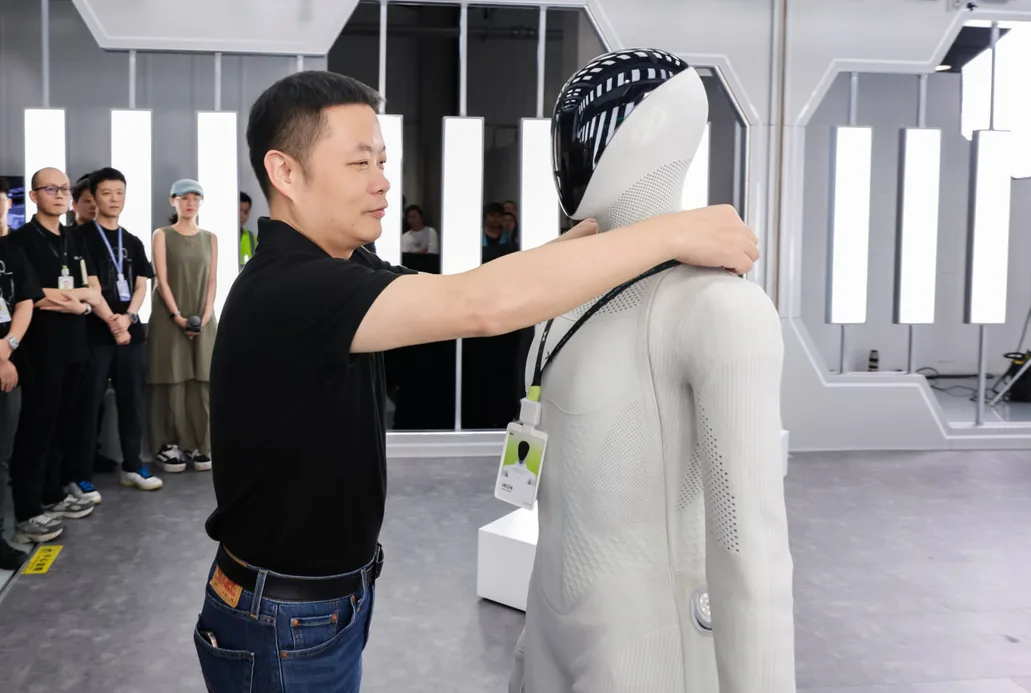
Back to humanoid robots—because China really is developing them, just not as soldiers with rifles. The company UBTech Robotics signed a contract for a pilot project deploying humanoid robots at a border crossing with Vietnam. Its Walker S2 robot, unveiled in July 2025, features a battery-swapping system that operates while the robot is running—making it an ideal assistant for logistics and customs administration.
China is the world’s largest market for industrial robots and accounted for more than half of all robot installations globally in 2024. Rising labor costs and an aging population are pushing Beijing toward automation—and the military is benefiting as a byproduct.
So—will robots replace Chinese soldiers? Not yet. But drones trained like birds of prey, robotic wolves, and swarms controlled by a single person? That is no longer a question for the future. It is the present—and amid current global tensions, it should concern us all much more.