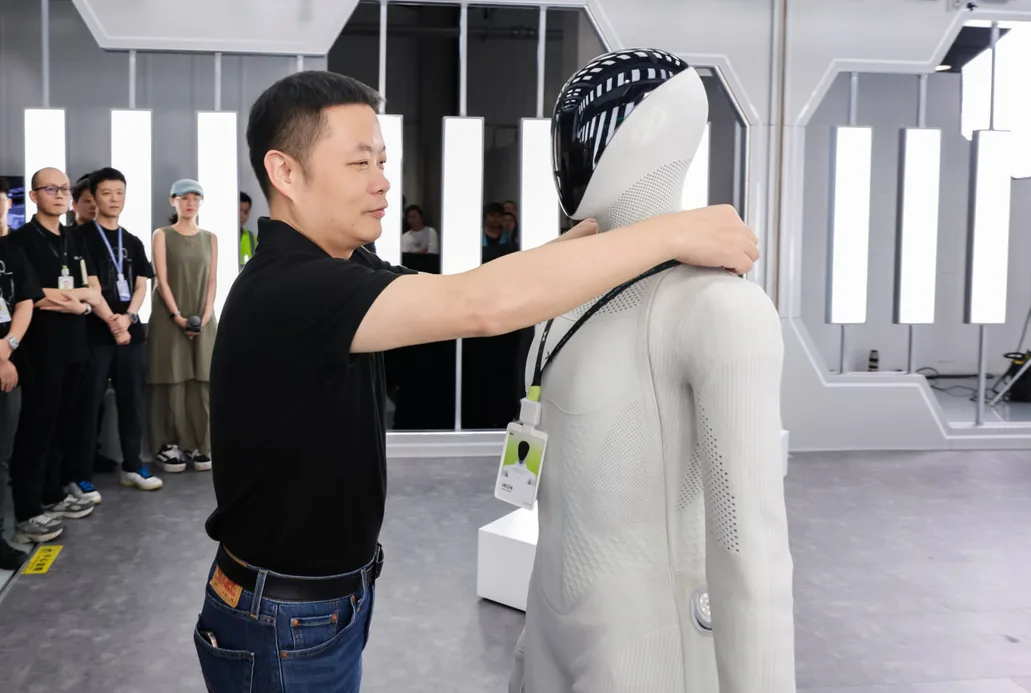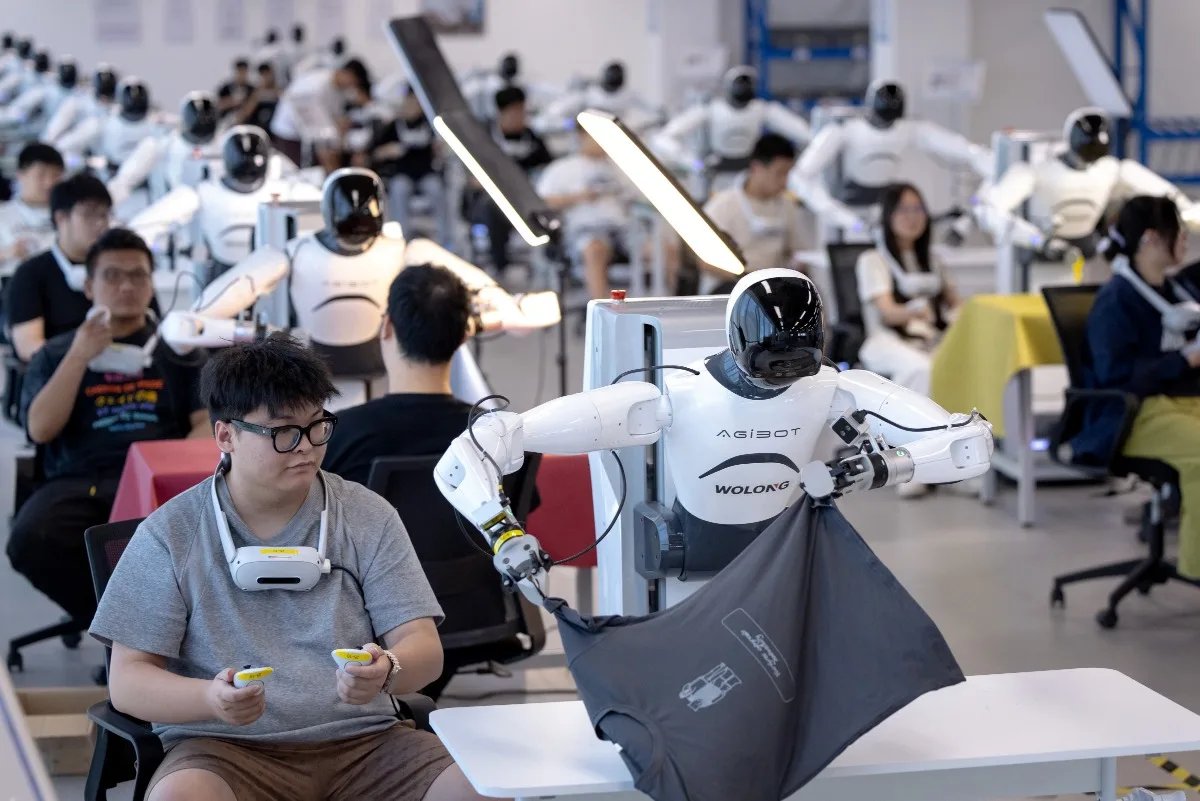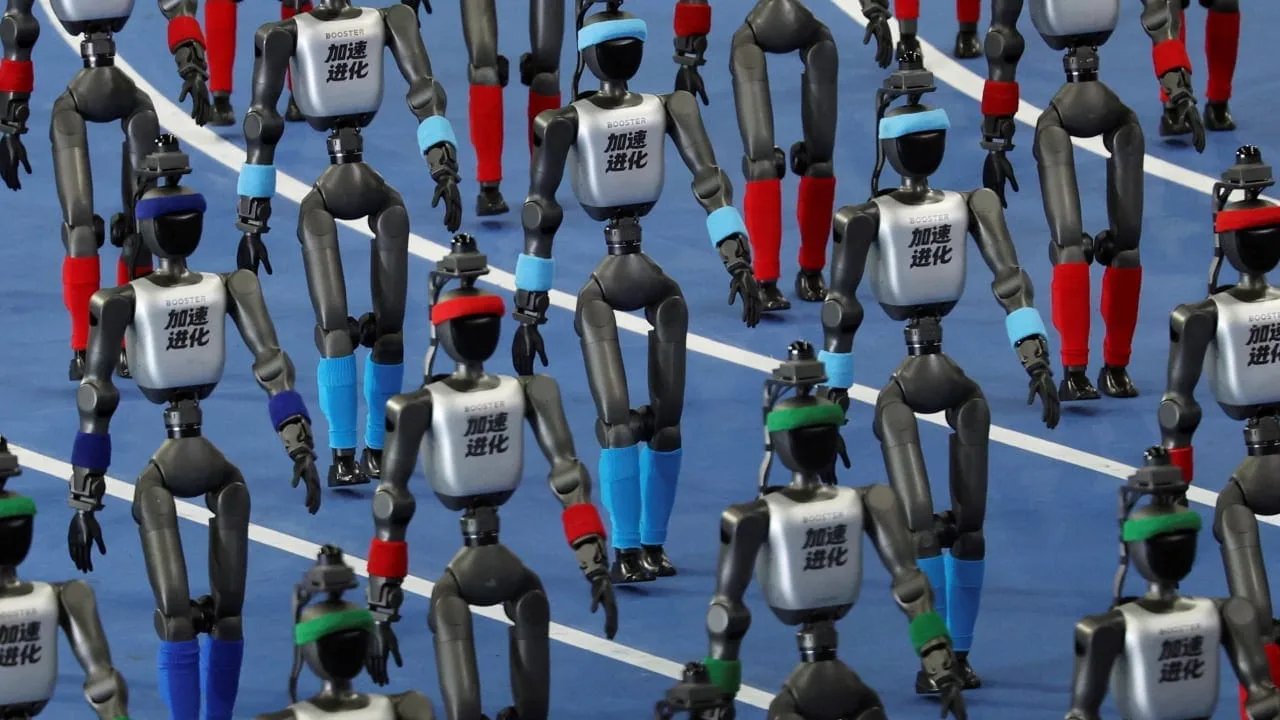
At the World Humanoid Robot Games, held in Beijing's speed skating arena in late August, machines jumped, boxed, and danced. The fastest of them ran the 100 meters faster than Usain Bolt. The audience cheered their successful feats as well as the falls that later flooded social media. Two days after the games ended, the Chinese military newspaper drew its own conclusions from the spectacle. The People's Liberation Army Daily called on scientists to accelerate the transfer of cutting-edge technologies from laboratories to training grounds, referring to robotic “warriors.”
Reuters reviewed more than a hundred Chinese military procurement notices, academic studies, patents, official publications, government records, and materials from arms manufacturers. The documents show that the country's defense establishment is accelerating research into the military use of humanoids and preparing to deploy them in warfare.
Military institutions are testing robots' limits
According to previously unpublished documents, military facilities are testing whether humanoids meet battlefield requirements. They are seeking both the robots themselves and technologies for training them, while examining how they could operate alongside soldiers. The work gained momentum in 2025 and 2026 and focuses on how the machines perceive their surroundings, manipulate objects, and obtain data for learning. China has created favorable domestic conditions for this effort. According to BofA Global Research, about 95 percent of global humanoid robot shipments in 2025 came from Chinese manufacturers. The military therefore has access to a rapidly growing industry while simultaneously developing its own military applications.
A weapon in the hands of a humanoid, however, remains only an idea for now. Reuters found no evidence that China has deployed an armed robot in an operational military unit. The machines consume a great deal of energy and cannot be relied upon outside carefully prepared demonstrations. Combat environments present so many variables that robots' capabilities fail in unpredictable ways, warns Aaron Johnson, a professor of mechanical engineering at Carnegie Mellon University.
Robots on the front line
Chinese military scientists outlined a specific vision of urban combat as early as last year. An August study by researchers from the Xi'an test center of the National University of Defense Technology describes a group of six combat robots, including humanoids, robotic dogs, and unmanned vehicles. The machines would split into two assault groups and, together with infantry troops, sweep through a building occupied by the enemy, floor by floor and room by room. The authors envisioned technology that they said could be available within five to ten years. However, they did not specify what rules governing the use of force the robots would follow, what weapons they would carry, or how they would proceed when encountering civilians.
Juo-Min Chou of Taiwan's Institute for National Defense and Security Research describes areas where bipedal machines could be useful. Advances in balance, perception, and endurance could make them useful assistants in buildings, tunnels, or the interiors of vessels. Two arms and two legs theoretically allow them to walk, climb, and handle objects. For simpler tasks such as reconnaissance or transporting supplies, quadrupedal, tracked, or wheeled robots remain an easier-to-deploy and less expensive alternative.
An article in the PLA Daily from July 2025 argued that humanoids' tasks could gradually shift from supporting units to combat itself. It also discussed how a robot could receive permission to fire on a living target after the target had been confirmed by a human. In December, the Eastern Theater Command released an AI-generated montage in which military robots, including humanoids and quadrupeds, crush Taiwan's defenses in a hypothetical future conflict.
Infiltrating behind enemy lines
Military interest in humanoids began to grow in China in 2024. That year, the National University of Defense Technology and the Chinese Academy of Military Sciences held a defense technology forum, part of which focused specifically on the military use of humanoid systems. A year later, the university was already referring to robots as battlefield tools. Its June 2025 competition included an event simulating infiltration behind enemy lines. The machines had to enter an area, map it, and locate targets. Another task envisioned robots checking identities at military bases, enforcing order, and patrolling. The university itself described the competition as a testing environment for humanoids intended for later battlefield deployment.
In May 2025, the military issued a procurement notice for a humanoid robot, including installation and technical training. Four months later, a request appeared for a humanoid robotic system with advanced perception and dexterous manipulation, listing a university email address as the contact. The documents contained few details, and Reuters was unable to determine whether the contracts were ever fulfilled, which companies won them, or what models they may have supplied.
The military is also paying for data
This June, the military allocated approximately 300,000 dollars for a system designed to collect and label data from cameras, radar, and motion records, including information about terrain that a robot can traverse.
The procurement notice shows that China's military interest is shifting from robot construction itself to perception, manipulation, and training systems. Defense experts consider these essential if humanoids are to progress beyond demonstrations in controlled conditions.
Arms manufacturer offers a patrol robot
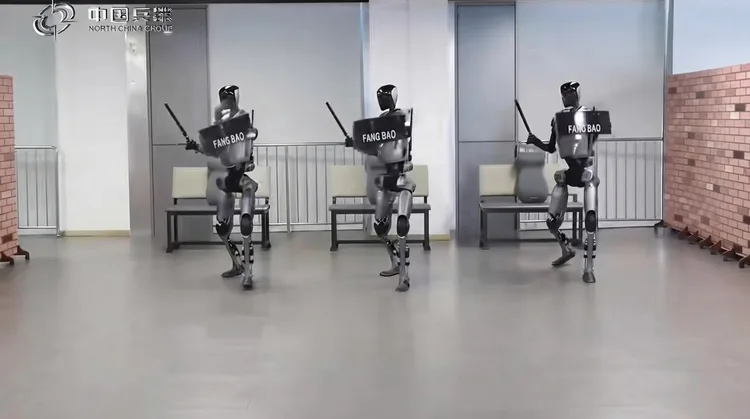
Over the course of this year, humanoid development has expanded from military academies into China's arms industry. This is demonstrated by Fuxi, a robot from the state-owned Norinco conglomerate. Company materials published in August describe the life-size machine as suitable for patrols, all-weather reconnaissance, and work in hazardous locations. Fuxi can be connected to a system through which a human controls it remotely. This circumvents what many robotics experts describe as humanoids' greatest weakness: the need to make decisions entirely on their own.
Americans are trying the same thing, but lag behind
Last year, the U.S. Army also launched a competition to develop military humanoid technologies that could eventually work alongside soldiers. It listed reconnaissance, security, obstacle removal, handling hazardous materials, and offensive and defensive operations in urban areas as potential tasks. Up to ten finalists were expected to test their systems with U.S. military experts this year, with more than one million dollars reserved for follow-on contracts.
However, American robotics significantly lags behind China's in the production of bipedal and quadrupedal machines. Reuters reported last month that the Chinese company Unitree, one of the world's largest manufacturers of humanoids and robotic dogs, based the design of its best-selling model on technology originally funded by the U.S. Army. Neither the Pentagon nor the U.S. Army commented on the matter.
Who can tell when the enemy is surrendering
Even a remotely controlled machine will sooner or later encounter questions that cannot be resolved through technology. The laws of war require combatants to be distinguished from civilians and prohibit attacks on the wounded or those who are surrendering. The International Committee of the Red Cross has warned that autonomous weapons may have difficulty interpreting signals of surrender because such judgments depend on context, behavior, and intent.
The U.S. military requires autonomous weapons to undergo legal review and testing under realistic conditions, and commanders and operators must retain appropriate human oversight over the use of force. In March, China's Ministry of National Defense stated that AI-powered weapons must remain under human control. However, this has done nothing to slow China's interest in military humanoids.
Wang Yonghua of the Academy of Military Sciences wrote in a November commentary that humanoids still face unresolved problems with movement, perception, and intelligence. Turning them into standard military systems will require a technological breakthrough, lower production costs, and mass production. If this can be achieved, he said, humanoid robots will soon fill the battlefield.
Source: dailysignal.com