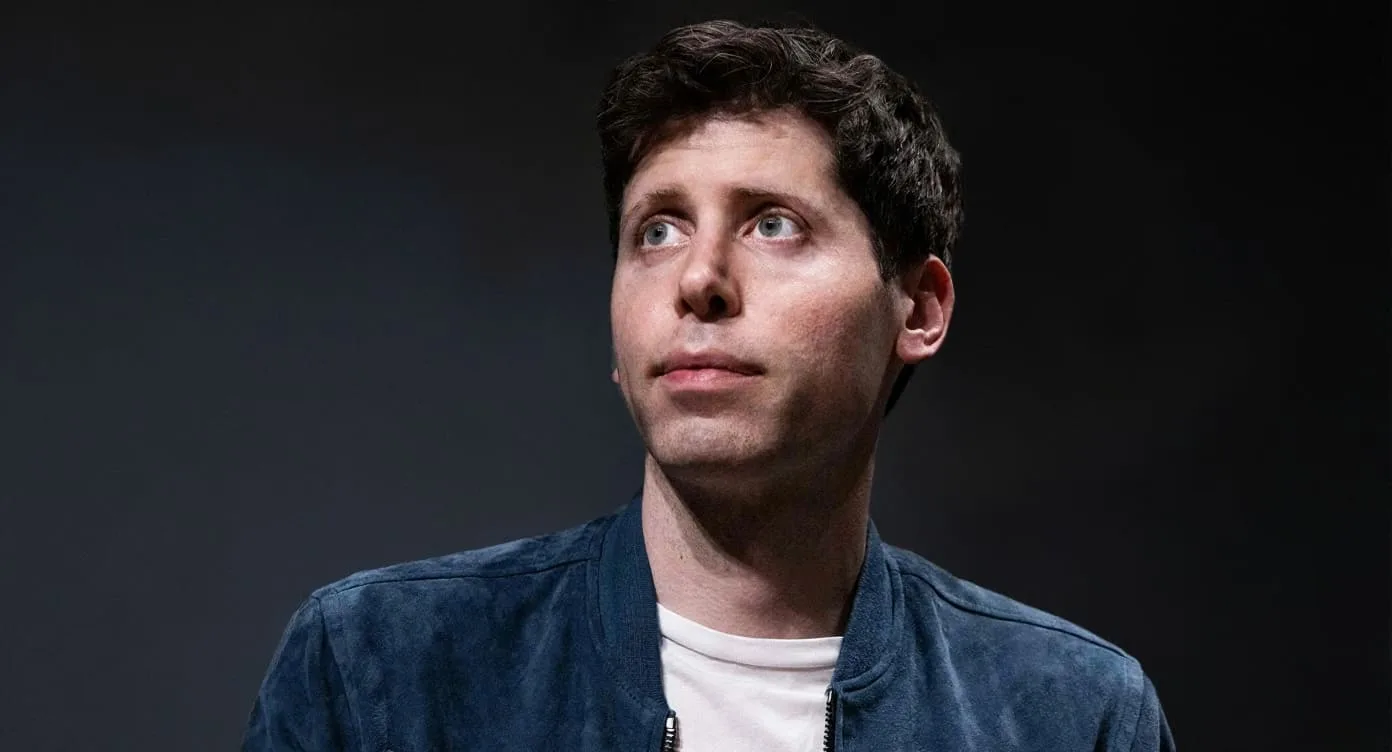
OpenAI CEO Sam Altman has described himself as a huge Apple fan and admitted that the lawsuit the company filed against OpenAI deeply saddened him. He discussed it in an interview with technology journalist Alex Heath. The two companies, which publicly shook hands two years ago, are now fighting a trade secrets dispute in court.
Altman reminisces about Apple
Altman’s fondness for Apple goes back to his childhood. His first computer was a Macintosh LC II. In 2024, he told Bill Gates that he still has it at home and that it remains fully functional. When announcing his collaboration with designer Jony Ive, he spoke about his desire to restore the sense of wonder and urge to create that he himself experienced with an Apple computer more than three decades ago.
A story he told with his brother Jack in 2016 illustrates their family background. Their grandmother gave them shares in companies she thought they would like as birthday gifts. While Jack received a stake in the Applebee’s restaurant chain, Sam was given Apple stock. He still holds those shares in his brokerage account, listed as a gift from his grandmother, and has no intention of selling them.
Altman’s strongest memory dates back to 2008. At the developer conference, he demonstrated Loopt, the location-based social app he co-founded. To appear on stage, he needed Steve Jobs’s personal approval. He described it as the pinnacle of his career at the time and added that he had never felt so nervous anywhere else in business. In 2015, he said that he had viewed Jobs as an iconic figure since childhood. That admiration did not leave him even when he began developing his own hardware. Last November, on stage alongside Jony Ive and Laurene Powell Jobs, he called the iPhone the most significant achievement in the history of consumer electronics.
Relations were still good in 2024
In June 2024, Altman personally traveled to Cupertino to announce that Apple would integrate ChatGPT into its products. The enthusiastic fan had thus reached the place he had been heading toward since childhood. His model was to become part of the phone he himself considered the best product in the history of consumer electronics.
However, the partnership was short-lived. Relations between the two companies began to cool when OpenAI entered a field that Apple had dominated for many years. Less than a year after appearing at Apple’s developer conference, Altman and Ive also announced that they had been secretly working together for several years and that OpenAI was acquiring Ive’s startup IO for just under $6.5 billion. The man who designed the iPhone thus began developing hardware for the company whose model had originally been intended merely to assist Apple.
Meanwhile, Apple chose a different partner to power the new Siri. In January, it confirmed an agreement with Google under which Gemini models will form the foundation of Apple Foundation Models and new Apple Intelligence features, including a more personalized Siri. ChatGPT remains available on iPhones, but only as an optional aid for more complex queries, not as the foundation of the entire system. Google explained this by saying that its technology provides the most stable foundation for Apple’s models.
Apple is now suing OpenAI
The deterioration in relations culminated in court. Apple sued OpenAI in July, alleging coordinated misconduct across the entire company aimed at gaining access to carefully guarded secrets. In addition to the corporate entities, the forty-page complaint names only two individuals, Chang Liu and Tang Tan. Both previously worked for Apple. According to the lawsuit, they took confidential information with them when they left and, in some cases, questioned current employees about products that had not yet been announced. The filing also claimed that Apple prototypes were taken to job interviews, where they were shown to others.
Altman himself is barely mentioned in the original lawsuit. When he first learned about it, his immediate thought was that it sounded very serious and that someone must have made a major mistake. He added that OpenAI does not want anyone else’s intellectual property, much less people who would bring it into the company. The company says it has no interest in others’ trade secrets and noted that the lawsuit does not match Apple’s reputation as a company that prides itself on safeguarding even the smallest details. At the same time, it asked the court to dismiss the case because, in its view, it fails to establish any legal claim.
Apple asked the court for a preliminary injunction that could delay OpenAI’s plans. It wants to ensure that its competitor never gains access to its secrets. OpenAI has responded by saying that Apple is trying to delay its hardware because it fears a potential decline in demand for its own products.
The nature of this dispute is largely determined by where it is taking place. California does not recognize post-employment non-compete clauses, so a company whose engineers leave to join a competitor cannot take preventive action. It must instead litigate afterward over exactly what the employees took with them.
Sources: aol.com, businessinsider.com, thenextweb.com