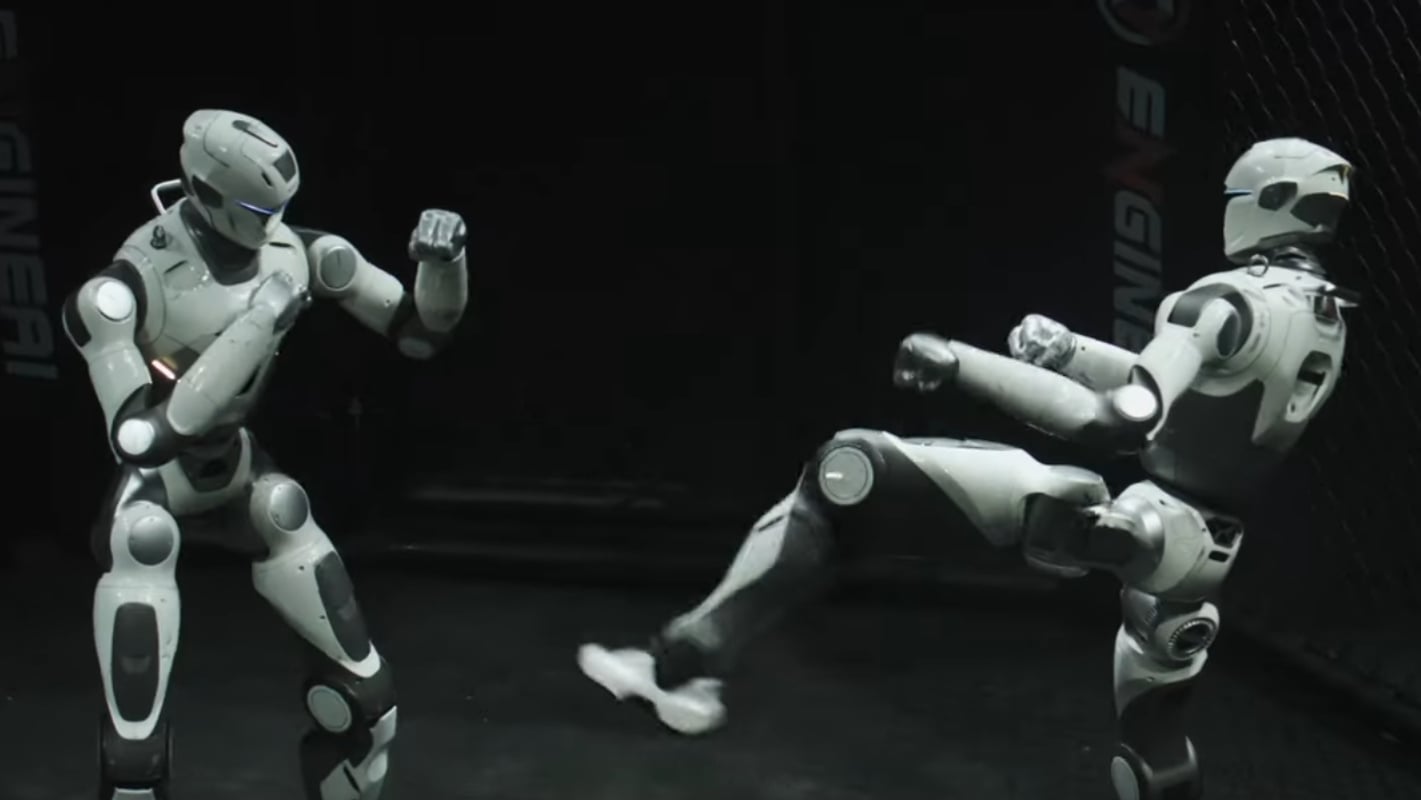
An arena packed with spectators watching two humanoid robots perform flying kicks, mid-air spins, and lightning-fast strikes. Science fiction? No, reality. On February 9, 2026, the first commercial humanoid robot free-fighting league, called the Ultimate Robot Knockout Legend (URKL), launched in Shenzhen, China. And it is not just a show—the winning team will take home a 10-kilogram gold championship belt worth more than CZK 37 million (10 million yuan).
While most companies rely on sterile laboratory environments, China is throwing its machines into the brutal setting of a combat ring.
T800: A Robot Built for Combat
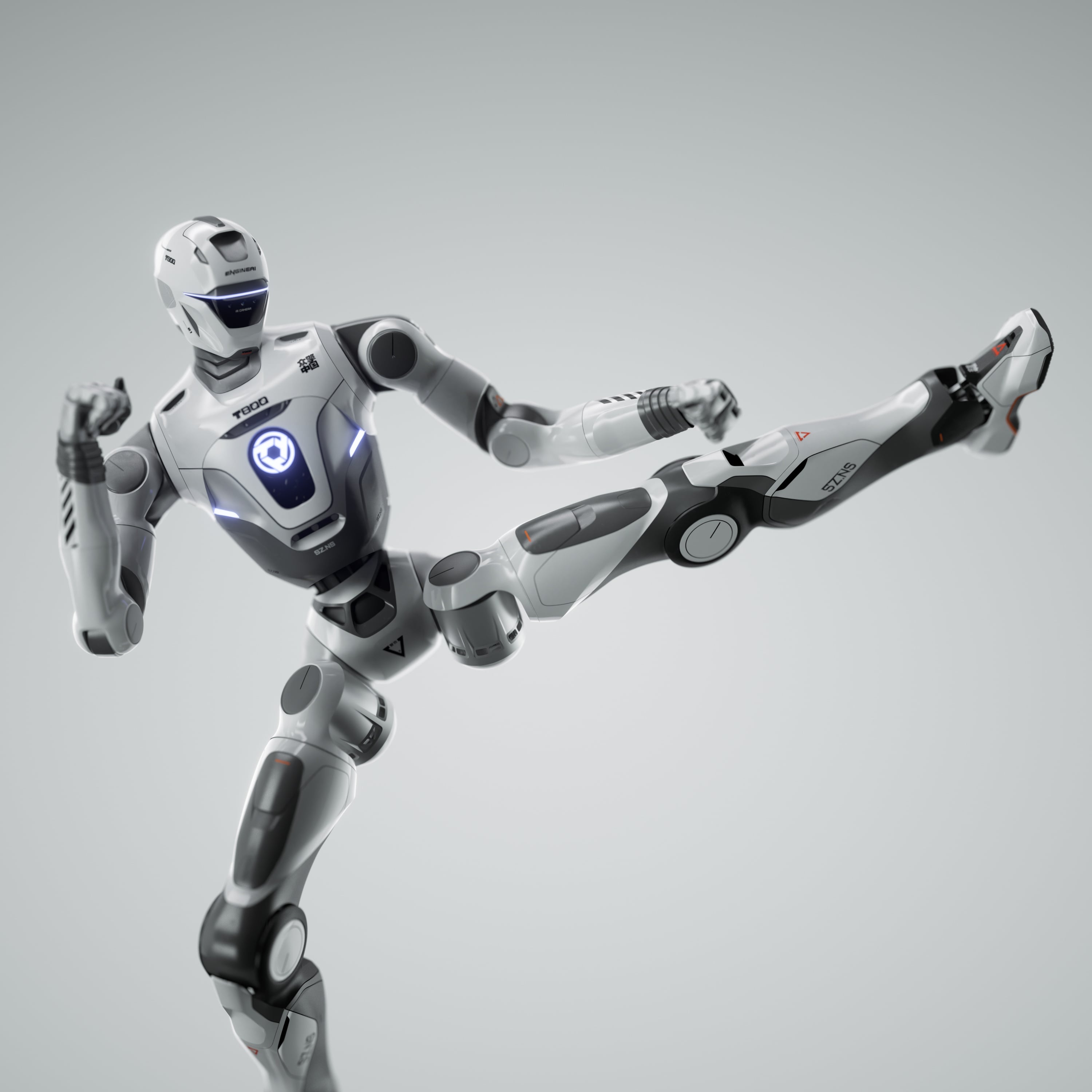
The Chinese company EngineAI is behind the entire event. It not only organizes the league but also provides all teams with its T800 humanoid robots free of charge. Yes, that's right—free. Why? Because the company wants to see what its machines can truly do when faced with an extreme challenge.
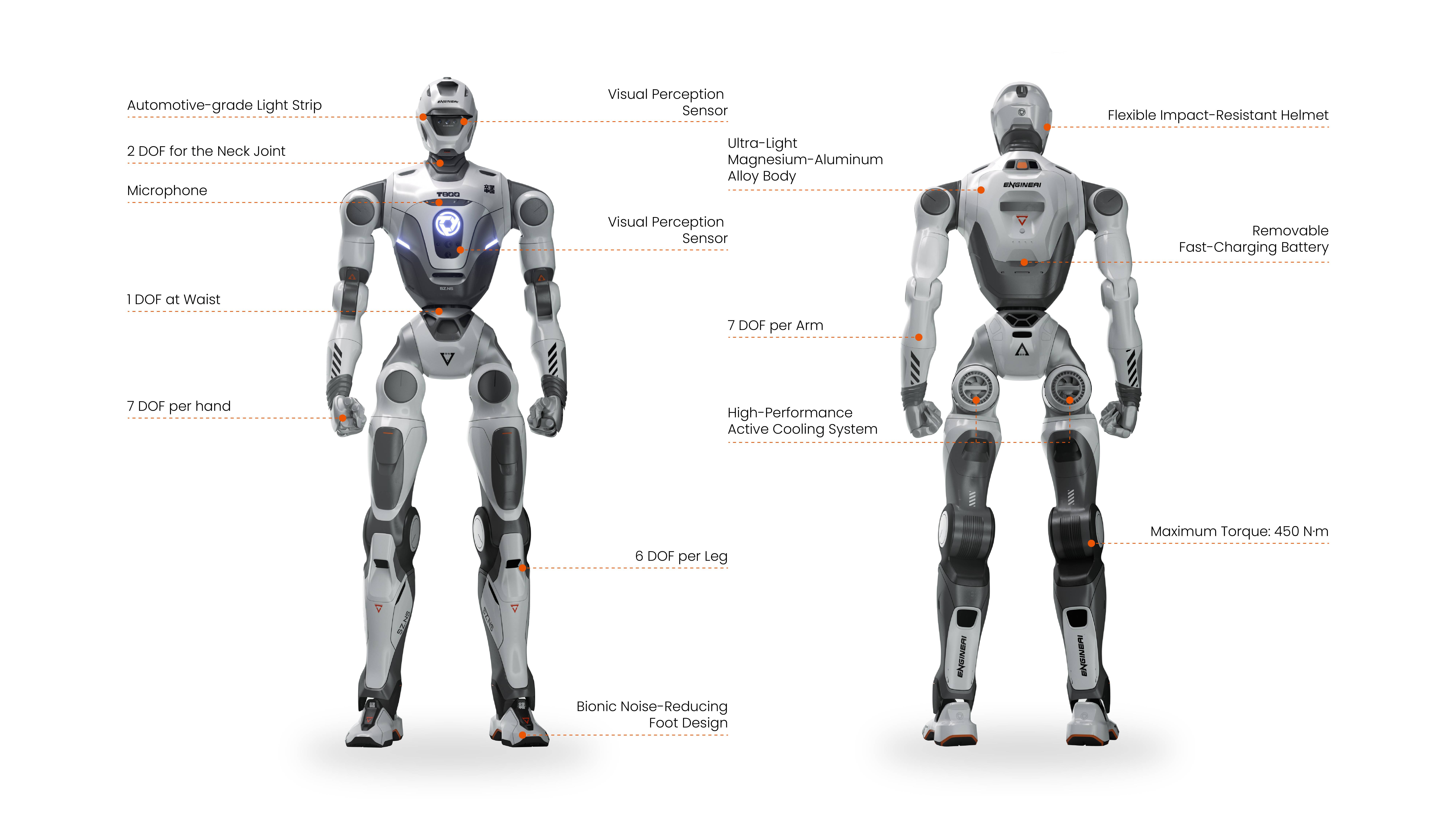
The T800 is no fragile laboratory prototype. The robot features aerospace-grade aluminum panels, an active cooling system between its leg joints, and a lithium battery capable of sustaining up to 4 hours of continuous intensive performance. Its joint motors generate up to 450 Nm of torque, enabling it to perform flying kicks, capoeira-inspired spins, and rapid changes of direction.
But that is not all. The robot is equipped with a multimodal sensor system combining 360-degree LiDAR, stereo cameras, and ultra-fast environmental processing. This allows it to maintain constant awareness of its surroundings and avoid obstacles in real time.
Fighting for Faster Development
It may sound absurd, but there is logic behind it. Tian Feng, former dean of SenseTime's Intelligent Industry Research Institute, explains that practical combat testing in real-world environments can shorten technology development cycles by more than 30% and accelerate the validation of laboratory simulations against actual performance.
The league will monitor several key metrics: motion control, dynamic balance, and impact resistance. Components such as gearboxes, ball screws, and dexterous hand tendons will undergo rigorous testing during every match.
URKL represents a fascinating experiment. It combines technology, sports, and entertainment in a way we have never seen before. While some critics may argue that it is merely a marketing stunt, the reality is more complex. The league provides a unique testing environment that no laboratory can replicate.
Robots and Kung Fu
URKL is not just a sporting event. The organizers position it as a comprehensive industrial platform integrating technological cooperation, resource consolidation, talent development, and capital involvement. Through the deep integration of "Technology + Sports + Culture," the league aims to build a closed-loop ecosystem covering the entire chain from research and manufacturing to application and investment.
EngineAI stated that its goal is to develop a competition format inspired by "Chinese robot kung fu" that connects Chinese culture with international pop culture while showcasing domestic robotics innovations. Zhao Tongyang, founder and CEO of EngineAI, announced at the conference that the championship team will receive a 10-kilogram gold belt symbolizing the highest honor in humanoid robotics.
The 2026 Season: What Can We Expect?
The 2026 URKL season will run through December in a multi-tiered competition format. Regular matches will be held at the Longgang FRL Robot Club. With the support of the relevant authorities in Longgang, the league will establish a standardized operating framework.
The organizers state that URKL will provide technical teams from around the world with high-intensity real-world combat scenarios, serving as a vital platform for validating core technologies and nurturing talent. All of this is intended to accelerate the transition of laboratory innovations into real-world applications and support the refinement of industry standards.
Not Everyone Is Enthusiastic
Not everyone is enthusiastic, however. Tian Feng warns that focusing on combat performance could divert robot development away from typical industrial or service applications. Combat requires extreme, brief bursts of high-impact movement rather than the stable, practical operation needed in factories or homes.
China's humanoid robot market is growing at a breakneck pace. The Chinese Institute of Electronics predicts that China's humanoid robot market will reach a value of 870 billion yuan by 2030 (approximately CZK 3 trillion). Driven by rapid advances in embodied intelligence, Chinese humanoid robots are evolving quickly and expanding their potential roles in both industrial and domestic environments.
As the league develops throughout 2026, the world will be watching closely. Will it prove to be a breakthrough that changes how we develop and test humanoids? Or will combat robots turn out to be a dead end? One thing is certain—the era of fighting machines has just begun, and China is at the helm.
Source: eweek.com