

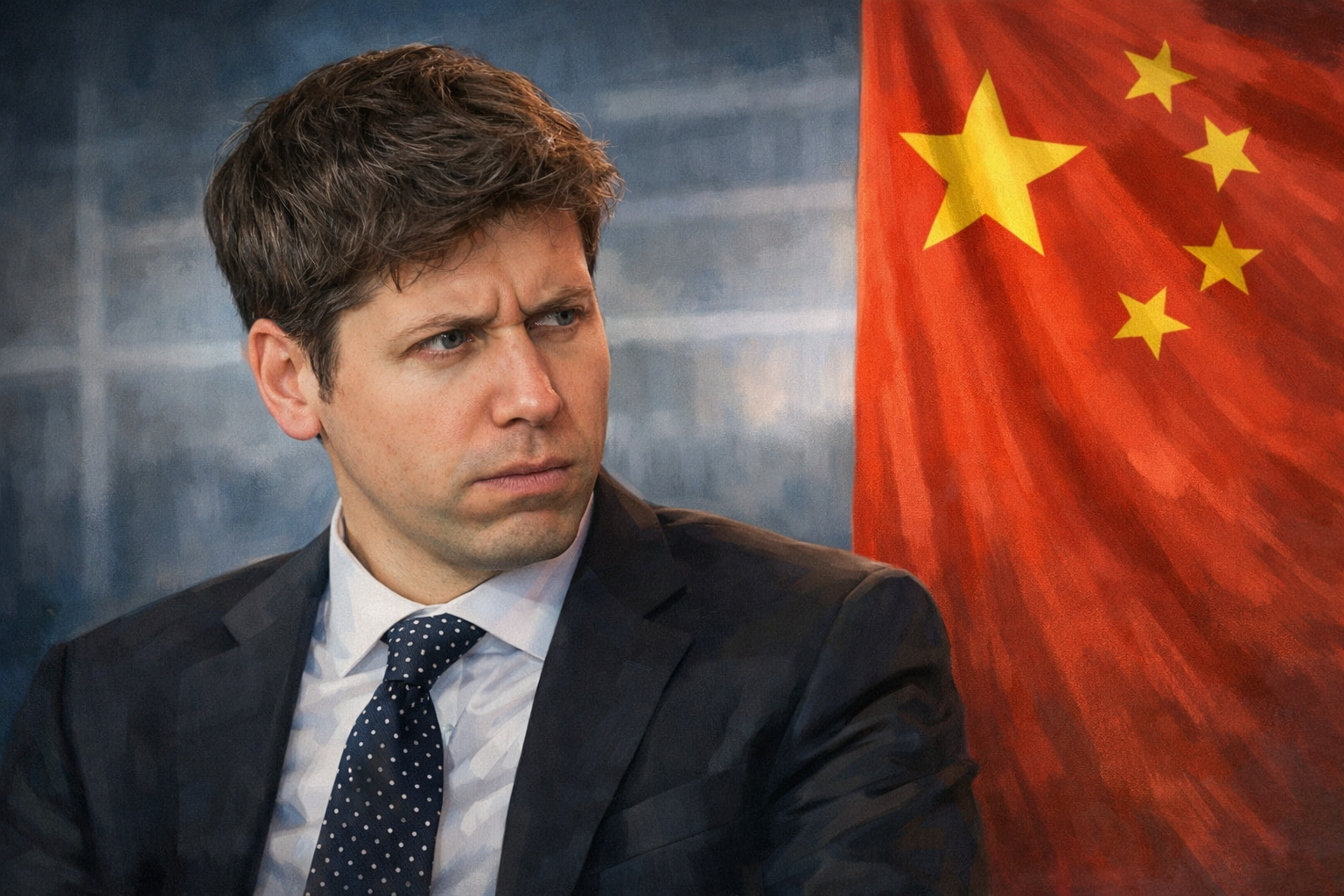
Sam Altman has a problem. And it is not a small one. Chinese startup DeepSeek, which shocked the world last January with an inexpensive AI model, is engaging in what could be called digital theft, according to OpenAI. But this is not just about two technology rivals—it is a clash between the US and China in the race for dominance in artificial intelligence.
On February 12, OpenAI sent US lawmakers a report that carries considerable weight. In it, the company accuses DeepSeek of systematically circumventing security measures and "free-riding" on technologies developed by American companies. The technique the Chinese are allegedly using? Distillation. And no, this is not about making whisky.
How does distillation work in AI?
Distillation works exactly like this. A smaller AI model learns by observing the responses of a larger, more advanced model. Instead of being trained from scratch on vast amounts of data, it simply copies the behavior of the smarter model. The result? A faster, cheaper model that behaves almost exactly like the original.
There is nothing inherently wrong with that. Distillation is common practice in the technology industry. Companies use it when they want to bring AI to phones or laptops that lack the computing power to run massive models. The problem arises when someone distills another company's models without permission—and then competes with them directly.
How is DeepSeek allegedly doing it?
OpenAI claims to have evidence. According to its report, DeepSeek employees developed methods to bypass OpenAI's security restrictions. They allegedly use "obfuscated third-party routers" and other tricks to mask their identity. In other words, they hide behind proxy servers, rotate IP addresses, and do everything they can to appear to be ordinary users.
"We have observed accounts associated with DeepSeek employees developing methods to circumvent our access restrictions," the document states. OpenAI also claims that DeepSeek created code that automatically accesses American AI models and extracts responses from them for distillation. And that is not all. OpenAI believes DeepSeek is using similar techniques against other American companies as well—not just against ChatGPT.
Preparing the market ahead of a new model?
DeepSeek became an overnight star of the AI world last January when it released its R1 model during the Chinese Lunar New Year. It claimed that its performance was comparable to the best American models—even though it had been trained using far fewer advanced chips. That set off alarm bells in Washington. Do US semiconductor export controls even work? Or has China found a way around them?
And now, a year after that shock, OpenAI is striking again. The timing is no coincidence. There is speculation that DeepSeek could unveil another model during this year's Lunar New Year celebrations. OpenAI apparently wants to strike preemptively—to warn politicians and the public that anything DeepSeek releases may be built on "stolen" knowledge.
Austin Horng-En Wang of the RAND Corporation think tank asks: Why is OpenAI escalating now? "One possible reason is to prevent DeepSeek and Chinese companies from obtaining more chips to distill American models, so that the US can maintain its leading position," he says.
China pushes open source, America closed models
Here we encounter a fundamental difference in philosophy. DeepSeek and other Chinese companies advocate an open-source approach—their models can be downloaded, modified, and used by anyone. That is the exact opposite of what American technology companies such as OpenAI or Google do, carefully guarding their models.
Following DeepSeek's success, China embraced open-source AI like an avalanche. Over the past month, Chinese startups have released dozens of new open models—everyone wants to be the next DeepSeek. Neil Shah of Counterpoint Research sums it up aptly: "The reality is that no model is an island, and the entire industry evolves through mutual learning. In many cases, new players follow the same paths of distillation and optimization."
Legality and politics
This is where things start to get complicated. Distillation itself is not illegal. It is a standard technique. The problem lies in how and where you obtain the data. If a company sends thousands of automated queries to someone else's AI system, collects the responses, and uses them to train a competing model—that is ethically and legally questionable. OpenAI's terms of use prohibit using outputs from its models to create "imitations of advanced AI models" that replicate their capabilities. But enforcing that in practice? That is like catching fish with your bare hands.
US Congressman John Moolenaar is not taking it lightly. "This is part of the Chinese Communist Party's strategy: steal, copy, and kill the competition," he declared. "Chinese companies will continue to distill and exploit American AI models for their own benefit, just as they copied OpenAI and created DeepSeek."
Republican Congressman Michael McCaul added another layer of concern. He points out that China has created advanced open-source models using less powerful Nvidia chips. "I shudder to think what they could do with more advanced hardware such as H200 chips," he adds.
This dispute is not just about two companies. It is a clash between two visions for the future of artificial intelligence. On one side is America, with closed commercial systems that it protects like state secrets. On the other is China, with an open-source philosophy that spreads AI technology around the world. OpenAI proactively removes users who appear to be attempting to copy its models. But in the world of the global internet, that is no easy task. Chinese companies have the motivation, resources, and political support to continue.
Sources: estofworld.org and ndtv.com


