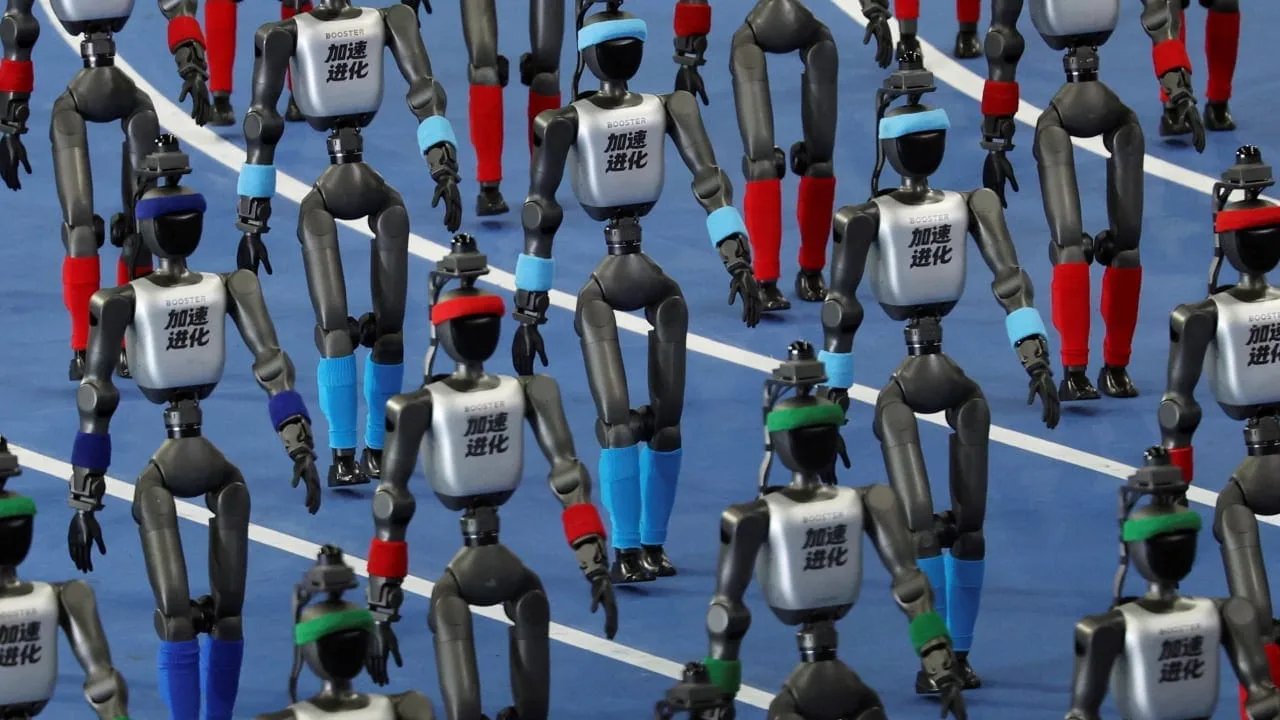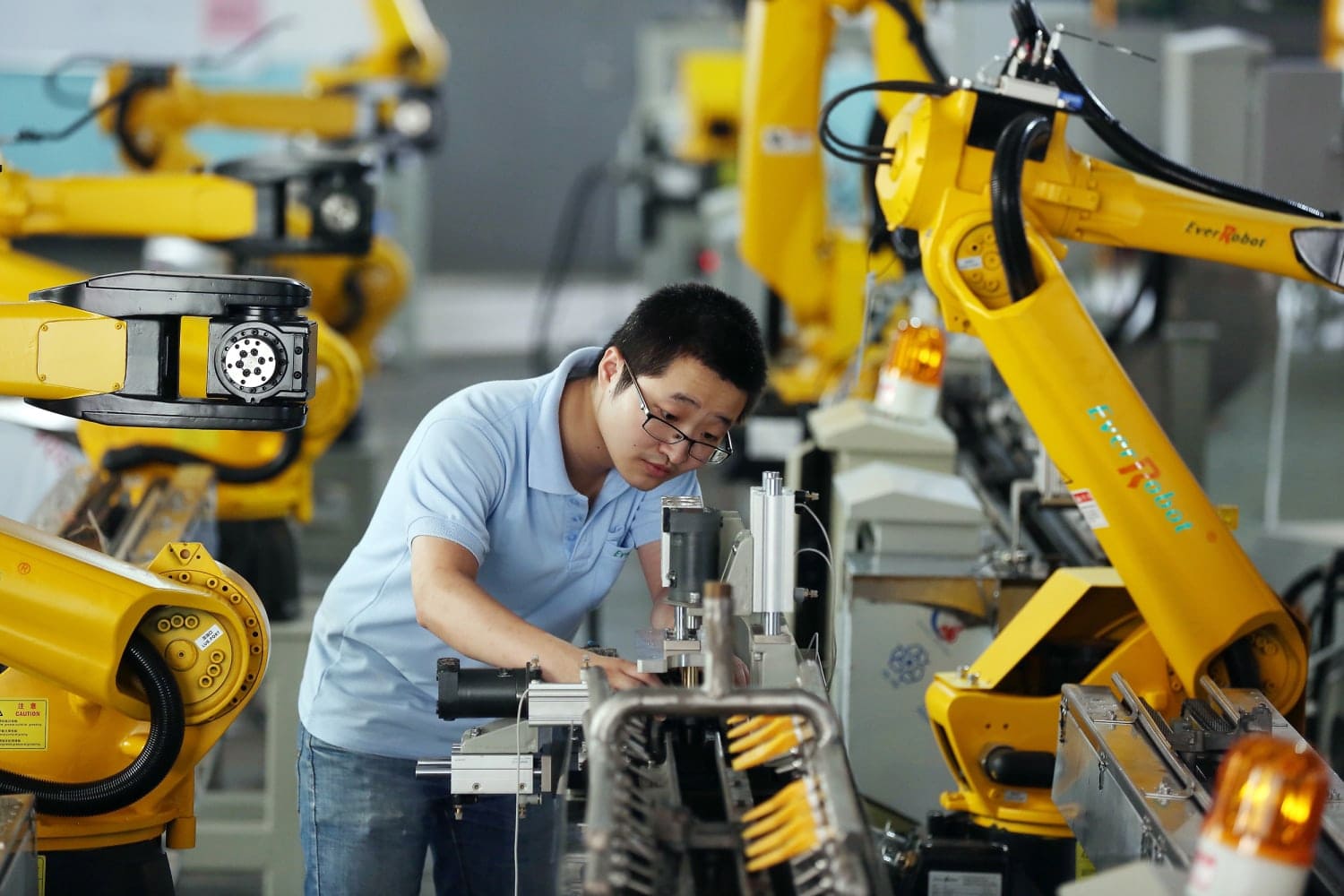
China Dominates the World of Robotics Through Mass Factory Automation
China has become the undisputed leader in deploying industrial robots in factories. In 2024, its factories installed nearly 300,000 new robots, exceeding the number installed in all other countries combined. For example, the United States installed only 34,000 and Japan 44,000. Overall, more than two million robots now operate in Chinese manufacturing facilities, more than in the rest of the world. This massive growth is driven by government strategies, particularly the Made in China 2025 initiative, which focuses on robotics and reduces dependence on foreign technologies through subsidies, low-cost loans, and direct funding.
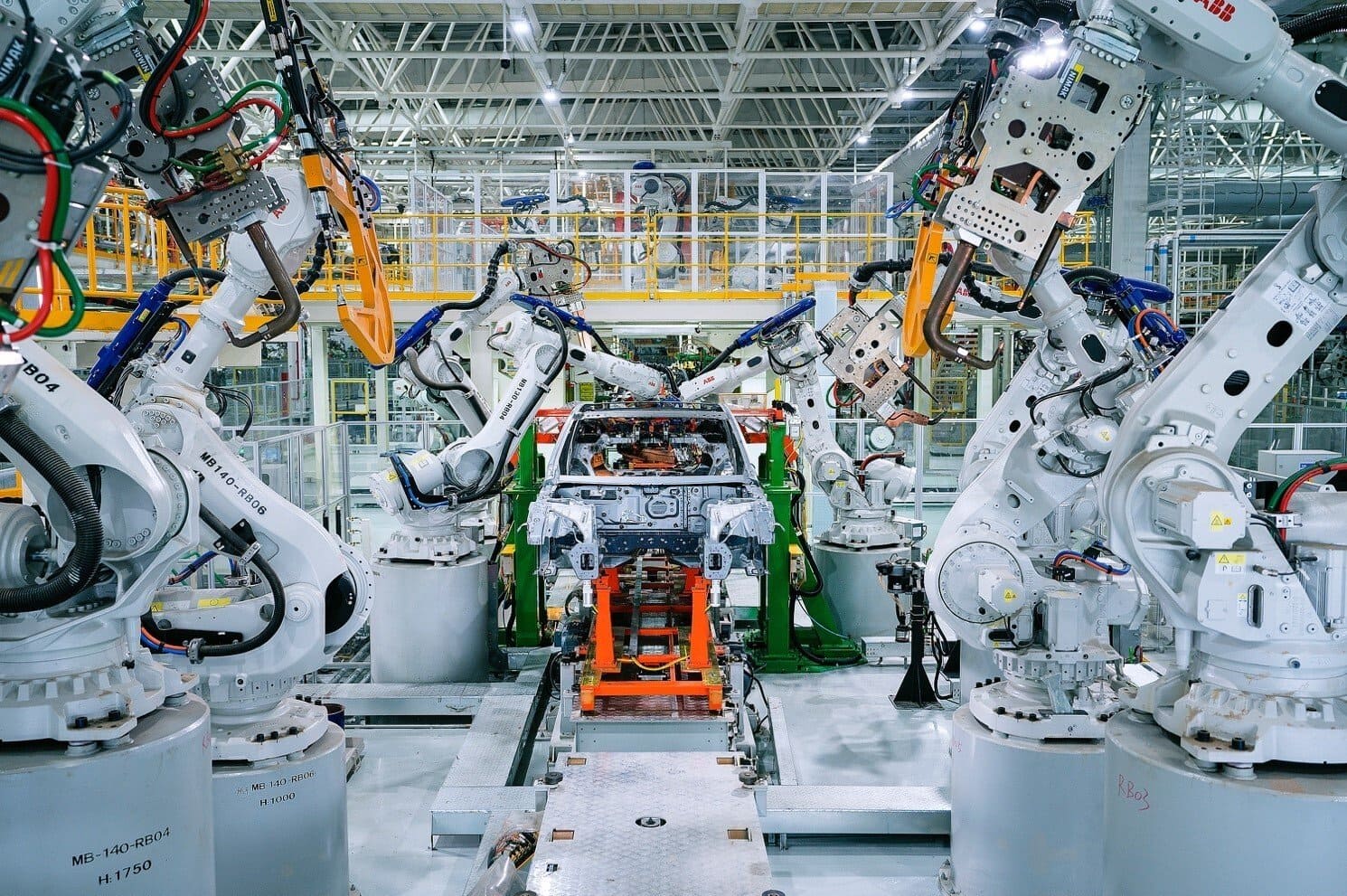
In 2024, domestic robot manufacturers in China accounted for nearly three-fifths of newly installed machines, a reversal from previous years when imported models dominated. China now produces one-third of all robots worldwide, strengthening its industrial self-sufficiency and creating a robust supply chain for components. Robots in Chinese factories handle a wide range of tasks, from welding automotive parts to loading boxes, and are increasingly being integrated with artificial intelligence, which optimizes their performance and predicts maintenance needs.
Domestic Innovation and Government Support
Chinese robot manufacturers are gaining ground thanks to lower prices, improved quality, and massive government support. The government provides subsidies and low-cost loans, enabling domestic companies to innovate and acquire foreign competitors. This approach has transformed the market: while China previously imported most of its robots, nearly three-fifths of new installations are now locally produced. Foreign suppliers, such as those from Japan or Germany, are losing market share because Chinese models are more affordable and tailored to local needs. The Made in China 2025 initiative has accelerated this trend by promoting automation in key sectors such as the automotive and electronics industries.
Labor shortages in industrial hubs such as Shanghai and Shenzhen are further accelerating this shift. Instead of mass layoffs, many workers are moving into new roles involving robot programming or maintenance. This transition is supported by government policies that invest in training and education to help people remain competitive in an automated environment.
Dark Factories and Advanced Technologies
So-called dark factories are emerging in China, where production runs without human workers, relying solely on artificial intelligence, the Internet of Things, and sensor networks. These facilities operate around the clock without the need for lighting and fully automate processes from raw materials to finished products. Robot density reached 392 machines per 10,000 workers in 2023, far above the global average of 141. China thus produces nearly one-third of all goods manufactured worldwide, with an emphasis on efficiency and speed.
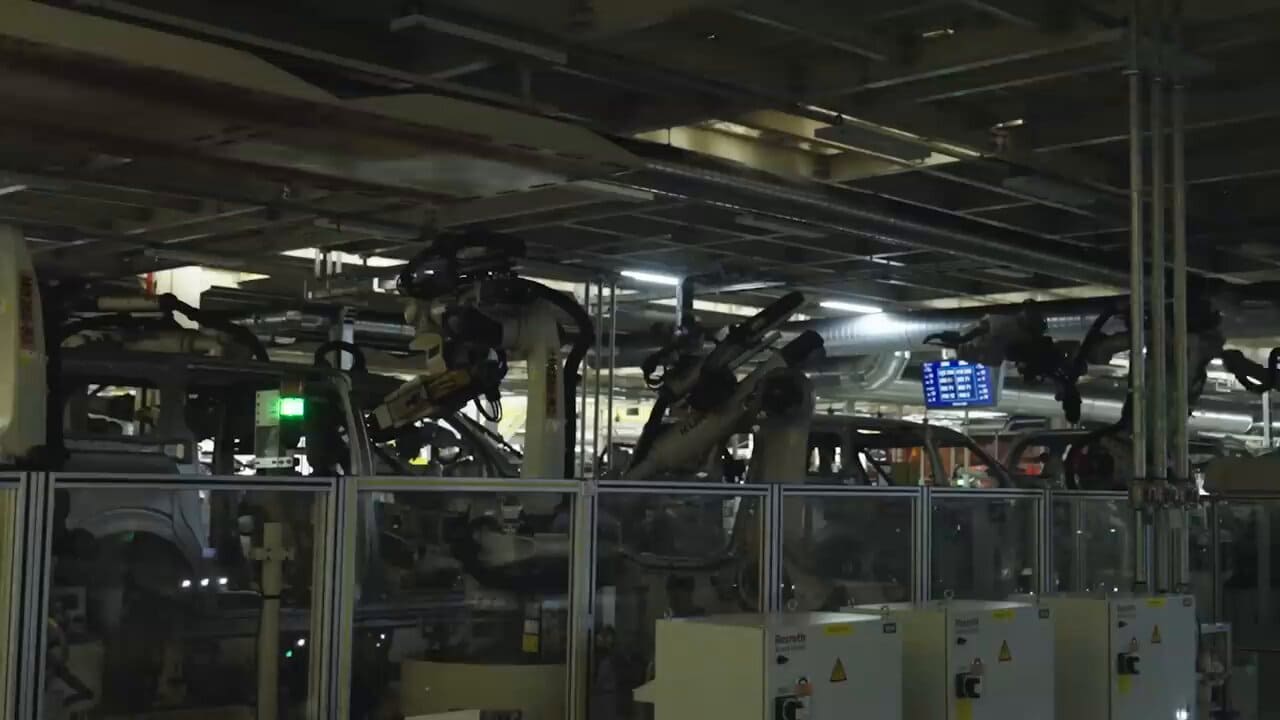
The integration of artificial intelligence enables robots not only to perform repetitive tasks but also to learn from data and adapt to changes in production. In the automotive sector, for example, robots weld parts with a level of precision that is difficult for humans to achieve, while in logistics they automatically sort and package goods. This progress reduces errors and increases output, making Chinese manufacturing globally competitive.
Impact on the Labor Market and Skilled Workforce
Although automation is growing rapidly, China has avoided mass layoffs. Instead, demand is increasing for skilled workers, such as programmers and engineers, who handle robot installation and maintenance. Salaries for robot installation specialists reach nearly $60,000 per year (CZK 1.38 million)). This wage growth reflects how automation is creating new opportunities in industries previously dominated by manual labor.
Unlike the situation in the United States or Japan, where automation has often led to production being relocated to lower-cost countries, this trend is strengthening the domestic economy in China. Workers are retraining for roles that require technical expertise, increasing overall productivity and reducing dependence on unskilled labor.
Global Context and the Future
China has doubled demand for factory robots over the past decade, while installations are declining in other industrialized countries such as Japan, the United States, South Korea, and Germany. Multinational companies are adapting by localizing their production and services directly in China to keep pace with the rapid development. This trend is influencing global industry, with China setting the standards for the adoption of advanced systems.
With the growing number of installations and innovations, this trend is expected to continue.
Source: nytimes.com