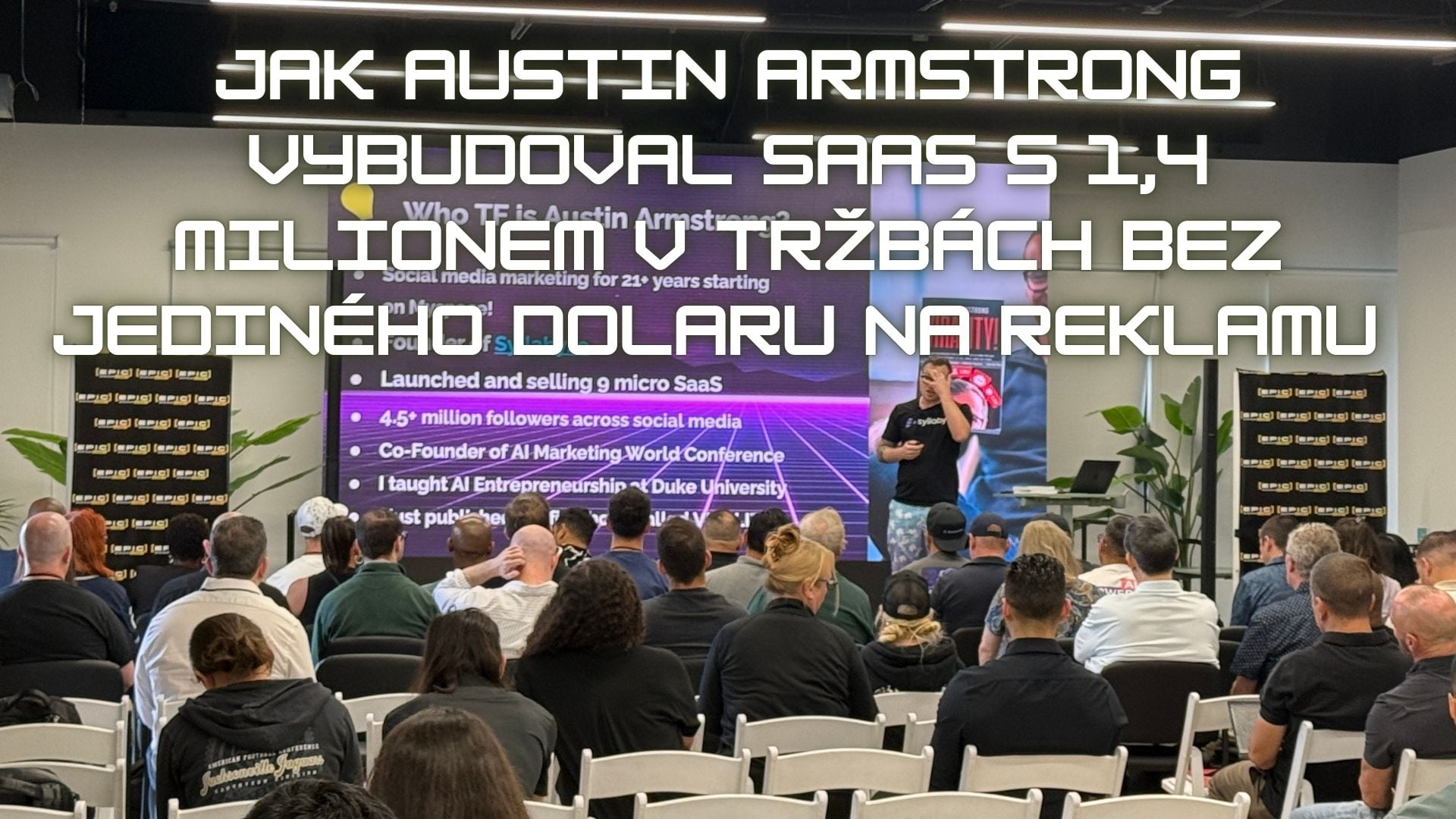
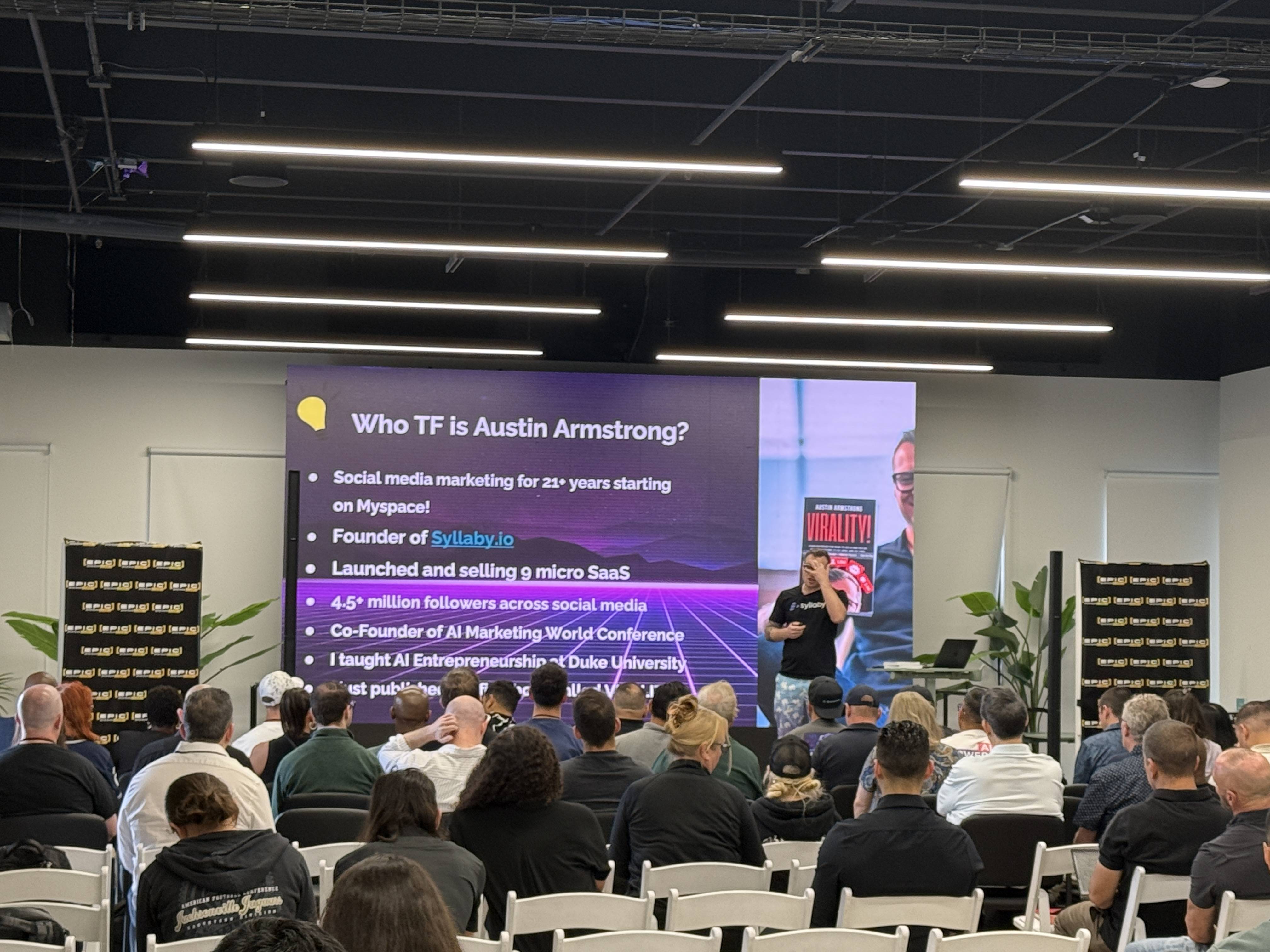
At this year’s Epic Webinar Summit in Miami, Austin Armstrong took the stage—the founder of Syllaby.io, a man with 4.5 million followers on social media, and co-creator of the AI Marketing World conference in Dallas.
And honestly? His talk was packed with specific strategies you can take away and put to use immediately. No theory, no empty talk—just real tactics that work for him and that he openly shares.
Here are the most important takeaways from his presentation.
Who is Austin Armstrong?
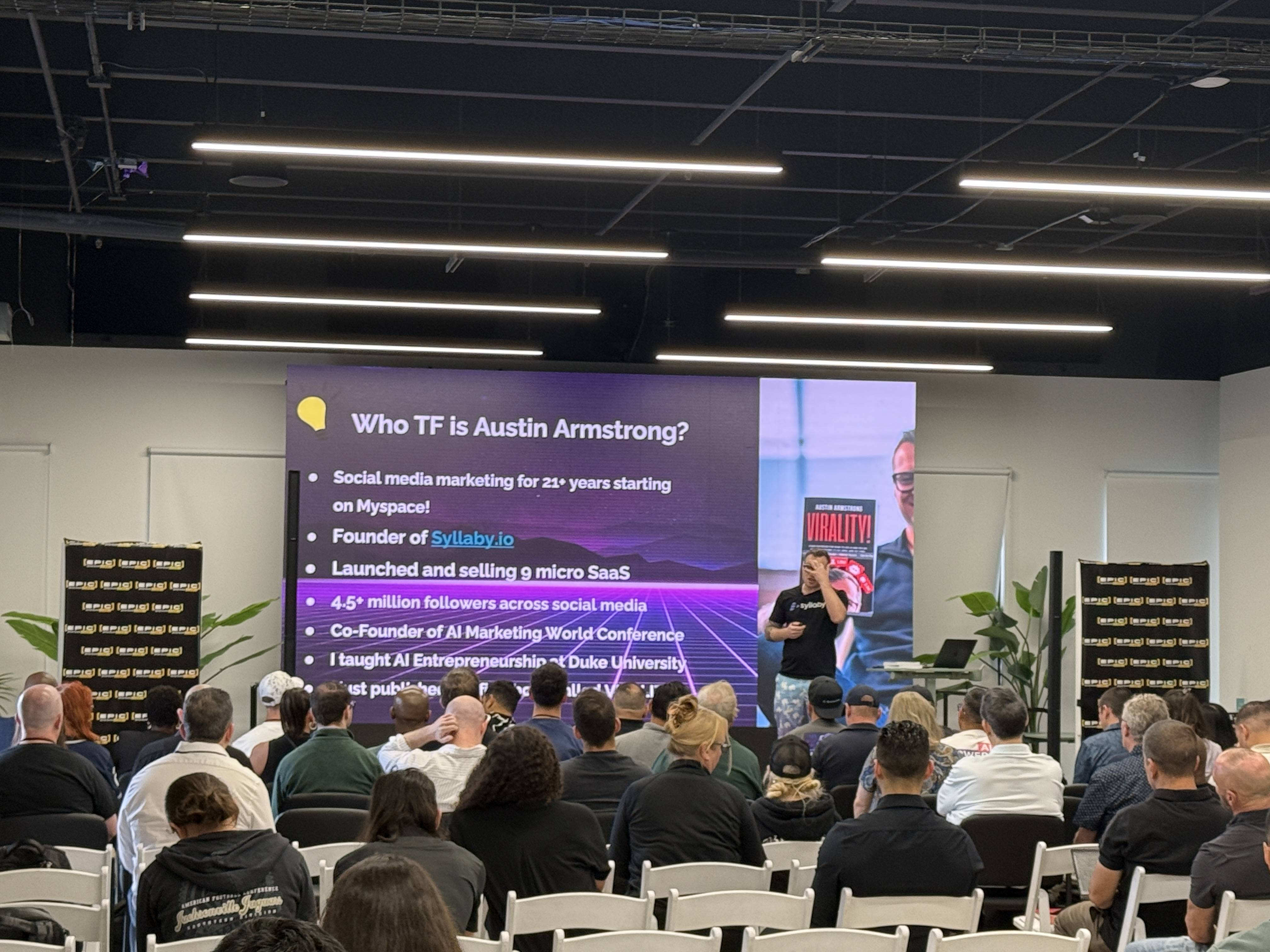
Austin has been active on social media for over 21 years—he started on MySpace, where he had hundreds of thousands of followers at the age of fourteen. Today, he runs nine micro-SaaS products, with his main project, Syllaby, automating the creation and publishing of video content. He has also taught AI entrepreneurship at Duke University and recently published a book about virality.
What makes him likable is that he genuinely practices what he teaches. All his content is 100% organic, with no paid promotion.
Facebook in 2025? 30 million people per month, organically
This number personally blew me away. Last year, Austin reached 1.4 billion people on Facebook. Organically. Without spending a single dollar on advertising.
His main strategy? His personal profile. Not a business page, not a group—his personal profile, complete with family and high school photos. As he puts it, he sacrifices his friends and family to the algorithm gods in exchange for reach.
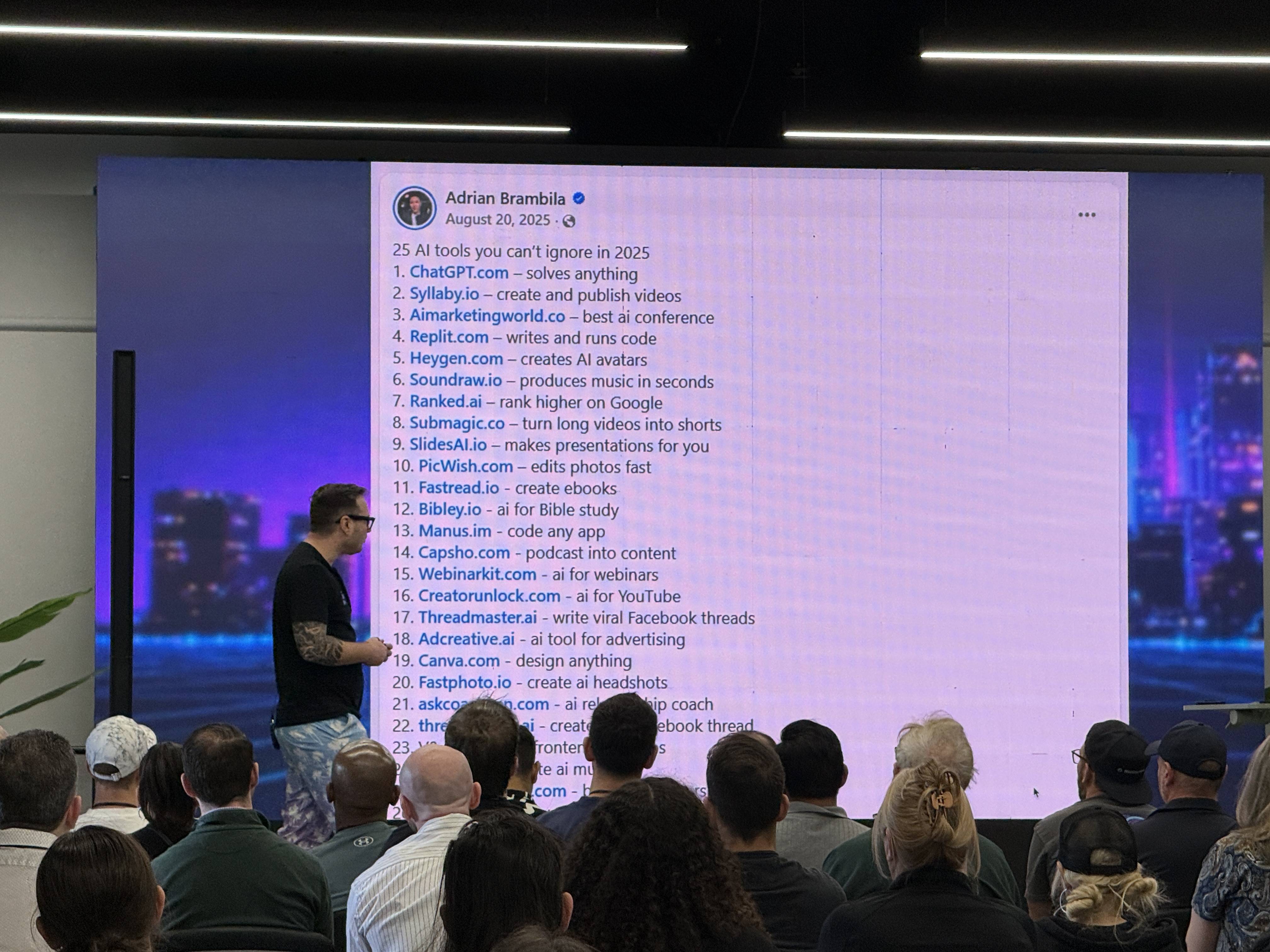
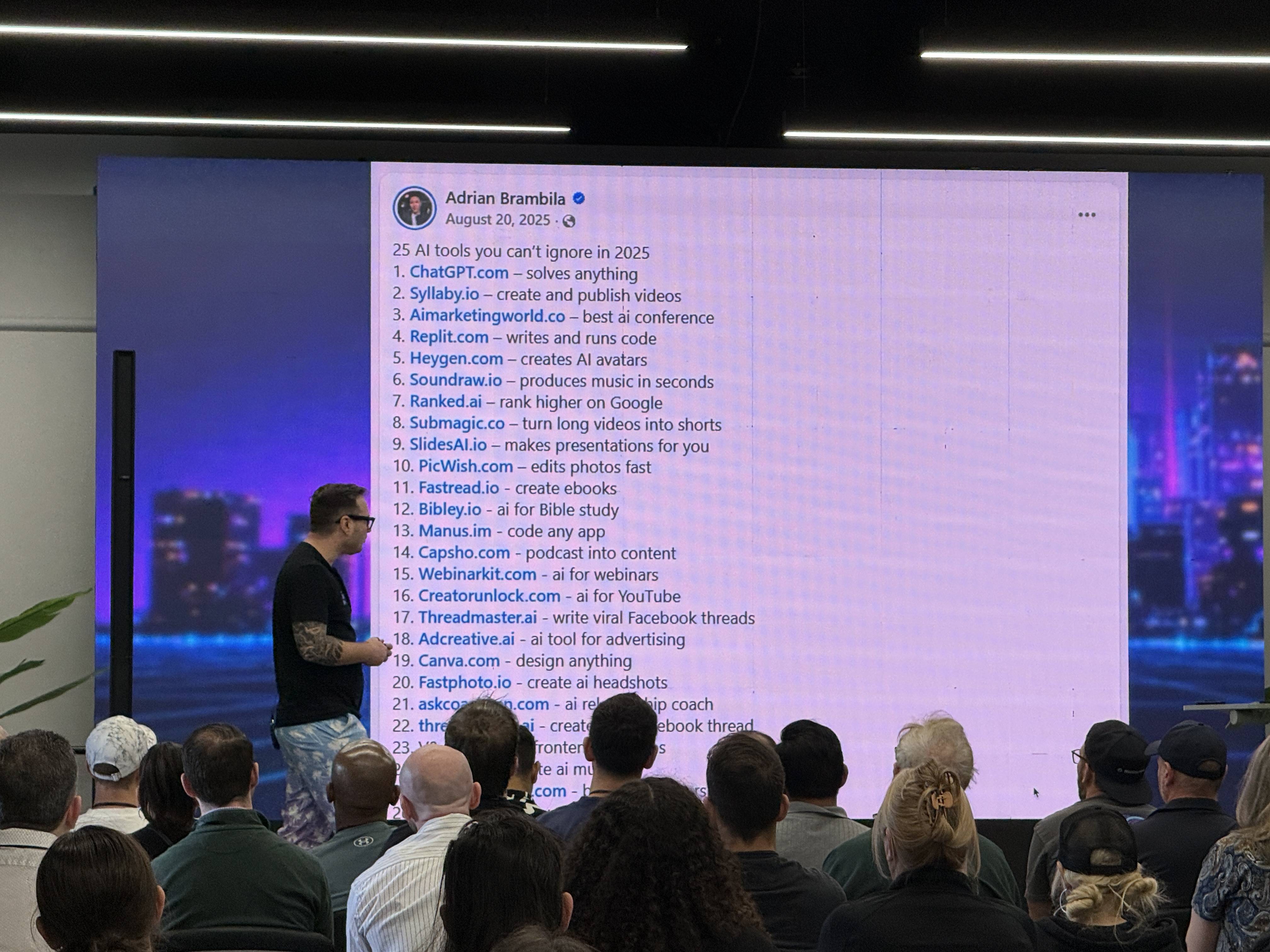
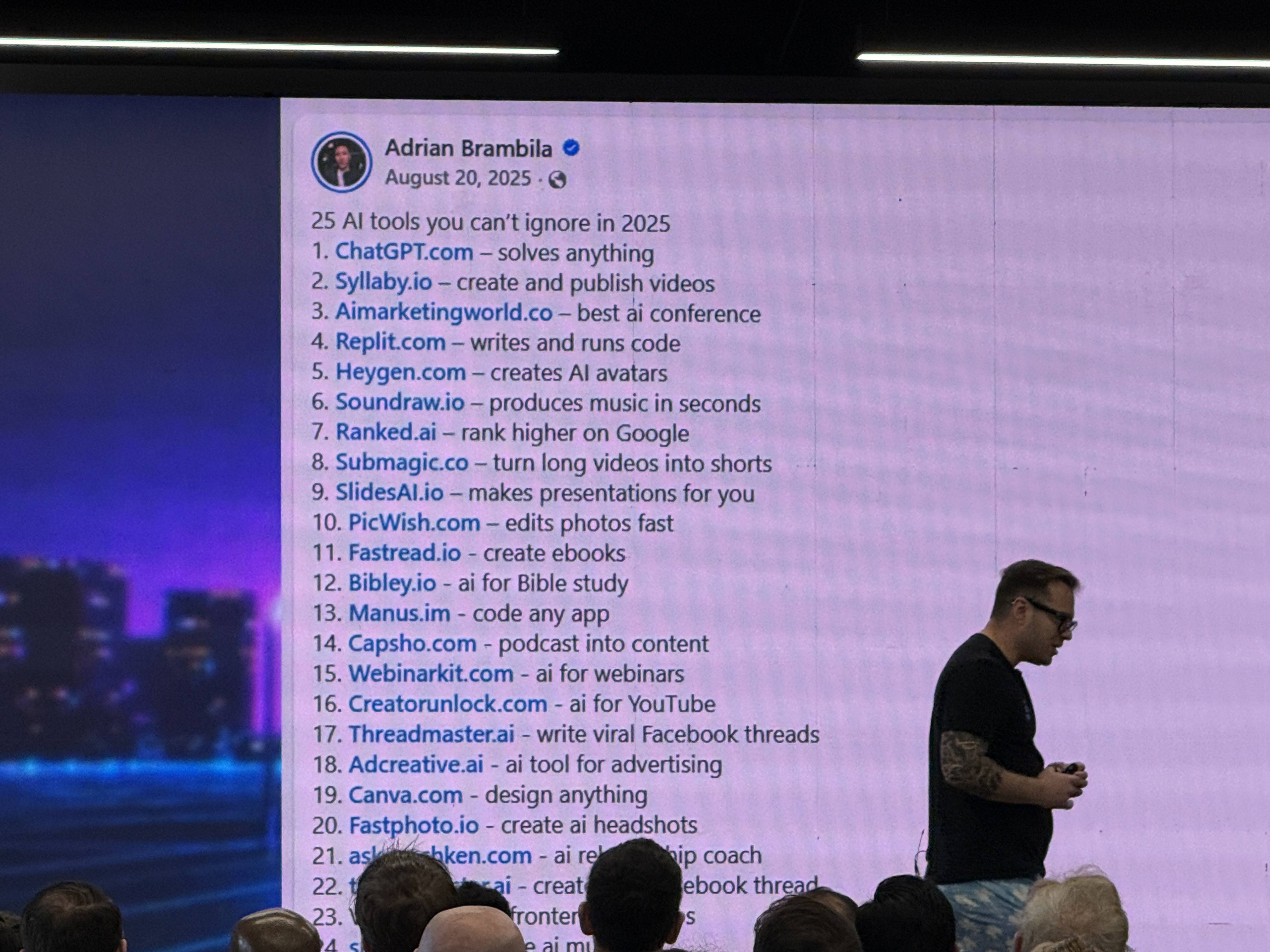
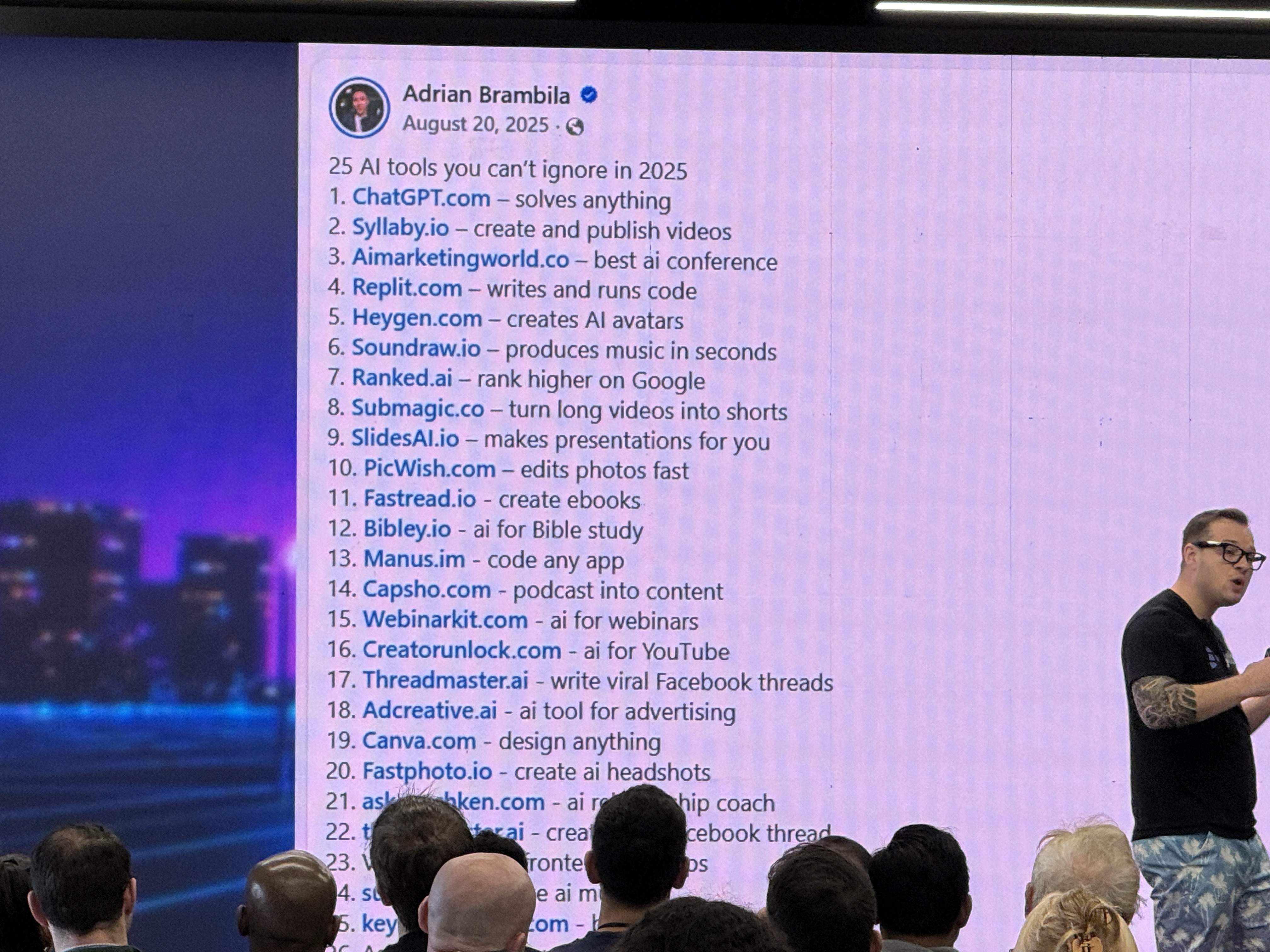
One tactic that works extremely well for him is posts like “25 AI tools you need to know.” It’s a classic list of links—with ChatGPT always in first place, which gives the post authority, and his own website immediately in second place. He fills out the rest with well-known brands and his friends’ projects. One such post received 29,000 likes and 35,000 shares.
And yes—it is exactly the kind of post containing 25 links. The format that Facebook is rumored to penalize. Austin says the opposite, and his numbers prove him right.
“Create your own beef”—an advanced social media strategy
This made me laugh. Austin openly admitted that he and his friend Adrian Gravina (Brambila) have staged a feud on social media. No one knows whether it is serious or not—and that is exactly the point. It generates engagement, comments, and shares.
When Austin won an award at a conference and shared a photo, Adrian immediately responded with something along the lines of, “Apparently they give awards to anyone these days.” Austin then replied in his usual style. The result? Both benefit from massive reach.
Of course, this is an advanced strategy that requires mutual trust and an agreement. But as a concept, it is fascinating.
Comments = an untapped gold mine
One simple tip that almost no one follows: add a call to action in the comments under every post you publish. Whether you are sharing a marketing tip or a photo from a family lunch, people automatically scroll down to the comments. And that is where they will find your registration link, webinar, or whatever else you are promoting.
The African proverb that guides his business
Austin repeatedly emphasized the philosophy of collaboration rather than competition. He quoted an African proverb: “If you want to go fast, go alone. If you want to go far, go together.”
He has a group called AI News Spot, where members share one another’s content, support each other’s posts, and win affiliate contests together. No envy, no rivalry—everyone grows together.
And this is not just an empty phrase. Austin actively promotes his friends’ tools in his posts—WebinarKit, KeywordSearch, and others. He says he does not need to keep 100% of the profits. The growth of the entire community is more important.
A brilliant funnel: Facebook profile → Group → Affiliate army
This is where everything comes together into a single system, and I have to say, it is cleverly designed.
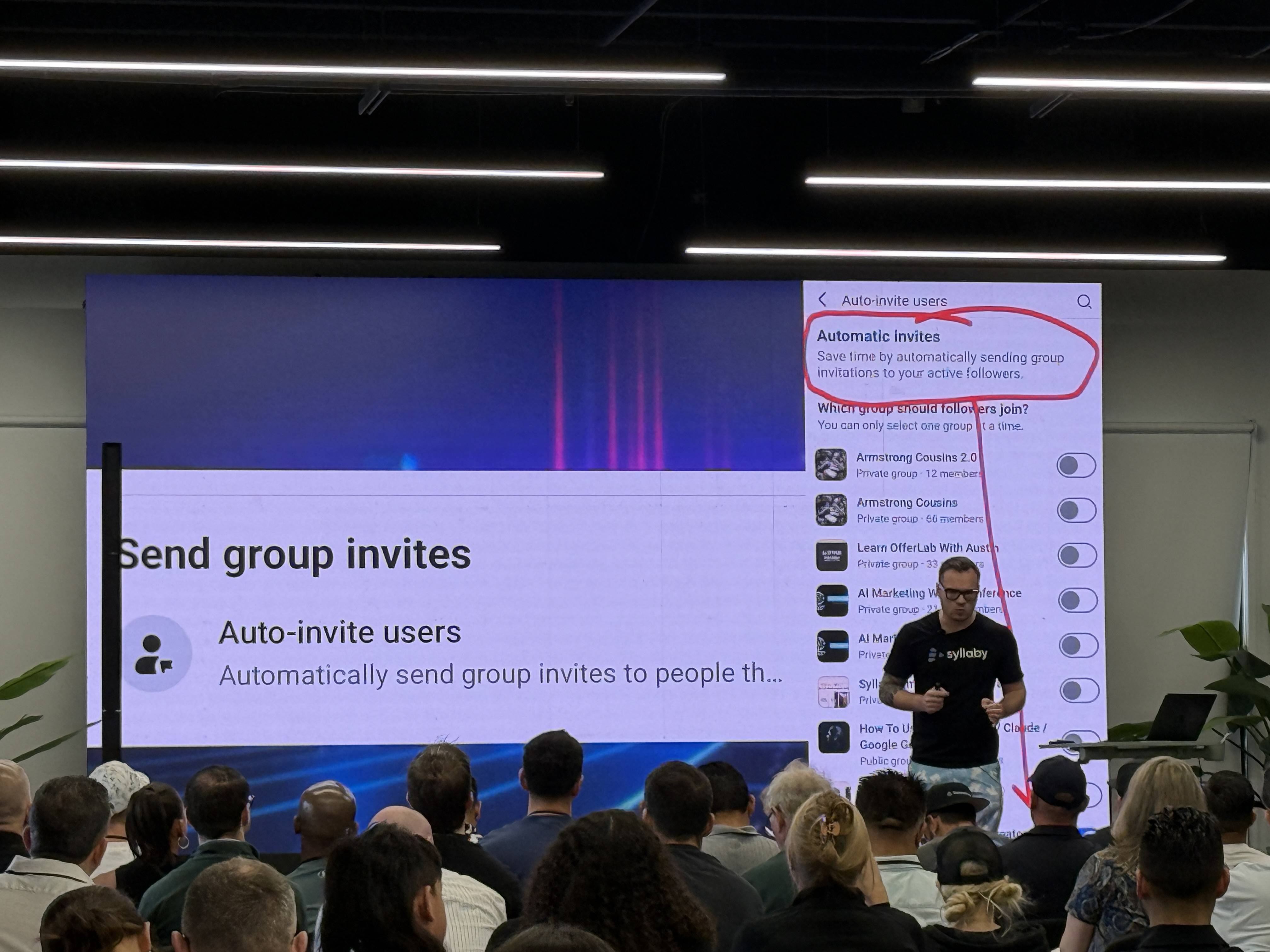
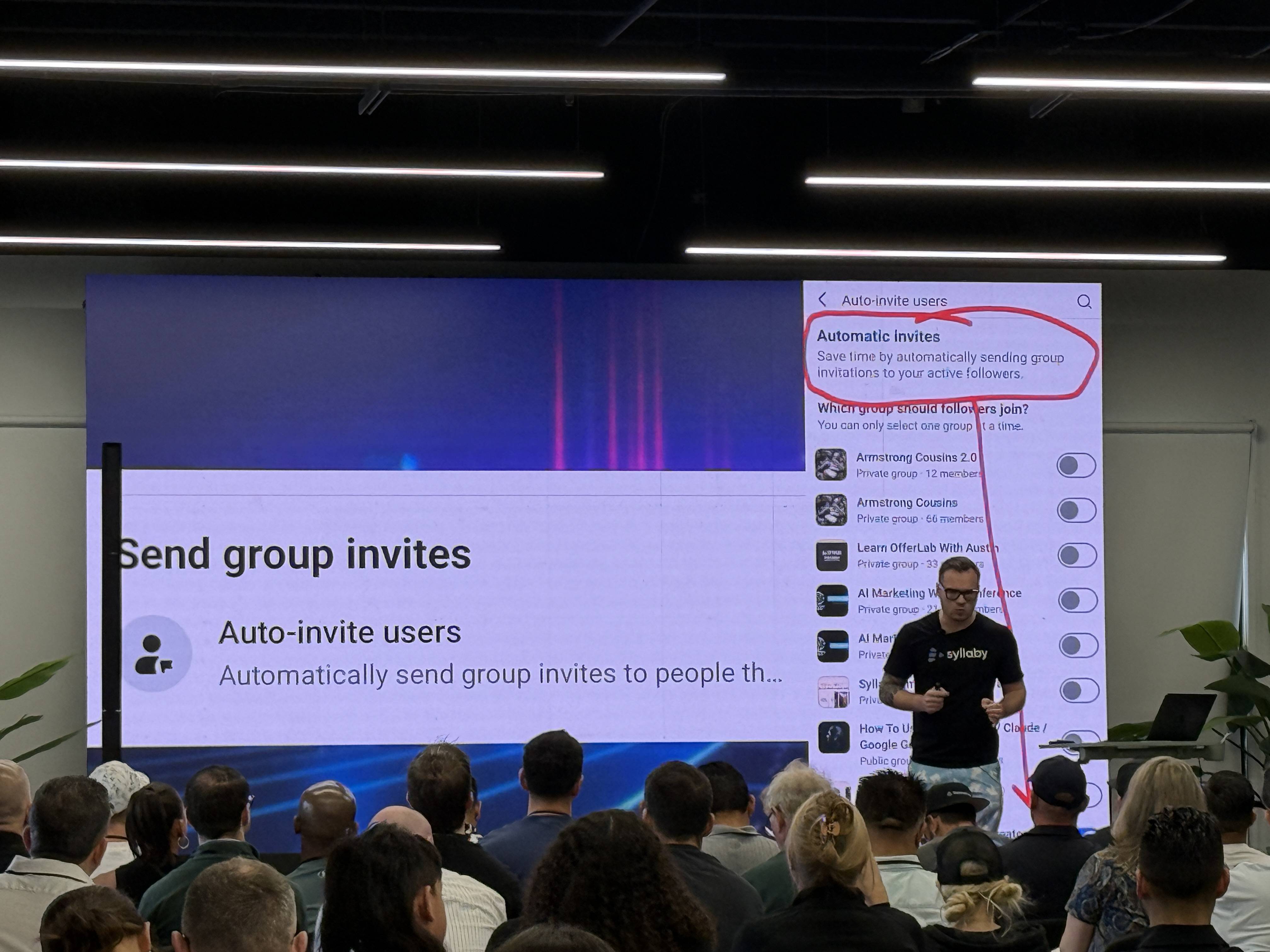
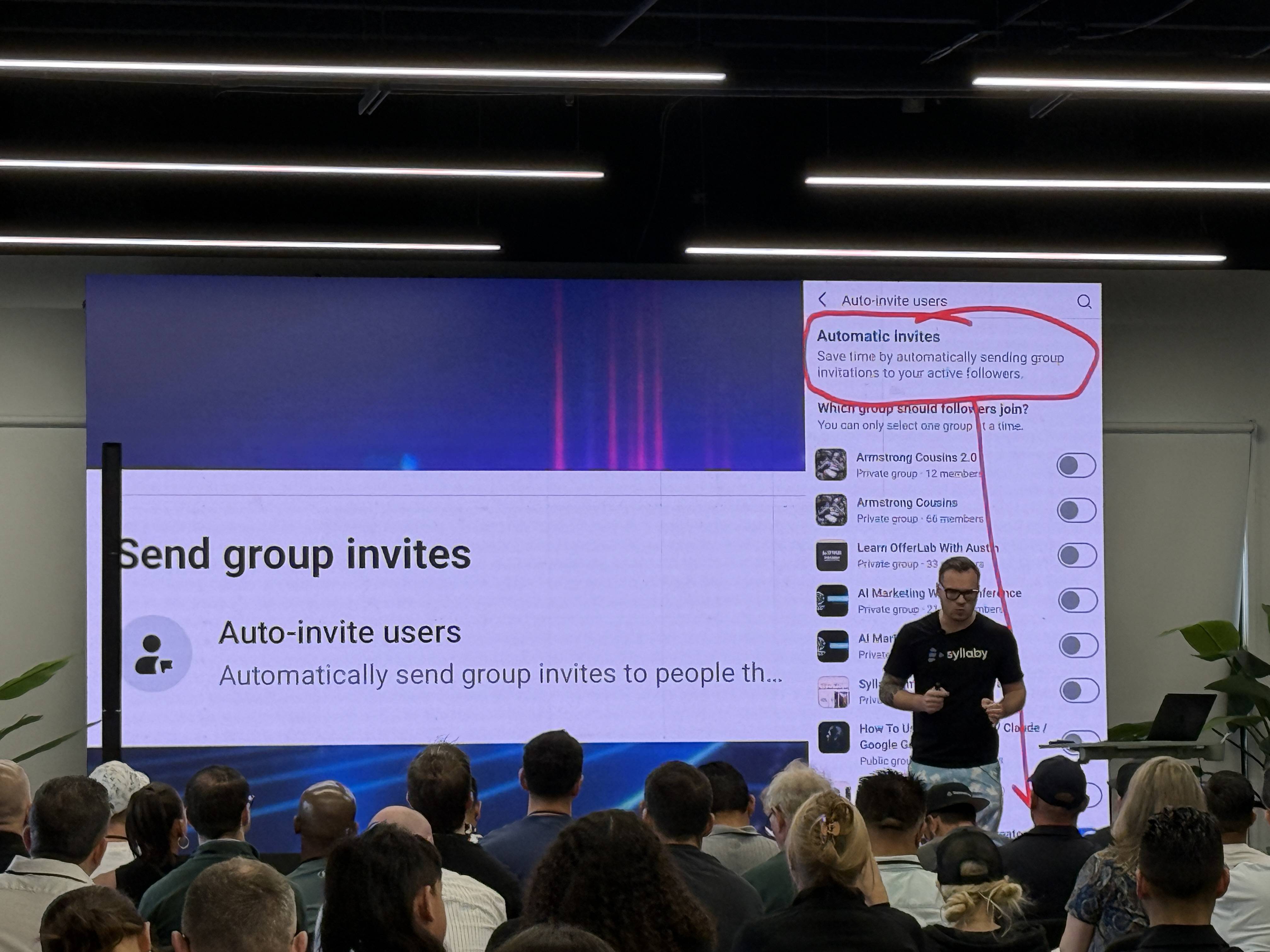
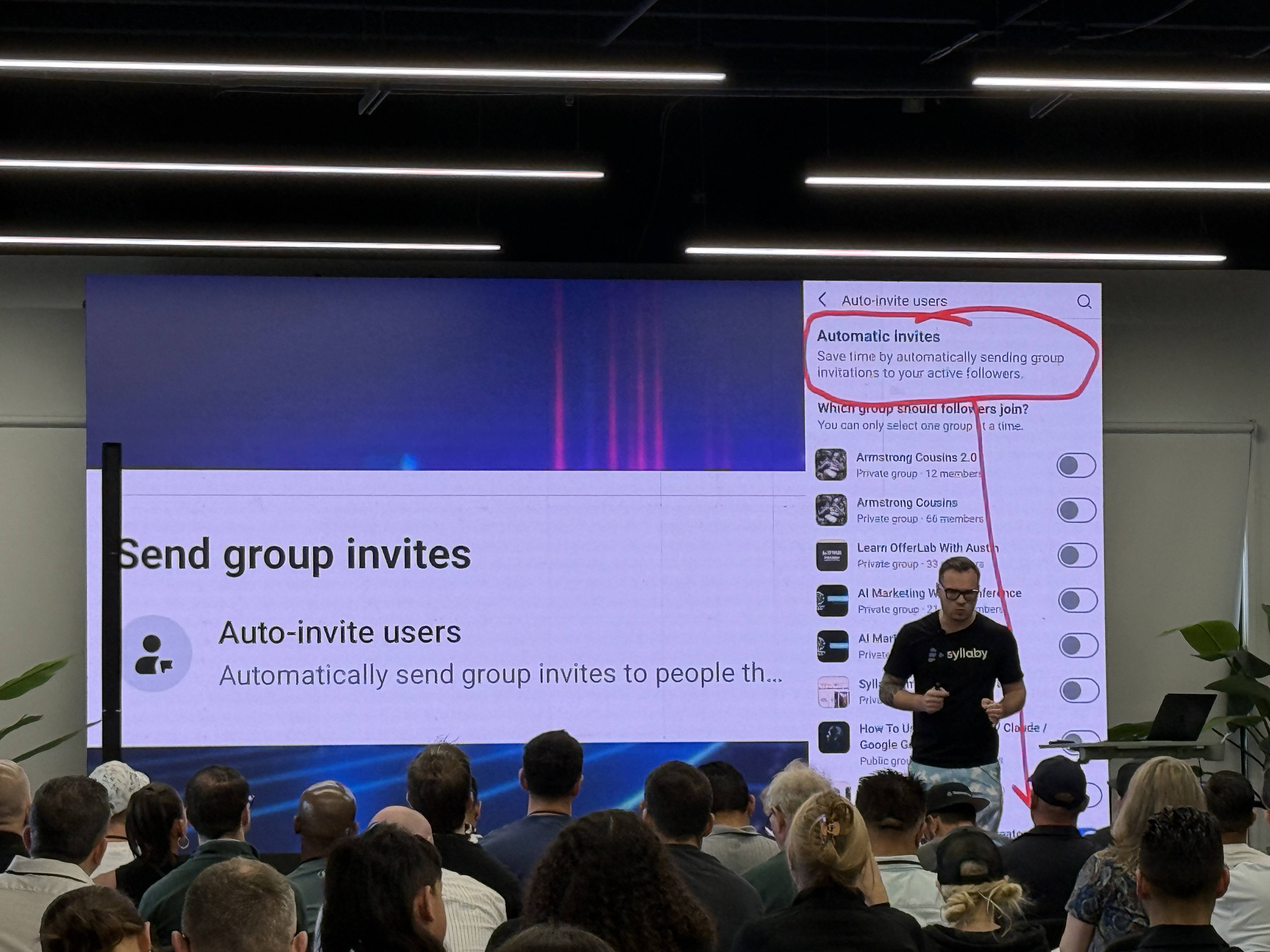
Facebook has a hidden feature—automatic group invitations. When you enable it, everyone who interacts with your content automatically receives an invitation to a group you have selected.
With a reach of 1.4 billion, that means a massive influx of people into the group. And what happens there?
Newcomers see posts about the success of other members—screenshots of affiliate commissions and follower growth (one person gained 110,000 followers and received 26 million views using Syllaby). This motivates them to ask questions. That is where the “Beat me to the response” game begins—group members race to be the first to answer a newcomer’s question while including their affiliate link.
The result? Everyone makes money. Affiliates earn commissions and do not churn (leave) because they are motivated. Austin gains new users. And his platform grows.
Affiliate program numbers that speak for themselves
Affiliate marketing is Syllaby’s number-one source of user acquisition. The specific figures:
-
$1.4 million in revenue from affiliates alone
-
26,000 registrations
-
13,000 active affiliates—that is an army of people motivated to sell his software in exchange for recurring monthly commissions
Austin summed it up simply: affiliate marketing is one of the most powerful strategies that most people underestimate. And the key is to give affiliates as many materials as possible—images, copy, videos, and templates. The easier you make it for them to sell, the more they will sell.
Webinars: from content to $20,000 in monthly recurring revenue
Webinars are another pillar of Austin’s growth. Every week, he hosts a webinar with 200–300 attendees—again organically, without paid advertising.
The key trick? Zoom allows you to upload a CSV file with email addresses and automatically invite previous attendees. Austin has a list of about 8,000 people from past webinars and continually invites them to new ones. Some may have registered but not attended, while others attended but did not find it relevant—a new webinar on a different topic, however, may interest them.
And this is where the conversion breakthrough came. Previously, they offered a discount coupon at the end of the webinar—the classic “value stack” approach. It worked reasonably well. But when they switched to personal demo calls, everything changed.
A team in the Philippines, paid $8 per hour, conducts 50 demo calls per week. In the first quarter, that amounted to 361 calls, resulting in 73 paying users. That is a 45% conversion rate with an average LTV of $269—and a total of $20,000 in monthly recurring revenue. From free webinars.
Repurposing: one webinar, dozens of content assets
Austin gets the most out of every webinar. He uploads the recording to YouTube, where it is optimized for search. At the same time, he turns it into a blog post—all you need to do is take the transcript, put it into AI, format it, add your own expertise, and publish it on your website.
A long webinar can also be cut into short vertical videos using tools such as Opus.pro. These clips go to YouTube Shorts, TikTok, Instagram Reels, Facebook Reels, Pinterest, X, Threads... everywhere.
And because the webinar is built around a specific keyword, this entire content ecosystem is interconnected and strengthens SEO.
Directory listings: a slow but steady stream of users
For software founders, Austin recommends listing on as many directories as possible. Product Hunt is one of the best known—Syllaby has repeatedly ranked as the number 1, 2, and 3 product of the day there and was even nominated for product of the year.
Austin created a complete guide on how to reach first place on Product Hunt, along with a list of more than 200 software directories you can submit to.
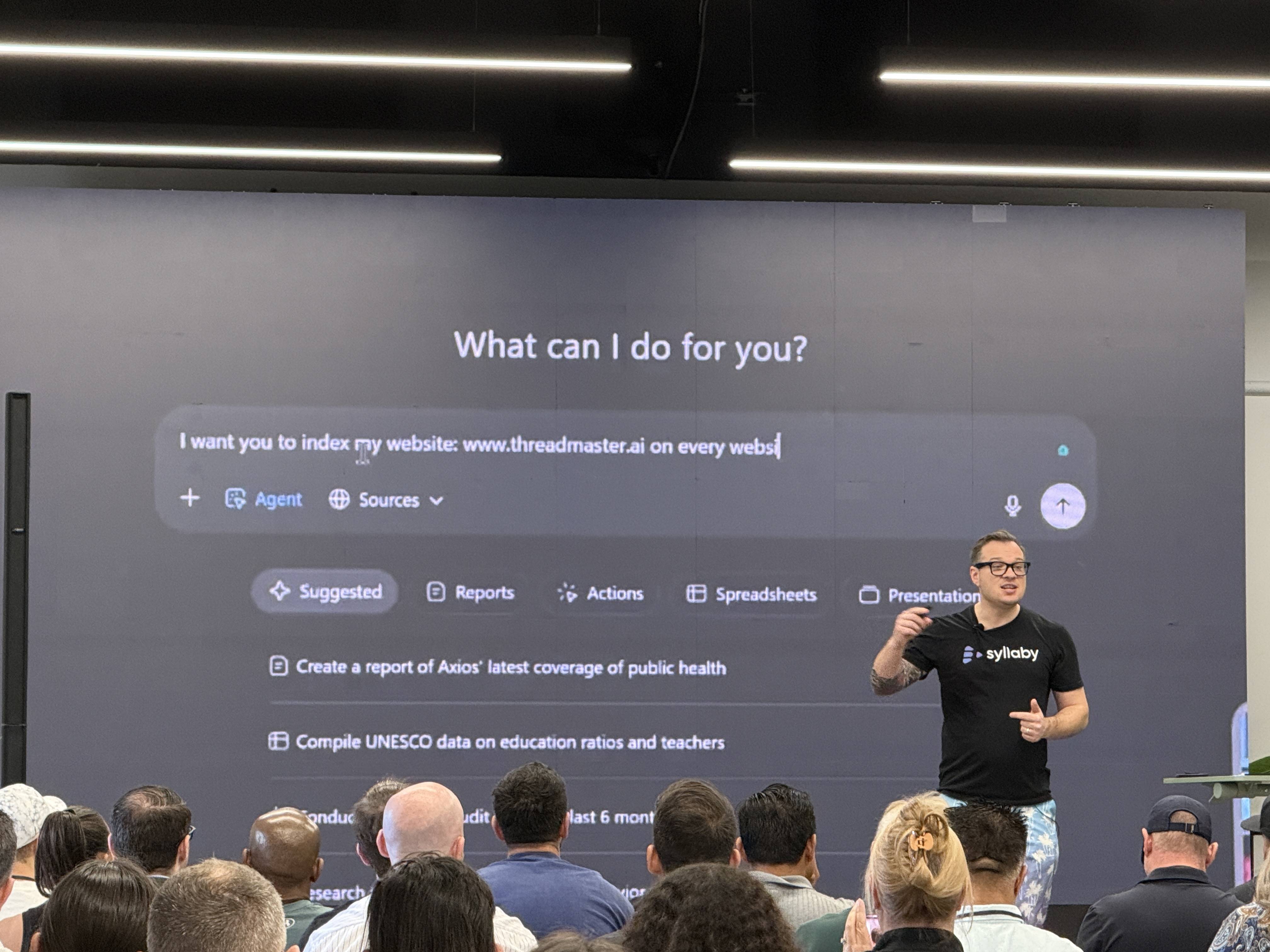
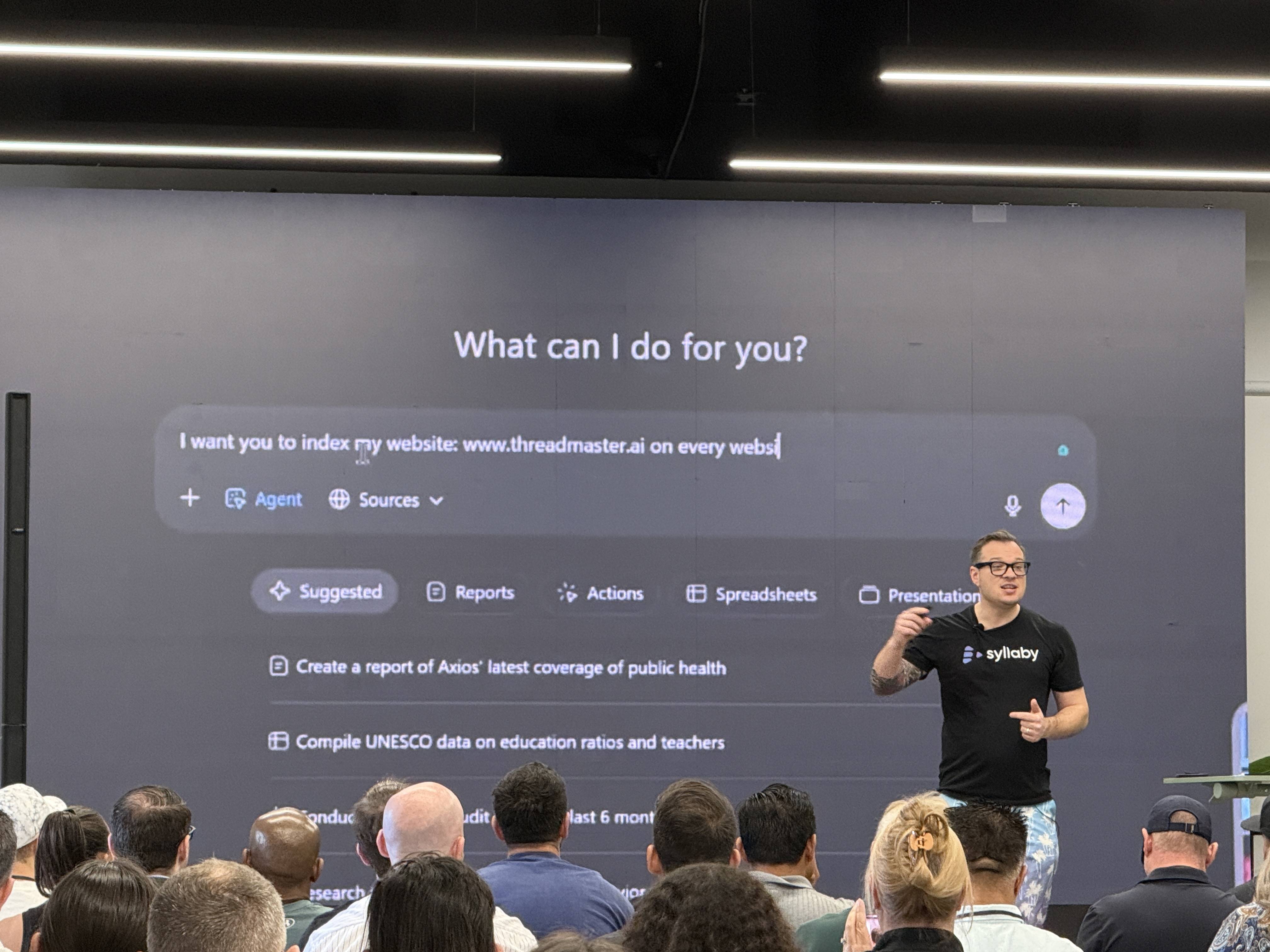
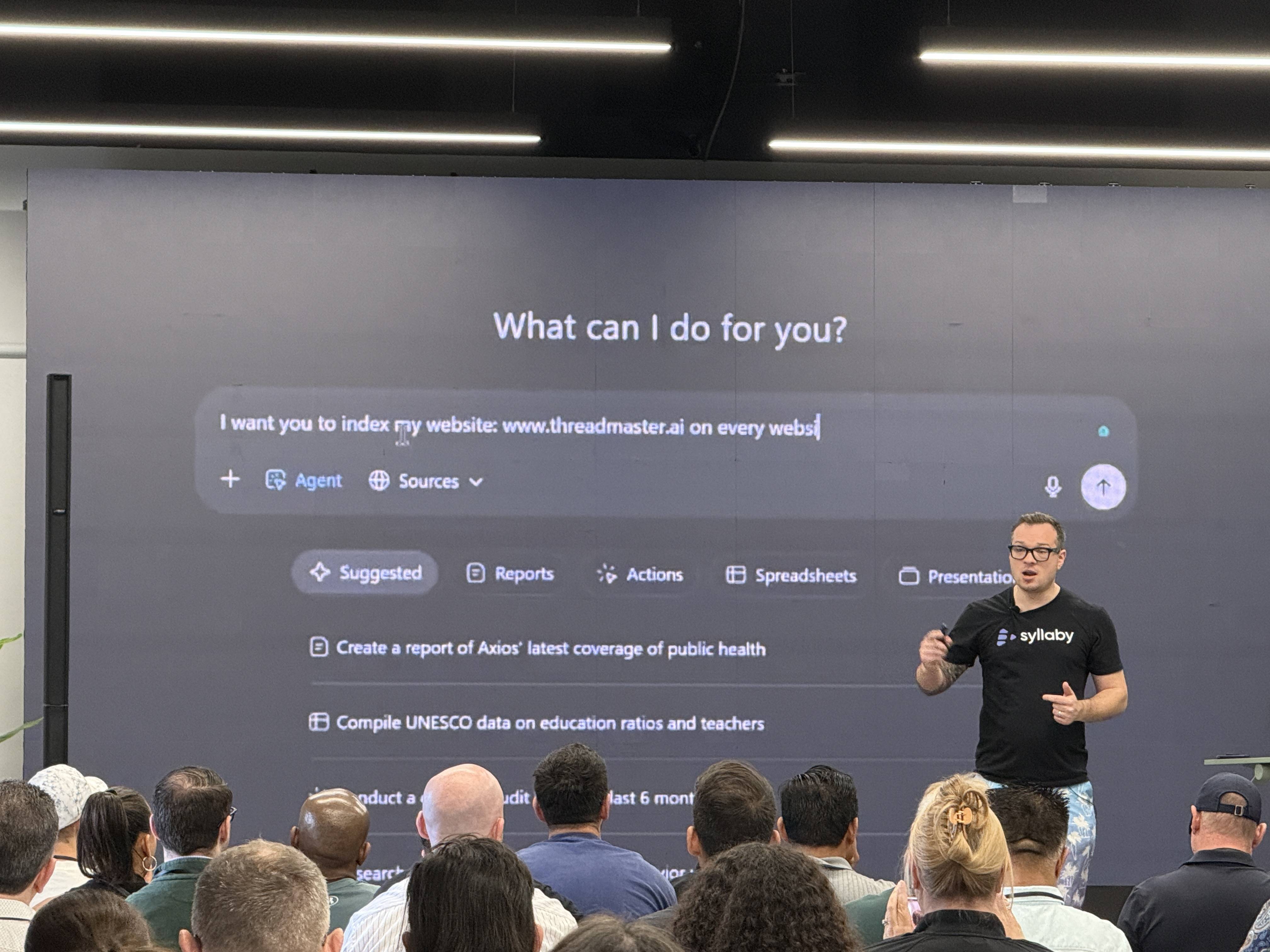
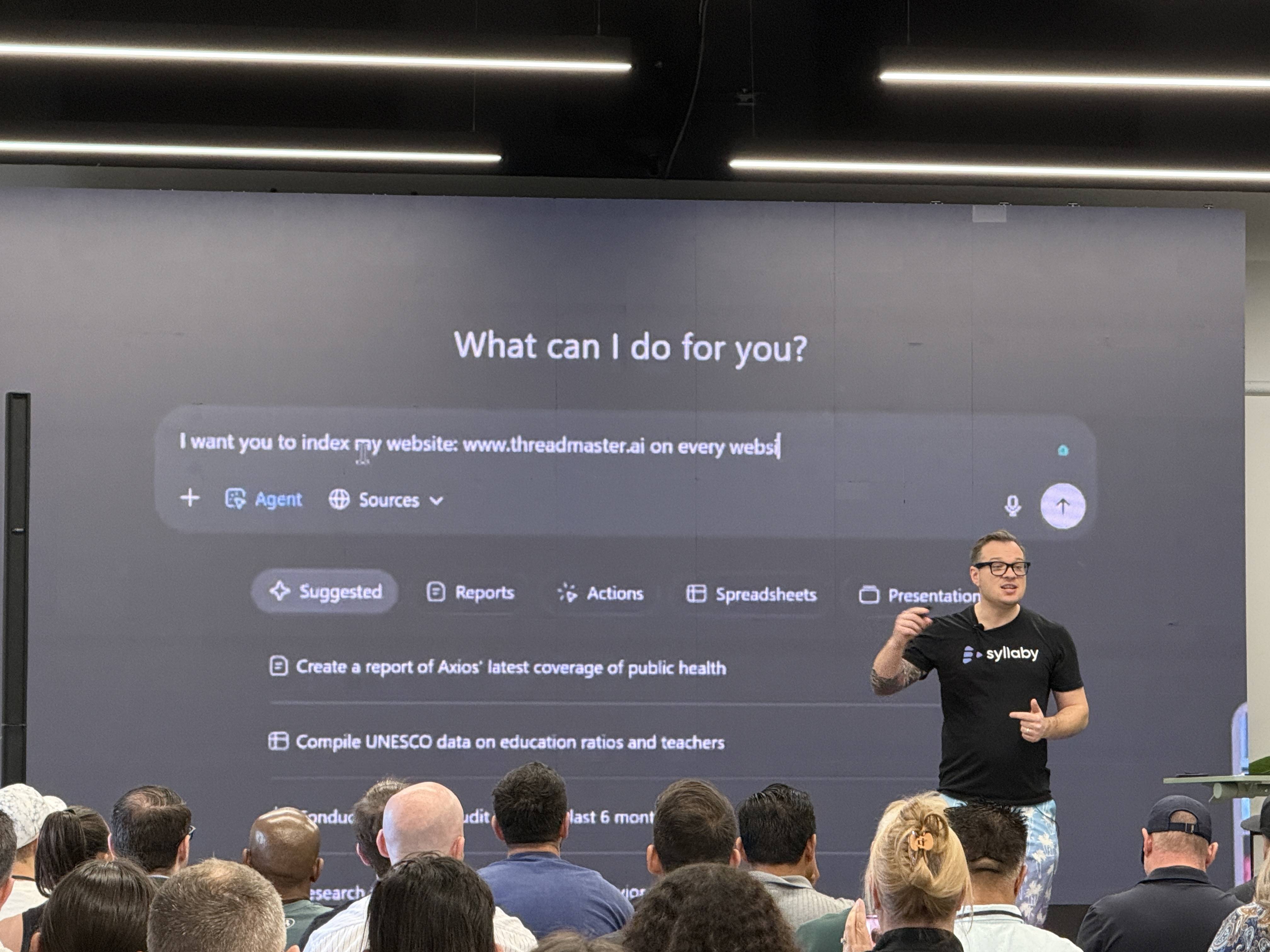
And now for the crazy part—you do not even have to do it manually. Austin gave the list of 200 websites to ChatGPT agent mode with the instruction: “Sign up for each of them using this email.” And it worked. The AI agent even passed CAPTCHA.
Reddit: automated outreach using AI agents
Austin applies a similar approach to Reddit. He gave an AI agent access to his Reddit account with the following instructions: find all subreddits about AI video marketing, read the threads, respond meaningfully, and, when appropriate, add a link to the tool at the end. Wait 5–7 minutes between responses to avoid a timeout.
Completely automated. According to Austin, if you have older Reddit accounts, this is a great strategy for organic outreach.
What should you take away from this?
At the end of the talk, someone asked how to identify what matters most out of all this information. Austin’s answer was surprisingly simple:
Choose one thing. Just one. And do it today or tomorrow. If you wait, life will get in the way. Create an SOP (standard operating procedure), teach your team to carry it out, and be consistent. Once it works, add another.
Austin recommended Scribe—a browser extension that automatically documents your processes and turns them into SOPs. It is ideal for delegating work to virtual assistants.
Then he added one more piece of advice that stuck with me: diversification. Do not put all your eggs in one basket. If your Meta Ads account gets blocked tomorrow, it must not mean the end of your business. Build organic reach, an affiliate program, engagement groups, and webinars—use multiple channels at once. They all reinforce one another.