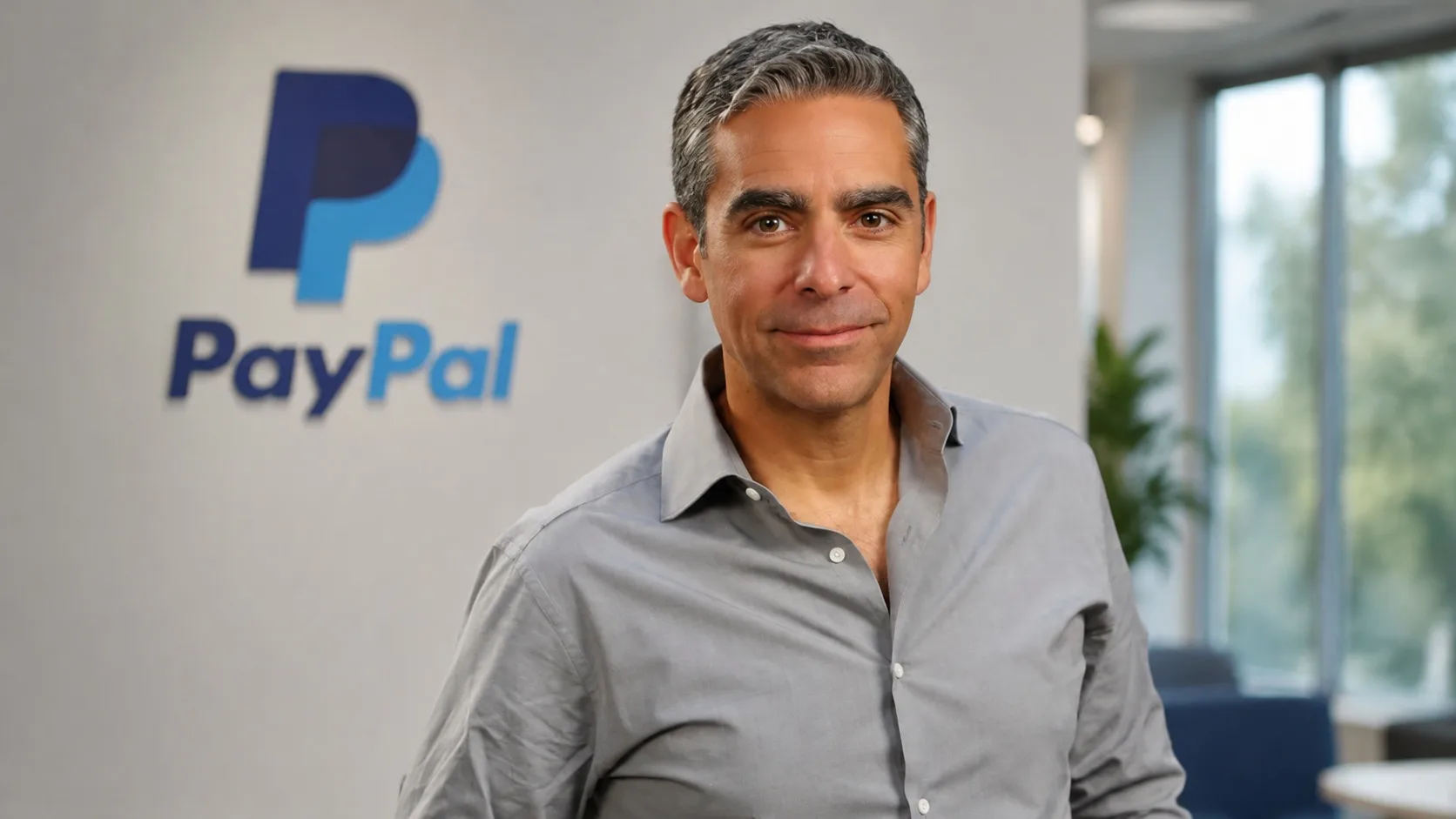
Mobile apps, websites, drop-down menus, and annoying pop-up windows asking users to confirm actions will soon disappear. According to David Marcus, the former head of PayPal, these elements will be completely replaced by a new technology. The executive, who led the development of the M assistant and the Libra digital currency at Meta, argues in his essay that we will soon talk to computers as we do to people. Tasks will be completed without us having to open a single app. He believes this will also fundamentally transform the way we pay.
An assistant ahead of its time
This is not the first time Marcus has spoken about this vision. Back in 2015, Meta acquired Wit.ai, a startup focused on natural language processing, and integrated it with its artificial intelligence research team. That same summer, the M assistant appeared in Messenger, allowing people to message it as they would a friend. They asked it to book restaurant tables, send flowers, or plan trips, and the assistant took care of everything. Users immediately embraced the service.
The catch was that, behind the scenes, the M assistant largely relied on human operators. The company never managed to automate more than 30 percent of requests. At the time, the large language models that power chatbots such as ChatGPT today did not yet exist. As a result, the assistant could not keep up with demand, and Meta eventually shut down the project.
Four years later came Libra, a digital currency designed to make it easy to send money around the world. According to Marcus, the politics of the time killed this vision, even though Mark Zuckerberg enthusiastically supported both projects.
Marcus now admits that both ideas came too early. The assistant needed models capable of working independently, while Libra required governments to recognize digital money as legal tender. Both conditions have since been met. Models have reached a high level of quality, and so-called stablecoins, which replicate Libra's underlying principle, are now backed by legislation in both the US and Europe.
Why apps are on their way out
When Marcus talks about the end of interfaces, he means the end of everything we currently click and tap through on screens. Apps, websites, and buttons will fade into the background, he says. We will continue to view photos and maps, but everything else will disappear. We will communicate with computers in the same way we communicate with people: by speaking and writing.
For more than forty years, we have learned to operate computers in their own language through programming, menus, forms, and icons. We have become so accustomed to it that we have forgotten we are constantly adapting to the machine. Now the situation is reversing, and computers are beginning to speak our language.
This change will also affect the role of the operating system. Today, it mainly serves as an app launcher, and its creator sets the rules for the market. Once people stop opening apps individually, the digital assistant itself will become the new operating system. No one has yet gained full control of this space.
Whoever controls the agents controls the market
For the past twenty years, human attention has been concentrated in social networks and apps. Marcus believes it will now shift to autonomous assistants that independently handle tasks on our behalf. There will be both personal assistants working for individuals and corporate programs representing stores and services. These systems will make decisions with increasing frequency.
The companies with the best assistants will become the most powerful corporations of the new era. Meta, with its Muse agent, and the startup Instinct are already competing for this position. Google and other developers of the most advanced models are also likely to join the race soon.
Shopping will play a crucial role in the entire ecosystem. Commercial transactions will allow these assistants to finance the enormous costs of computing power and model training. Marcus sums it up by saying that an assistant without the ability to make purchases will not be useful enough for users.
Wrote a short piece over the weekend about the death of UI and what it means for money... https://t.co/gvRbVgCecb
— David Marcus (@davidmarcus) October 12, 2026
Money built around a button
At PayPal, the main product was a button. Marcus and his team spent years cutting unnecessary steps and seconds from the payment process so that as many people as possible would complete their transactions. Now he is writing its obituary himself.
Nearly all financial services today depend on screens. These include banking apps, online store payment gateways, forms for entering card numbers, and codes sent by text message. The entire payment security system, from identity verification and fraud protection to chargebacks, assumes direct human involvement.
Once you remove the human element, that assumption collapses. When your assistant buys from a store's assistant, there is no conventional checkout and no one to whom a confirmation code can be sent. The relevant question is instead whether you have authorized the program to make that specific type of transaction. Today's payment systems were created long before such a need ever arose. Card companies and developers of new protocols are already working on solutions.
Digital money is not enough
Stablecoins are digital money whose value is pegged to a conventional currency, most commonly the US dollar. One might expect unequivocal praise from Libra's founder. Surprisingly, however, Marcus argues that they no longer really make sense as a standalone technology.
According to him, the term itself has merely fulfilled its temporary purpose. It gave lawmakers an understandable concept that they could enshrine in law. Europe's MiCA rules have already come fully into force, while the US GENIUS Act, approved last year, will take effect in January. This legislative battle lasted years and has largely been won.
Owning digital dollars is useful, as residents of Buenos Aires or Lagos would attest. Using them in practice, however, is often complicated. To achieve mass adoption, they must be combined with fast networks enabling instant and free transfers. They also require digital wallets built directly into services, connections to conventional bank payments worldwide, and payment cards that make them easy to spend anywhere.
Money without a screen
Marcus calls this concept headless money, which can be translated as faceless money. It has no app or button, only a simple interface. Through it, assistants can send funds whenever they buy or sell something.
It looks simple from the outside, but internally it is a complex process. The system requires licenses, partner banks, card issuance around the world, and connections to local payment networks in more than a hundred countries. Sufficient liquidity and strict regulatory compliance oversight are also essential. That is why Marcus believes only a handful of companies will be able to achieve it.
In practice, it will work simply. You tell your assistant that you need your fence repaired by the weekend. The program finds a contractor, negotiates a price with the contractor's digital representative, pays a deposit, and sends the balance after receiving a photograph of the completed work. You do not open any app yourself, because a single sentence was enough.
For companies, everything will take place on a larger scale. An assistant will manage the budget according to predefined rules. Every Friday, it will pay hundreds of people across dozens of countries, top up advertising credits, pay for servers, and refund a customer for damaged goods. Each payment will go somewhere different: to a bank account, a mobile wallet, or a card.
Assistants already have their own email addresses and sometimes even phone numbers, but they lack bank accounts. For them to get such accounts, transfers must operate instantly and continuously, regardless of bank business hours. Transaction fees must fall to a minimum so they do not erode small payments. People must also be able to set secure limits, and in the event of fraud, it must be clear who is liable for the loss.
Who will profit
According to Marcus, this sector will produce giant corporations worth hundreds of billions of dollars. Yet compared with the creators of artificial intelligence themselves, they will still be smaller players. Payment services take only a fraction of each transaction. An assistant that directly decides which goods to purchase is far more valuable to sellers. Companies developing these programs will therefore make money in much the same way as today's advertising platforms and online marketplaces.
Payment teams within these organizations will face a difficult task. They must assemble all the pieces of the puzzle so that payments work securely in every country. Marcus admits that this is exactly what his current company, Lightspark, is working on, so he is not impartial. Nevertheless, he is convinced that his vision is correct.
Third time around—and still too early?
The first wave of agent-based shopping is getting off the ground slowly, and Marcus is once again hearing claims that he is ahead of his time. However, he places much of the blame on the current structure of the financial world. For now, digital assistants are merely borrowing payment methods designed for people, which require forms and confirmations. This time, the models are smart enough and the laws are ready. The only thing missing is money that machines can use without screens.