Within a few years, artificial intelligence has moved from laboratories into offices and living rooms. But not everyone has embraced it equally. Two new studies—one from Harvard focused on the United States and another from University College London covering 35 European countries—reached a similar conclusion. Women use AI less than men, trust it less, and have poorer access to it at work. Meanwhile, Americans are increasingly bringing tools such as ChatGPT into the workplace, while Europe is lagging behind and there are enormous differences between individual countries.
Almost a third of American women have never tried AI
In July 2026, researchers from Harvard University’s Shorenstein Center asked more than five thousand American adults how they use artificial intelligence. They supplemented the results with anonymized web browsing data and an analysis of approximately 78,000 news articles about AI. They found that 29 percent of women had never used AI, compared with just 22 percent of men. A quarter of men use it regularly, compared with only 16 percent of women. Women are also more likely to say they have tried the tool but hardly ever return to it.
However, browser data reveal an interesting nuance. The proportion of people who have opened an AI tool at least once is virtually the same for both genders. The difference lies in how much time they spend using it. Men who use AI devote 4.6 percent of their time online to it, compared with 2.9 percent for women. The widest gap is among better-educated and higher-earning people; among poorer groups, where few people use AI, the difference almost disappears.
Uncertainty, or overconfidence?
The study’s authors gave respondents twelve questions testing their knowledge of artificial intelligence. On average, men answered seven correctly and women six. But women did not give more incorrect answers; they simply chose “I don’t know” more often. In fact, they made fewer mistakes than men.
The researchers therefore offered another explanation. Part of the difference may be attributable to men’s overconfidence. When respondents were shown the names of twelve well-known figures in the field along with two fictitious ones, men were more likely to claim they knew every single one—including those who did not exist.
Privacy concerns and little support at work
The feeling people most commonly associate with AI is concern. It is stronger among women and is accompanied by fear and anxiety. Men, by contrast, give higher ratings to all positive emotions, such as curiosity, excitement, and optimism.
Trust is generally low. When it comes to information about artificial intelligence, people trust almost no one. Even technical experts, who are trusted the most, are trusted by fewer than half of respondents, and nearly a quarter of women trust no one at all. Among men, the figure is 15 percent. The main obstacle for both genders is concern about privacy, mentioned by 40 percent of women and 34 percent of men, as well as distrust of the outputs AI generates. By contrast, concern that someone might judge them for using AI was reported by only about one in twenty people.
The differences are also visible in the workplace. Working women are less likely to receive training, have a mentor, or get encouragement from their boss, even though this kind of support leads both genders to use AI more frequently and confidently. Women are also more likely to work in occupations that AI can replace most easily, such as administrative roles. In wealthy countries, almost ten percent of women’s jobs fall into the most vulnerable occupational categories, compared with only three and a half percent of men’s jobs.
Men dominate the news
An analysis of articles from American media showed that men appear in AI-related headlines roughly fifteen times more often than women and are quoted as experts more than four times as often. This is partly due to the heads of major technology companies, who are almost exclusively men. Even when the researchers excluded them from the calculation, women still accounted for no more than a quarter of the experts quoted.
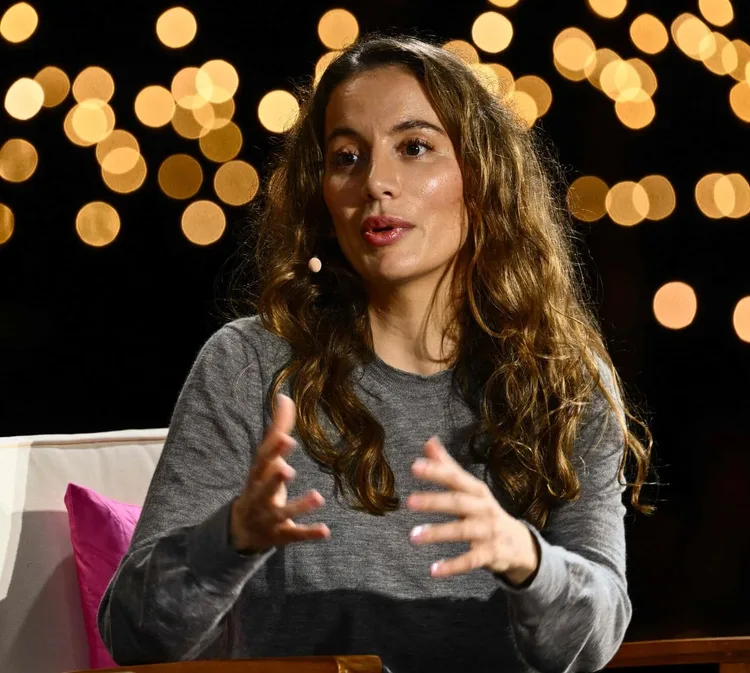
This is also reflected in the recognition of prominent figures. Daniela Amodei, co-founder of Anthropic and the best-known woman in the field, is less recognizable than the least-known men in the survey. Scientist Fei-Fei Li and former OpenAI chief technology officer Mira Murati were recognized by the same number of people as the two fictitious names.

Europe is lagging behind and deeply divided
The second study, conducted by economist Golo Henseke of University College London, is based on the European Working Conditions Survey. In 2024, interviewers conducted in-person interviews with approximately 36,600 workers in 35 countries.
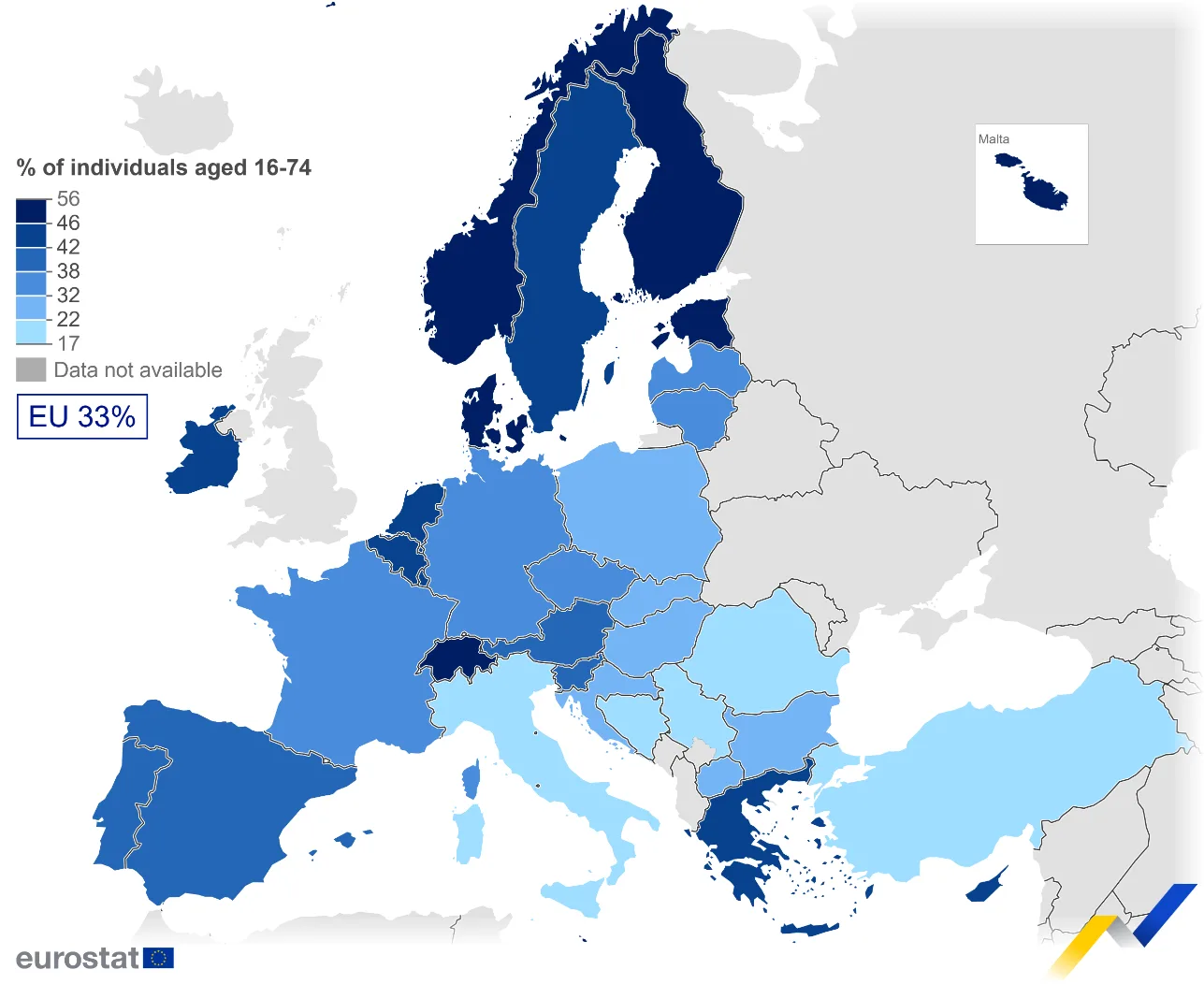
Only 12 percent of Europeans used generative AI at work. By comparison, the figure in the United States was approximately 26 percent of workers at the end of 2024 and had risen to 43 percent by the beginning of this year. There are vast differences between European countries. Fewer than three percent of workers use AI in Bosnia and Herzegovina, compared with roughly a quarter in Luxembourg. The north and west of the continent are clearly ahead of the south and east.
The most important factor is the type of work someone does. In occupations where AI can provide the most help, such as programming or law, almost one in four workers use it. In manual occupations with the least potential, the figure is just 1.5 percent. Higher education, more demanding work, and having a say in company decisions all increase employees’ willingness to adopt new tools. At the national level, it helps when people routinely work with computers and companies pay for employee training.
Women are underrepresented where AI helps the most
The gender gap is also clear in Europe. Just under 14 percent of men used AI at work, compared with just under 10 percent of women. In relative terms, women therefore lag behind by almost a third, and this is the case in the vast majority of the countries studied.
However, Henseke found that the difference is not evenly distributed. In occupations with less exposure to AI, there is virtually no difference between men and women. The gap only emerges in occupations where AI offers the greatest benefits. There, men are 7.5 percentage points more likely to start using it, even when they work in the same occupation as their female colleagues. The issue is therefore not that women work in different fields.
Earlier research paints a similar picture. Globally, women account for only about a third of ChatGPT users. In Denmark, women were more likely to say they needed training and to doubt the tool’s usefulness, while men who did not use AI were more likely to cite a ban imposed by their employer. More recent data from other researchers, dating from the end of 2025, suggest that the gender gap is narrowing. At the same time, Henseke’s study has so far found no measurable impact of AI on the tasks people actually perform at work.