Anthropic published a report on Friday describing how its workforce and work organization have changed over the past year. The company, which has extensively adapted its workflows around AI, reports a declining share of junior technical staff and changing responsibilities for people working with Claude.
Junior staff account for a smaller share of new hires
According to Anthropic, junior employees’ share of technical departments has fallen from 21% to 14% since early 2025. Hiring has also shifted: juniors’ share of new technical hires dropped from 27% to 9%.
Technical teams as a whole also make up a smaller proportion of the workforce. The company says their share fell from 61% to 56%. Anthropic attributes this to the expansion of business functions as the company grows, as well as coding tools increasingly enabling employees without technical backgrounds to build software.
From carrying out tasks to managing Claude instances
An April 2026 employee survey captured changes in job responsibilities alongside perceived productivity gains. According to Anthropic’s report, 27% of employees said Claude had helped them become more productive. Meanwhile, 20% described a shift from carrying out tasks themselves to managing Claude instances.
The report identifies human attention and judgment as an emerging productivity bottleneck. It says Claude generates large volumes of text that people must read and organize.
More output, with questions about code quality
Anthropic argues that adopting AI has increased the company’s productivity. It points to greater code output per person, more deals closed per sales representative and a higher volume of contracts processed.
The company also acknowledges that code volume alone does not necessarily indicate quality or business impact. Its report nevertheless says it found no signs of declining code quality.
Meeting time rises for technical staff too
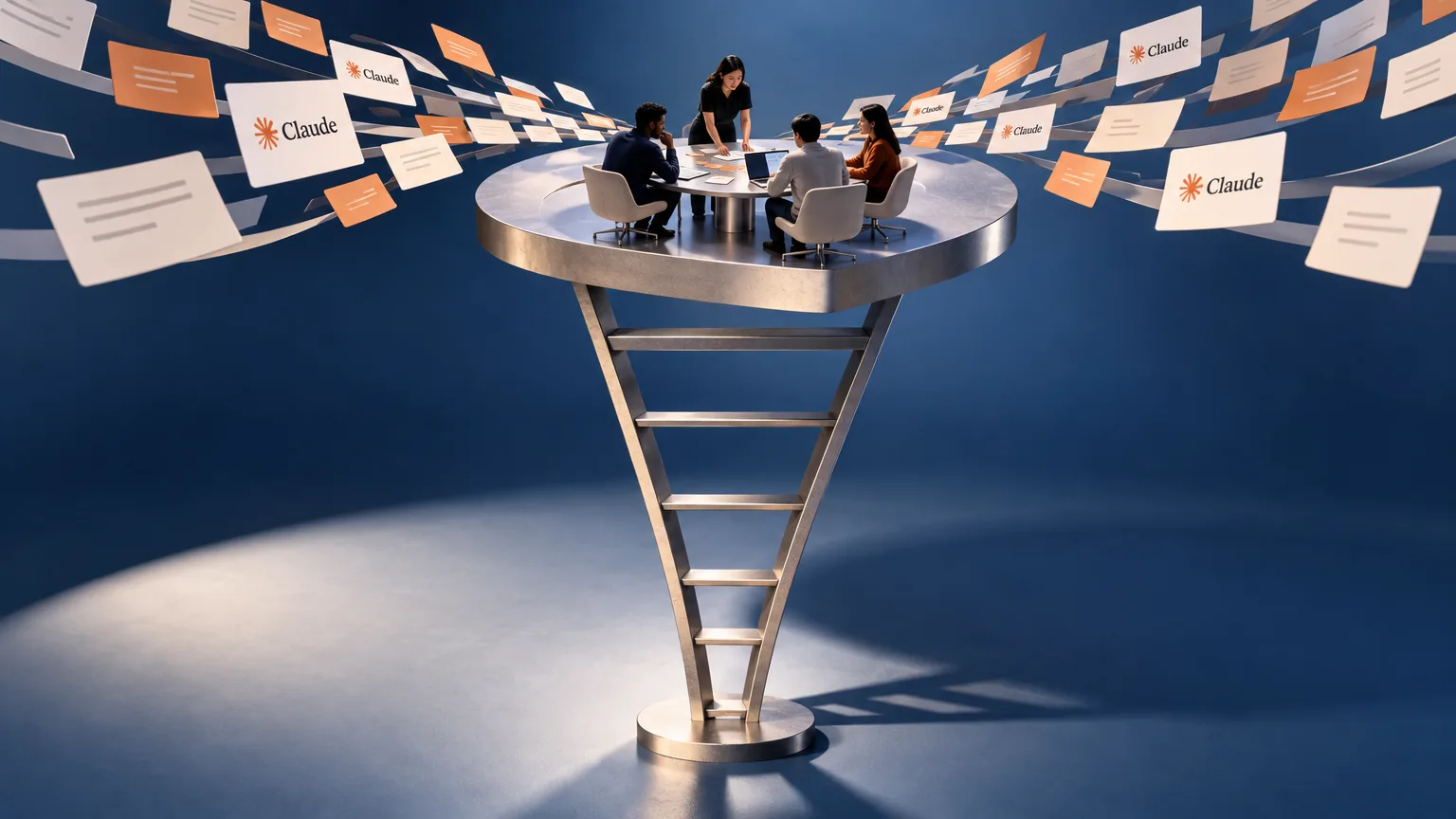
Calendar data included in Anthropic’s report shows that meeting time per employee rose 20% year over year. For technical contributors, the increase was 16%.
Anthropic links this change to the importance of trust between people and personal accountability. According to the report, employees repeatedly described face-to-face coordination as essential.