In February, two black-armored figures with tinted visors arrived in Ukraine. They are not soldiers. They are robots. And their arrival on the front line could be one of the most significant moments in the history of modern warfare.
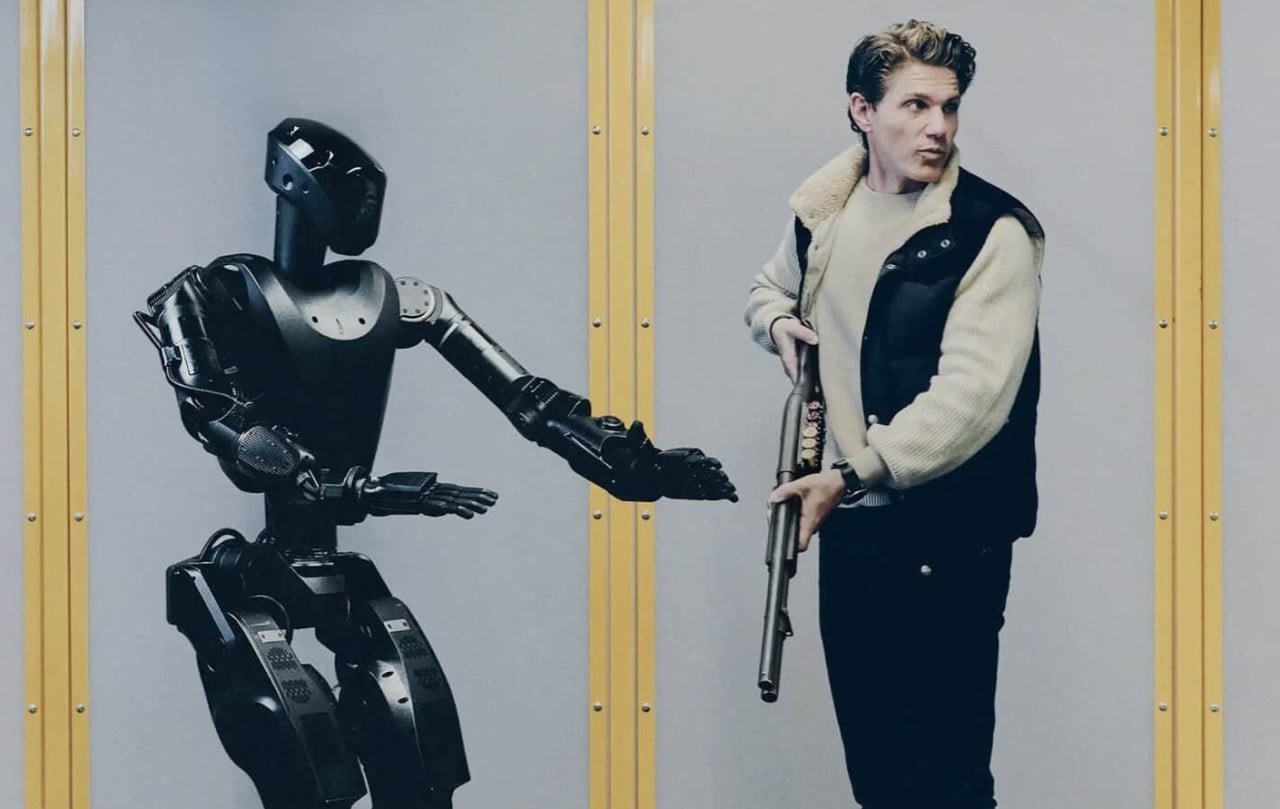
San Francisco-based American company Foundation sent two Phantom MK-1 humanoid robots to Ukraine for combat testing. This is the first time in history that a humanoid robot has been deployed directly to the front line of an active military conflict. Initially, they are carrying out reconnaissance missions, but their creators' ambitions extend much further.
Founder of Foundation
Foundation co-founder Mike LeBlanc is no inexperienced technology enthusiast. He is a U.S. Marine Corps veteran with 14 years of active service and more than 300 combat missions in Iraq and Afghanistan. He personally took Phantom to Ukraine, and what he saw there, in his own words, "really shocked him."
"It is full-scale robot warfare, where the robot is the primary combatant and humans play a supporting role. It is the exact opposite of what I experienced in Afghanistan: there, people were everything and technology was merely a tool," says LeBlanc. Ukraine has become the world's testing ground for weapons technology. In January 2026 alone, it conducted more than 7,400 robotic operations and launches up to 9,000 drones every day. The West sends both startups and established companies there to validate their systems in real combat. Foundation is no exception.
What the Phantom MK-1 can do
The Phantom MK-1 is approximately 175 cm tall and weighs around 80 kg. It moves using roughly 20 motors and, instead of complex sensor arrays, relies primarily on camera vision. It can navigate the battlefield, conduct reconnaissance, and operate a wide range of weapons commonly used by humans: from revolvers and pistols to shotguns and a replica M-16 rifle.
The goal is for the robot to be able to use any weapon that a human can use. According to LeBlanc, this is a huge advantage: the U.S. military's existing stocks of ammunition and weapons remain usable without the need to develop specialized robotic tools. The robot also has a thermal signature similar to that of the human body, which can confuse enemy reconnaissance systems. It is also suitable for places drones cannot reach, such as low bunkers.
Foundation has research contracts with the U.S. Army, Navy, and Air Force worth a total of $24 million. Tests with the Marine Corps are also planned, during which Phantom will learn to place explosives on doors when breaching buildings.
The humanoid arms race
Phantom is not an isolated project. An entire industrial sector is emerging in the U.S. around AI-powered military robots. Scout AI is working to integrate artificial intelligence with tanks, drones, and off-road vehicles. In February, it successfully tested a scenario in which seven autonomous software agents identified, located, and neutralized a target without any human intervention. Scout AI is currently negotiating Pentagon contracts worth more than $225 million.
Russia and China are also monitoring the development of humanoid combat systems. The humanoid arms race "is already underway," says Sankaet Pathak, Foundation's co-founder and CEO.
Risks that cannot be overlooked
But this is not merely a technological fairy tale. Humanoid robots are heavy, expensive, require regular recharging, and tend to fall over. During a visit by reporters from TIME to Foundation's headquarters, Phantom crashed to the ground several times with a loud bang. Each of its 20 motors must function flawlessly, or the entire system fails.
The security risks are even more serious. Intercepted drones in Ukraine already function as flying smartphones packed with sensitive data. But a hacked humanoid robot is in a different category. An enemy could take control of an entire fleet of robots through software backdoors and turn them against their creators.
Experts also warn about so-called artificial intelligence "hallucinations," in which systems confidently produce incorrect or misleading information. "We cannot have lethal autonomous systems that occasionally hallucinate," says U.S. Congressman Ted Lieu. The philosophical question remains unresolved: if a robot kills an innocent person, who is responsible? The programmer? The commander? International law does not yet have an answer to this question.
New Phantom MK-2 model in development
Foundation plans to unveil the Phantom MK-2 in April 2026 with a range of improvements: waterproofing, larger batteries, the ability to carry loads of up to 80 kg, and consolidated electronics reducing the risk of short circuits. In the future, the company aims to manufacture up to 30,000 units per year, and once production reaches half a million units, the price of a single robot could fall below $20,000.
LeBlanc believes that humanoid soldiers are a natural continuation of drones. And just like drones, they too will eventually find their way onto the battlefield. "What you are seeing now are only the first clumsy attempts at having robots fight our wars. But the real show is only just beginning," he concludes.
Sources: militarnyi.com and tvpworld.com