

San Jose, March 16, 2026. The SAP Center was packed to the rafters. Thousands of people were waiting for one man in a leather jacket. Jensen Huang, founder and CEO of NVIDIA, took the stage to thunderous applause and, over the course of several hours, demonstrated where AI is headed next. And believe me, there was plenty to see.
Computing power is growing a millionfold
Huang opened the keynote simply, but with a number that will take your breath away. Demand for computing power has increased more than a millionfold over the past several years. And this is directly reflected in NVIDIA's business, as Huang estimates GPU sales revenue at more than one trillion dollars between 2025 and 2027.
The whole story began twenty years ago, when NVIDIA launched the CUDA platform. Huang called it the "flywheel of accelerated computing" and the foundation on which the entire AI lifecycle now stands. Without CUDA, none of what we see today would exist. Meanwhile, the world has filled with so-called "AI-native" companies. OpenAI, Anthropic, and dozens of other startups into which investors poured more than $150 billion last year. The market has simply exploded.
Vera Rubin: A new architecture for agentic AI
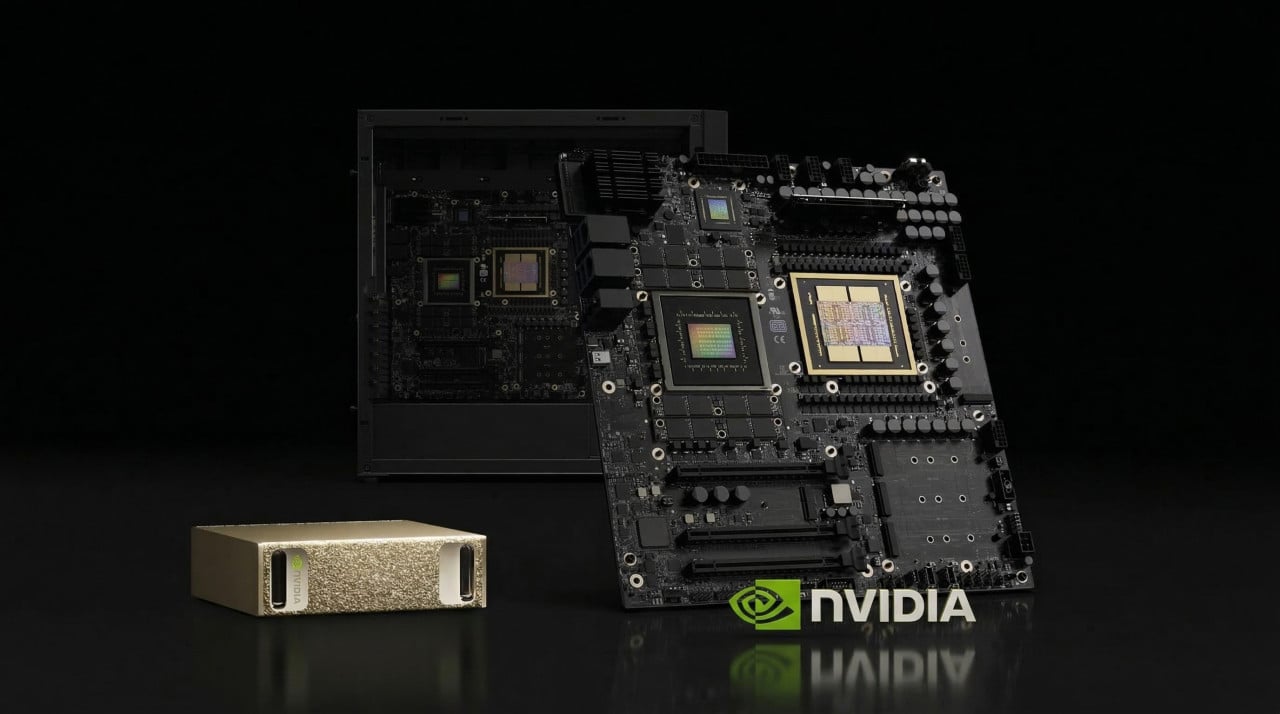
The biggest technology announcement of the evening? The NVIDIA Vera Rubin platform. It is a complete computing stack consisting of seven chips, five rack-scale systems, and one supercomputer, designed specifically for agentic AI. It includes the new NVIDIA Vera CPU and the BlueField-4 STX storage architecture. Huang emphasized that Vera Rubin is not just hardware, but an entire system designed as a single whole, from software to silicon.
And what comes after Vera Rubin? The Feynman architecture, which will introduce the new NVIDIA Rosa processor, named after Rosalind Franklin, the scientist whose X-ray crystallography revealed the structure of DNA. The symbolism is clear: Rosa is intended to power agentic AI data flows as efficiently as Franklin revealed the hidden architecture of life.
Huang also announced the Vera Rubin DSX AI Factory reference design and the DSX Air tool, which will allow companies to simulate entire AI factories in software before physically building them. It saves time, money, and stress.
NVIDIA is heading into space
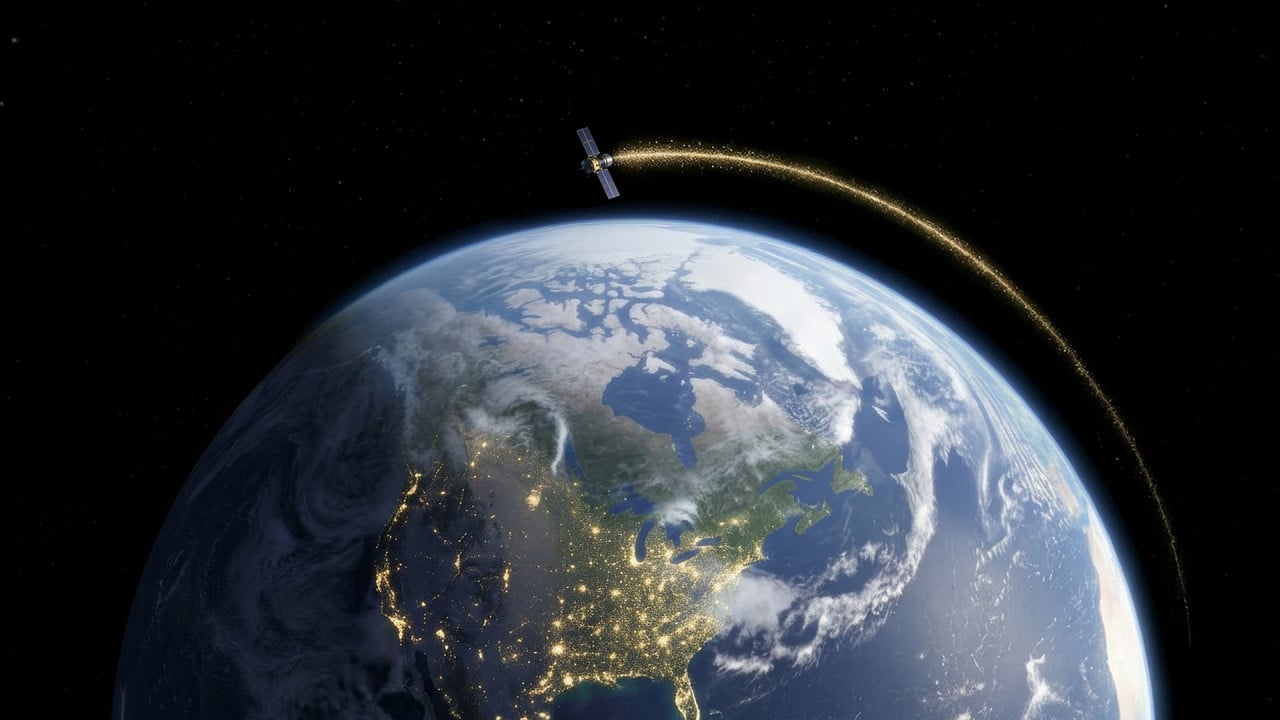
No one expected this. NVIDIA is going into space. Future systems such as NVIDIA Space-1 Vera Rubin are designed to bring AI data centers directly into Earth orbit. Accelerated computing will thus no longer be limited to terrestrial data centers.
OpenClaw: Every company needs a strategy
Huang devoted a large portion of the keynote to the open-source project OpenClaw, which he called the "most popular open-source project in human history." OpenClaw allows developers to launch an AI agent with a single command, extend it with tools, and deploy it into production.
"Every company in the world today needs an OpenClaw strategy," Huang said bluntly. And to ensure this was not just an empty slogan, NVIDIA also introduced NVIDIA NemoClaw and the OpenShell runtime, which enable the secure deployment of agents within companies. They combine policy enforcement, network safeguards, and private data routing.
Alongside this, NVIDIA is expanding its family of open models through the new Nemotron Coalition, which brings together six model families: from Nemotron language models and GR00T robotics models to the Earth-2 climate model.
Physical AI: Robots, cars, and operating rooms
AI is no longer confined to screens. NVIDIA is bringing intelligence into the physical world, and the results are fascinating.
New partners have joined the autonomous driving space: BYD, Hyundai, Nissan, and Geely are adopting the NVIDIA DRIVE Hyperion platform for Level 4 vehicles. Uber plans to deploy these vehicles in its ride-sharing network.
In industry, NVIDIA is working with robotics giants such as ABB, Universal Robots, and KUKA to integrate physical AI models into production lines. Telecommunications companies such as T-Mobile are transforming base stations into edge AI platforms.
In healthcare, NVIDIA launched the first domain-specific physical AI platform for surgical robotics. It includes Open-H, the world's largest healthcare robotics dataset, with more than 700 hours of surgical video from approximately thirty collaborating organizations. Companies such as Johnson & Johnson MedTech and CMR Surgical are already actively using it.
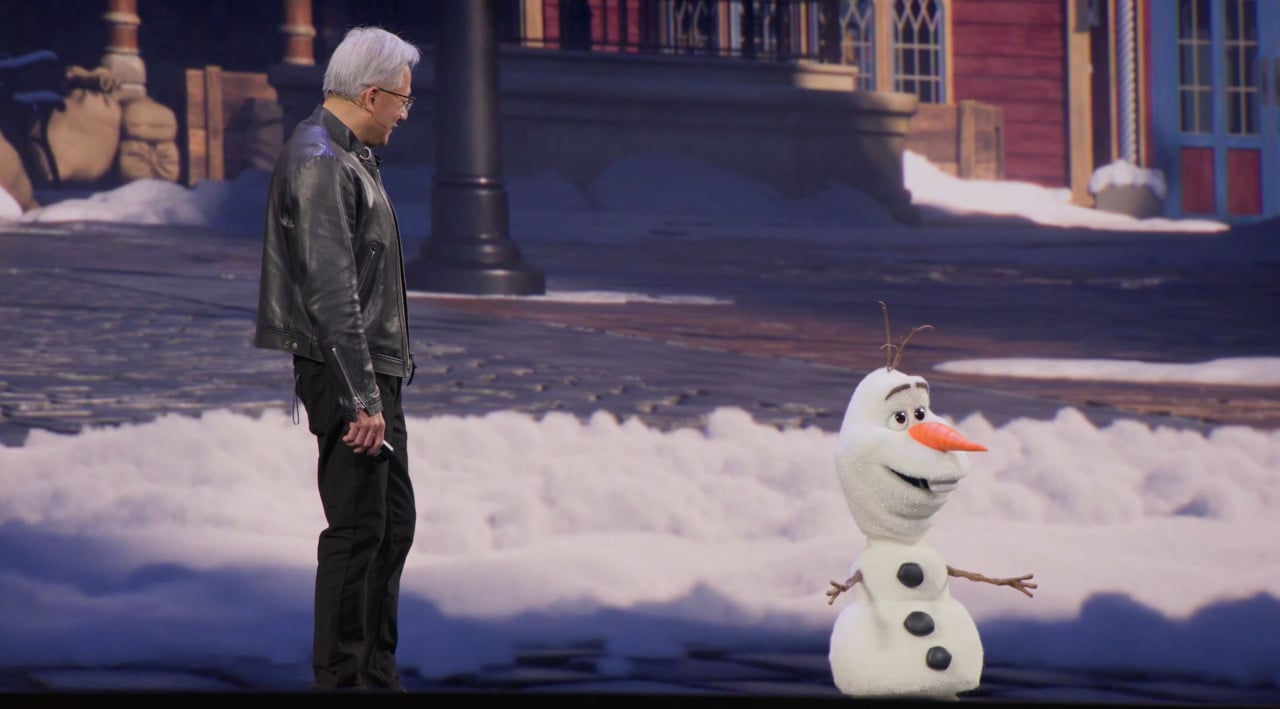
And then came the keynote finale. Olaf, the snowman from Frozen, walked onto the stage. Alive, moving, powered by NVIDIA's physical AI stack, the Newton physics engine, and Omniverse simulation. Huang smiled at him and said, "Olaf, I know how you feel because I gave you your computer. It's called Jetson, and it's in your belly."
It was the perfect ending. A little funny, a little touching, yet entirely to the point. Everything on stage was simulated, not pre-rendered. That is exactly the shift Huang had been talking about all evening.
AWS, Microsoft, and a trillion GPUs
Major announcements also came from the cloud world. NVIDIA and Amazon Web Services are expanding their partnership: AWS will deploy more than one million NVIDIA GPUs across its global regions later this year. The infrastructure will cover the entire stack, from the Blackwell and Rubin architectures to new LPUs for ultra-fast inference.
Microsoft Azure announced that it was the first hyperscale cloud to bring the new NVIDIA Vera Rubin NVL72 systems online. Through Microsoft Foundry, developers can build specialized agents on Nemotron models. And Microsoft's security team reports that, thanks to its collaboration with NVIDIA on adversarial learning, it has achieved a 160-fold improvement in detecting and mitigating AI attacks.
GTC 2026 made one thing absolutely clear: AI is no longer just software in the cloud. It is moving into robots, cars, operating rooms, satellites, and perhaps soon even into orbit.


