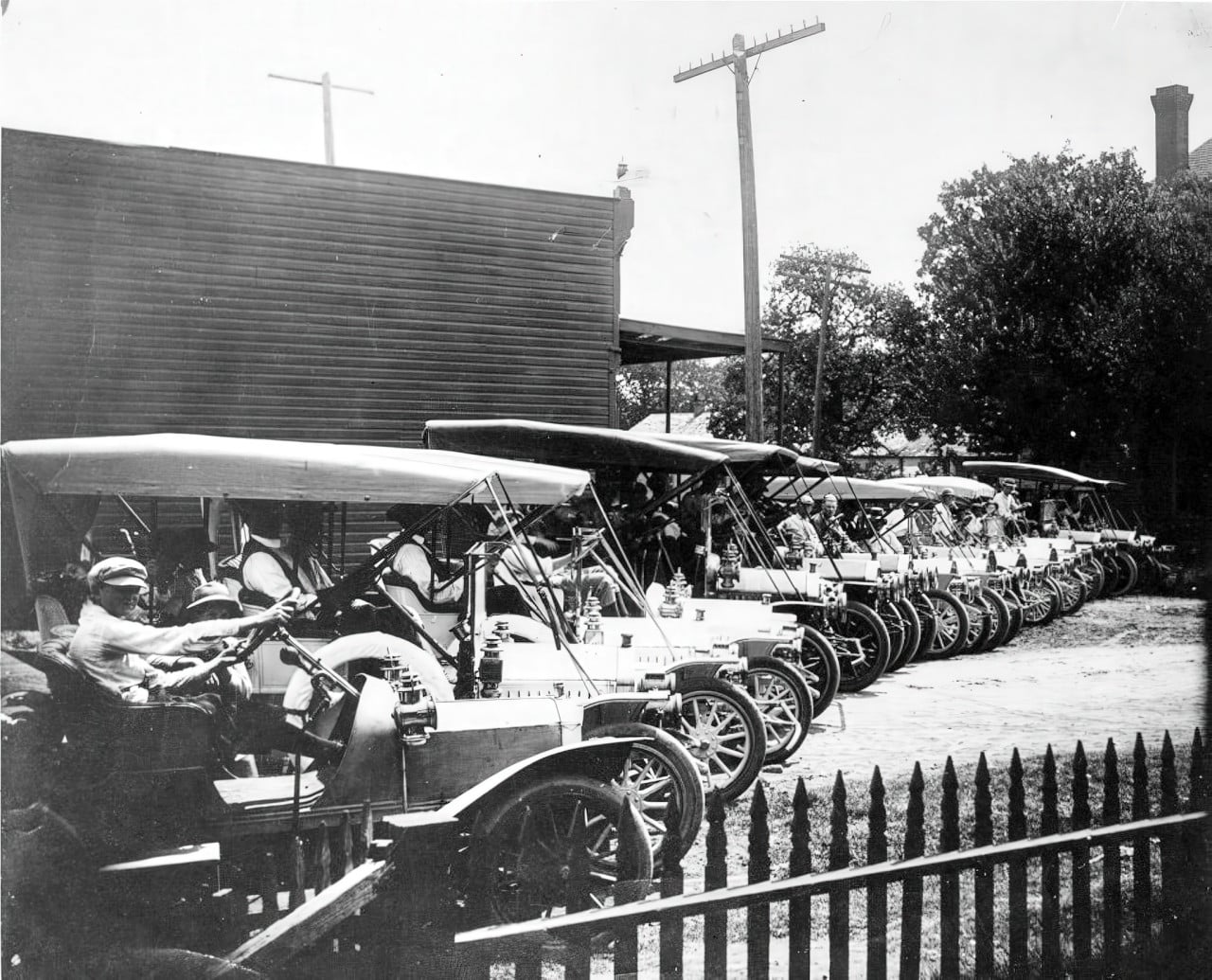
The automobile era arrived in Fort Worth in the summer of 1902, when proud bicycle shop owner H. R. Cromer drove down Main Street in his two-cylinder, sixteen-horsepower Rambler at the dizzying speed of eight miles per hour. Horses shied and reared, people stared or fled out of the way, and Cromer sped onward, heedless of the commotion he was causing. Within two years, Fort Worth already had fifteen automobiles, and their owners organized the first automobile parade, driving along Houston and Main streets to the courthouse. A. B. Wharton, the adventurous son-in-law of cattle magnate W. T. Wagonner, opened the first automobile dealership and repair shop in 1904. He sold Winton and Franklin cars, but only by special order, because there was no salesroom. The showroom did not yet exist. The first generation of automobile owners constituted a wealthy and privileged group that could afford to purchase and maintain one of these new toys. In 1904, they founded the Automobile Club, and one Tuesday afternoon they took the entire city council for a ride. The following year, photographer Charles Swartz immortalized them with all their vehicles in a group portrait in front of the Texas and Pacific station. He was the first, but certainly not the last, professional photographer to be fascinated by automobiles.
The list of these early automobile owners, then known as "autoists," read like a selection from an encyclopedia of Fort Worth high society. Driving around the city in small open machines was the epitome of conspicuous consumption. This exclusive circle included physicians J. D. Mitchell and I. C. Chase, cattlemen A. F. Crowley and J. P. Daggett, Police Chief James Maddox, architect Marshall Sanguinet, L. P. Robertson, owner of Robertson's Funeral Home, and Guy Waggoner, son of another cattle baron, W. T. Wagonner. A reporter for a local newspaper described them as the proud owners of "the finest vehicles in the entire state." They also seemed to regard the roads as their private property and drove with the kind of recklessness that caused the city's first traffic accidents.
The first recorded accident occurred in October 1904, when Albert B. Wharton, traveling at 20 miles per hour along a busy main thoroughfare, struck a Western Union delivery boy riding a bicycle. The boy's family sued Wharton for one thousand dollars, but the dispute was settled out of court a year later. In 1906, Dr. Chase collided with a horse-drawn carriage at the corner of Main and Ninth streets. He was taken home with a serious head injury. Fortunately, no one else was injured. Chase was cared for by his fellow physicians and eventually returned to the wheel.
The first driver in the area to get into legal trouble for driving with the pedal to the floor was an unnamed motorist stopped by a Dallas police officer in 1900. The court released him, however, because at the time there was no law making speeding a criminal offense. Fort Worth City Hall initially set the speed limit at ten miles per hour within the city limits, following Dallas's example. After a series of accidents and near misses, however, the city council revisited the question of an appropriate speed for automobiles at its meeting on January 25, 1907. It reached no decision then, but a few months later, in response to complaints from citizens, it reduced the permitted speed to seven miles per hour. This, in turn, prompted protests from motorists, who considered such a limit ridiculously low. The small cars of the time overheated when driven so slowly. Most of the privileged young men decided simply to ignore the legal limit and continue driving at their preferred speed. Two speeders who were caught, Marshall Sanguinet and Guy Waggoner, were identified only because an alert police officer recognized them as they passed him. At that time, the police still had no way to catch up with speeding motorists. An officer on foot could hardly hope to overtake an automobile, even if it was traveling at only ten miles per hour. A few years later, in response to complaints from the ever-growing number of motorists, the city council raised the speed limit to 12 miles per hour, which was still not enough for those who enjoyed the wind in their hair and the landscape flashing by.
Because automobiles were owned exclusively by the wealthy, traffic enforcement was marked by class prejudice. On the Fourth of July 1904, Sanguinet was driving through City Park (now Trinity Park) at approximately 20 miles per hour when he struck and killed A. B. Wharton's dog, which was ironic given Wharton's own history of reckless driving. Sanguinet did not slow down, but he was recognized and reported to the police by Wharton. The offense was handled by having an officer politely deliver a summons directly to Sanguinet's office. The municipal police court, which handled all traffic offenses, imposed only token penalties on offenders in the form of one-dollar fines and minimal court costs, usually five dollars. For some of the privileged, the court was even more lenient. In 1909, Colonel H. E. Crowley and three ladies were speeding through the night to outsmart an approaching storm that would have ruined their ostrich-feather-adorned hats. Crowley was ticketed by a police officer, but the police court judge dismissed the charge in light of the extenuating circumstances.
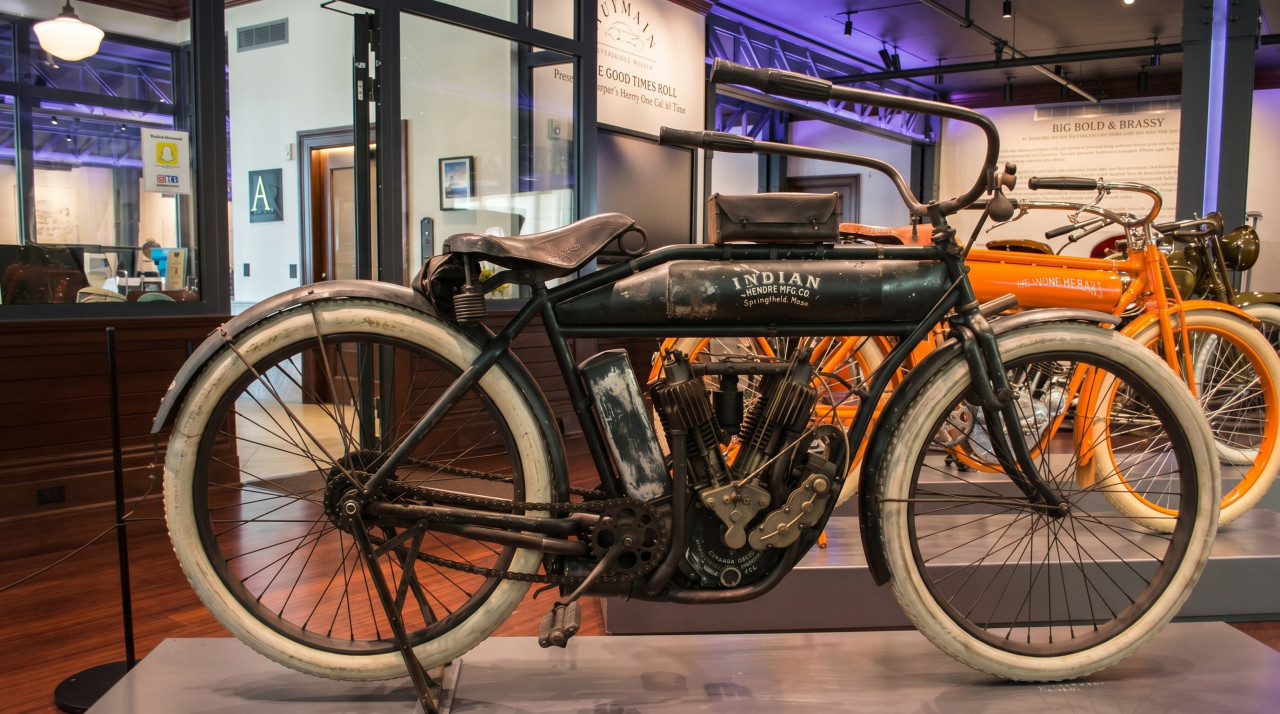
The Fort Worth Police Department had to adapt quickly to the times. In 1909, the city commissioners, who had assumed the city council's powers under the revised 1907 charter, established a "traffic squad" to direct traffic downtown. To ensure that they were clearly visible, only the tallest officers were selected, and they wore white gloves while on duty. This did not solve the speeding problem, however. The first attempt at a remedy was to deploy mounted officers in "speed traps," evoking the image of a horse furiously pursuing an automobile through the city streets. In 1909, the department finally eliminated this tactical disadvantage by purchasing two Indian motorcycles. Henry Lewis, a former circus stunt rider, became Fort Worth's first motorcycle officer. A few months later, he made the first traffic stop for speeding when he pulled over Pete Vernon, who was traveling at the remarkable speed of 27 miles per hour in a city where the limit was 12 miles per hour. From then on, Lewis and his fellow motorcycle officer Bill Little were kept constantly busy.
It was only a matter of time before the city's prominent ladies also got behind the wheel and demonstrated that a lead foot was not exclusively a male trait. In August 1911, Police Court Judge B. D. Shropshire declared: "If women break the law, they will be punished just as men are for the same offense." The first test of this statement came the very next month, when Martha Shelton, daughter of wealthy cattleman John M. Shelton, was stopped for speeding on Lipscomb Street. Motorcycle officer J. W. Edwards caught up with her after a brief chase. It was not her first speeding ticket, but it was the first one to which she pleaded guilty and paid the fine. The city had recently increased the fine to $5, so in total she or her father had to pay $12.95. Thanks to her gender and family name, she did not have to appear in court in person.
Fort Worth residents had to grow accustomed to the sight of the privileged racing around the city in increasingly powerful vehicles. The Fort Worth police were less accommodating. Motorcycle officer Bill Little pursued one high-spirited young man and his female companions as he raced through the streets. When the driver refused to stop, Little drew his pistol and fired over their heads. The driver stopped, and Little took him away, leaving the ladies seated in the automobile.
Amon Carter, always enthusiastic about the latest technological innovations, acquired an automobile of his own and then, on March 16, 1910, had his newspaper publish a special twenty-eight-page automobile edition. The city also showed typical cowboy hospitality toward long-distance racers passing through the area, welcoming, among others, a race that began in Fort Worth and ended in Beaumont, as well as a race from Denver to Mexico City.
The city council issued traffic regulations to impose some order on the dangerous new vehicles while seeking to strike a balance between personal freedom and public safety. In accordance with state law, the 1909 automobile ordinance established a maximum speed limit of 17 miles per hour anywhere in the city. In earlier years, the limit in Fort Worth had first been 8 and then 12 miles per hour. The ordinance also prohibited driving "in a careless or reckless manner at any speed." It further required every vehicle to be registered with the city and marked with a number displayed on the rear of the car "in white numerals at least six inches high," which were effectively the first license plates. The ordinance also required every vehicle to be equipped with brakes, a horn or bell, and lights at both the front and rear. It was forbidden to "sound a horn or bell with the intent to frighten horses." Fines for violating these provisions ranged from $1 to $200. Nevertheless, traffic problems continued to worsen. The city posted speed limits on major streets so that no one could claim ignorance of the law, and gradually installed first STOP signs and then traffic lights at major intersections.
As drivers began venturing onto the open roads, county authorities also became involved. In 1919, the Tarrant County commissioners established "traffic officers" as part of the sheriff's department. That same year, Police Chief Oscar Montgomery called "traffic control" his department's "chief problem." Catching horse thieves was a problem of the past. Fort Worth had entered the new twentieth century, whose concern was catching horsepower under the hood rather than actual horses.