

Chinese Robotics Surges Thanks to the Unitree A2 Stellar Explorer: The Fastest Quadruped on the Market
Today, we have a robot that not only helps but literally runs faster than most of its competitors. That is exactly what the latest innovation from Unitree brings—the A2 model, called the Stellar Explorer. This recently unveiled quadruped can sprint faster than most robotic dogs on the market, while offering a battery life of up to 5 hours when unloaded. According to Bloomberg, it even caused the Solactive China Humanoid Robotics Index to rise by 5%. Let us take a closer look, step by step, to understand why this robot is such a hit.
Key Specifications and Performance
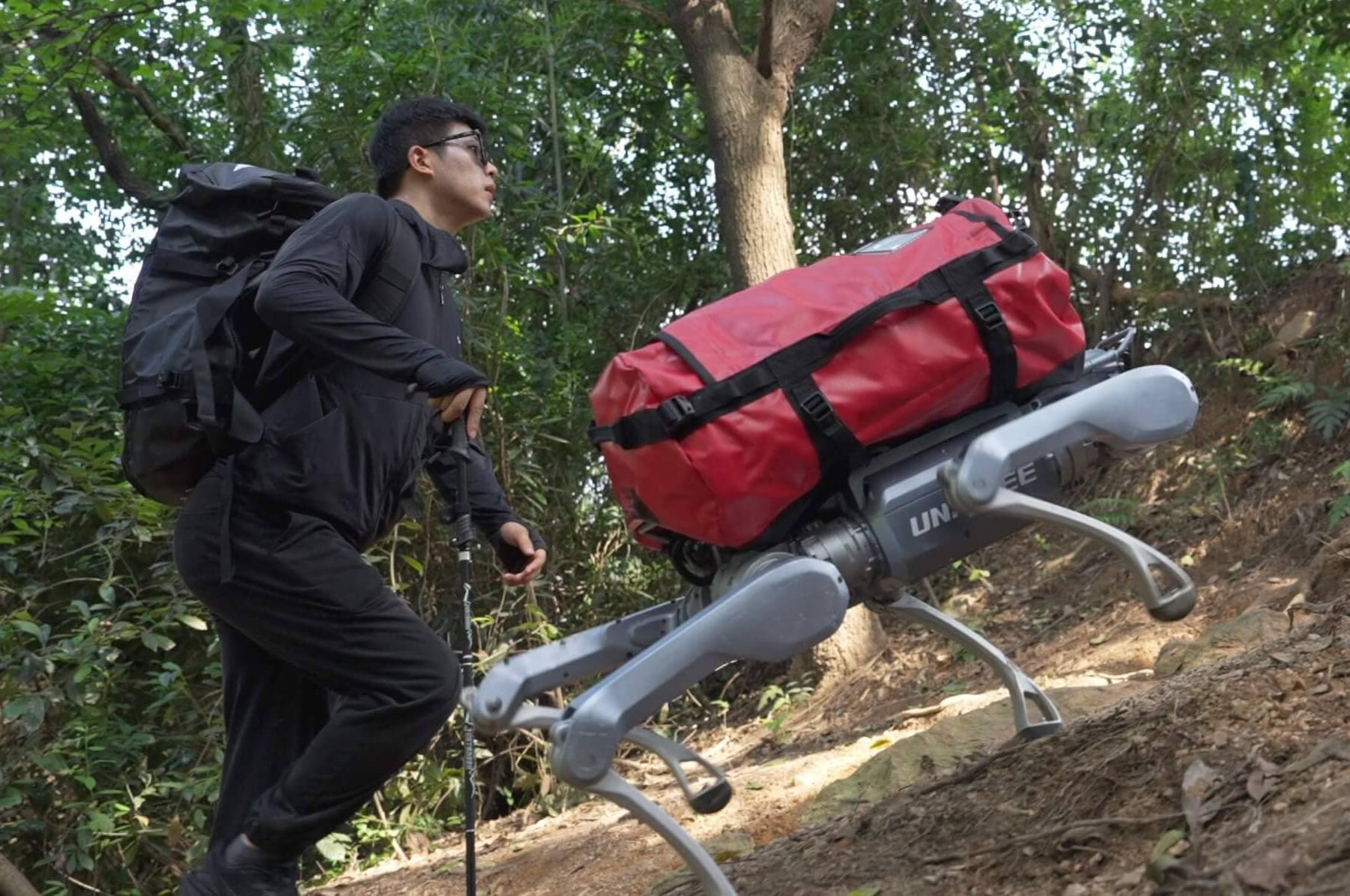
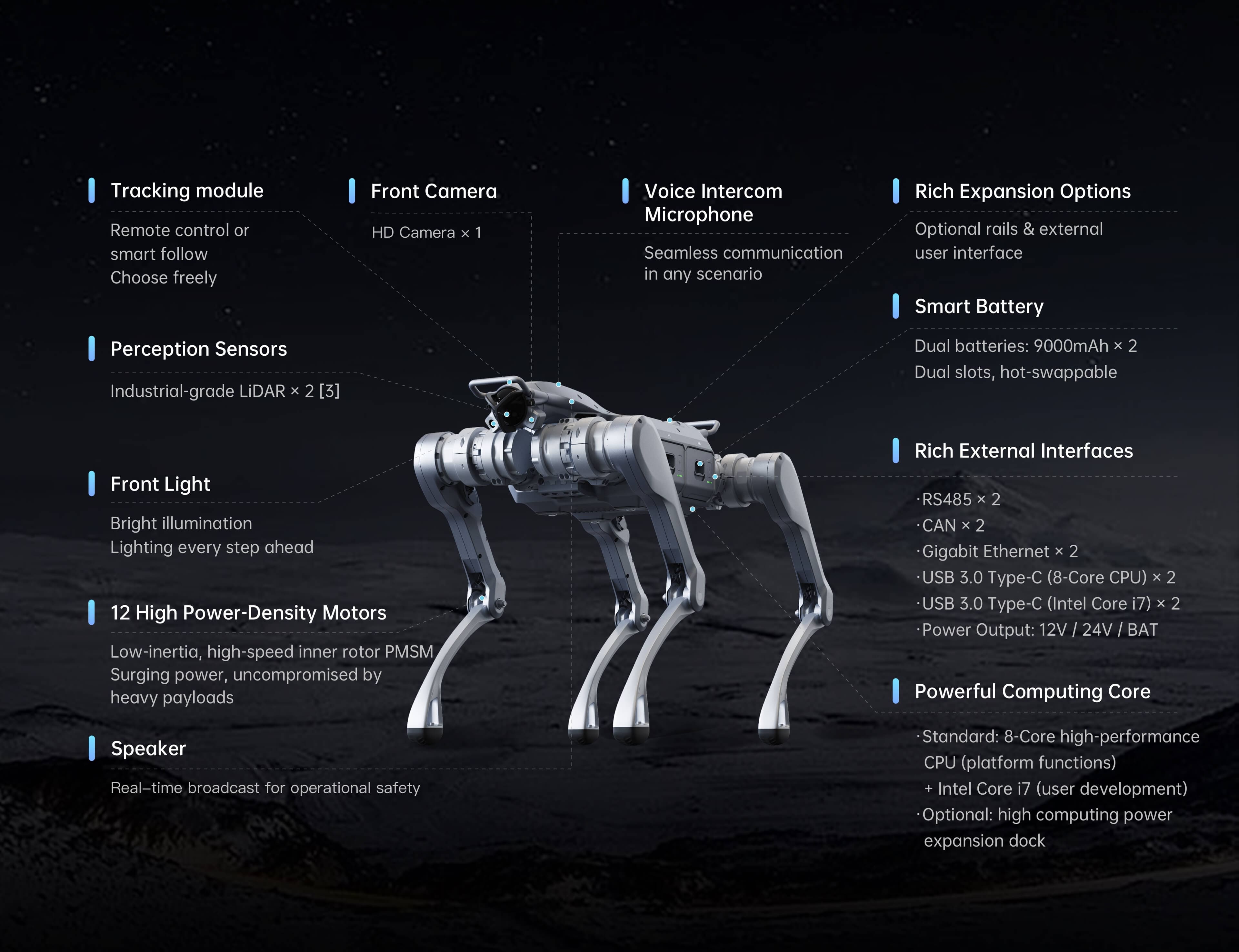
The Unitree A2 Stellar Explorer weighs approximately 37 kilograms, including two batteries that can be swapped during operation (so-called hot-swappable batteries). Each of these batteries has a capacity of 9,000 mAh and allows the robot to operate for up to 5 hours without a load or 3 hours with a payload. In terms of range, it can travel up to 20 kilometers without a load, or around 12 to 12.5 kilometers with a payload. Its top speed is approximately 5 meters per second, or about 18 km per hour—a speed that truly surpasses many other robotic dogs.
The robot is equipped with dual LiDAR sensors (one at the front and one at the rear), plus a front-facing HD camera, enabling AI-powered obstacle avoidance. It can handle slopes of up to 45 degrees, steps 30 centimeters high, and obstacles measuring around 0.5 to 1 meter. Its load capacity is impressive: up to 100 kilograms while stationary and around 25 kilograms while moving. The body is made of aluminum alloy and plastic, with IP56 protection for exterior parts and IP67 protection for internal components, meaning it can operate in temperatures ranging from -20°C to 55°C. On board are an Intel Core i7 processor, Wi-Fi 6, Bluetooth 5.2, and optional 4G with GPS.
Practical Applications
This robot is not just a toy—it is designed for hard work. According to available information, it could significantly impact areas such as site inspections, logistics, and research operations. Imagine it traversing rough terrain at construction sites, performing safety checks, or carrying supplies in warehouses. Its ability to perform backflips or carry an adult on its back demonstrates its high agility and low center of gravity, as shown in media videos. AI-powered obstacle avoidance ensures that it moves smoothly even in complex environments such as forests or industrial zones. Its endurance and all-terrain capabilities could make it ideal for search and rescue (SAR) operations.
Impact on the Market and Chinese Robotics
The unveiling of Unitree's A2 Stellar Explorer not only demonstrates progress in Chinese robotics but also directly affected financial markets. According to Bloomberg, the Solactive China Humanoid Robotics Index rose by 5%, which indicates growing investor confidence in this sector. Unitree is thus becoming a key player pushing the boundaries of speed and endurance in quadrupeds. Although the official price has not been announced, there is speculation that it could be more affordable than competitors such as Boston Dynamics' Spot. All of this highlights how such innovations can move the entire industry forward.
Overall, the Unitree A2 Stellar Explorer is a fascinating piece of technology that combines speed, endurance, and intelligent navigation. If you follow robotics, this is a model worth watching—and who knows, perhaps we will soon see it in action in the real world. What do you think?


