

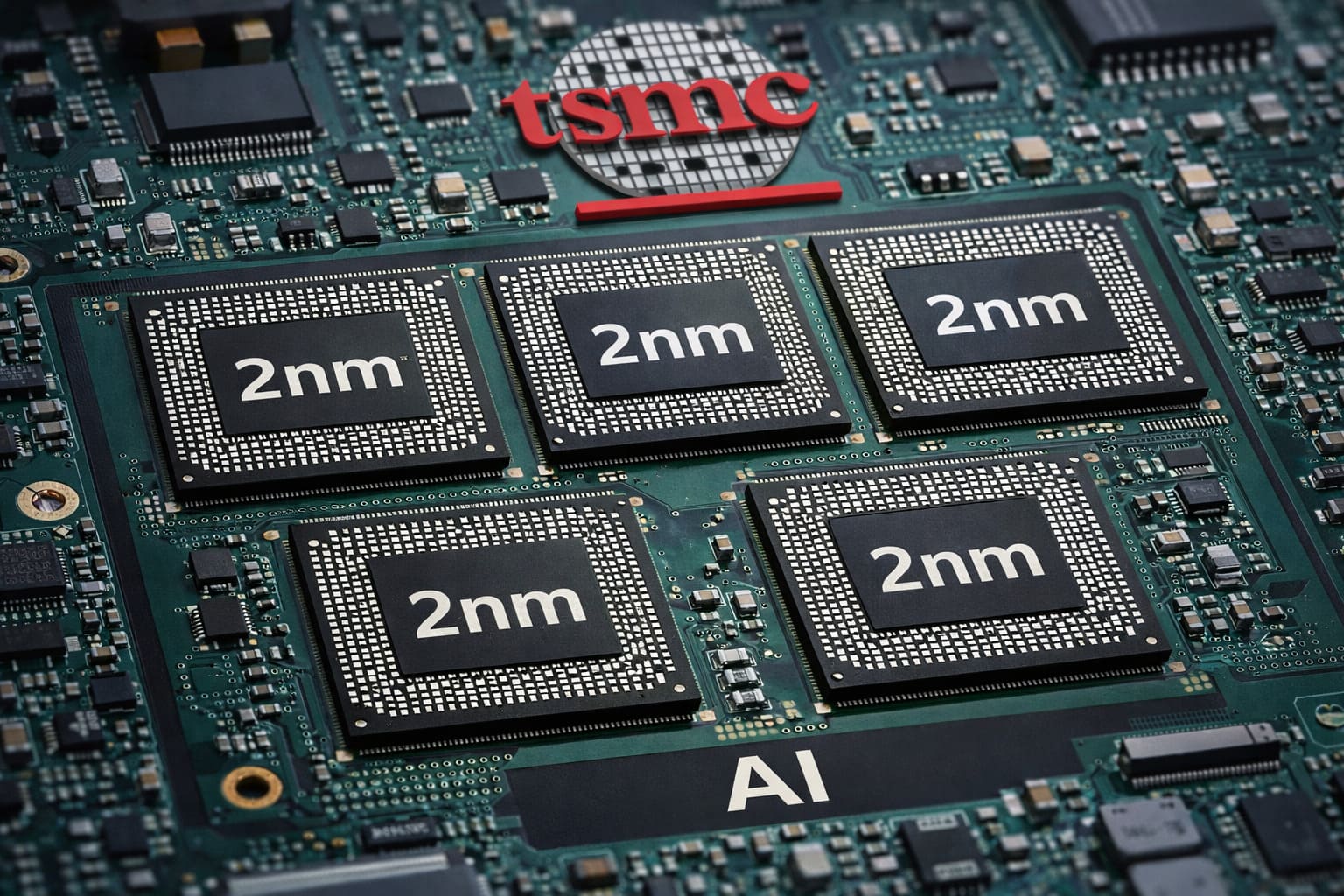
What Are 2nm Chips and Why Are They Important for AI?
Imagine chips so small that up to 50 billion transistors can fit into an area the size of a fingernail—that is exactly what 2nm (2-nanometer) chips offer. These chips are manufactured by Taiwan-based TSMC, which recently announced the start of mass production. They are more powerful and consume less energy than older types, making them ideal for artificial intelligence. According to IBM, they will help speed up laptops, reduce the carbon footprint of data centers, and enable autonomous cars to recognize objects on the road more quickly. For AI, this means that devices such as smartphones will be able to handle complex tasks locally, without having to send data to remote servers, while large models in data centers will run more efficiently.
How Are Such Chips Manufactured?
TSMC dominates the market and is one of the few companies capable of manufacturing 2nm chips. Others include South Korea's Samsung and Intel from the United States, but TSMC is ahead because it has major customers and better yields. Japanese company Rapidus is building a factory in northern Japan, with plans to begin mass production in 2027. Manufacturing is extremely complex—it requires advanced lithography machines, in-depth process expertise, and enormous investment. According to Jan Frederik Slijkerman, an analyst at Dutch bank ING, it is "extremely difficult and expensive." TSMC works with companies such as Nvidia and Apple, which use these chips in their products. Nvidia, for example, which manufactures graphics processing units for AI, reports "incredible" demand for these chips, helping TSMC grow.
Complex Manufacturing
The path to 2nm chips is not without obstacles. In August, Taiwanese prosecutors charged three people with stealing trade secrets related to these chips, which were allegedly intended to help Japanese company Tokyo Electron, an equipment supplier to TSMC. The prosecutors' office described it as a threat to "key national technologies vital to Taiwan's industry." Geopolitics also plays a role—TSMC is avoiding Chinese equipment due to potential U.S. restrictions, according to Nikkei Asia. The company plans to accelerate production in the U.S. by the end of the decade, investing a total of $65 billion (approximately CZK 1.5 trillion) in three factories in Arizona. TSMC is also expanding into Japan with an $8.6 billion factory (approximately CZK 198 billion) and is planning another in Germany. Taiwan, where most of its factories are located, faces risks such as earthquakes—in April, a magnitude 7.4 earthquake halted production, but TSMC has protective systems in place, including earthquake warnings.
2nm Chips and the AI Boom
Artificial intelligence is experiencing tremendous growth, with global investment expected to exceed $2 trillion in 2026, according to Gartner. TSMC, founded in 1987 by Morris Chang, who studied at MIT and Stanford, is benefiting from demand for chips used in AI tools such as ChatGPT. The company supplies chips to companies such as Qualcomm and AMD, Nvidia's competitors, and production capacity is booked years in advance. According to TrendForce analyst Joanne Chiao, Samsung and Intel are still working to improve their yields and do not have as many major customers. The AI boom raises questions—for example, about its impact on jobs, with McKinsey estimating that 30% of U.S. jobs could be automated by 2030. Companies such as Anthropic, whose founder Dario Amodei predicts that the next level of AI could arrive in 2026 and surpass Nobel laureates, are driving progress. OpenAI, led by Sam Altman, plans to create AI capable of making discoveries by 2028.
Even Smaller Chips on the Horizon
TSMC is already working on 1.4nm technology, with mass production expected around 2028. Samsung and Intel are close behind. Rapidus sees 2nm chips as ideal for AI servers, which will become the foundation of digital infrastructure, despite the enormous technical challenges and costs involved. The 2nm size is more of a marketing term—in reality, it refers to transistor density, where a smaller number means more components in the same area. Transistors are created by cutting silicon wafers, treating them, and combining them with thin films of other materials, resulting in smaller chips or chips of the same size with faster processing. TSMC began producing 3nm chips in 2023 and is building a factory for 1.4nm chips in the Taiwanese city of Taichung.
Source: techxplore.com


