

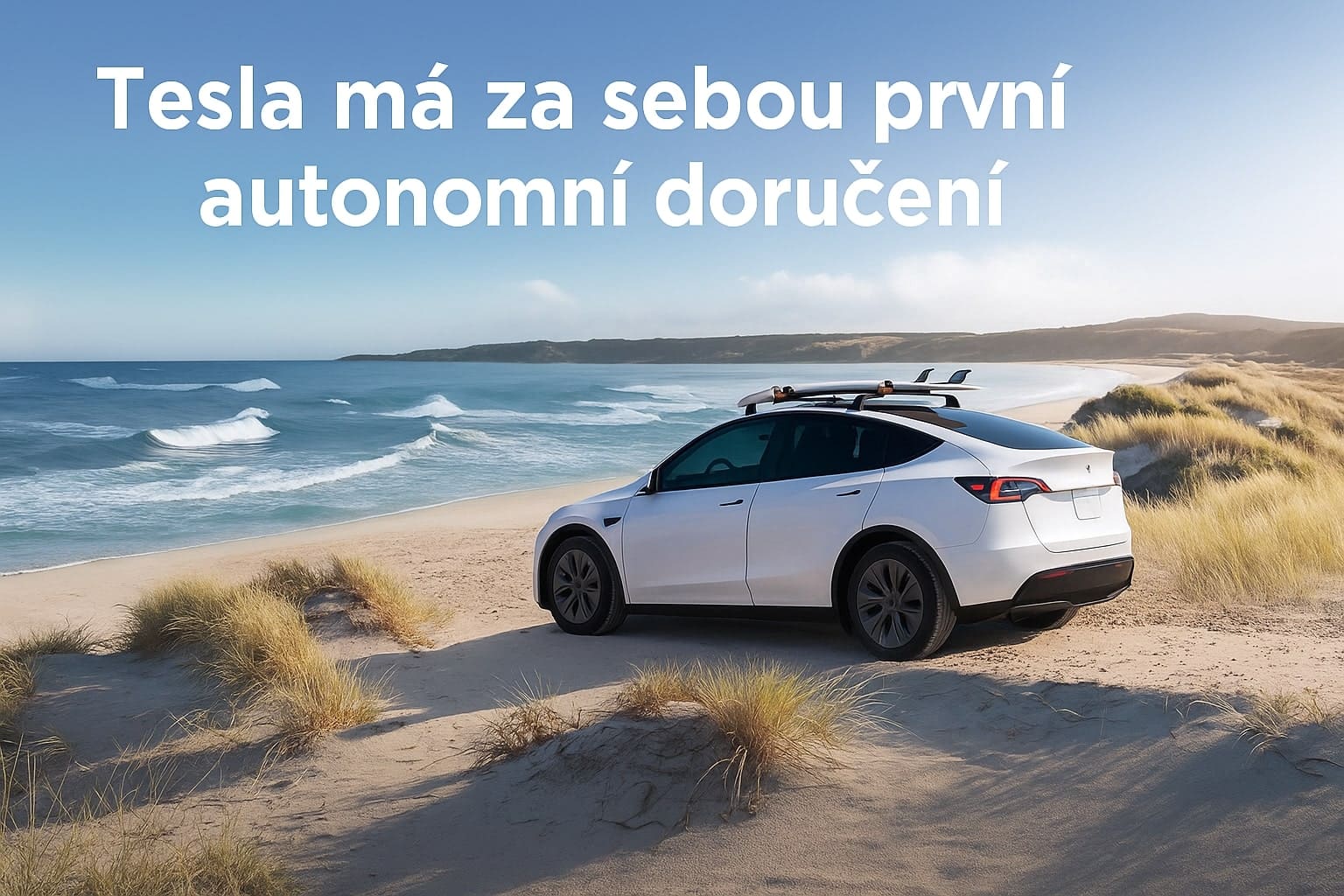
Tesla Transformed the Automotive Industry with the First Autonomous Delivery
In late June 2025, Tesla made significant progress in autonomous mobility by successfully completing the first driverless delivery of a new vehicle directly to a customer. This groundbreaking moment took place in Austin, Texas, where a Model Y SUV traveled entirely on its own from the Gigafactory to an apartment building, where its new owner was waiting for it.
The entire event was captured on video and shared by Elon Musk on the X platform. The video shows the vehicle driving through the city without anyone in the cabin—neither in the driver's seat nor in the passenger seat.
Technical Specifications of the Autonomous Drive
According to Tesla's head of artificial intelligence, Ashok Elluswamy, the customer was selected entirely at random from all Model Y orders in the Austin area. The vehicle was identical to any other Model Y leaving Tesla's production line.
During its autonomous journey, the vehicle reached a maximum speed of 115 kilometers per hour, slightly exceeding typical speed limits on Texas highways. The route included navigating complex highway interchanges, driving through residential neighborhoods, and maneuvering in parking lots.
World's first autonomous delivery of a car!
— Tesla (@Tesla) June 28, 2025
This Tesla drove itself from Gigafactory Texas to its new owner's home ~30min away — crossing parking lots, highways & the city to reach its new owner pic.twitter.com/WFSIaEU6Oq
Technological Background of the Project
Tesla did not disclose the specific software version or hardware configuration used in this demonstration. The current Full Self-Driving (Supervised) system normally requires drivers to keep their hands on the steering wheel and be ready to take control of the vehicle at any time.
However, autonomous delivery represents a significant step forward compared with the system's current capabilities. The vehicle handled complete navigation through urban traffic, including responding to traffic lights, pedestrians, and other road users.
Robotaxi Program in Full Swing
In parallel with this historic delivery, Tesla launched a robotaxi pilot program in Austin involving 10 to 20 Model Y vehicles. These vehicles operate in geofenced areas around the company's headquarters, with continuous remote monitoring by safety operators.
For now, the service is available only to selected users, primarily influencers and analysts who frequently create content supporting the Tesla brand. The robotaxi vehicles have a safety supervisor on board in the passenger seat and are remotely monitored from an operations center.
Tesla's Vision for the Future
Elon Musk has long promised to transform all Tesla cars into fully autonomous vehicles through over-the-air software updates. His Master Plan, Part Deux, outlines a future in which every Tesla owner will be able to add their vehicle to the "Tesla shared fleet" simply by pressing a button in the mobile app.
This concept would allow vehicle owners to generate income from their cars while they are not using them. In 2019, Musk predicted that Tesla would have one million robotaxis on the road by 2020—a prediction that helped the company raise $2 billion from institutional investors.
Competition in Autonomous Mobility
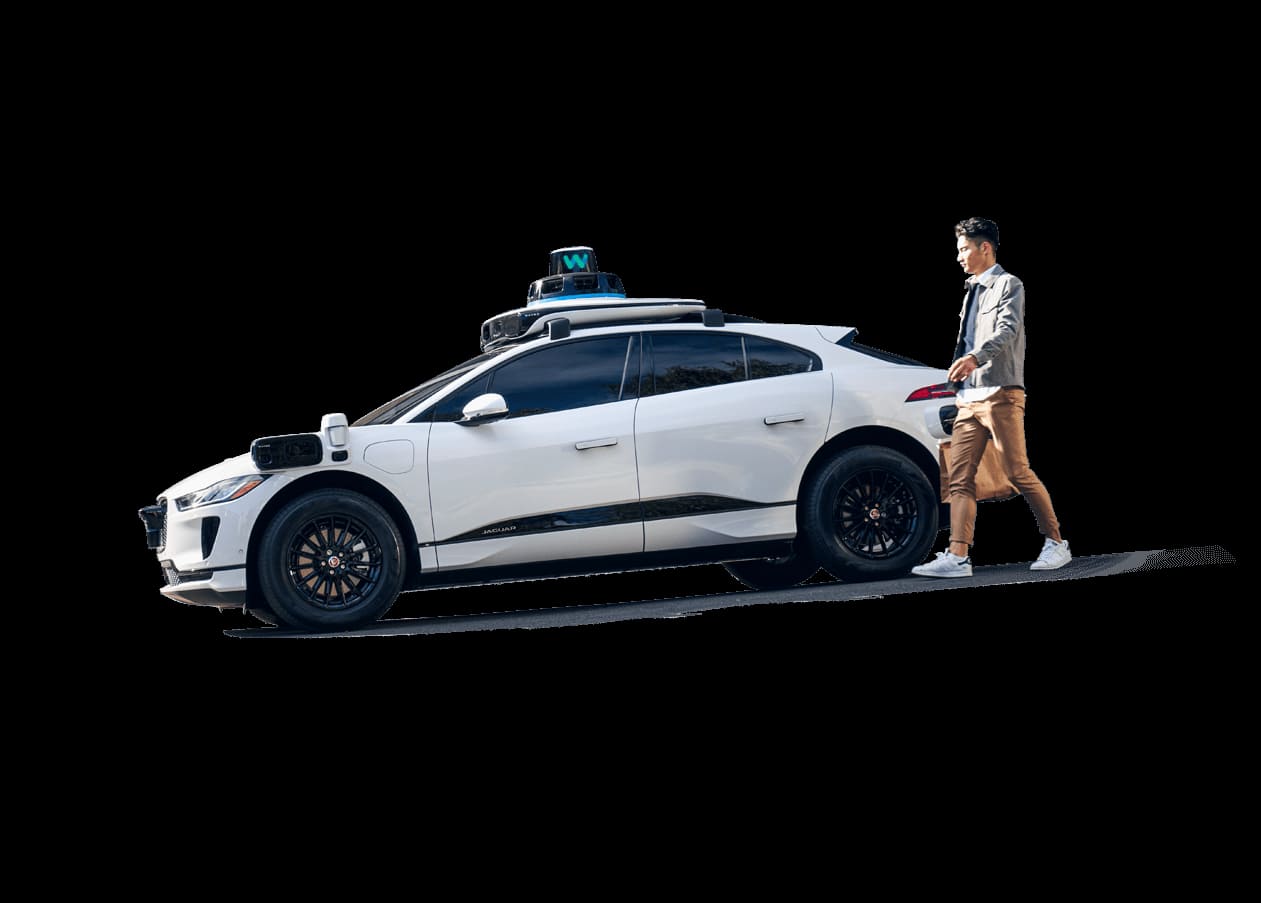
Musk's claim of the "first fully autonomous drive" on a public highway is not entirely accurate. Waymo, owned by Alphabet, already operates commercial robotaxi services in several U.S. cities and has offered employees fully autonomous highway rides in Phoenix since 2024.
Waymo has also expanded its services to Los Angeles and San Francisco, making it the current leader in the commercial deployment of autonomous vehicles.
Regulatory Challenges and Safety Concerns
The National Highway Traffic Safety Administration (NHTSA) is investigating Tesla over potential safety defects in its FSD systems. It recently requested more information from the company about its robotaxis after the vehicles were recorded violating certain traffic rules.


