

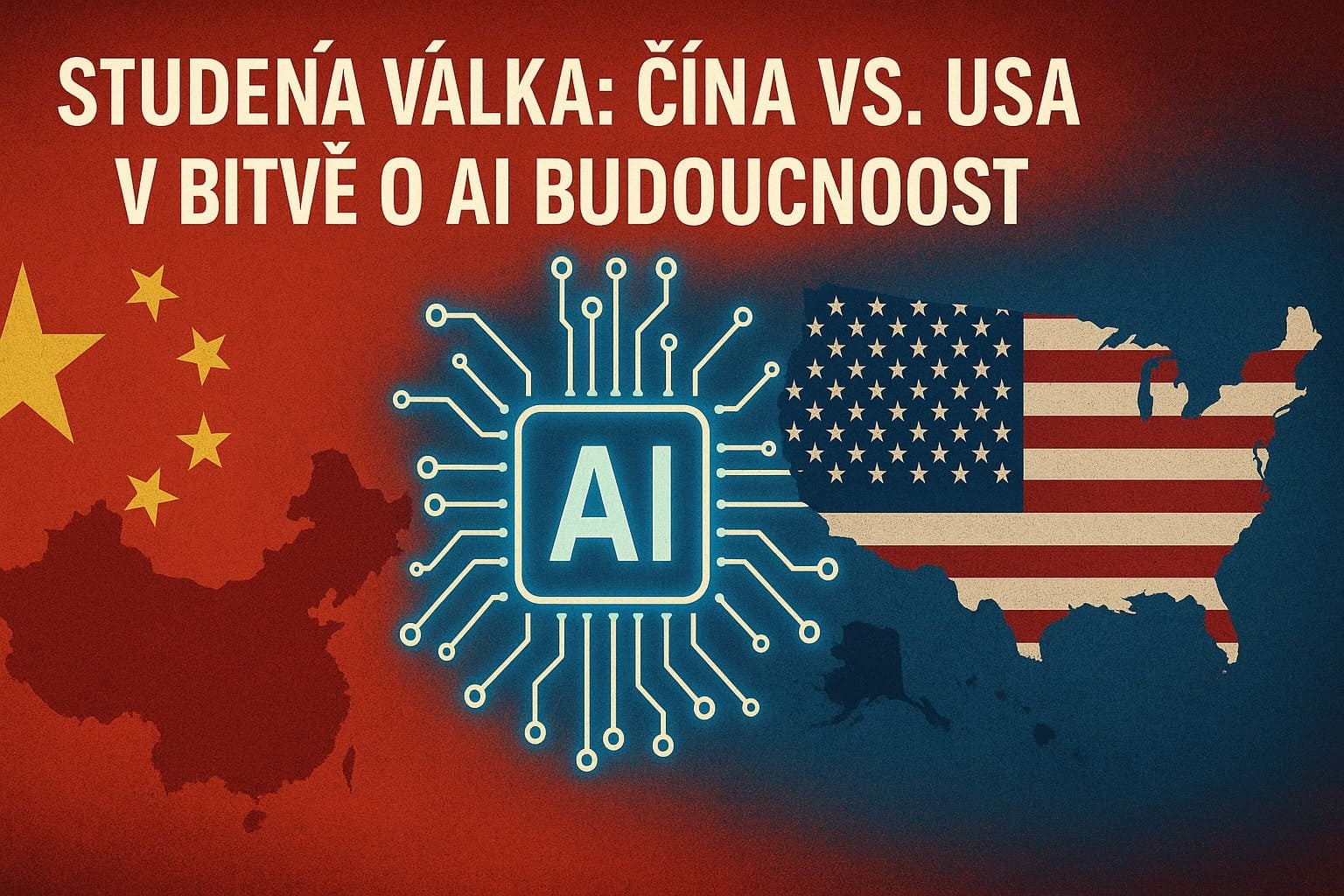
Technology Cold War: China vs. the USA in the Battle for the Future of AI
Chinese artificial intelligence companies are gradually challenging American dominance in the global AI race. While American models are still considered the industry’s gold standard, Chinese alternatives are gaining popularity worldwide thanks to a combination of competitive pricing and comparable quality.
International corporations ranging from multinational banks to public universities across Europe, the Middle East, Africa, and Asia are increasingly turning to large language models (LLMs) from Chinese companies. The most prominent include Hangzhou-based startup DeepSeek, founded in 2023 as a spin-off from the High-Flyer hedge fund, and e-commerce giant Alibaba with its Qwen model.
Specific Use Cases for Chinese AI Models
Banks HSBC and Standard Chartered have begun testing DeepSeek models internally, according to sources familiar with the matter. An even more notable case is Saudi Aramco, the world’s largest oil company, which recently installed DeepSeek in its main data center.
Paradoxically, even major American cloud service providers such as Amazon Web Services, Microsoft, and Google offer DeepSeek to their customers, despite the White House banning the company’s app on some government devices over data security concerns.
ChatGPT’s Numerical Lead Versus DeepSeek’s Growing Popularity
Although OpenAI’s ChatGPT remains the world’s dominant consumer AI chatbot, with 910 million global downloads compared with DeepSeek’s 125 million, according to data from research firm Sensor Tower, the gap is gradually narrowing. American AI maintains its reputation as the industry’s gold standard thanks to advantages in computing chips, cutting-edge research, and access to financial capital.
China’s Strategy: Comparable Quality at a Significantly Lower Price
As in many other industries, Chinese companies have begun winning customers by offering nearly the same quality of performance at significantly lower prices. A study of global competitiveness in critical technologies published in early June by researchers at Harvard University found that China has advantages in two key building blocks of AI—data and human capital—which help it keep pace.
On the Cyprus-based Latenode platform, which helps global companies create their own AI tools for tasks including social media content creation and marketing, as many as one in five users worldwide now chooses the DeepSeek model, according to co-founder Oleg Zankov. “DeepSeek has the same overall quality, but it is 17 times cheaper,” Zankov said, making it particularly attractive to clients in places such as Chile and Brazil, where money and computing power are less abundant.
Open-Source Approach as a Competitive Advantage
Leading Chinese AI companies—including Tencent and Baidu—also benefit from releasing their AI models as open source, meaning users can freely modify them for their own purposes. This encourages developers and companies around the world to adopt them.
According to Alibaba, developers have created more than 100,000 derivative models based on its flagship open-source AI model, Qwen. Tokyo-based AI startup Abeja chose Qwen over similar products from Google and Meta last fall when it was tasked with building a series of customized models for Japan’s Ministry of Economy, Trade and Industry.
Practical Applications Versus Breakthrough Innovations
While American AI companies prioritize pursuing major breakthroughs in the race to build artificial superintelligence, China’s AI industry focuses far more on using AI to create practical applications—an emphasis that could help it quickly gain new users.
At South Africa’s University of the Witwatersrand, research leaders selected DeepSeek for a grant-writing pilot project because it is open source and can be used offline, preserving the security of university data, according to Taariq Surtee, the university’s head of e-research.
Geopolitical Implications: Moving Toward a Technology Cold War
According to some industry experts, the competition has set the world on a path toward a technology cold war in which countries will have to decide whether to align themselves with American or Chinese AI systems.
“The number one factor defining whether the USA or China wins this race is whose technology is most widely adopted throughout the rest of the world,” Microsoft President Brad Smith said at a recent Senate hearing. “Whoever gets there first will be difficult to displace.”
American Sanctions and Chinese Independence
Chinese AI companies continue to move forward despite the obstacles placed in their way by the USA. Concerned about China’s efforts to develop cutting-edge technologies for surveillance or military purposes, Washington has restricted Chinese AI companies’ access to American computer chips, know-how, and funding, and is threatening further restrictions.
In response, Beijing is investing money in building an AI supply chain with as little dependence on the USA as possible. The Trump administration halted sales of Nvidia’s H20 AI chip—a processor scaled back to comply with US export control requirements for China—and research firm Jefferies predicted that the move would cost Nvidia $10 billion in lost revenue.
Military and Security Aspects
Articles published in military journals show that the People’s Liberation Army, like the US military, is actively exploring how to use advances in AI for strategic advantage, although it is difficult to determine how far these efforts have progressed. US lawmakers recently introduced a bipartisan bill that would prohibit federal agencies from using AI developed in China.
Information Bubbles and Propaganda
As competing systems become more isolated from one another, AI models will have freer rein to lock users into bubbles of disinformation and propaganda, according to industry experts. The consumer version of DeepSeek produces censored answers on topics considered sensitive by the Communist Party, such as ethnic assimilation campaigns in Xinjiang and Tibet.
Changes in Global Cooperation
Just a few years ago, the American and Chinese AI sectors were closely interconnected. In 2018, American investors participated in deals accounting for approximately 30% of the $21.9 billion in funding for China’s AI sector, according to PitchBook. Elite Chinese students flocked to American universities and Silicon Valley companies.
Today, US venture capital investment in Chinese AI companies has largely dried up. Chinese citizens face greater difficulty studying and working in the USA.
Global Standards and Future Influence
The less dominant American AI companies become, the less power the USA will have to set global standards for how the technology should be used. This opens the door for Beijing to use Chinese models as a Trojan horse for spreading information that reflects its preferred worldview.
According to Ritwik Gupta, an AI policy researcher at the University of California, Berkeley, the USA also risks losing insight into Chinese ambitions and AI innovations. “If they are dependent on the global ecosystem, then we can manage it,” Gupta said. “If not, China will do what it is going to do, and we will have no visibility.”
OpenAI’s Expansion in Response to Competition
This year, privately held OpenAI significantly stepped up its efforts to expand abroad, opening offices in Europe and Asia. In June, OpenAI wrote on Substack that Chinese AI startup Zhipu AI is gaining ground by helping South Asian, Middle Eastern, and African nations build their AI infrastructure.
OpenAI said the Chinese startup’s goal is to “lock in Chinese systems and standards across emerging markets before American or European rivals can get there.” OpenAI CEO Sam Altman said in May: “We want to make sure democratic AI wins over authoritarian AI.”
The current situation suggests that the global AI market is splitting into two spheres of influence, which will have long-term implications for technological development, international trade, and geopolitical stability.


