

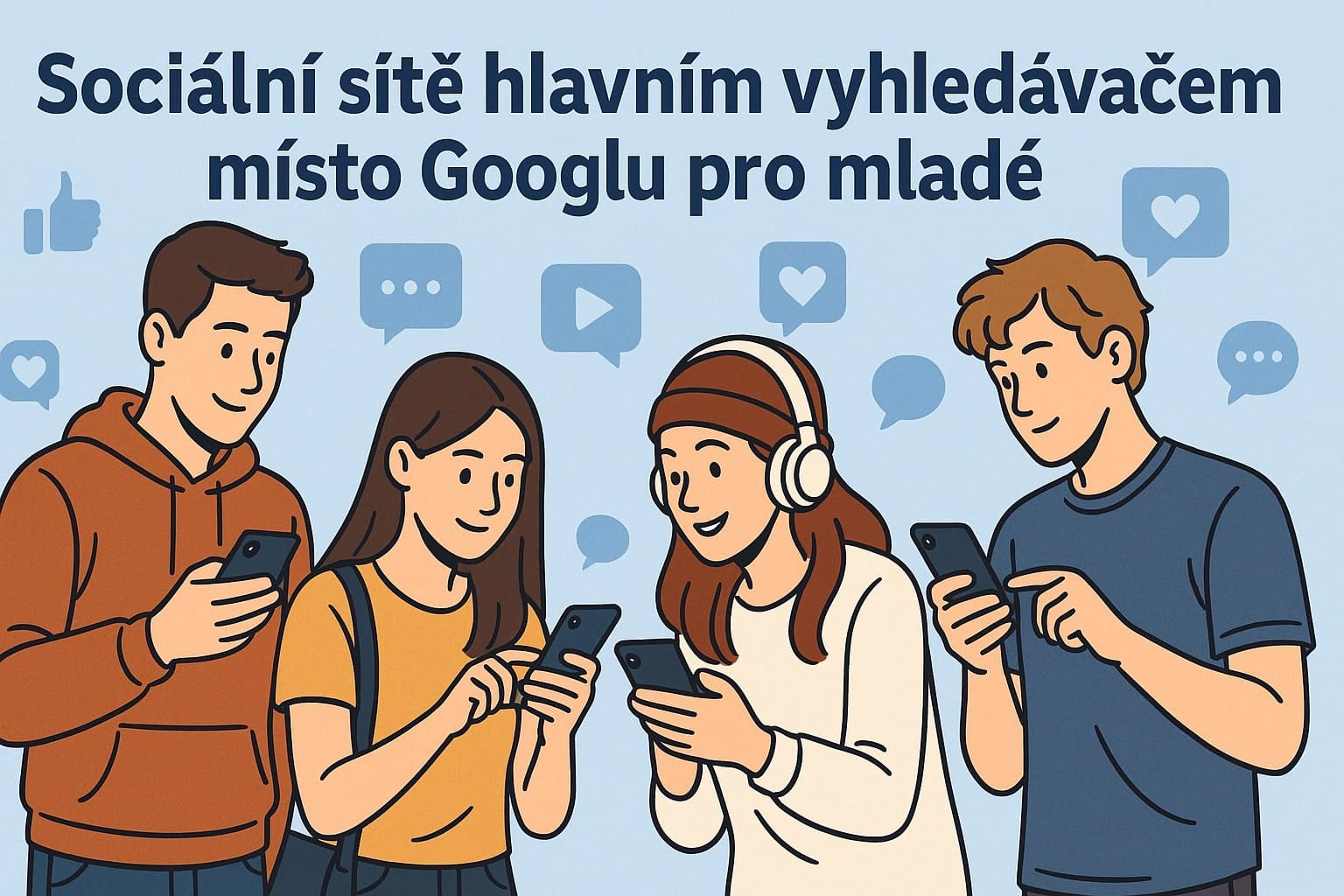
Generation Z Is Abandoning Google: Social Media Has Become Their Primary Search Engine
According to new research by Sprout Social, something groundbreaking is happening. Generation Z (Gen Z) no longer uses Google as its primary search engine. Instead, 41% of this generation turns to social media first when they need to find information. This percentage surpasses traditional search engines (32%), artificial intelligence chatbots (11%), and advice from friends and family (9%). Scott Morris, Chief Marketing Officer at Sprout Social, commented on this trend: "Social media is becoming the new search engine, driven primarily by Generation Z. This shift is transformative not only for social media but for commerce and business as a whole, as it changes how consumers discover products and brands."
Specific Figures That Are Changing the Rules of the Game
Research by Sprout Social, conducted by Glimpse among more than 2,280 social media users in the United States, United Kingdom, and Australia, reveals fascinating statistics. A total of 37% of consumers across all age groups prefer social media as the first place to search for product reviews and recommendations. Another 35% primarily use social media to find local restaurants and activities. The impact on purchasing behavior is even more pronounced. Social media content influenced purchases by 76% of respondents over the past six months. Among Generation Z, this figure is even higher at 90%, while among millennials it is 84%.
The Positive Impact of Social Media on Young People's Lives
Surprisingly, the research also reveals that social media has a predominantly positive impact on young people. A total of 60% of all users say that social media had a positive effect on their mental health over the past six months, while only 18% report a negative impact. This figure is even higher among millennials (68%) and reaches 71% among Generation Z. The impact on financial decision-making is similarly positive. A total of 47% of respondents say that social media helped them improve their financial decision-making, rising to 53% among millennials and as high as 62% among Generation Z. Only 13% report a negative impact.
The Evolution of Platform Preferences
Facebook (81%), YouTube (71%), and Instagram (66%) remain the most popular platforms. Interestingly, YouTube has moved into second place in popularity since Sprout Social's last index. Community platforms such as Reddit are experiencing significant growth, with 51% of global users planning to spend more time on them over the next six months. Among Generation Z and millennials, this figure reaches 63%. Generation Z (52%) and millennials (53%) also lead in the adoption of creator-driven platforms such as Substack and Patreon.
The Evolution of Search
Katie Tweedy, Director of SEO and Content Marketing at Collective Measures, explains the broader context of these changes in her article for Adweek. According to her, we are undergoing a "search evolution" and living in an era of conflicting information. Tweedy highlights two main forces driving this evolution. First, artificial intelligence is limiting the space available to brands in search. Brands that previously depended on informational traffic from the upper funnel are being hit hard by AI Overviews, which are shrinking Google's first page. Second, user behavior is expanding. A total of 76% of consumers have used social media for search, and 52% of people say they turn to platforms other than Google for information.
Challenges for Marketers
Tweedy points to an important observation: 54% of people browse more search results than they did five years ago—not because they enjoy the experience, but because it is harder to find the information they want. Google is aware of changing search patterns and competition from social media apps. Its response to this competition includes the new Short Videos tab and the inclusion of short-video carousels in search results, where Google displays videos from TikTok, Instagram Reels, and YouTube Shorts.
The Future of Search
As Tweedy concludes, marketers cannot wait for traditional search engines to adapt to evolving search behavior. People are already migrating and searching for information in different ways, on different platforms, using voice, text, and image searches. The task for marketers remains the same: they must create content that resonates with their audience and ensure it is optimized to be found anywhere on the internet. Social media has become the new battleground for attention, where brand and product discovery takes place. This shift is not merely a temporary trend, but a fundamental change in how the younger generation approaches information and purchasing decisions.


