Altman Criticizes Meta for “Distasteful” Tactics in Recruiting OpenAI Researchers
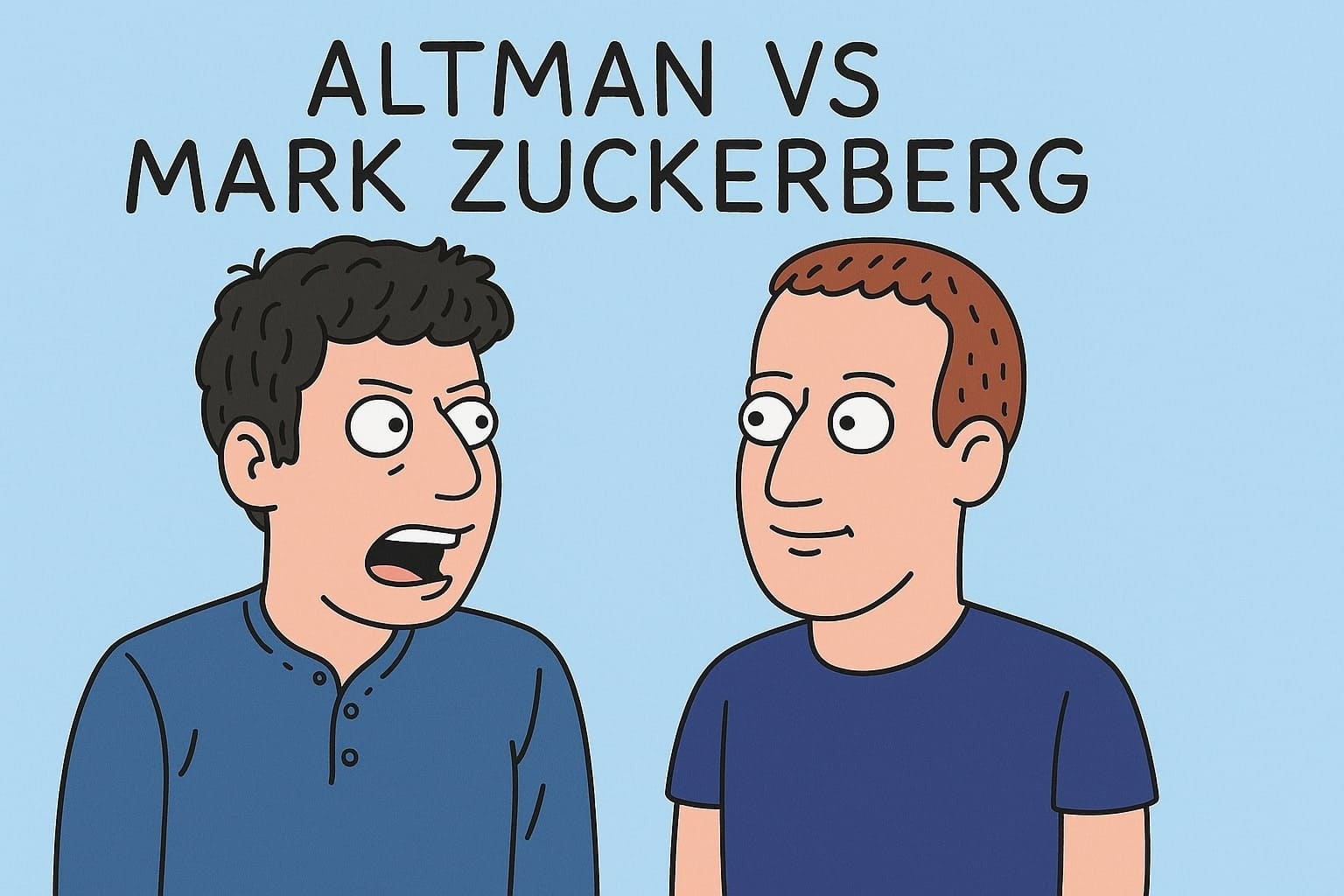
Sam Altman, CEO of OpenAI, has sharply criticized Meta's aggressive talent recruitment. In an internal memo sent to OpenAI researchers on Monday evening, obtained by WIRED magazine, Altman explained why employees should stay at OpenAI while also indicating that the company is reviewing compensation across the entire research organization. In the Slack message, Altman wrote: “We have gone from some nerds in the corner to the most interesting people in the tech industry (at least). AI Twitter is toxic; Meta is acting in a way that feels somewhat distasteful; I expect things will get even crazier in the future.”
Meta Unveils New Superintelligence Team
Altman's response came after a major announcement from Mark Zuckerberg. On Monday, Meta's chief sent employees a memo introducing a new Superintelligence team. The team will be led by Alexandr Wang, formerly of Scale AI, and Nat Friedman, who previously led GitHub.
The list of new hires included several people from OpenAI, including Shengjia Zhao, Shuchao Bi, Jiahui Yu, and Hongyu Ren. According to available information, they also include other prominent researchers:
- Trapit Bansal (co-creator of OpenAI's o-series models)
- Shuchao Bi (co-creator of GPT-4o's voice mode)
- Hongyu Ren (former post-training lead)
- Jiahui Yu (former perception team lead)
Mark Chen, OpenAI's chief research officer, told employees that he felt as though “someone had broken into our home and stolen something.”
Altman's View of Employee Departures
Altman, however, took a different tone regarding the departures. “Meta has certainly recruited some great people, but on the whole, it is impossible to overlook how many of their top targets they failed to recruit and how far down their list they had to go,” he wrote. “They have been trying to recruit people for a very long time, and I have lost track of how many people from here they have tried to recruit for the chief scientist role.” Altman added that he is proud of how mission-oriented their industry is: “Of course, there will always be some mercenaries. Missionaries will beat mercenaries.” He also noted that OpenAI is reviewing compensation across the entire research organization.
Criticism of Meta and Defense of OpenAI's Culture
“I believe there is much, much more upside in OpenAI stock than in Meta stock,” Altman wrote. “But I think it is important that major rewards come after major success; what Meta is doing will, in my opinion, lead to very deep cultural problems.”
Altman then laid out his case for why people should stay at OpenAI: “I have never been more confident in our research roadmap. We are making an unprecedented bet on compute, but I love that we are doing it, and I am confident that we will put it to good use. Most importantly, I think we have the most brilliant team and environment in the world.”
“And perhaps even more importantly, we genuinely care about building AGI (artificial general intelligence) the right way,” he added. “Other companies are more interested in it as an instrumental goal serving some other mission. But this is our core focus, and it always will be.”
Employees Respond to Altman's Letter
Several senior employees who previously worked at Meta subsequently responded on Slack with their own stories about why the environment at OpenAI is better. “They constantly change their primary focus,” one of them wrote. Another stated: “Yes, we are odd and weird, but that is what makes this place a magical cradle of innovation. OpenAI is weird in the most magical way. We contain multitudes.”
Altman concluded his message by saying: “Long after Meta moves on to its next flavor of the week or is defending its social stronghold, we will be here, day after day, year after year, figuring out how to do what we do better than anyone else.”
This dispute reflects the broader “war for talent” in artificial intelligence, in which companies are trying to attract the best researchers with large financial incentives, including alleged signing bonuses of up to $100 million.