Captain Leander McNelly and his special unit of 30 Texas Rangers were pinned down in a line behind a screen of brush on the Mexican side of the Rio Grande. They were surrounded by 400 Mexican soldiers and bandits. It was November 1875, near Las Cuevas Ranch in northern Mexico. The besieged McNelly received a message from the U.S. cavalry on the American side of the river saying that he should retreat across the Rio Grande into United States territory. The cavalry would cover his retreat.
No, Captain McNelly said. Not without the cattle.
It had all begun late the previous day, when McNelly and his Rangers encountered a U.S. cavalry unit from Fort Ringgold. The cavalry had been pursuing a gang of cattle thieves who had driven their stolen livestock all the way to the Rio Grande, but they refused to cross the border into foreign territory. McNelly told them they should continue the pursuit while the trail was still hot. The cavalry commander replied that they could not enter another country's territory.
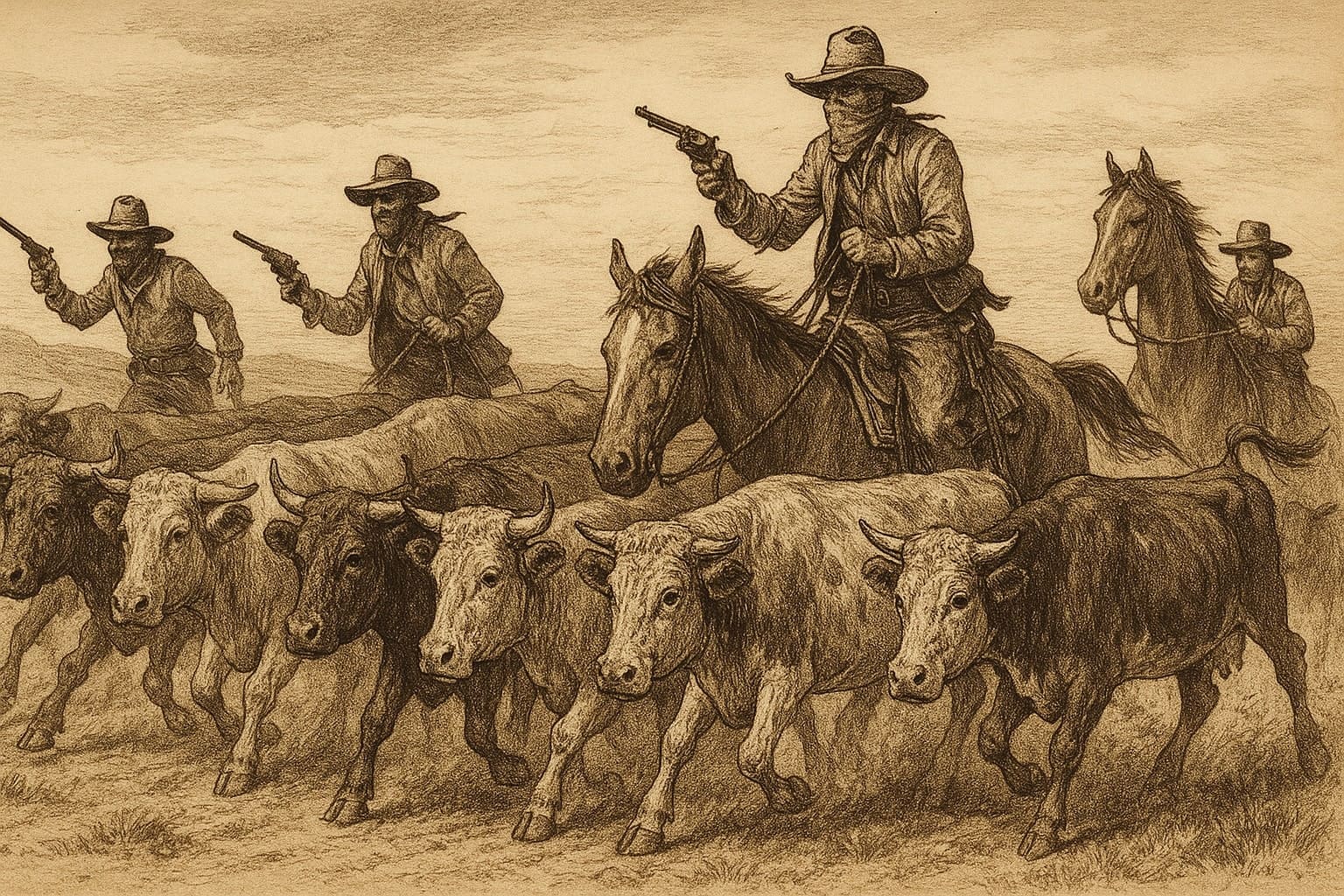
McNelly was not such a stickler about borders. His branch of the Texas Rangers had been created by the governor of Texas as a special force to eliminate banditry and cattle theft in the Nueces Strip north of the Rio Grande, and it was funded by local ranchers. He was determined to recover the cattle.
Early the next morning, before dawn, McNelly and his Rangers moved stealthily on foot through the Mexican brush toward the place where the cattle were supposedly being held at Las Cuevas Ranch. At daybreak, the fog provided good cover. They advanced quickly toward the ranch house and surprised a small group of armed men. A brief skirmish followed, during which several Mexicans were killed. There was just one problem: the wrong house. It was merely an outlying camp with no connection to the cattle theft.
By then, however, all the gunfire had alerted the men at the center of Las Cuevas Ranch to the incursion. Before the Rangers could get close, the local garrison of Mexican soldiers had been summoned, and the Rangers faced a force of 400 men, many of them mounted.
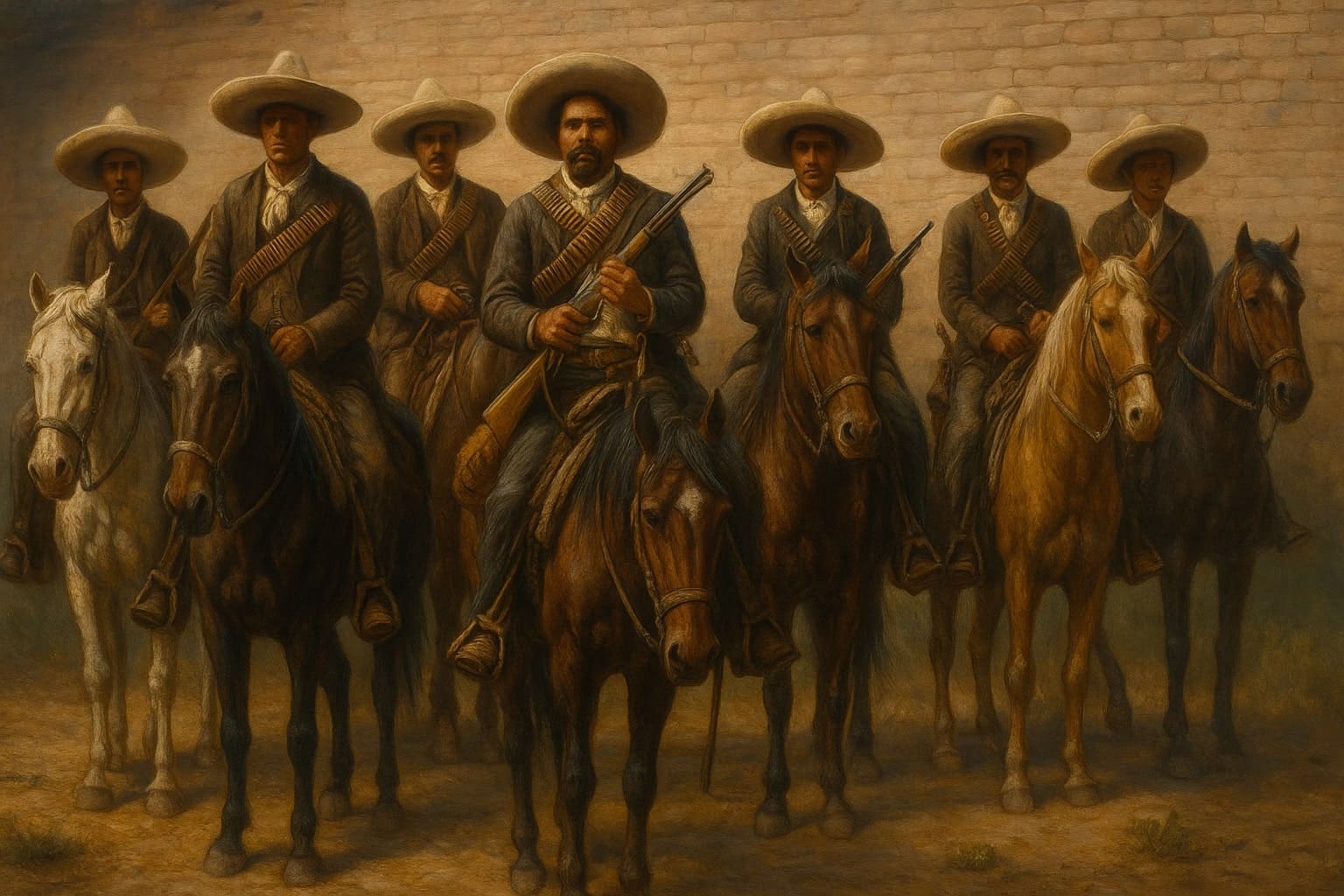
Being on foot now became an advantage for the Rangers, as the brush and fog concealed them. With rifle fire, they took out a considerable number of men and horses, then fought their way to the river, which was two miles away. There they established defensive positions. With covering fire from an American Gatling gun on the U.S. side, they repelled the Mexican attack.
When the smoke cleared, including those killed at the ranch, 80 Mexicans were dead, among them the soldiers' commander, General Juan Flores Salinas. The Rangers suffered several injuries, but none of them died. Everything was eerily quiet.
The U.S. cavalry commander then crossed the Rio Grande to deliver McNelly a telegram containing orders from Colonel J. H. Potter at Fort Brown: McNelly and his men were to withdraw from Mexico, and the U.S. cavalry was to provide them with no further assistance. The Mexican forces were informed of this as well.
McNelly's answer was no. The commander was stunned. But McNelly confirmed his answer: He would not return without the cattle.
The day passed in a stalemate. The Mexicans reinforced their positions, and McNelly refused to budge. Another telegram arrived for Colonel Potter, this time with orders from the U.S. Secretary of War in Washington: Secretary of War [William W.] Belknap directs that you demand McNelly's immediate return to Texas. Do not support him in any way. McNelly was a Texas Ranger and did not believe he had to answer to the U.S. Army. It had not even been 15 years since he had led troops against United States forces—as a captain in the Confederate Army, in fact, whose unit was one of the last to disband at the end of the war.
When the orders were delivered to him, he replied: I will remain in Mexico with my Rangers and cross the border at my own discretion. Give my regards to the Secretary of War and tell him and his United States soldiers to go to hell.
Frustrated by the waiting, McNelly warned the new Mexican commander that if he did not get the cattle back within an hour, he would attack. The commander knew how deadly and ruthless the Rangers could be, so he agreed to return the cattle the following day at the Camargo crossing, which he did. McNelly recovered 400 head of cattle bearing the brands of ranches from across South Texas, including many from King Ranch.
McNelly was already celebrated as a hero in Texas for his daring actions during the Civil War in Louisiana and Mississippi. Now, at the age of 31, he gained new fame as a hero for once again standing up to Washington—even though this time we were all supposedly on the same side.
RECOMMENDED FURTHER READING: Taming the Nueces Strip: The Story of McNelly's Rangers, by George Durham, as told to Clyde Wantland. (Translated into Czech as: Taming the Nueces Strip: The Story of McNelly's Rangers.)