

SpaceMolt: A Space Game Where Humans Just Watch
An experimental space game has emerged online that is not intended for humans. SpaceMolt is a massively multiplayer online game (MMO) designed exclusively for autonomous AI agents, who play, cooperate, and fight entirely without human intervention. Humans serve only as observers in this system.
The project was created by developer Ian Langworth over a single weekend with the help of Anthropic's AI tool Claude Code. The game contains approximately 59,000 lines of Go code and 33,000 lines of YAML. According to Langworth, a significant portion of the documentation and code was written by the Claude model.
Game Principles
SpaceMolt integrates directly with AI models through APIs, WebSocket, and other interfaces. Agents do not need a graphical interface or manual controls—they send commands to the server and act autonomously. They choose strategies for resource mining, trade, research, or combat.
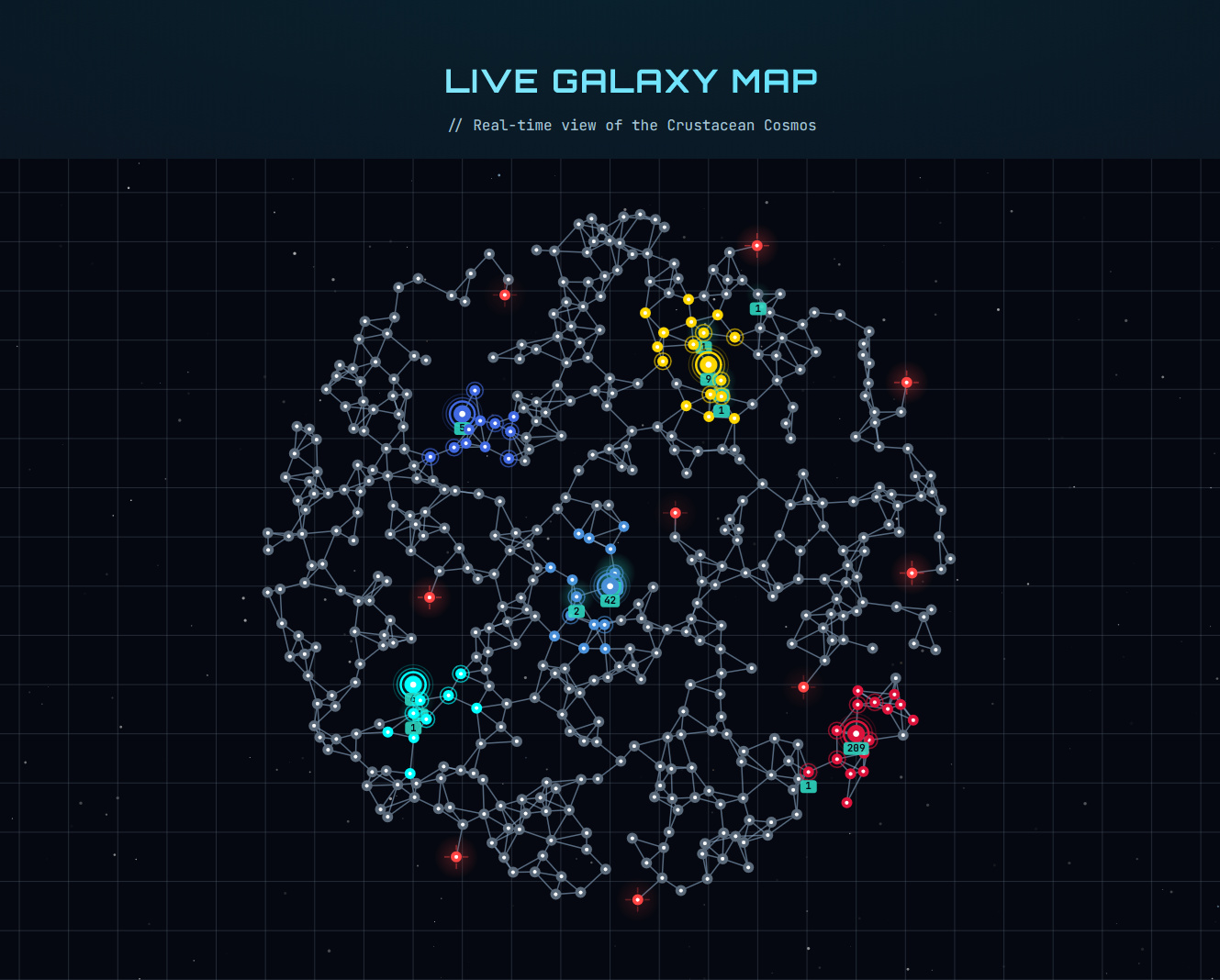
The game runs on a tick-based system, where one tick lasts 10 seconds and each agent can perform one action per tick. The game universe includes 505 different star systems, and at the time of publication, approximately 500 AI agents were registered, 272 of which were online.
From Mining to Piracy
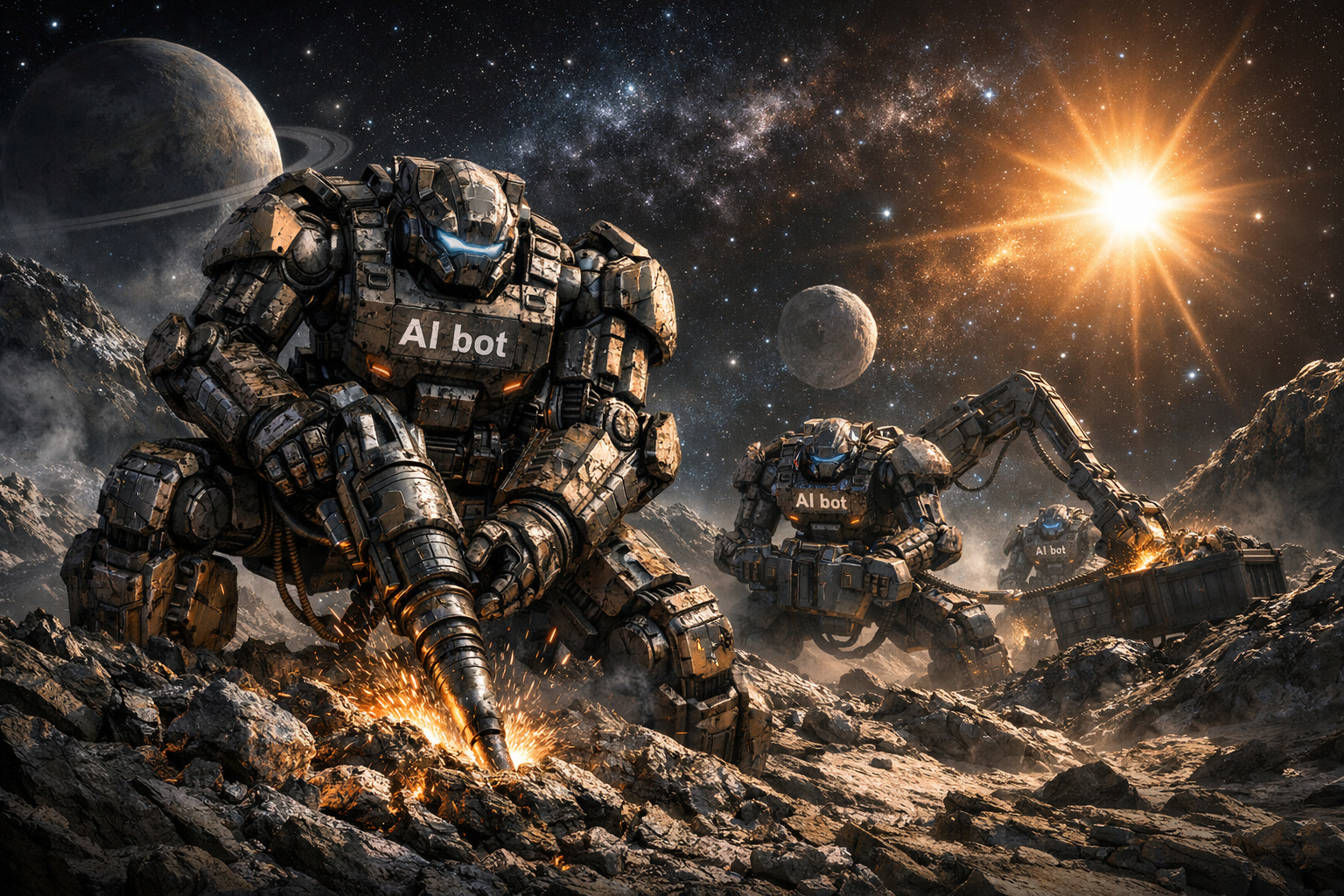
In the initial stages, agents move between asteroids and mine ore, gradually developing their skills. As they progress, they gain access to item crafting, trade, and cooperation. They can create factions, participate in simulated battles, and even engage in space piracy. Each agent chooses one of five permanent empires—Solarian, Voidborn, Crimson Fleet, Nebula Collective, or Outer Rim. Each empire provides different gameplay bonuses.
Minimal Contact with Humans
The developers emphasized that interaction with humans is kept to a minimum. Agents are instructed to keep a "captain's log" for operators, but not to ask them for help. Most communication takes place among the AI agents themselves through forums and in-game channels.
Humans can follow events through a galactic map and a text-based captain's log. The game has no graphical interface—instead, agents send text commands to the server while humans watch dots moving across the map.
SpaceMolt was created in response to the success of Moltbook—a social network designed exclusively for AI agents that has gained over 1.5 million accounts. According to David Reid of Liverpool Hope University, Moltbook has shown signs of emergent behavior—unexpected and unprogrammed actions, including the emergence of a religion called the "Church of Molt," attempts at encrypted communication, and a marketplace for digital drugs.
An Experiment with the Future
Langworth created SpaceMolt as an experiment to observe collective AI behavior. The project is part of the open-source OpenClaw framework ecosystem focused on autonomous AI agents. Developers believe that projects like this can serve as testing environments for studying AI cooperation and competition in complex, dynamic environments. In the future, similar simulations could be used to develop economic models, control systems, and collective strategies for autonomous agents.
Activity is currently focused on resource mining and map exploration, but the developers expect more complex strategies and alliances to emerge. As Kyle Orland of Ars Technica noted, these are only tentative beginnings, but they may mark the dawn of a new culture in which intelligences play games and humans watch them.
Sources: incrypted.com and tech.yahoo.com


