

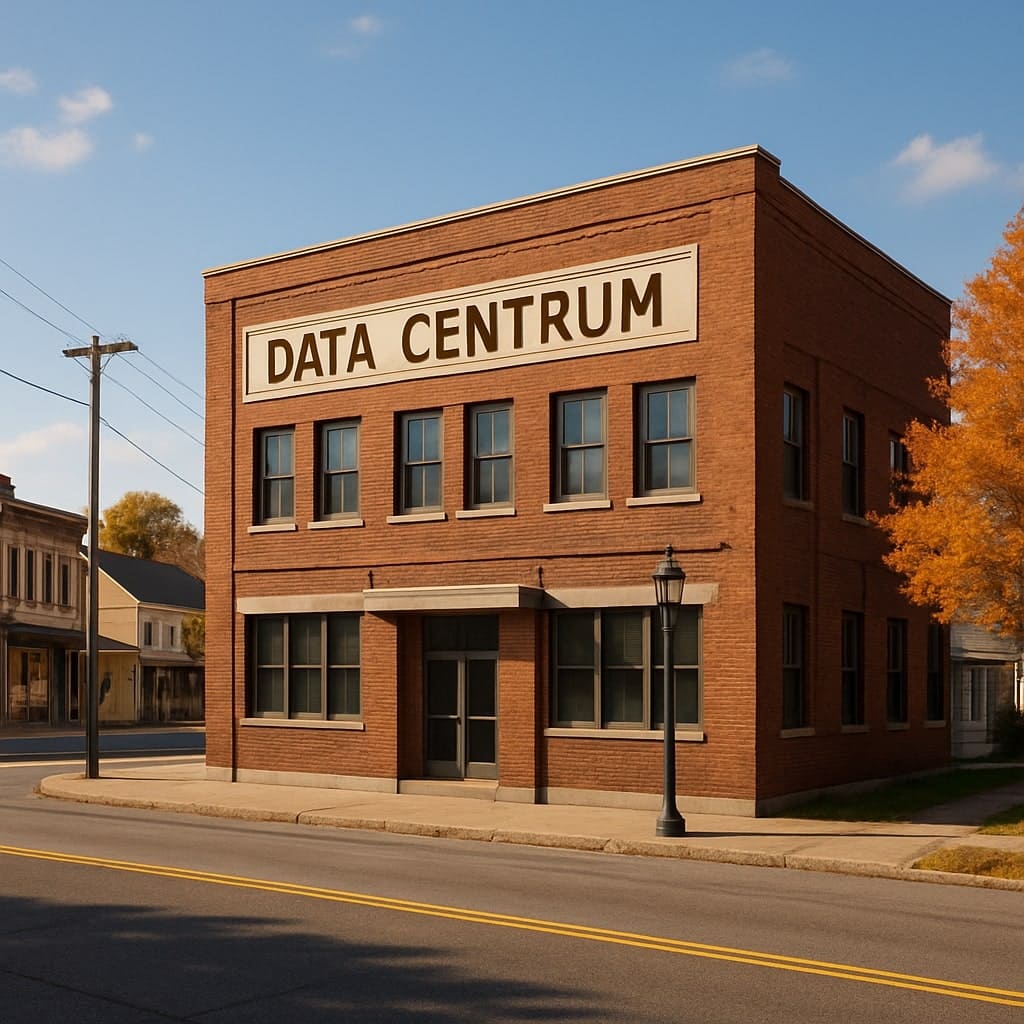
Small Towns and Data Centers for Artificial Intelligence: A New Trend Changing the American Landscape
In recent years, small towns and rural areas in the United States have been experiencing an unexpected boom – they are becoming new hubs for data centers focused on artificial intelligence (AI). This trend, reported by outlets such as Futurism, is driven by the growing demand for cloud services and the computing power essential for modern AI.
Why Small Towns?
The main reason why technology giants such as Microsoft, Google, and Amazon are moving their data center capacity to smaller towns is a combination of several advantages. First and foremost, there is the availability of cheaper and more extensive land, which is often in short supply in metropolitan areas. The proximity of reliable energy sources – often renewable ones – also plays a role, as does the willingness of local governments, which attract investors with tax breaks and other incentives. For example, in Iowa, Microsoft built an extensive data center complex in the city of West Des Moines, including the Azure supercomputer, which is also used by OpenAI. Similar projects are also emerging in smaller towns such as Boardman and Hermiston, where companies benefit from available infrastructure and support from local communities.
Economic Benefits and Challenges
The arrival of data centers in small towns brings significant economic benefits. In addition to increased tax revenues – for example, in Virginia, data centers generate up to a billion dollars in taxes annually – new jobs are also being created. Direct employment in data centers is not usually massive (often involving dozens to hundreds of people), but hundreds of jobs in construction and services are created during construction. In the case of West Des Moines, Microsoft directly employs around 300 people and supports more than 800 construction jobs during expansion.
On the other hand, local residents also have concerns. These most often involve environmental impacts, such as high water consumption for cooling servers, noise from cooling systems, or increased strain on local infrastructure. Some communities therefore protest against new projects, especially if they feel that the benefits do not outweigh the potential drawbacks, or if data centers are planned too close to residential areas or schools.
The Future: Small Towns as Technology Hubs?
The growing trend of moving data centers to smaller towns shows that these locations are becoming key players in the digital economy. Companies find ideal conditions for expansion here – from inexpensive land and available energy to willing local governments. At the same time, however, they must address challenges related to sustainable development and communication with local residents. In conclusion, small towns in the United States are rapidly changing thanks to AI data centers. They bring new economic opportunities, but also create a need to find a balance between technological progress and protecting the environment and the quality of life of local communities.


