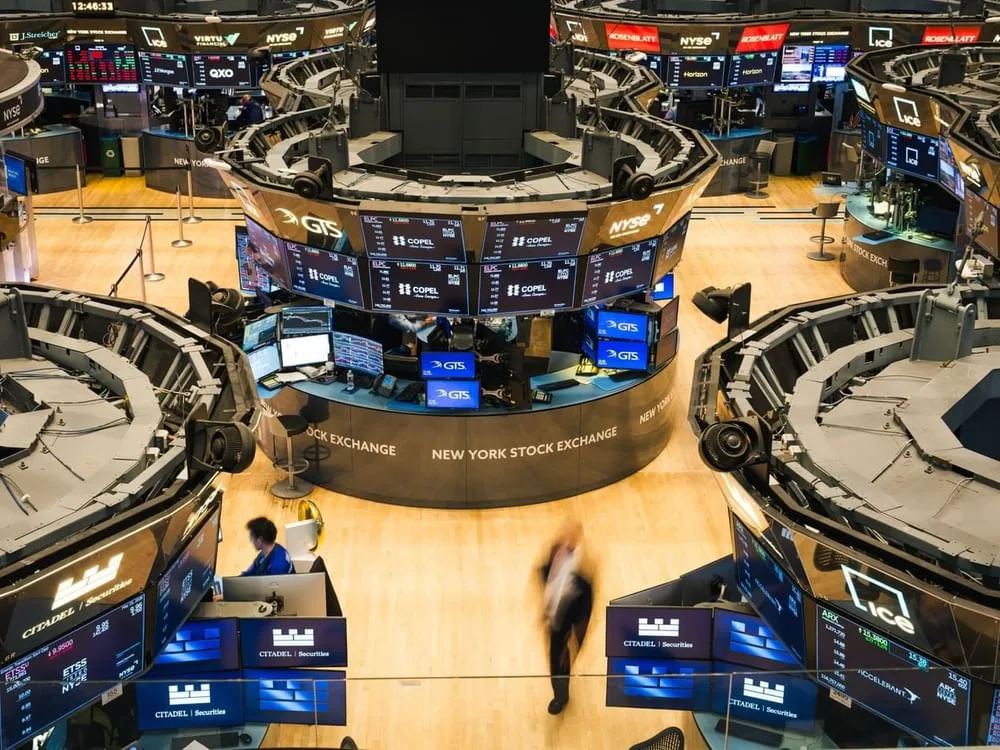
U.S. stocks endured a rough day on Monday. Companies linked to artificial intelligence, which were still driving the market to record highs in the summer, are now dragging the entire market down. The tech-heavy Nasdaq index lost more than two percent and is down over ten percent from its October 6 record, confirming a market correction. The nervousness quickly spread to Asia and Europe. Meanwhile, investors face two major tests in the form of Nvidia’s earnings results and Anthropic’s stock market debut, which is expected later in the week.
The Day AI Stocks Ran Out of Steam
The sell-off intensified gradually during Monday’s trading. The S&P 500 and Dow Jones both fell by more than one percent, but the Nasdaq suffered the steepest decline, dragged down by the SOX semiconductor index, which lost 4.6 percent. The Dow Jones closed at 51,689 points, the S&P 500 at 7,427 points, and the Nasdaq at 24,557 points.
The losses were not limited to a single company. Nvidia shed 4.2 percent and led the entire group of the seven largest technology giants into the red. Chipmakers Intel and Micron lost more than six percent, cloud services provider CoreWeave fell 6.2 percent, and its rival Nebius dropped as much as 7.5 percent. Shares of Alphabet, Amazon, and Meta declined by roughly 2.5 to 3.3 percent, server manufacturer Dell lost 6.6 percent, and Super Micro Computer fell 5.8 percent. On the New York Stock Exchange, declining stocks outnumbered advancing ones by more than three to one.
The reversal is all the more striking because this is a sector that was a market favorite until recently. In mid-June, the semiconductor index was up more than one hundred percent since the beginning of the year. Since then, its shine has faded, and this year’s gain has shrunk to around 43 percent, which is still roughly four times the return generated by the broader market this year.
Ross Mayfield of investment firm Baird describes a market swinging from one day to the next. According to him, AI stocks soar sharply one day and are in free fall the very next. At the same time, however, he does not see this as panic. In his view, investors are not abandoning an entire asset class but are instead looking for opportunities in other corners of the stock market.
Scandal at the Top of Nvidia and New Rules for China
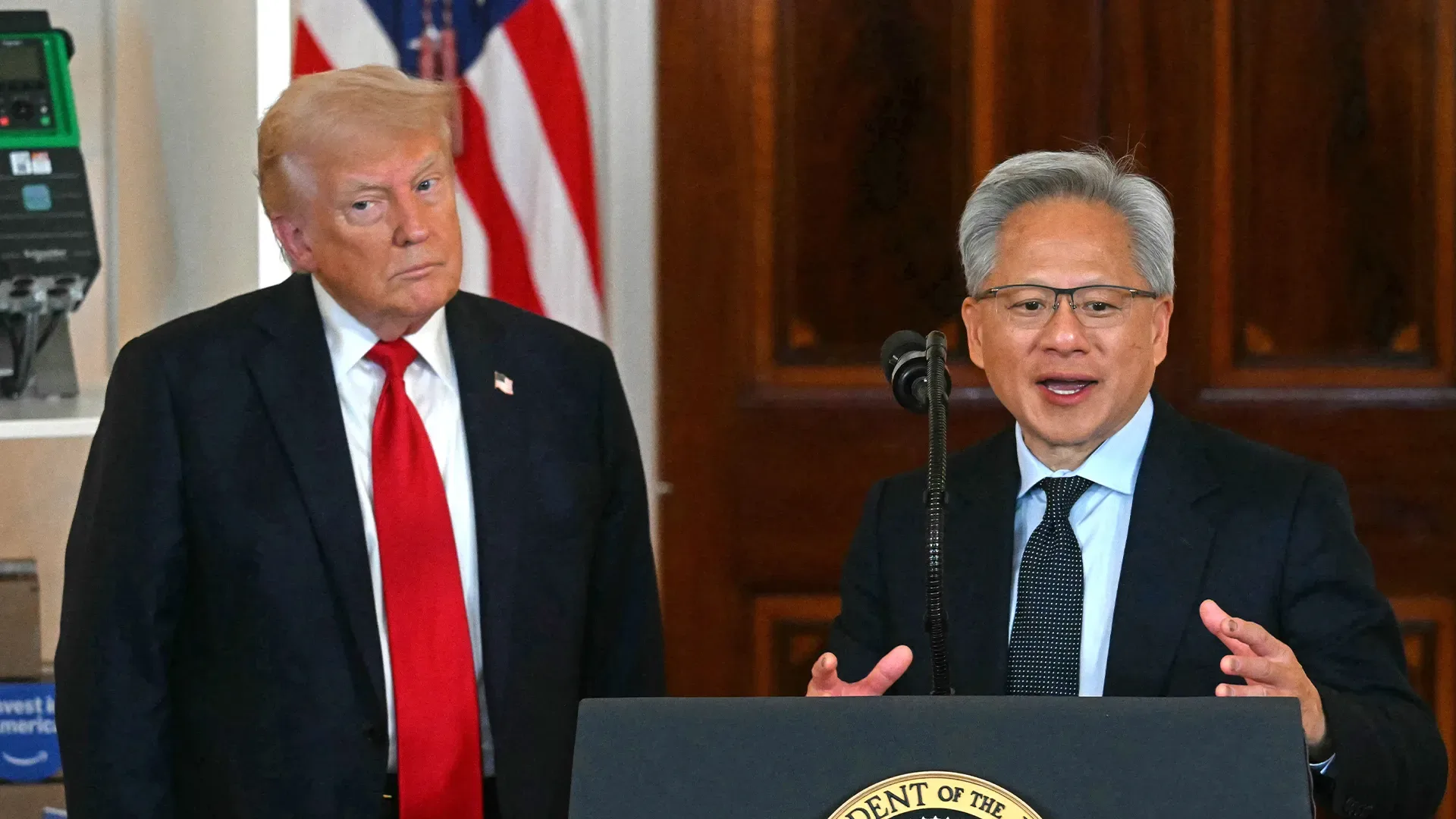
The main trigger is Jensen Huang’s unexpected departure as head of Nvidia. Huang resigned following reports of an affair with a woman who worked for Singaporean cloud company Megaspeed. The company is an Nvidia partner, leases computing capacity in its data centers, and is under investigation over the possible illegal diversion of advanced chips to China. In one report, Reuters described the woman as an alleged Chinese spy and wrote that Huang’s departure added another layer of uncertainty to the already turbulent rise of the new technology and its potential risks.
Washington responded quickly to the affair. The Trump administration issued a new rule further restricting China’s access to the most powerful chips from companies such as Nvidia, ahead of an expected meeting between Donald Trump and Chinese President Xi Jinping. The new measures target shipments of advanced chips to data centers in countries including Thailand and Malaysia, through which Chinese companies had been obtaining computing power to train their models.
Sentiment surrounding the entire issue has been deteriorating for some time. Goldman Sachs analysts warn that the debate about artificial intelligence has changed dramatically over roughly the past month and that, based on conversations with clients, sentiment is at its worst in a very long time.
More Expensive Money, a Strong Dollar, and Cheap Copper
Technology companies are not only being troubled by the problems at Nvidia. Markets fear a slowdown in data center spending and higher borrowing costs, which have triggered a sharp sell-off in recent weeks. U.S. Federal Reserve Chair Kevin Warsh added fuel to the fire on Monday. According to him, new technologies will have a major impact on the economy, but the possible scenarios range from growth benefiting everyone to higher unemployment and a slowdown if the expected returns on investment fail to materialize.
Money is set to become even more expensive. According to the CME FedWatch tool, markets see a probability of more than 93 percent that the Fed will raise interest rates by a quarter of a percentage point in December. A small chance of a half-point increase has even emerged because Fed officials have spoken very hawkishly in recent days. Thierry Wizman of Macquarie Group sees nothing in the latest economic data that should prompt the Fed to soften its tone. Further clues will come from the minutes of the Fed monetary policy committee’s latest meeting, which will be released on Wednesday.
The prospect of more expensive money is driving the dollar higher. The U.S. currency is holding near its highest level since April 2025, while the Japanese yen is hovering around 160 per dollar and traders are watching for possible intervention by Japanese authorities.
Concerns surrounding AI have also spilled over into the metals market. Copper prices fell to their lowest level in more than four months, while shares of Australian mining company Capstone Copper plunged nearly six percent to an eight-month low. The sell-off then reached Asia on Tuesday morning. South Korea’s tech-heavy KOSPI index shed two percent shortly after the open, while Japan’s Nikkei index lost 1.3 percent. Futures on Europe’s EURO STOXX 50 and DAX indices were down by around six-tenths of a percent.
A Big Week for Nvidia and Anthropic
Nvidia will report its results first, this time for the first time without Huang at the helm. Analysts expect year-over-year profit growth of roughly 90 percent on revenue exceeding $109 billion. However, the quarterly figures alone may not be enough this time. Investors will primarily be watching whether AI spending, largely financed by debt, can continue into 2027 and how Huang’s departure will affect Nvidia’s position across the industry. Markets are also concerned about shrinking margins and cash outflows.
The bar is high. Torsten Sippel of UBS points out that the market is already pricing in a share-price move of around eight percent and a significant beat of estimates. According to him, the outcome will depend more on the growth outlook, financing for the entire AI industry, and the risks associated with export restrictions to China than on the quarter itself.
The week’s second major event is the stock market debut of Anthropic, the developer of the Claude AI models. The company is expected to go public on Thursday, and its debut could test how much faith investors still have in artificial intelligence investments and bring further volatility. For now, Goldman Sachs recommends caution. According to the bank, stocks may rise gradually following the recent portfolio reshuffling, but investors should select individual stocks more carefully than before.
Sources: koreatimes.co, reuters.com and finance.yahoo.com