

One Year with Phi: The Revolution of Small Language Models in Practice
In the dynamic world of artificial intelligence, gigantic language models with tens or hundreds of billions of parameters, which consume enormous computational resources, often dominate. However, the past year has brought a remarkable shift - a series of small language models (SLMs) from Microsoft under the Phi designation has demonstrated that even significantly smaller models can achieve excellent results at a fraction of the cost. This approach could fundamentally change the way organizations implement and use generative artificial intelligence.
From Vision to Reality: The One-Year Journey of Phi Models
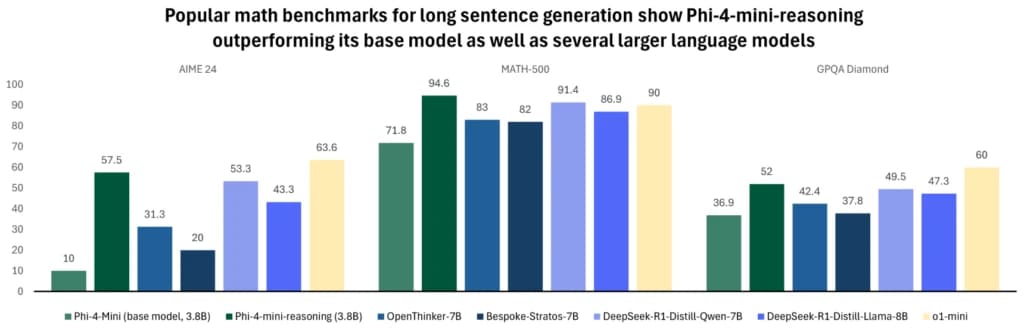
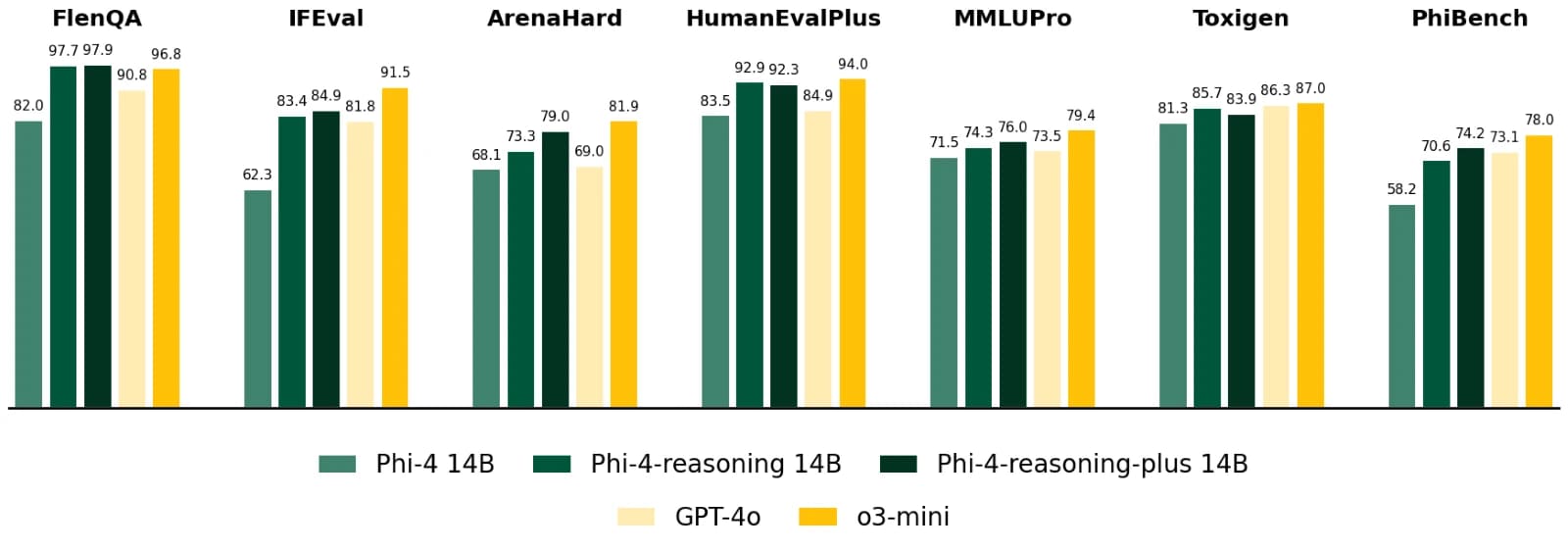
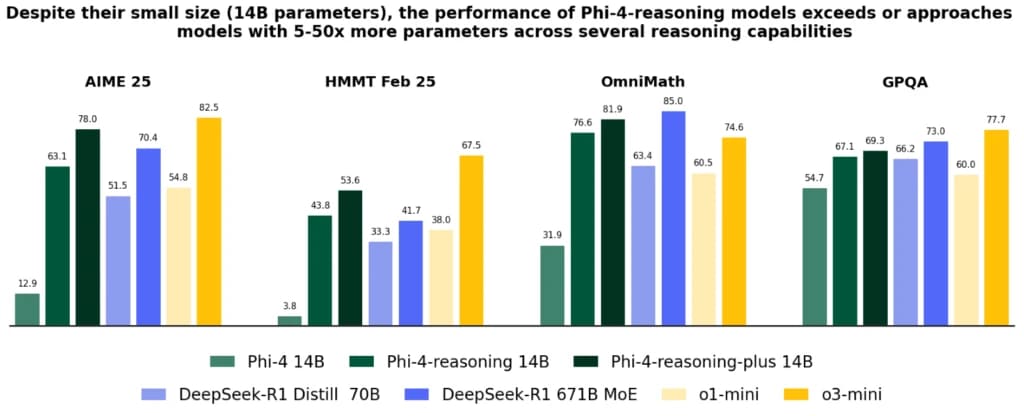
When Microsoft introduced the first Phi-1 model a year ago, few people expected how quickly this technology would evolve. In just one year, the Phi family has expanded by several generations, each bringing significant improvements. Phi-3, released in the first quarter of 2025, offered mini, small, and medium variants with 3.8 to 14 billion parameters. The latest additions - Phi-4-reasoning, Phi-4-reasoning-plus, and Phi-4-mini-reasoning - push the boundaries of multi-step reasoning and solving complex problems. These models represent a significant breakthrough in AI efficiency. As stated in a technical report on arXiv, Microsoft researchers used advanced techniques such as "scaled up inference" and knowledge distillation from larger models to achieve maximum performance with minimal resources. For example, the Phi-4-reasoning model, with only 14 billion parameters, can outperform much larger models in some mathematical benchmarks, including those with more than 600 billion parameters.
Technical Innovations Behind the Success
Several key innovations are behind the impressive results of the Phi models:
- Optimized training process
Microsoft researchers focused on quality over quantity. Instead of training on enormous, unfiltered text corpora, they use carefully curated data. They refer to this approach as "high-quality data curation," and it enables the models to gain a deeper understanding of concepts with less data. - Multi-step reasoning
The latest Phi models, especially Phi-4-reasoning, are optimized for tasks requiring complex, multi-step reasoning. According to the technical report, the model was specifically trained on tasks requiring problems to be broken down into sub-steps, which is crucial for mathematical tasks or logic puzzles. - Scaling during inference
An interesting technique described in the documentation is "scaled up inference," in which the model can devote more computational resources to more complex problems when generating responses, while handling simpler tasks more efficiently. This adaptability further increases the models' efficiency in real-world deployment.
Measurable Results: How Phi Performs in Practice
The test results are remarkable. In the AIME 2025 benchmark (American Invitational Mathematics Examination), Phi-4-reasoning-plus achieved better results than the DeepSeek-R1 model with 671 billion parameters. In other tests, such as GSM8K for mathematical reasoning, the small Phi models matched or outperformed much larger competitors. Specific results from the technical report show that Phi-3-medium (14B) achieves a score of 74.6% on the GSM8K mathematical benchmark, outperforming many larger models and approaching the results of models with 5-10× more parameters.
Practical Benefits: Why Small Models Represent a Major Opportunity
- Speed and efficiency
Smaller models generate responses significantly faster and with lower computational requirements. For applications requiring real-time interaction, this aspect is crucial - users do not have to wait for a response, which improves the user experience. - Deployment flexibility
Thanks to their compact size, Phi models can run on a wide range of devices - from cloud servers to resource-constrained edge devices. This opens up possibilities for deploying AI in environments with limited connectivity or high latency requirements. - Adaptability
Smaller models can be fine-tuned more easily and affordably for specific domains or business needs. As the Azure blog states, organizations can take a pretrained Phi model and adapt it to their specific tasks with a relatively small amount of domain-specific data. - Accessibility and democratization of AI
Lower training, deployment, and operating costs mean that advanced AI technologies are more accessible to smaller organizations and developers with limited budgets. As Microsoft emphasizes in its blog, this is part of a broader effort to democratize AI technologies.
A New Approach to AI Deployment
As part of its strategy, Microsoft promotes the concept of a "model portfolio," in which organizations use a combination of different models depending on the type of task. Large LLMs act as "routers," directing simple queries to efficient SLMs, while handling more complex problems themselves or delegating them to specialized models.
This hybrid approach optimizes the performance-to-cost ratio while maintaining quality. The Azure blog provides specific examples:
- Farmers in remote areas can use Phi models locally on their devices to analyze crops and soil without needing a connection to the cloud.
- Businesses can implement specialized assistants for internal use that run directly on corporate infrastructure, increasing security and reducing latency.
Challenges and Future Directions
Despite all the progress, small language models still have their limitations. Large models remain unsurpassed for extremely complex tasks or when extensive knowledge is required. However, Microsoft suggests that future development will focus on further narrowing the "performance gap" between small and large models. We can also expect even closer integration of Phi models into the Azure platform and new tools to make it easier to implement and customize these models for the specific needs of organizations.
Evaluation
In just one year since the introduction of the first Phi model, Microsoft's small language models have evolved from experimental technology into practical tools ready for real-world deployment. Their ability to achieve impressive results at a fraction of the computational cost of traditional LLMs represents a significant shift in the approach to artificial intelligence. As these models continue to evolve, we can expect AI to become increasingly accessible, efficient, and adaptable to a wide range of applications - from enterprise assistants and specialized analytical tools to personal aids running on edge devices. Phi models demonstrate that in AI, it is not always necessary to choose between performance and efficiency - with a smart approach to model design and training data, both can be achieved simultaneously.


