

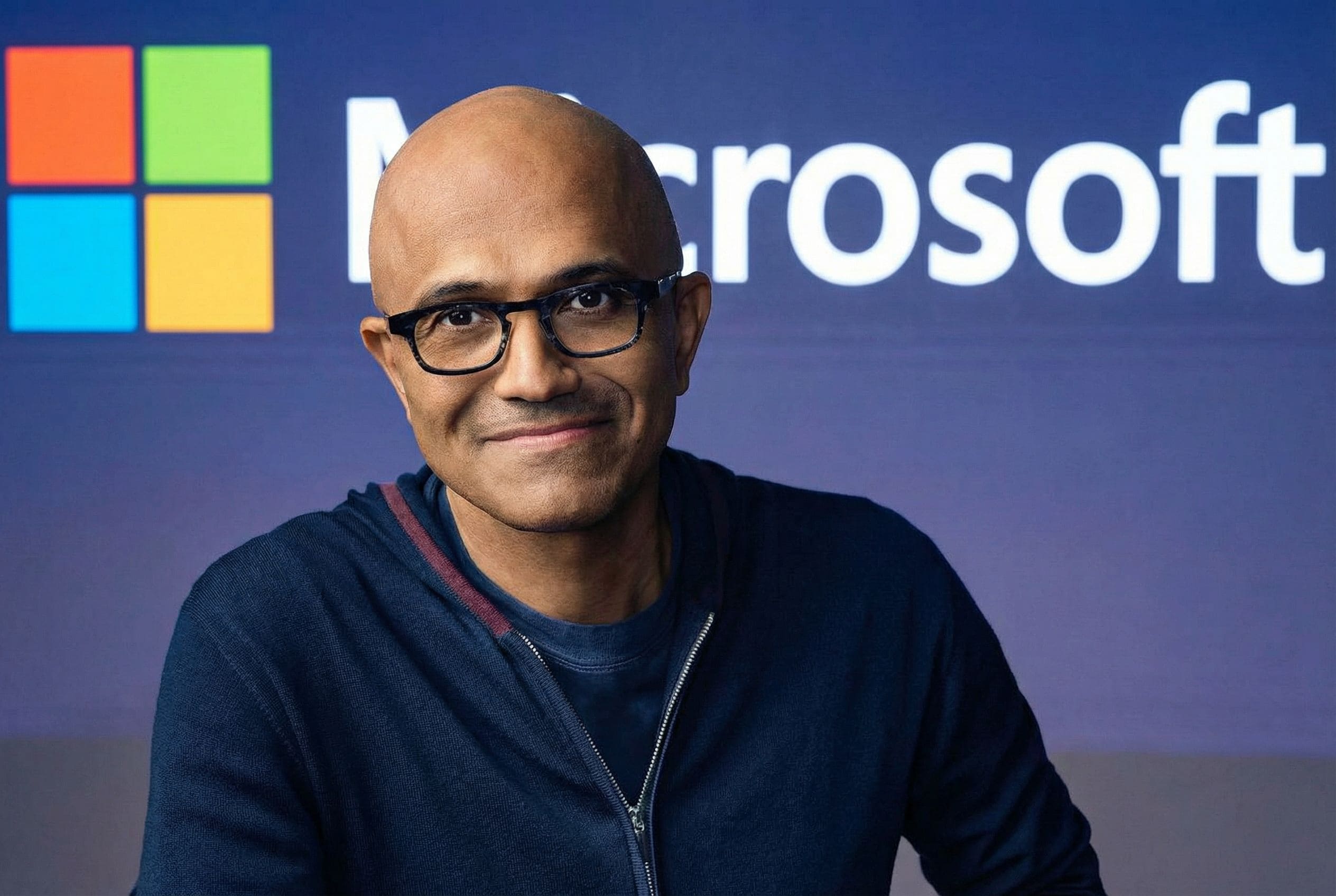
Microsoft CEO Satya Nadella spoke about the future of artificial intelligence at the World Economic Forum in Davos, Switzerland, on Tuesday, and his words sounded surprisingly cautious. Nadella warned that the current boom surrounding AI could turn into a mere speculative bubble if the technology does not spread beyond large technology companies and wealthy economies.
When Will AI Become a Bubble?
During a conversation with Larry Fink, CEO of investment firm BlackRock, Nadella clearly defined what he believes would indicate that AI is just another bubble. "For it not to be a bubble, the benefits of this technology need to be distributed much more evenly," Nadella said. According to him, a situation in which only technology companies benefited from the development of AI would be a "warning sign of a bubble."
The Microsoft CEO explained that if the discussion revolved solely around technology companies and their supply side, it would be a purely supply-driven phenomenon with no real impact on other industries. "If we are not talking about how a pharmaceutical company brought a successful drug to market because AI accelerated clinical trials, then we are not heading in the right direction," Nadella said. He emphasized that it is not so much about discovering a "magic molecule," but rather about accelerating the entire drug development process.
Inequality in Access to AI
Nadella highlighted the growing divide between developed and developing countries in the adoption of artificial intelligence. An increasing amount of data from technology companies, including Microsoft, points to global disparities in AI adoption rates. Productivity benefits and workplace applications are concentrated primarily in wealthier developed countries.
According to Nadella, the long-term success of this rapidly developing technology depends on whether it begins to be used by a broad range of industries and whether it spreads beyond the developed world. Only then can AI truly deliver lasting growth.
Microsoft Is Betting on Multiple AI Models
Nadella also reiterated his view that the future of AI adoption will not depend on a single dominant model provider. This approach led Microsoft to decide to work with several AI companies, including Anthropic, xAI, and OpenAI.
Microsoft gained an early lead in AI thanks to its $14 billion investment (approximately 336 billion Czech korunas) in OpenAI. The deal gave the software company unique access to the ChatGPT creator's technology and priority rights to data center contracts.
However, following the October restructuring of its partnership with Sam Altman and his start-up, Microsoft abandoned exclusivity over data center requirements and will also lose exclusive access to OpenAI's research and models in the early 2030s.
Nadella explained that companies will be able to use multiple models simultaneously, including open-source versions, or even create their own models using a technique called "distillation." This method makes it possible to create smaller and less expensive versions of powerful models.
"The intellectual property of any application or company lies in how you use all these models with context engineering or your data," Nadella said. "If companies can answer that question, they will move forward quickly."
Nervousness in the Technology Sector
Nadella's concerns are not unique. In recent weeks, the Microsoft CEO has taken a noticeably more defensive stance when discussing artificial intelligence. In early January, he even asked the public to stop using the term "slop" to describe low-quality AI-generated content, including poorly written text, images, and videos. The Merriam-Webster dictionary even named the expression its word of the year.
Nadella is not alone in tempering his promises about AI. A cloud of uncertainty hangs over the entire industry. Experts continue to warn that progress in AI may hit a wall, pointing out that even after years of the AI boom, the technology has still not delivered significant productivity gains.
Many technology CEOs have recently tried to pretend that they never used the pursuit of legendary artificial general intelligence (AGI) as the industry's main rallying cry. The idea of creating a system that would surpass human intelligence increasingly appears unrealistic in the near future.
Practical Adoption Instead of Grand Promises
Sarah Friar, OpenAI's chief financial officer, struck a similar tone, saying that in 2026 the company will focus on the "practical adoption" of AI and on how people, businesses, and countries use it every day. ChatGPT users will soon experience firsthand what this shift toward practical economics looks like: last week, the company announced that free users would begin to be targeted with sponsored advertisements and content based on their conversations.
Nadella's warnings from Davos therefore suggest that the era of grand promises and futuristic visions surrounding artificial intelligence may be coming to an end, giving way to a period in which the technology will have to prove its real-world value. If AI fails to penetrate different industries and countries around the world, the entire boom may turn out to be yet another technology bubble that bursts.
Sources: futurism.com and ft.com


