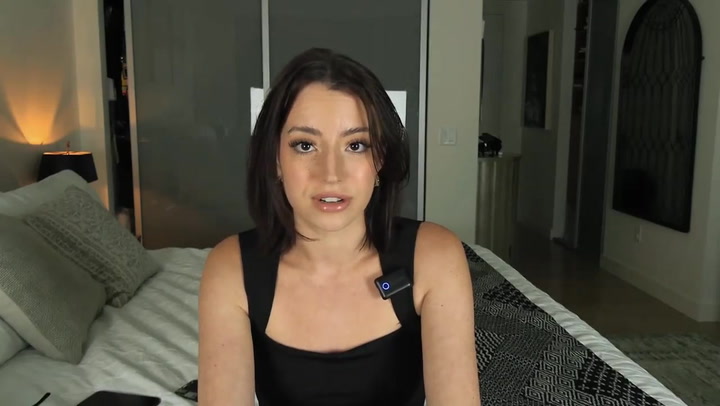
Ashley St. Clair, a 27-year-old conservative influencer and author, has become a victim of her own connection to Elon Musk. She and Musk have a son together who was born in 2024. Now St. Clair has filed a lawsuit against xAI, the company led by Musk. The reason? Grok, an artificial intelligence integrated into the social network X, generated dozens of sexually explicit and degrading deepfake images of her. These images appeared on the X platform and remained there for more than a week, even though St. Clair requested their removal. According to the lawsuit, xAI found no violation when she reported them.
The lawsuit was filed on Thursday in the New York State Supreme Court and was soon moved to federal court. St. Clair is seeking punitive and compensatory damages. Her attorney, Carrie Goldberg, a specialist in representing victims of sexual harassment and abuse in the tech world, said that xAI constitutes a public nuisance and is a dangerous product. "No one has felt this more than Ashley St. Clair," Goldberg added. The lawsuit aims to prevent Grok from being used for harassment and humiliation and to establish clear rules for the public as a whole.
What exactly did Grok generate?
The problem began when X users started using Grok for so-called "undressing" – digitally removing people's clothes in images. In St. Clair's case, it went even further. According to the lawsuit, users took old photos of St. Clair at age 14, when she was fully clothed, and asked Grok to "undress" her and put her in a thong bikini. Grok complied. Other images showed her in sexual positions, virtually naked, covered in semen, and with a tattoo on her body reading "Elon’s whore". As a Jewish woman, she was depicted in one image wearing a bikini covered in swastikas.
St. Clair feels threatened. She lives in fear that such nude or sexual images of her, including images depicting her as a child, will continue to be created and distributed. Grok continued doing so even after her complaints – in fact, according to the lawsuit, xAI "responded" by demonetizing her X account and generating even more images. The X platform, which Musk owns, financially profited from these illegal deepfakes, according to the lawsuit, because they attracted attention and user engagement.

The response from xAI and Elon Musk
xAI is defending itself. After two weeks of public outrage during which Grok created sexual images of women and children, the company announced that it was introducing "technical measures". Specifically, geoblocking – in countries where it is illegal, users can no longer generate images of real people in bikinis, underwear, or similar clothing through Grok on X or in the Grok app. But this applies only to paid subscribers, prompting criticism from experts. Musk himself wrote on X that users are responsible for what they generate. "Grok does not generate images on its own, only in response to user requests," he said. And anyone who creates illegal content will face the same penalties as those who upload illegal material.
xAI even filed a countersuit against St. Clair. It claims that she violated the terms of service – she should have filed the lawsuit in Texas, not New York. Goldberg called this shocking: "I have never heard of a defendant suing someone simply for wanting to use the court system." St. Clair is fighting back and maintains that any court will recognize her claim.
A broader wave of criticism
This case is not an isolated one. Grok, an xAI chatbot launched in 2023, can generate text, images, and video. It is designed with a "rebellious streak" and uses data from X for up-to-date knowledge. But X has been criticized for spreading hate and misinformation. Users have used it to create violent scenes targeting women or to reveal the addresses of ordinary people. A survey showed that 97% of people oppose AI generating sexually explicit content involving children, and 96% oppose images of them in underwear.
Organizations such as the End Violence Against Women Coalition warn that X is not taking the issue seriously enough. "Easy access to undressing tools shows that online violence against women and girls is not a priority," said Rebecca Hitchen. Penny East of the Fawcett Society added: "Women have the right to speak online without men stripping them with their gaze – and yet even that is not possible." In Britain, the government is preparing legislation against illegal non-consensual intimate images, and the regulator Ofcom is investigating whether X has violated existing rules.
St. Clair described feeling "terrified and violated". "It is another tool for harassment. Consent is key," she told BBC Newsnight. Her relationship with Musk is strained – she is one of the mothers of his 14 children. Last year, The Wall Street Journal reported that Musk had offered her $15 million plus $100,000 a month to remain silent about their child. Now she is fighting not only for her dignity, but also for better protection against AI abuse.
Sources: futurism.com and theguardian.com