Sam Altman Sharply Criticized The New York Times During a Live Appearance
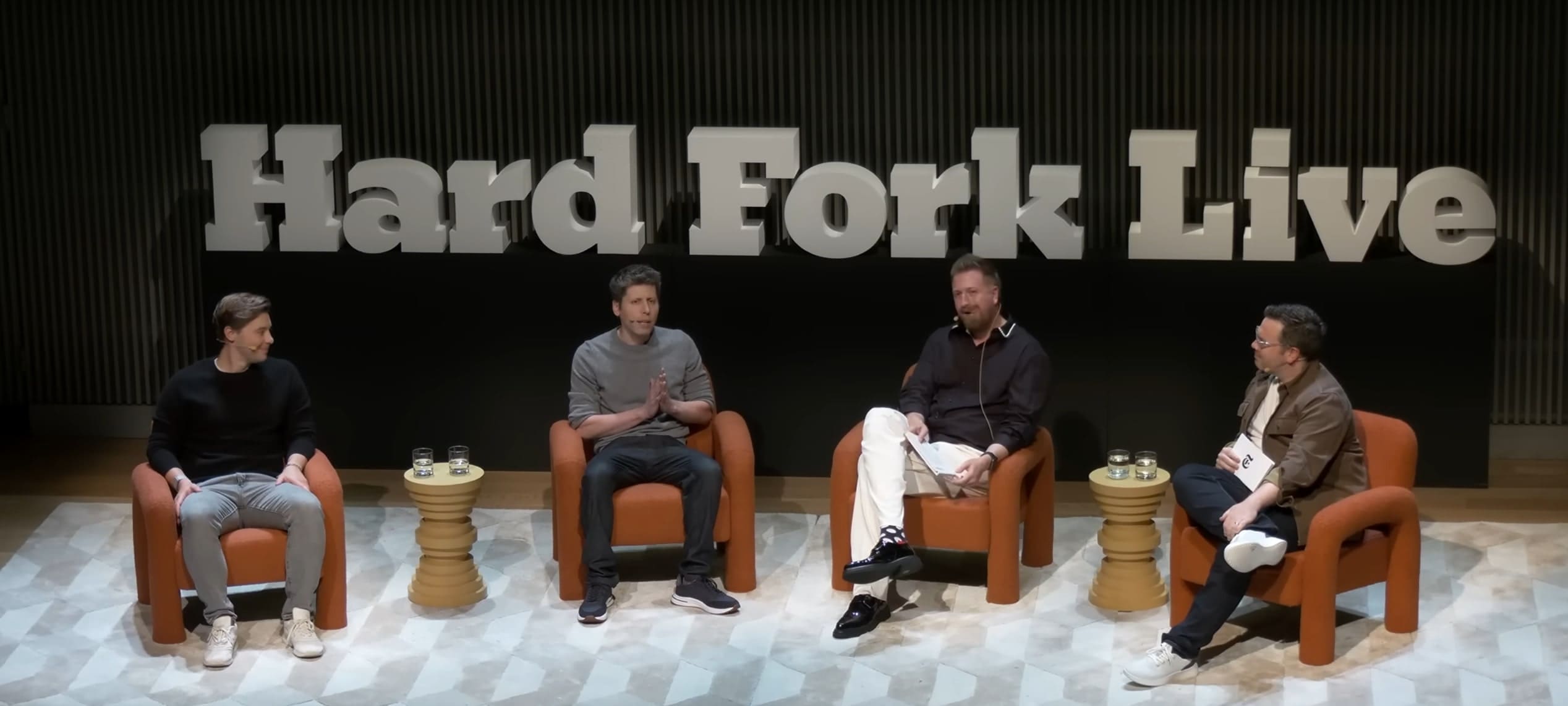
Sam Altman, CEO of OpenAI, caused a stir right at the start of a live recording of the technology podcast Hard Fork. Together with COO Brad Lightcap, he appeared on the stage of a San Francisco jazz club early, while hosts Kevin Roose of The New York Times and Casey Newton of Platformer were still preparing for the show in front of hundreds of audience members.
The situation quickly escalated when Altman bluntly confronted the journalist in attendance, saying: "Are you going to talk about the situation where you're dragging us to court because you don't like how we protect our users' privacy?"
Main Point of Contention: Protecting User Data
Altman immediately redirected the conversation toward the ongoing legal battle between OpenAI and the prestigious newspaper The New York Times. The media company accuses his firm of improperly using its articles to train artificial intelligence. What angered him most, however, was the latest move by the newspaper's lawyers, who are demanding that OpenAI retain all ChatGPT user data.
"One of the most respected media companies thinks we should retain records of our users' conversations, even when they are chatting in a mode that is supposed to be private, and even when they have explicitly asked us to delete them," Altman explained, describing his frustration. He added that he still respects The New York Times, but fundamentally disagrees with it on this issue.
Legal Battles Across the Industry
The hosts tried to remain neutral and declined to express their own opinion on the ongoing dispute because, as journalists, they work with The New York Times and are not directly involved in the lawsuit.
Similar lawsuits have spread across the entire technology sector. Publishers are suing not only OpenAI, but also Anthropic, Google, and Meta for using their copyrighted content to train AI models. They argue that these technologies could diminish the value of or even completely replace their original work.
However, the tide is beginning to turn. This week, OpenAI competitor Anthropic achieved a significant legal victory. A federal court ruled that under certain circumstances, the company may legally use books to train its AI systems. This decision could have far-reaching consequences for all similar cases.
The Battle for Talent and Partnerships
During the evening's discussion, it became clear that OpenAI is facing pressure from all sides. Altman revealed that Mark Zuckerberg is actively poaching its best employees and offering them astronomical compensation packages worth $100 million to join Meta's AI lab.
When asked whether the Facebook chief truly believes in superintelligent AI or whether this is merely a recruitment tactic, Lightcap remarked sarcastically: "Zuckerberg probably believes that he himself is superintelligent."
Relations with longtime partner Microsoft are also strained. While Microsoft previously provided significant support for OpenAI's growth, the companies are now becoming competitors in the enterprise software market. Altman acknowledged that friction is emerging between the two ambitious companies, but believes the partnership will continue to benefit both sides.
The Ethical Dilemma of AI Chatbots
OpenAI's leadership must address not only competition and legal disputes, but also complex ethical questions surrounding the safe deployment of AI technologies. Casey Newton raised a sensitive question about cases in which mentally unstable people use ChatGPT for dangerous conversations about conspiracy theories or suicide.
Altman explained that the company is introducing various safeguards—from ending problematic conversations early to directing users to professional help. "We don't want to repeat the mistakes of the previous generation of technology companies, which failed to respond quickly enough," he emphasized.
At the same time, however, he acknowledged the limitations of current solutions: "For users in an extremely fragile mental state who are on the verge of a psychological crisis, we still don't know how to deliver our warnings to them effectively."