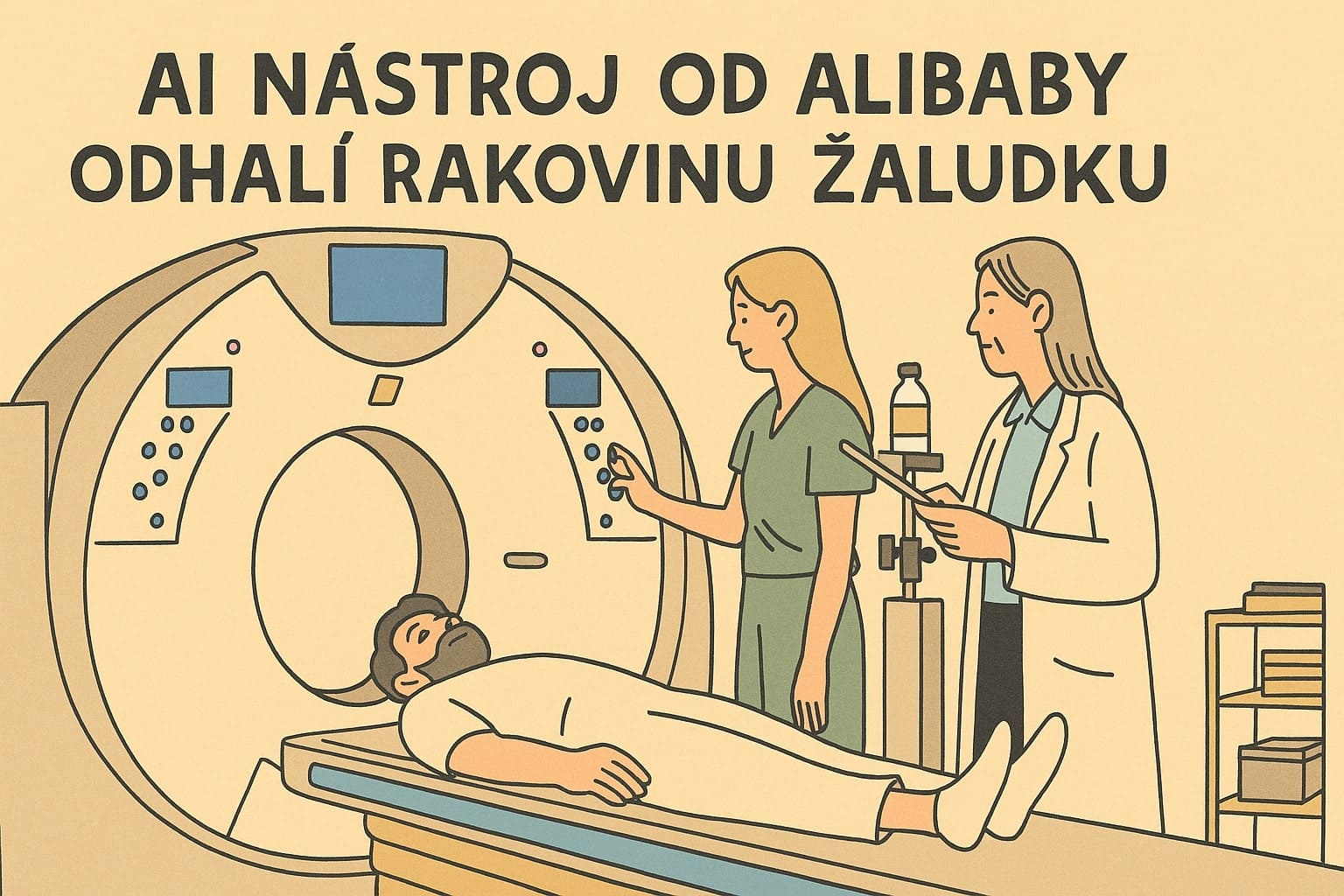
Alibaba's AI Tool Detects Stomach Cancer
Chinese technology giant Alibaba has achieved a major breakthrough in medical diagnostics by developing an innovative artificial intelligence tool capable of detecting stomach cancer in its early stages. This advanced system is the first of its kind in the world and promises to revolutionize cancer care.
Technology Based on CT Scan Analysis
The tool, developed by Alibaba's research institute, DAMO Academy, uses deep learning technology to analyze non-contrast abdominal CT scans. This method represents a significant improvement over traditional contrast-enhanced CT examinations because it exposes patients to a substantially lower dose of radiation while maintaining high screening effectiveness.
The AI model was originally designed specifically to detect pancreatic cancer, but Alibaba's researchers have successfully expanded it to identify other types of tumors. The system can now recognize seven common types of cancer from a single non-contrast CT scan of the body, including pancreatic, esophageal, lung, breast, liver, stomach, and colorectal cancer.
Clinical Testing with Remarkable Results
The tool was deployed in a pilot program at several Chinese hospitals, including a hospital in Ningbo. During a large-scale screening of 40,000 people, the system detected several cases of early-stage cancer, some of which had previously been missed during routine examinations.
This early detection capability is crucial because stomach cancer is among the most dangerous forms of cancer. When detected in its early stages, patients' chances of successful treatment and long-term survival increase significantly.
International Recognition and Approval
The year 2025 marked a turning point for Alibaba's AI tool. The system earned prestigious recognition on Fortune magazine's "Change the World" list, a major honor for technologies with the potential to positively change the world. Even more importantly, it received "breakthrough device" designation from the U.S. Food and Drug Administration (FDA), accelerating the clinical approval process and enabling the technology to be deployed more quickly in practice.
Expanding Access to Diagnostics
One of Alibaba's primary goals is to make this advanced technology available in regions with limited access to high-quality healthcare. Dr. Le Lu, head of the medical AI team at DAMO Academy, explained during the AI for Good Global Summit: "We have made significant progress in the early detection of seven common types of cancer using a single non-contrast CT scan of the body."
This technology has the potential to dramatically expand access to early cancer diagnosis, particularly in developing countries and remote areas where there is a shortage of specialized oncologists and modern diagnostic equipment.
AI in Detecting Other Types of Cancer
While Alibaba's tool represents a breakthrough in stomach cancer detection, artificial intelligence can already effectively detect many other types of cancer. Current AI systems are capable of identifying breast cancer by analyzing mammograms, melanoma and other types of skin cancer from photographs, lung cancer from X-rays and CT scans, and colorectal cancer during colonoscopies.
Japanese researchers have developed AI systems for detecting stomach cancer during endoscopic examinations that achieve up to 95% accuracy. Similarly, American and European teams have created tools for identifying prostate cancer from MRI scans and ovarian cancer from ultrasound examinations.
The Future of AI in Oncology
The development of Alibaba's stomach cancer detection tool is a step in the right direction toward more personalized and accessible medicine. Artificial intelligence technology is gradually changing the way doctors diagnose and treat cancer, bringing hope to millions of patients around the world.
In the coming years, similar AI tools are expected to become a standard part of medical practice, leading to earlier cancer detection, better treatment outcomes, and ultimately saving more lives.