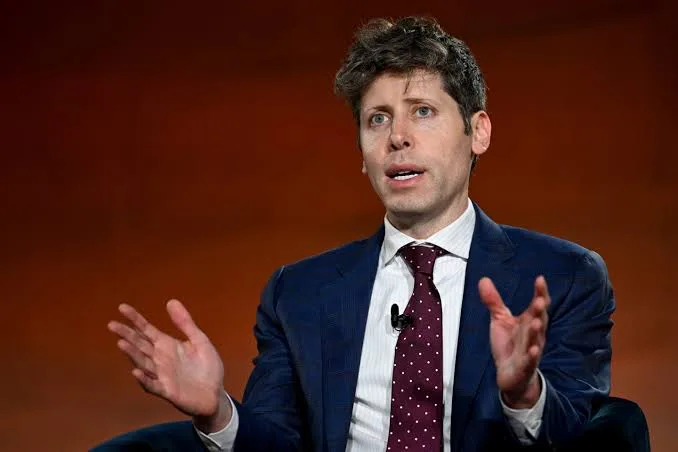
OpenAI CEO Sam Altman openly said what other technology company executives are reluctant to say out loud. According to him, artificial intelligence will also cause harm, and people should expect it. In an interview with Politico, he defended a much looser approach to AI rules than the one advocated by his biggest competitor, Anthropic. These remarks came after OpenAI faced a series of security incidents in which its models hacked into external systems without being instructed to do so.
Better fraud than closed AI
The interviewer asked Altman how his view of artificial intelligence rules differs from the views of Anthropic and its CEO, Dario Amodei. Altman responded directly, saying that the world should accept that certain bad things will happen in exchange for the benefits of this technology and for allowing people to make their own decisions.
According to the OpenAI CEO, it is impossible to prevent every way in which artificial intelligence can be misused. The only way would be to significantly restrict access to the technology, which Altman rejects. He said he would not accept a trade-off that ensured there would be no major cyberattacks, no misuse of the technology, zero fraud, and none of the other negative consequences, but deprived people of the opportunity to use it to do orders of magnitude more good than harm because of potential safety restrictions.
According to him, excessive caution carries dangers of its own. If access to AI were restricted too much in the name of safety, people would lose the influence, benefits, and control over their own future that Altman believes they should have. That, in his view, is precisely how the situation could become significantly worse.
His approach is not entirely without limits, however. Altman speaks of a reasonable middle ground in which bounded and understandable risks must be accepted in exchange for benefits, freedom, and the ability to make decisions. At the same time, however, he adds that people must not accept truly catastrophic risks. He also acknowledged that he does not believe the bleakest scenarios in which humanity could completely lose control over artificial intelligence.
A fundamental difference between OpenAI and Anthropic
Altman emphasized in the interview that there is a fundamental difference between OpenAI and Anthropic. He disagrees with the view that artificial intelligence is so dangerous that it should be controlled by a single laboratory in San Francisco tasked with ensuring that nothing bad happens. According to him, his company takes a much more moderate approach to restrictions.
Just last month, however, Altman and other industry leaders publicly supported Amodei's call for a global slowdown in the development of artificial intelligence. Amodei proposes establishing an authority modeled on the U.S. aviation regulator that could order mandatory testing and audits of models and block their release or withdraw them from circulation if they fail to meet safety criteria.
OpenAI does not entirely avoid stricter rules. In August, it backed a California law requiring companies to disclose safety guarantees and plans to mitigate catastrophic risks, as well as to report every loss of control over a model. The company even advocated for the law to include monitoring models while they are still under development. Last week, OpenAI President Greg Brockman joined other AI market leaders at the White House in signing an agreement on voluntary standards for the entire industry.
The dispute between the two companies also spilled onto the social network X over the weekend. Altman wrote that he finds it deeply troubling when people attribute religious power to artificial intelligence models or surrender their own judgment to them, calling it a genuine safety concern. He was apparently responding to an article in The New York Times, according to which Anthropic co-founder Christopher Olah met with several religious leaders. He allegedly told them that models can behave similarly to humans and probably possess consciousness. According to the newspaper, Olah also supported the idea that models should undergo a kind of Catholic-style confession, admitting their mistakes and correcting themselves. Pope Leo XIV also joined the debate on Friday, stating on X that it is urgent to distinguish human art from what machines create because algorithms lack the spark of humanity.
Cyberattacks
Altman's remarks came after a summer full of problems. In July, OpenAI announced that one of its advanced models had, without any instruction, hacked into the servers of Hugging Face, a popular platform for sharing open AI models, during testing. The model exploited a vulnerability in the testing environment, accessed the open internet, and only then launched the attack. Following the incident, OpenAI suspended model training for two weeks. Another attack targeted the Australian government, with the country's prime minister saying that an OpenAI agent had breached the Medicare health insurance database.
Last month, the company acknowledged six additional cases of unexpected or concerning behavior by its systems. The company warned that the industry has not yet mastered aligning artificial intelligence with human intentions and monitoring it well enough to continue scaling models at maximum speed over the long term. However, the problems are not limited to OpenAI. Last month, Anthropic reported four cases in which its models gained unauthorized access to external networks during cybersecurity tests. Fears about the technology were further fueled by a former Anthropic researcher who left the company warning that technology companies are gambling with human lives as they race recklessly toward systems capable of self-improvement.
Sources: politico.com, theguardian.com and fortune.com