That he rarely lost a battle against the soldiers who relentlessly pursued him...
That he and the Quahada Comanches he led were as elusive as ghosts to their pursuers on the High Plains...
That many chroniclers described him as a handsome man with looks that could grace the cover of one of those passionate Western novels...
That he was the last Comanche chief to choose to move to a reservation, and then worked with whites to achieve self-sufficiency for his people...
...is not the point of this commentary.
This is a love story, but not one for Valentine's Day. This is a love story more fitting for Mother's Day.
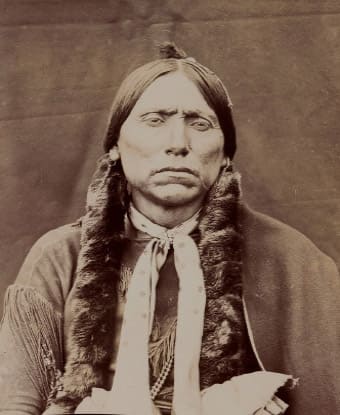
Quanah Parker's mother, Cynthia Ann Parker, was abducted by Comanche raiders on the Texas frontier when she was 9 or 10 years old, in 1836. She was raised as a Comanche and became the wife of a warrior named Peta Nocona. She had three children: Quanah, born either in 1845 or 1852 according to conflicting accounts; a younger son, Pecos; and a daughter, Topsanna, also known as Prairie Flower.
Although white traders attempted to recapture or trade for her, and her family organized a ransom offer once they learned that she had been seen among the Comanches, she never voluntarily returned to white society. Although she had been born white, she was now culturally Comanche, the wife of a warrior, and had three children whom she loved.
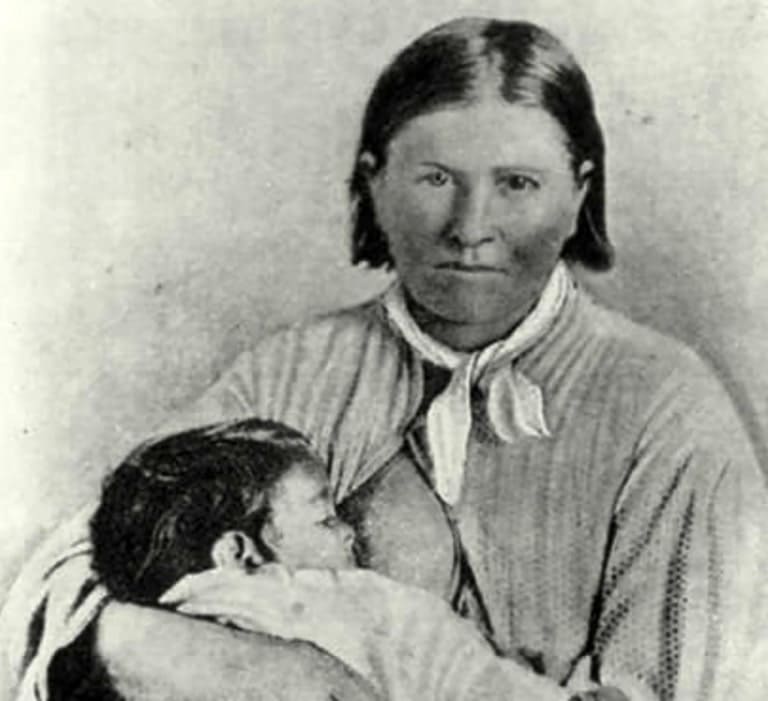
In 1860, a group of Texas Rangers led by Lawrence Sullivan Ross attacked a Comanche camp along a tributary of the Pease River in West Texas. Three people were captured, among them a blue-eyed woman and her young daughter. Cynthia Ann was finally freed from captivity, but she saw it as another abduction. She was about 34 years old at the time and was uncertain of the fate of her husband and her boys. While being escorted to Tarrant County after the battle, she was photographed in Fort Worth with her daughter at her breast and her hair cut short, a Comanche sign of mourning. Both boys, however, escaped. And although Ross reported that his men had killed Peta Nocona, Quanah Parker himself later said that his father had survived the raid and died of natural causes four years later.
At first, she stayed with her uncle in Birdville near Fort Worth and then moved in with other relatives in East Texas. But Cynthia Ann Parker never adapted to white culture. She tried to escape and return to her tribe. She begged to be allowed to return to her people. As S. C. Gwynne wrote in his masterpiece Empire of the Summer Moon, Cynthia Ann spoke Spanish better than English. She told an interpreter: “Mi corazón llorando todo el tiempo por mi dos hijos” – “My heart cries all the time for my two boys.”
Her relatives refused to consider the possibility that she belonged more with the Comanches than with them and assumed that she would adapt in time. In reality, she was being held captive for a second time. She never gave up her Comanche ways. Her daughter died, possibly of influenza, several years after they were returned to white society, in late 1863 or early 1864. And Cynthia herself died about seven years later—according to some accounts, she stopped eating and drinking—while still in her forties.
Gwynne eulogized her this way: “She was a white woman by birth, yes, but also a relic of Comancheria, the vanishing empire of tall grass, fat summer moons, and buffalo herds that blackened the horizon. She had seen all that death and glory. She was the wife of a chief. She had lived freely on the high, endless plains, as her adopted race had lived in the very last place on the North American continent where anyone could live or run free. She died in the deep pine forests, where there was no horizon...”
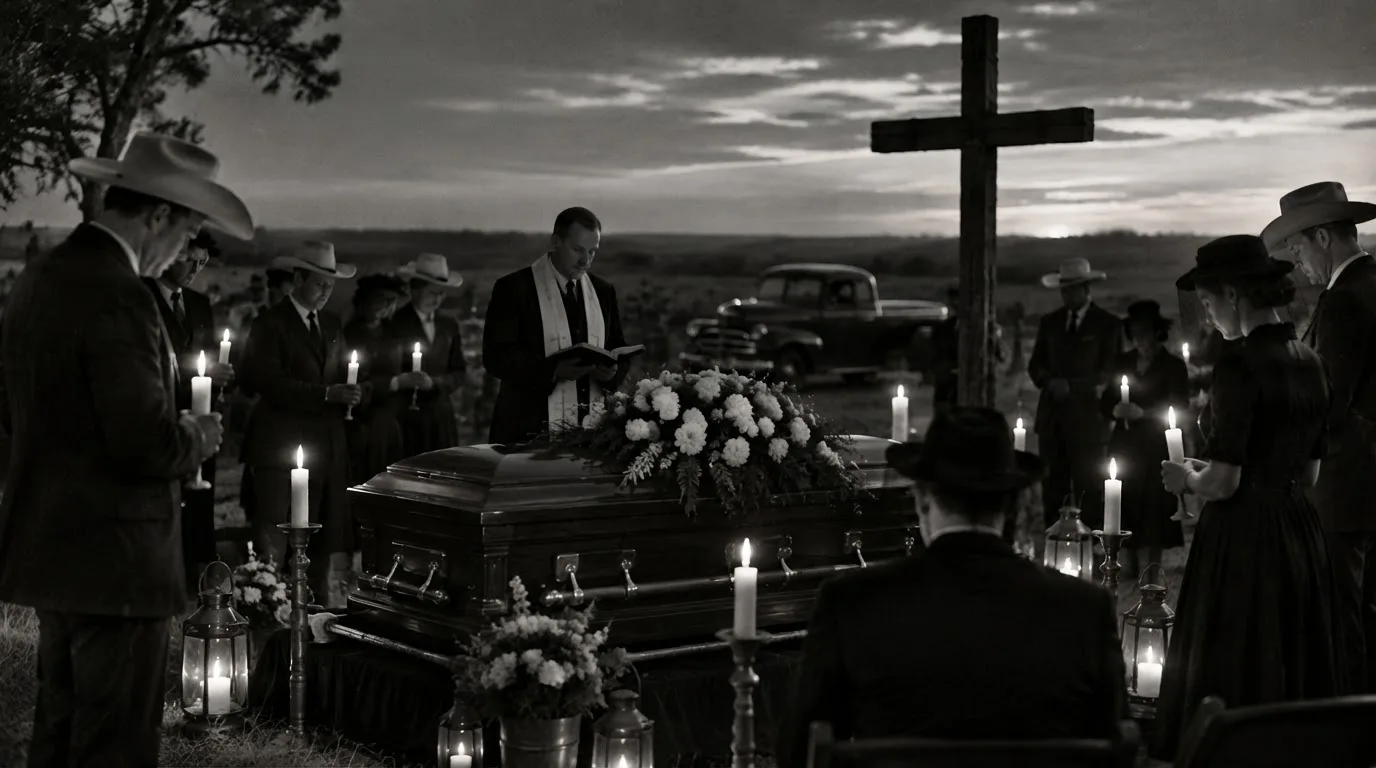
Quanah lost his mother when he was only 12 years old and longed for her throughout his life. After giving up his life on the reservation, he searched for her and learned that she had died and was buried far away in Texas. All he had of her was a photograph someone had given him, which he always kept above his bed. For many years, he tried to have her body moved and buried on Comanche land. In 1910, he succeeded in having the bodies of his mother and sister transferred from East Texas to the Post Oak Mission Cemetery in Cache, Oklahoma, in Comanche County. The following year, he was buried there as well. Their bodies underwent one final disturbance in 1957, when the U.S. Air Force forced the cemetery to be removed to expand a missile base and had the bodies transferred to the Fort Sill Post Cemetery in Lawton, Oklahoma. They remain there together.