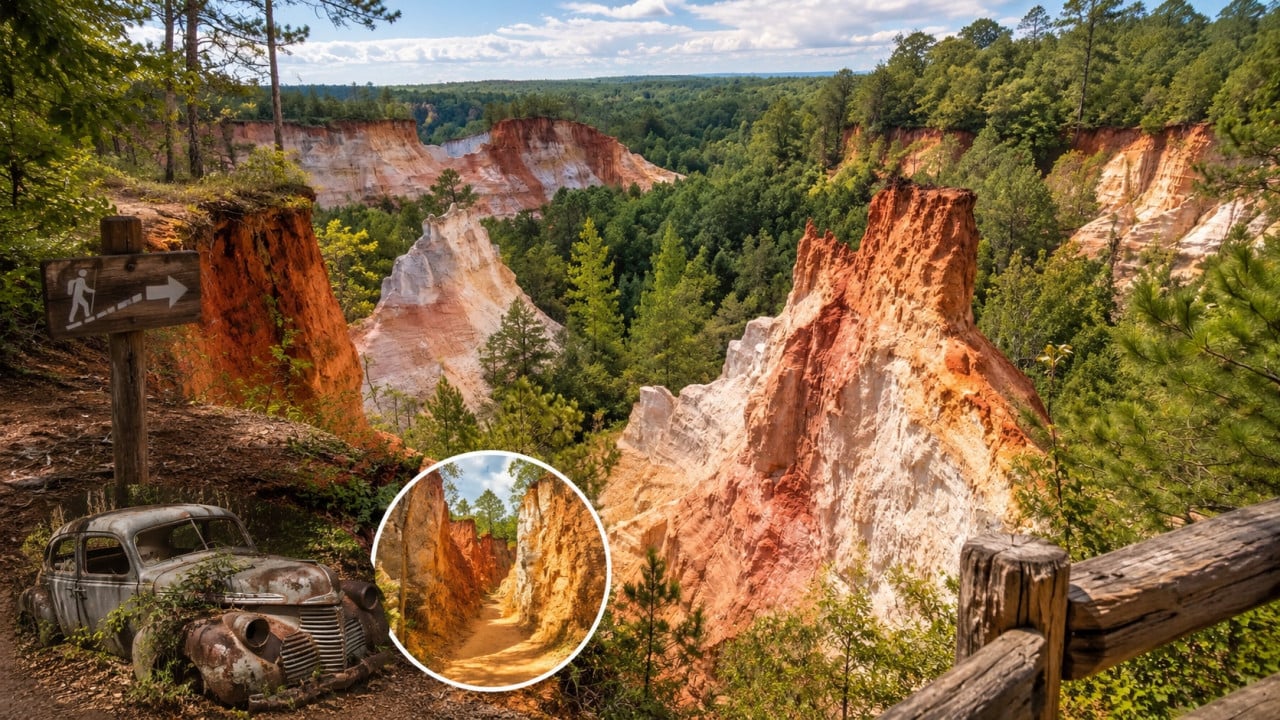
When I lived in Georgia, specifically in Atlanta, I visited the so-called Little Grand Canyon several times. The place is officially called Providence Canyon State Park and is one of the so-called Seven Natural Wonders of Georgia.
It really does look like a miniature Grand Canyon—of course, if you have visited the real one in Arizona, it is not quite comparable, but it was always worth the trip from Atlanta. Beautiful red, orange, and white rock formations, peaceful nature, and practically nothing in the surrounding area—the perfect place to spend a day away from the city.
And because this place has a surprising story that many tourists do not even know about, I decided to dedicate a separate article to it.
Where Providence Canyon is located
You will find the park near the small town of Lumpkin in the state of Georgia, approximately 240 kilometers (150 miles) southwest of Atlanta. The drive takes around 2.5 to 3 hours and mostly leads through rural countryside, passing only a few small towns.
You will see for yourself that Providence Canyon is essentially in the middle of nowhere. It is not a typical tourist destination full of hotels and restaurants—it is more of a place where you go for a day trip, take a walk, and then leave again. And that is exactly why it is so peaceful.
It is not a real canyon. It was created by farming
This is probably the most interesting fact I learned about Providence Canyon—and it will likely surprise you as much as it surprised me.
Providence Canyon is not a natural wonder in the same sense as the Grand Canyon in Arizona. The real Grand Canyon was formed over millions of years by erosion from the Colorado River. The one in Georgia? It was created in just a few decades due to poor farming practices.
Here is exactly what happened:
Intensive farming began in this area in 1830, with cotton as the primary crop. However, local farmers knew nothing about modern soil conservation techniques. They plowed up and down the slopes, did not rotate their crops, and cut down trees, removing the root systems that would have held the soil together.
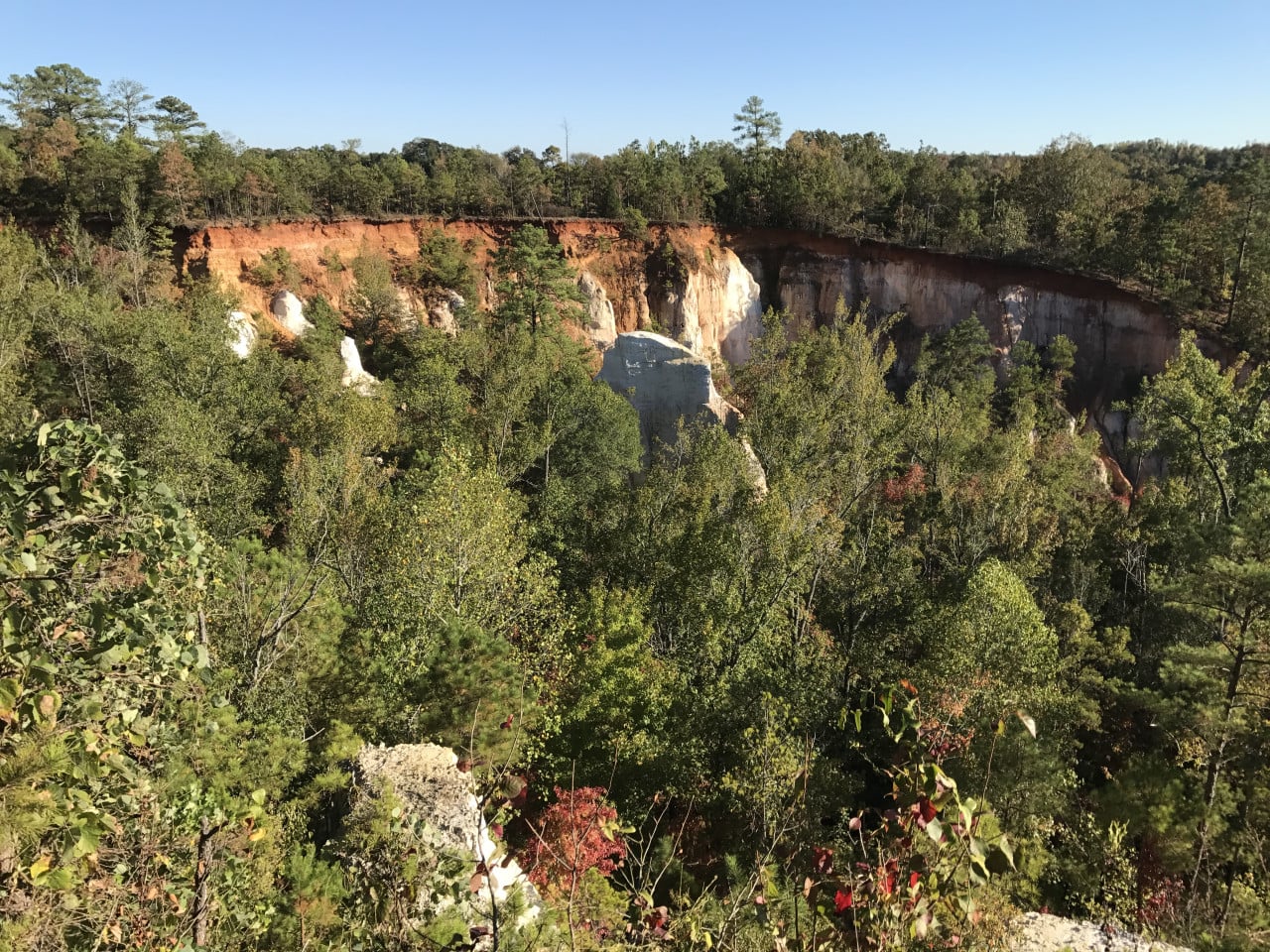
The result? After just twenty years, around 1850, gullies in the ground were already 1.2 to 1.5 meters deep. Rainwater and runoff continued to deepen them until, over the next several decades, they developed into canyons up to 45 meters (150 feet) deep and more than 90 meters wide.
In other words, what tourists now gaze at in amazement is essentially a monument to how quickly humans can alter the landscape when they do things incorrectly. By the 1930s, Providence Canyon had become known as “Georgia's Little Grand Canyon,” and there was even talk of designating it a national park. In the end, however, that never happened—precisely because of its unusual, human-caused origins.
Providence Canyon did not become a state park until 1971, during Jimmy Carter's tenure as governor of Georgia.
What you can see there
The park covers approximately 1,000 acres (about 405 hectares) and contains several interesting sights.
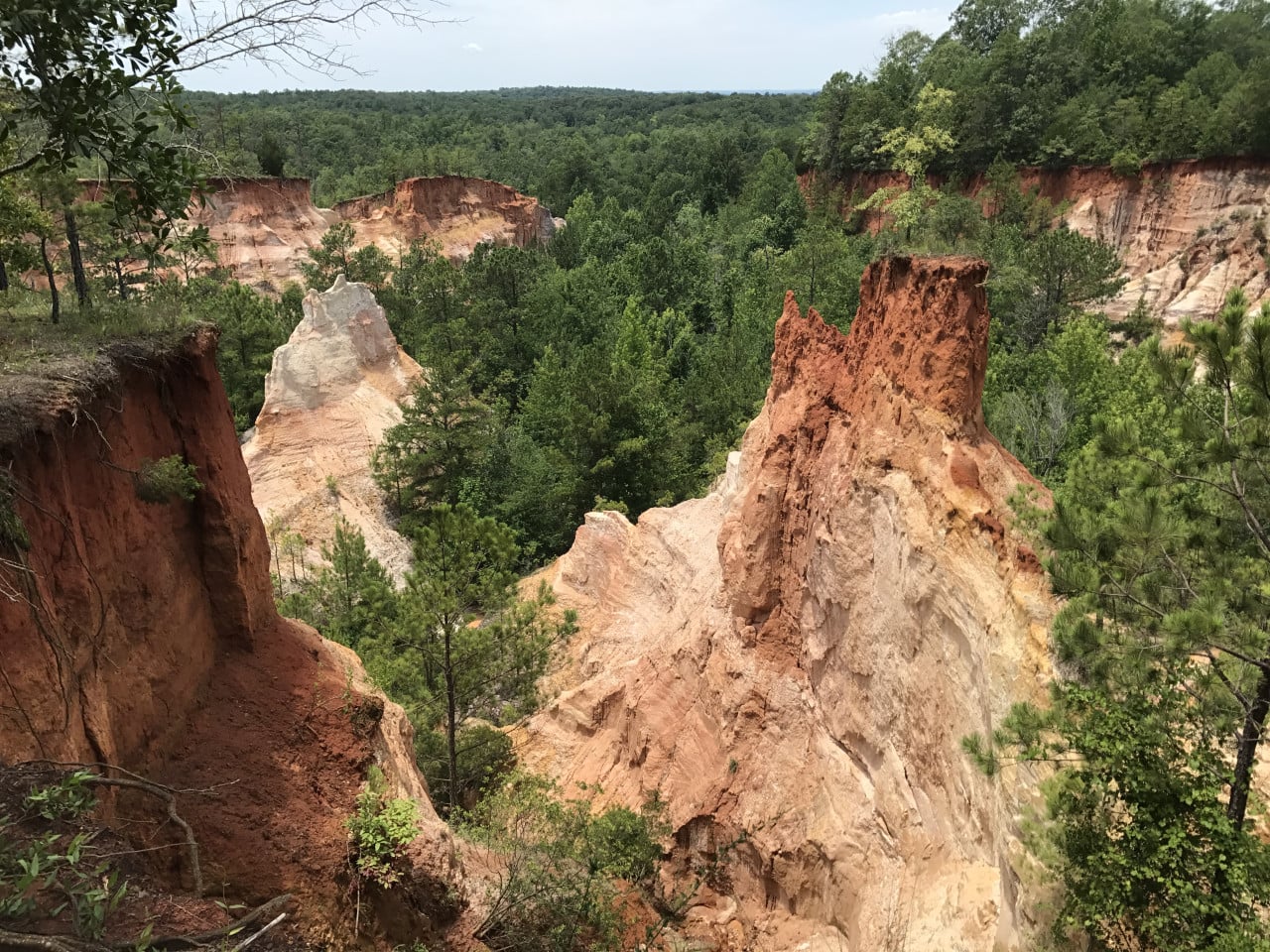
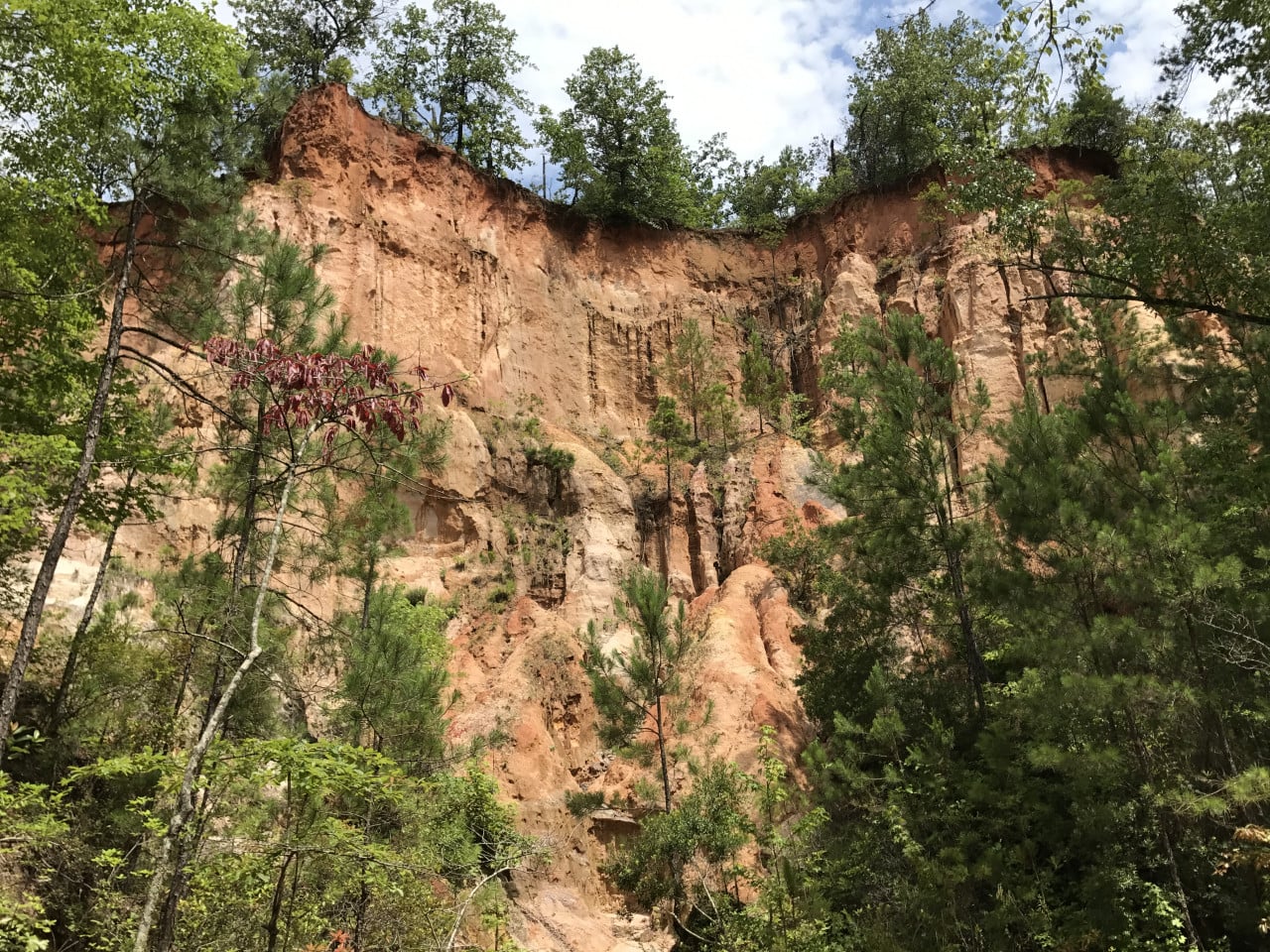
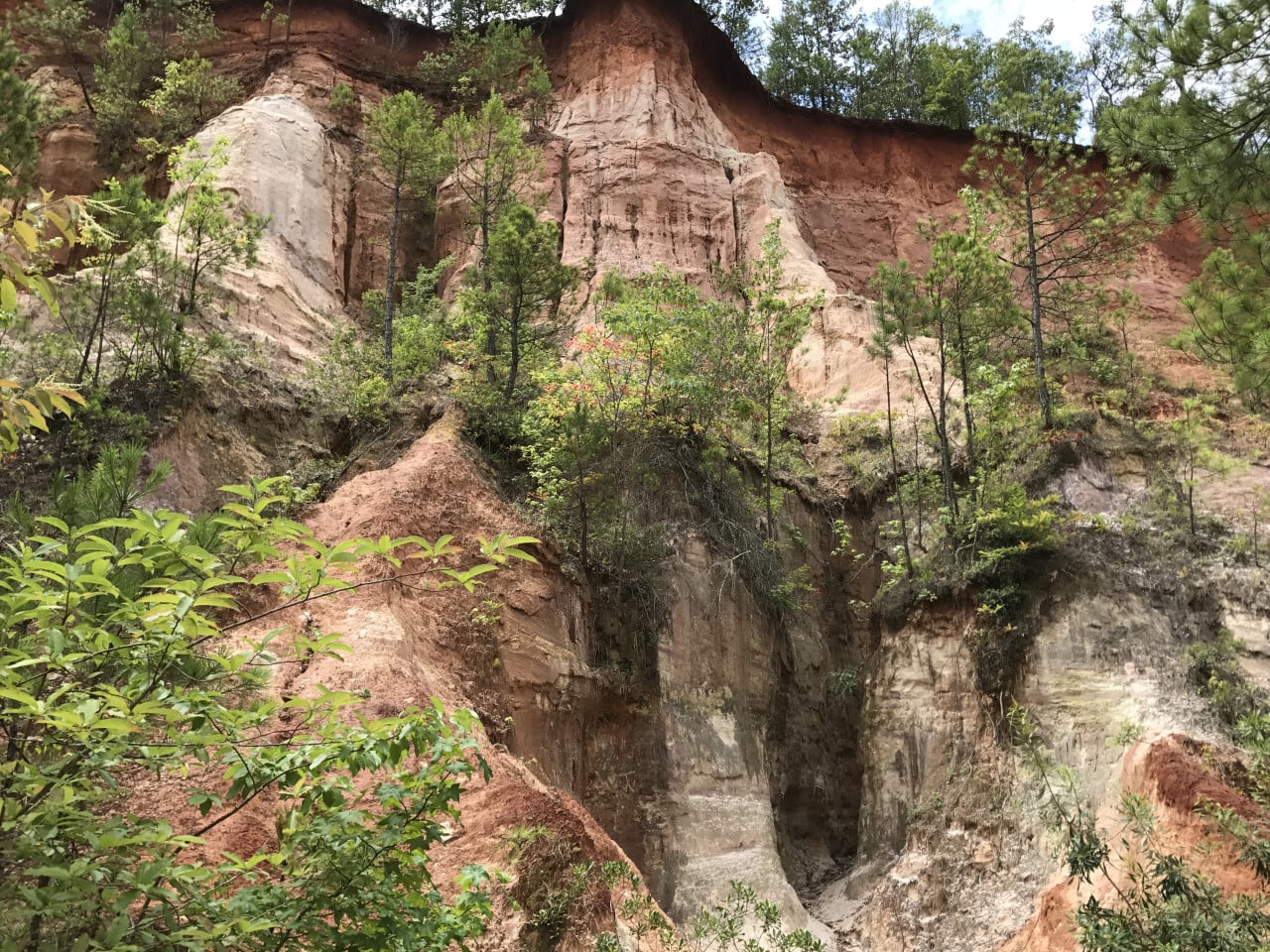
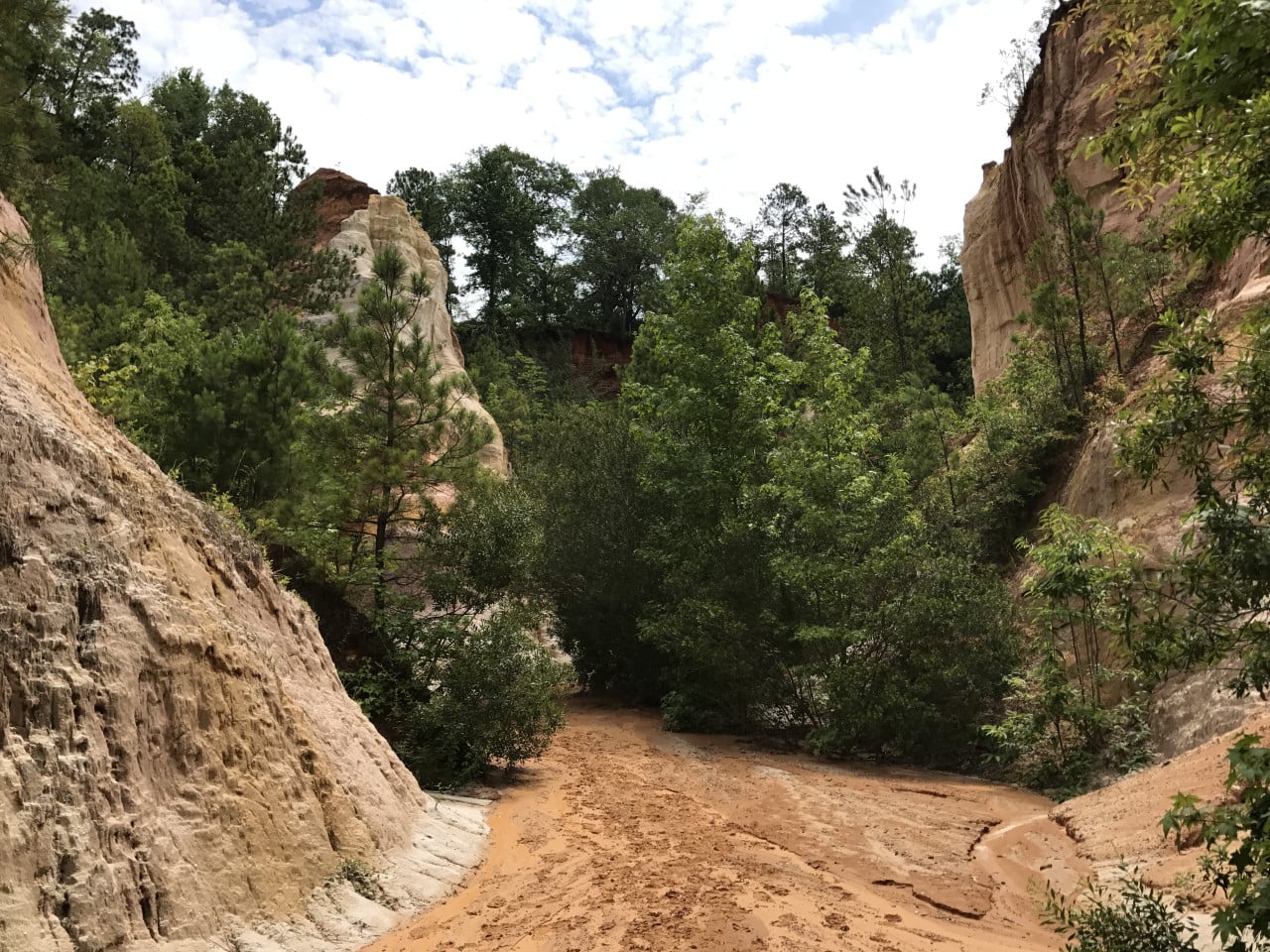
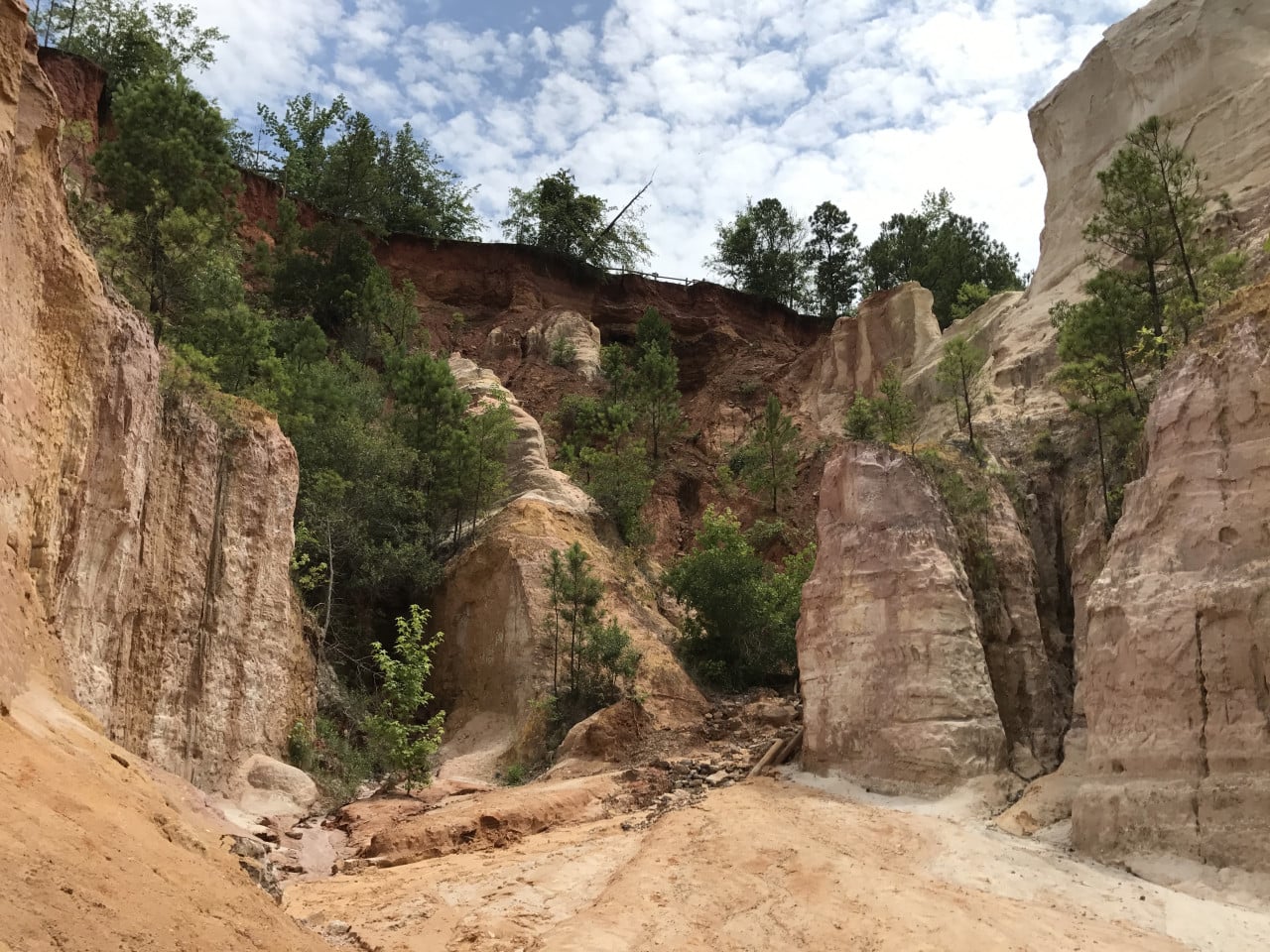
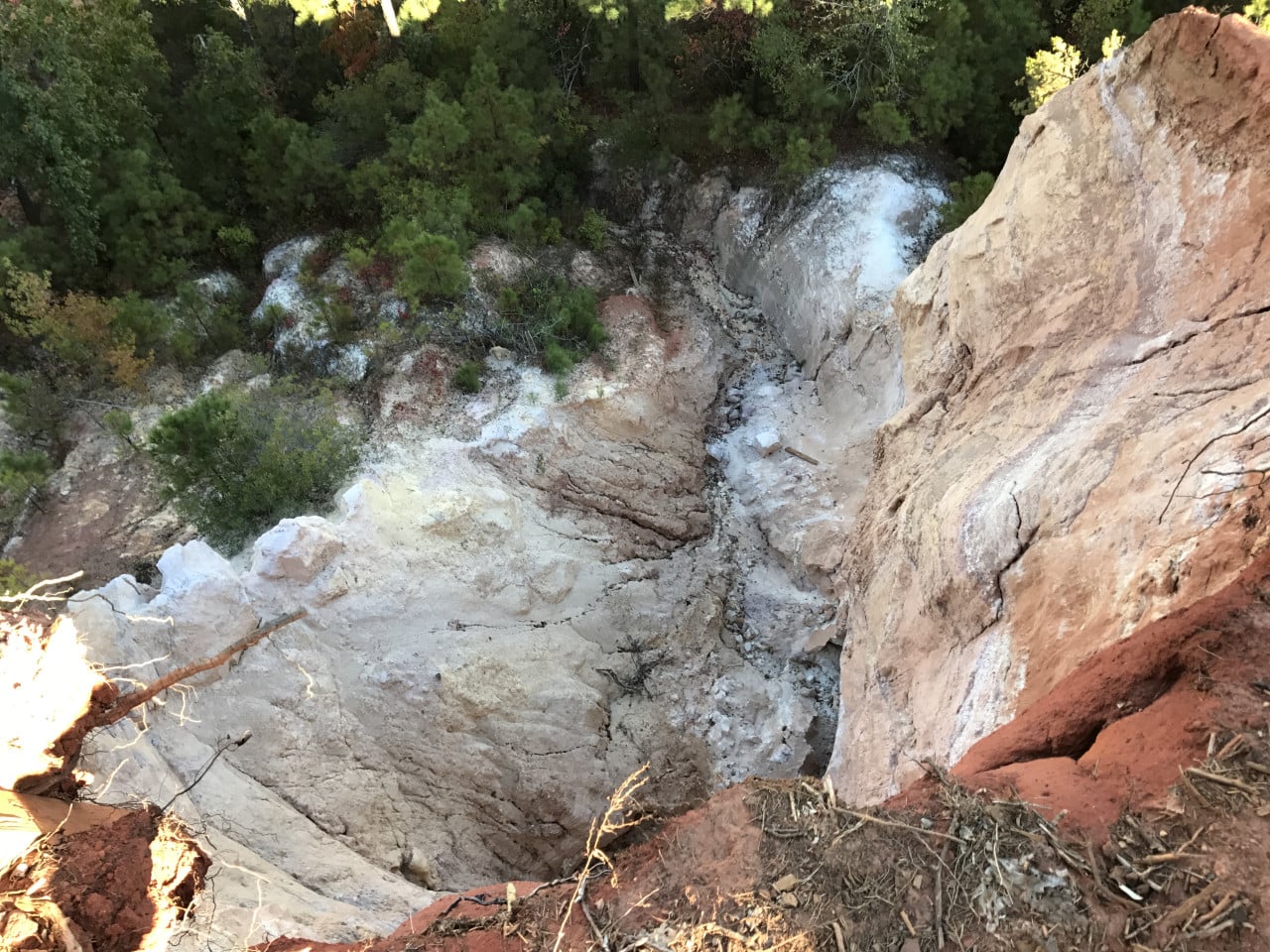
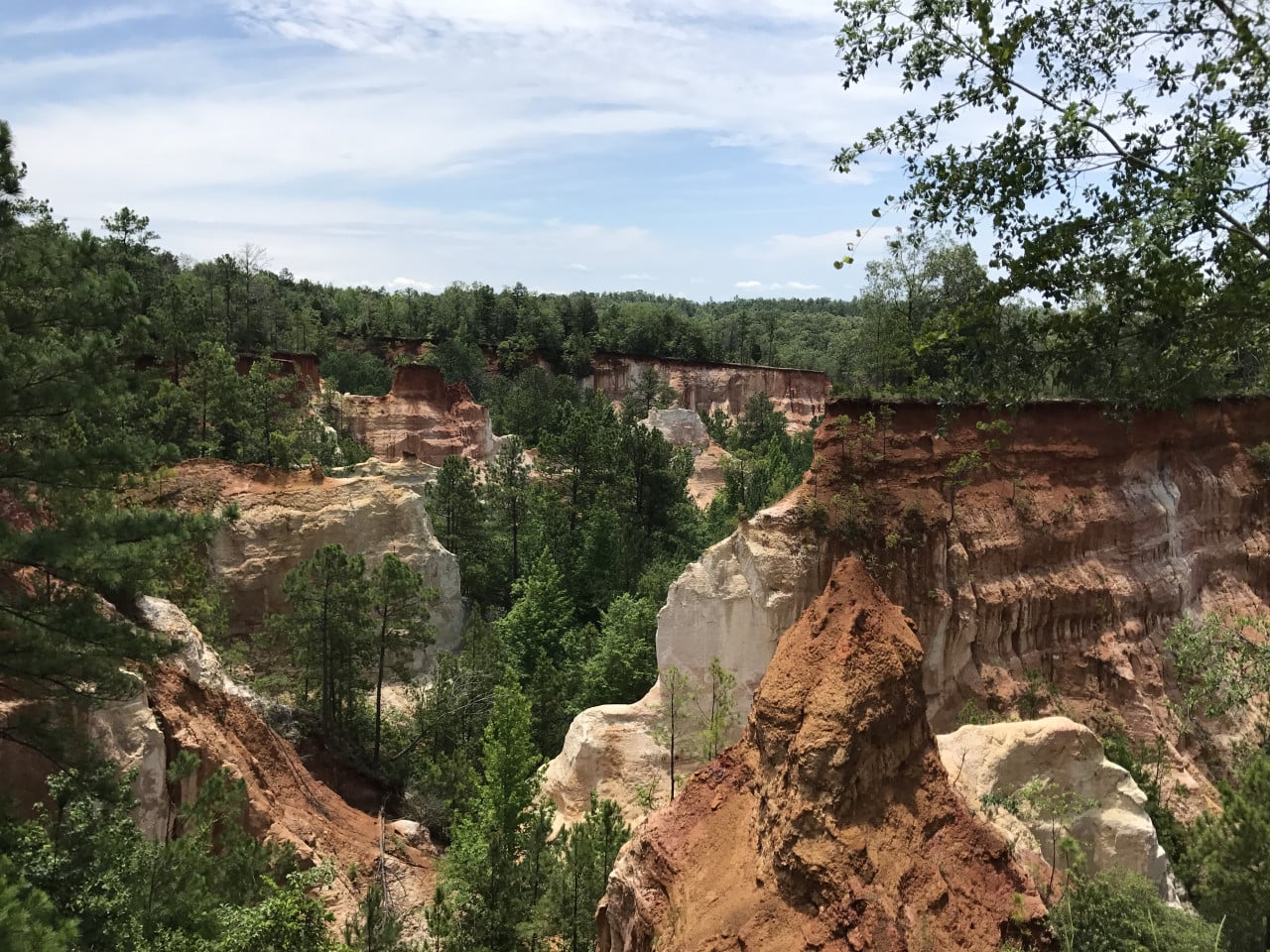
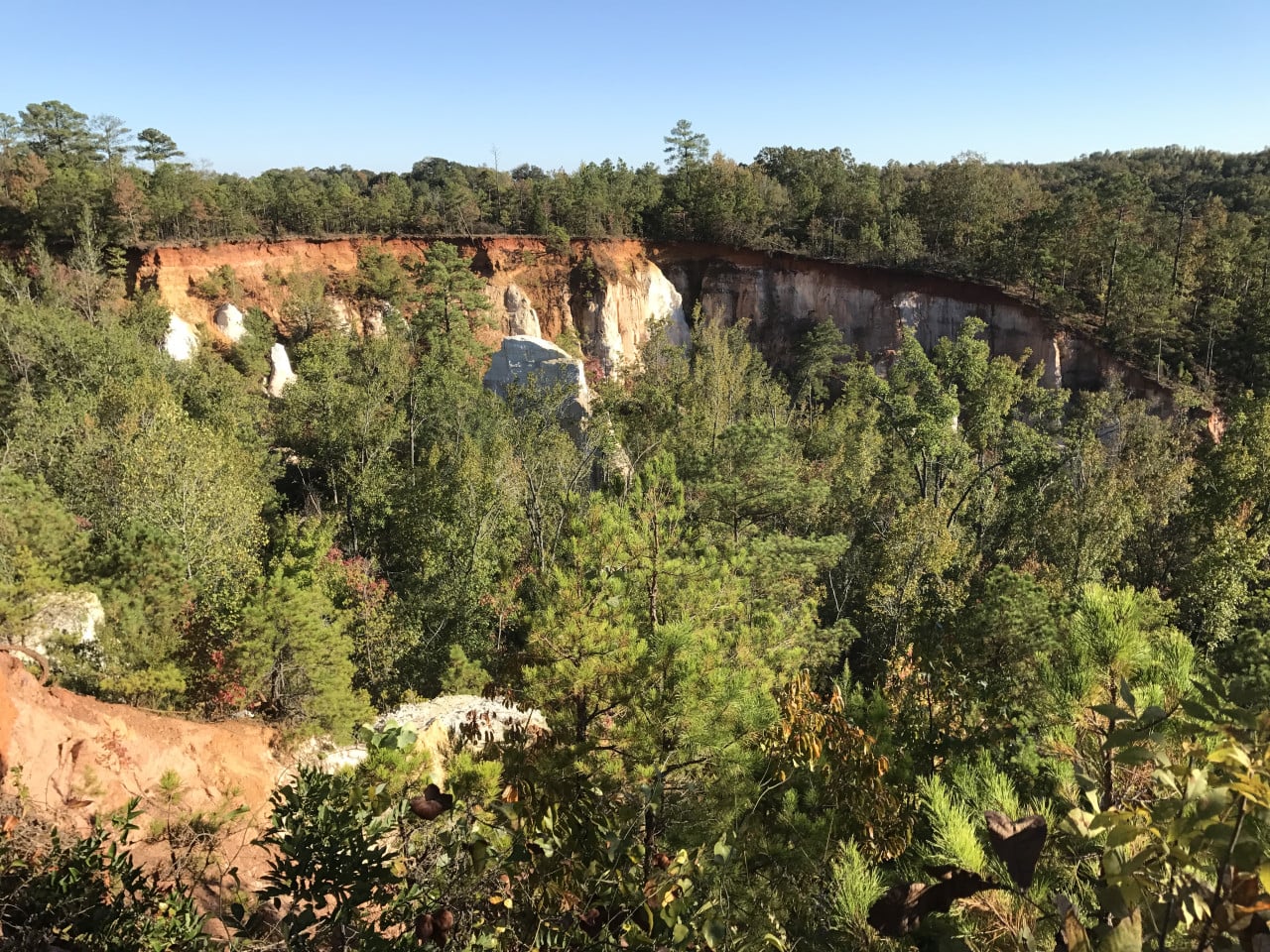
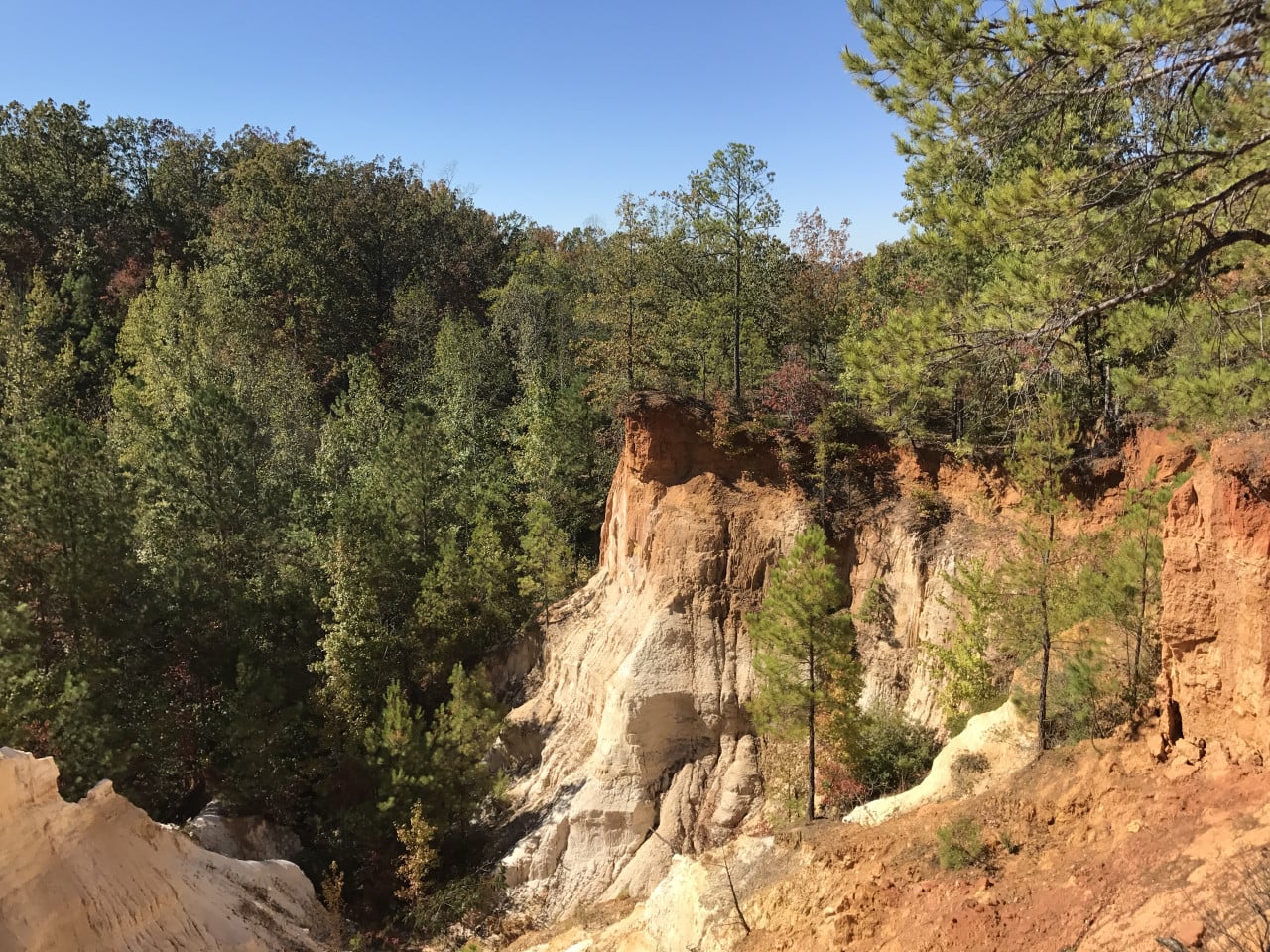
Colorful layers of sand and sediment
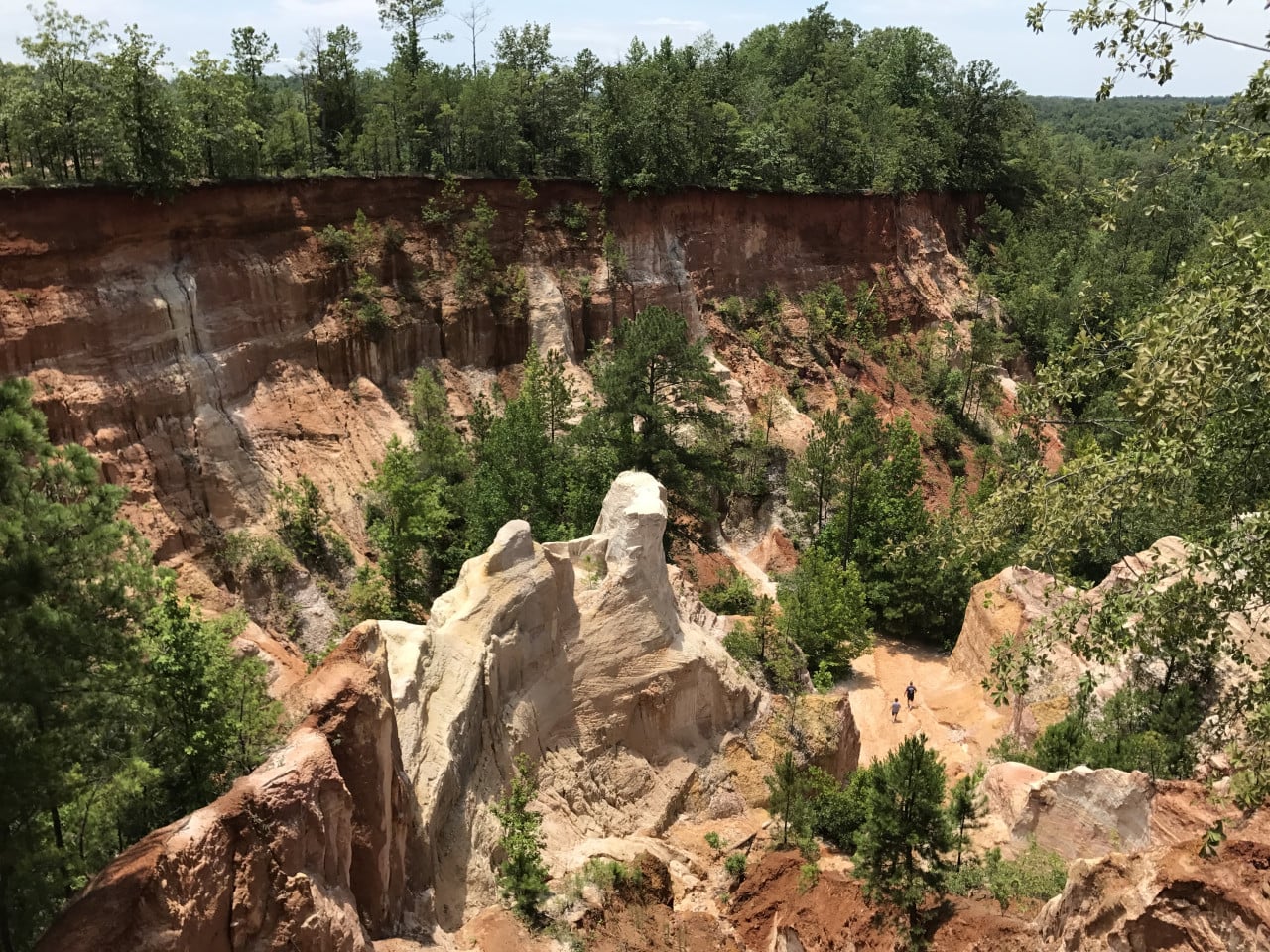
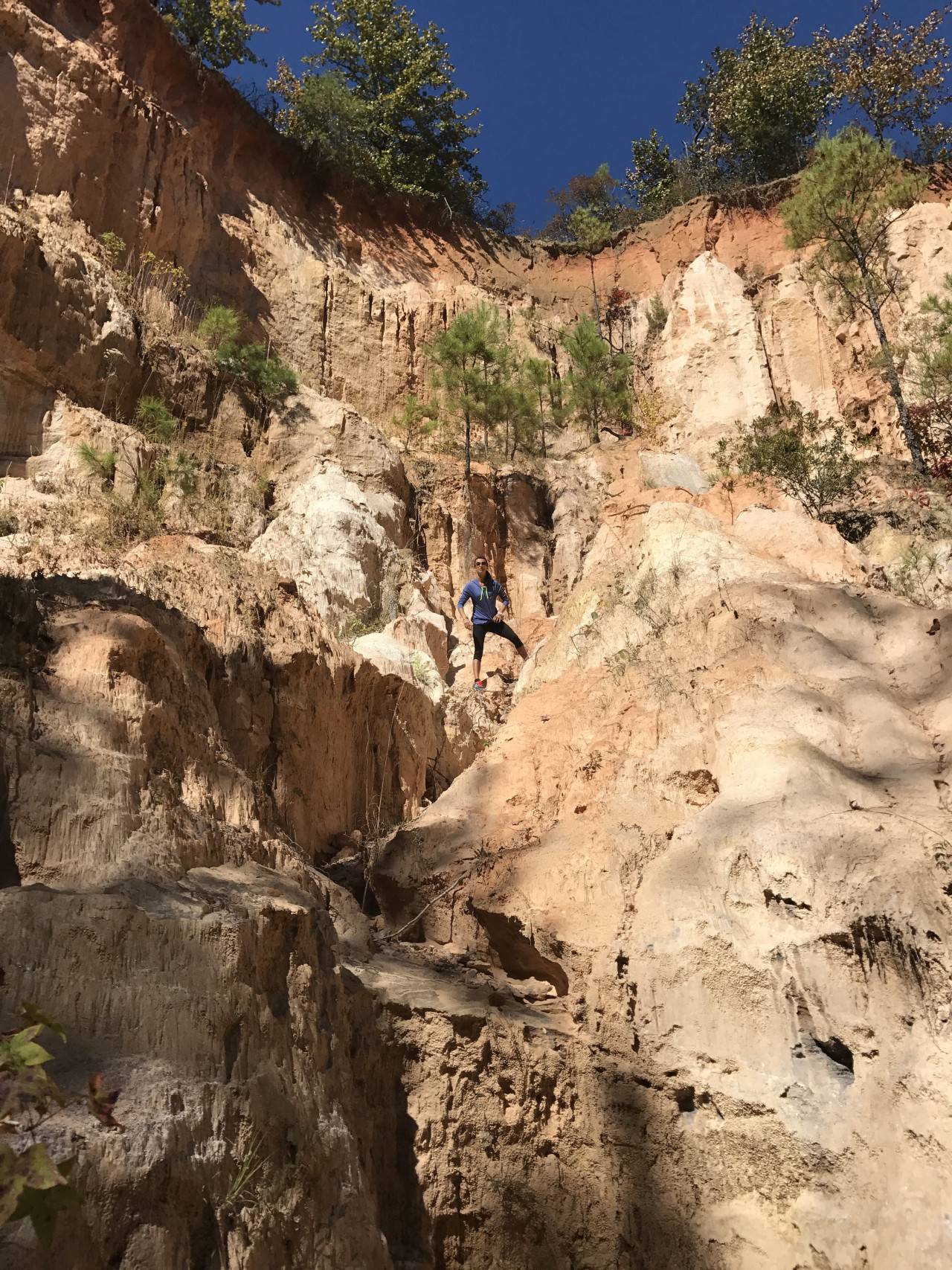
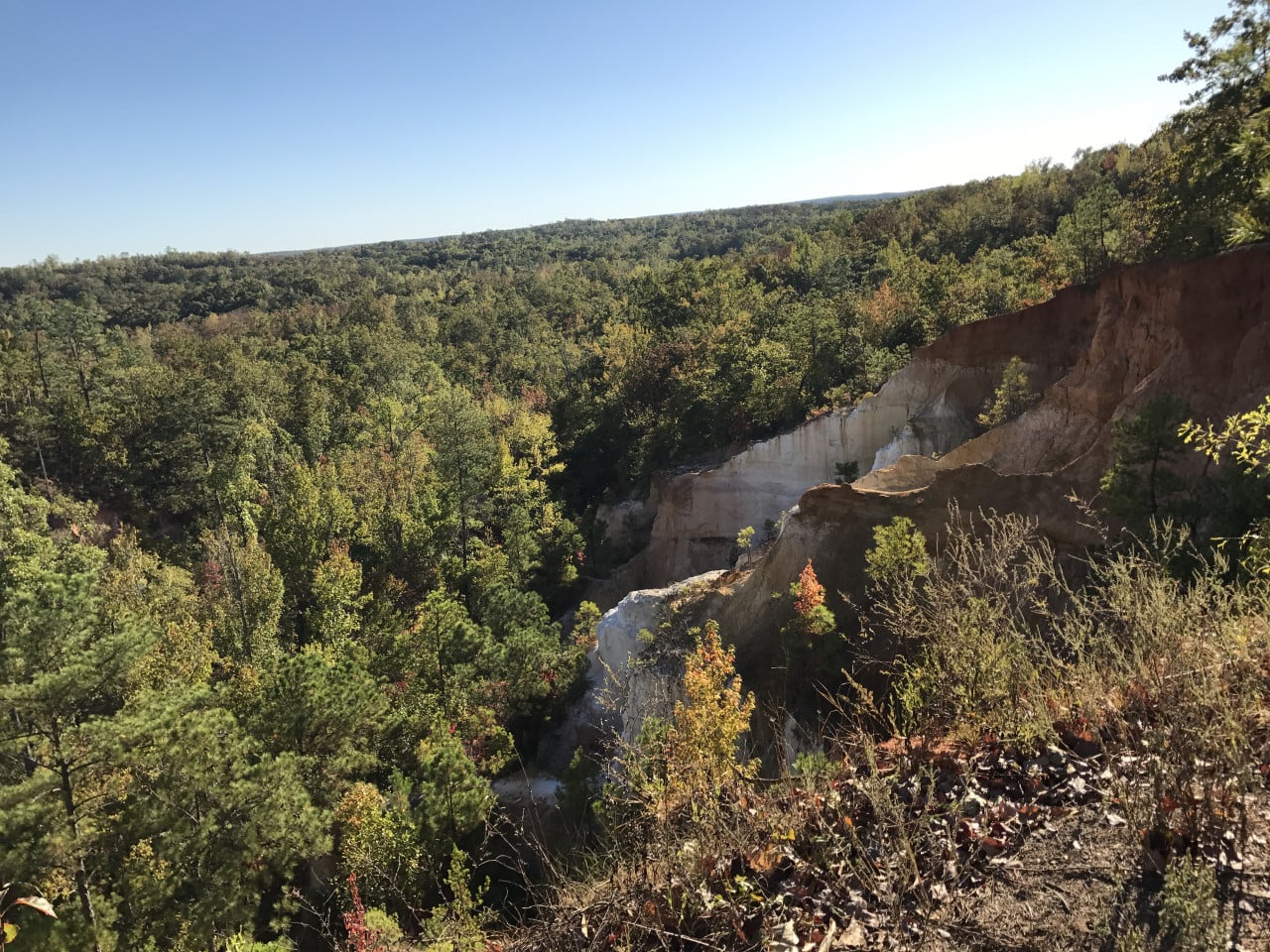
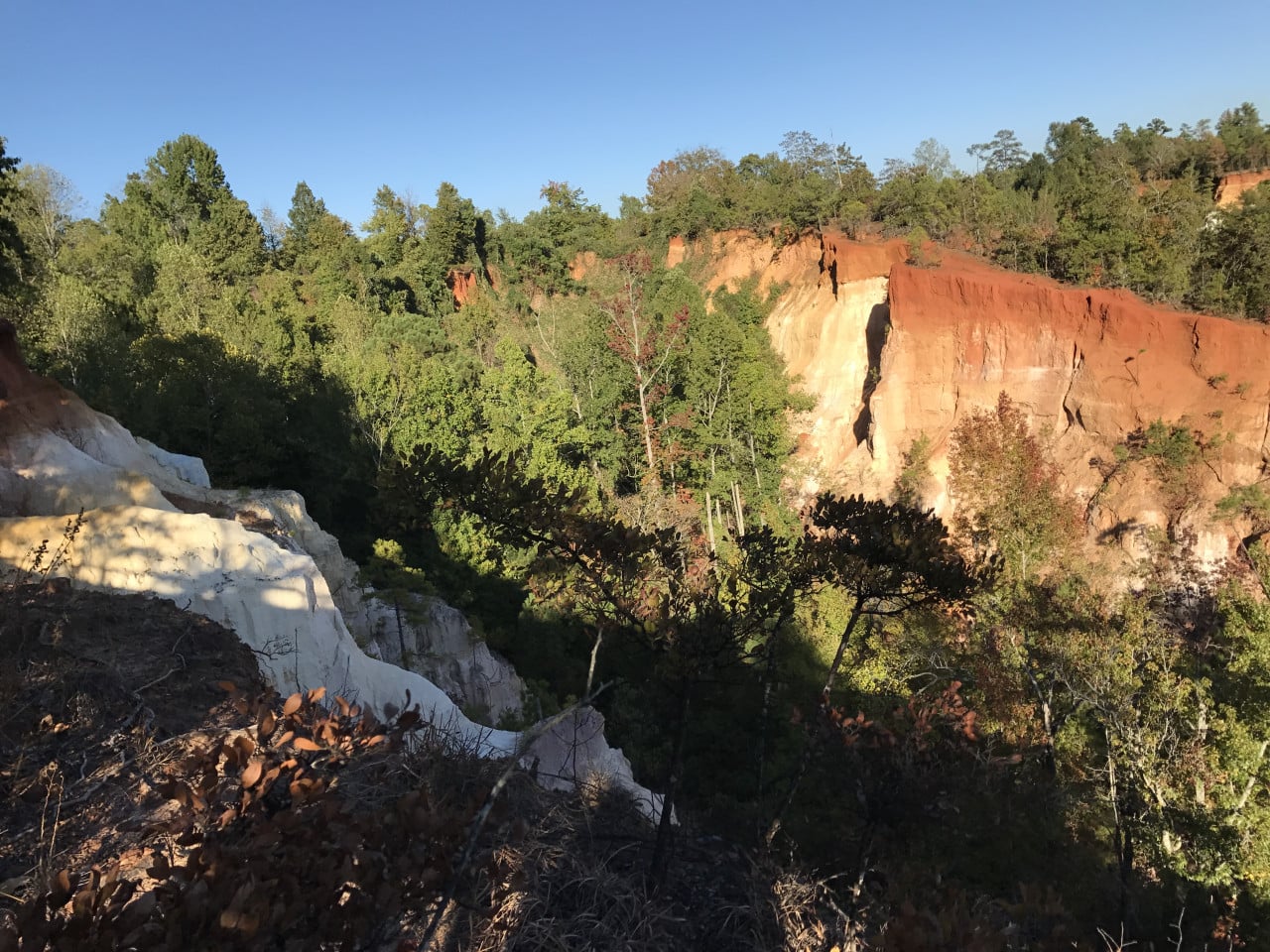
The canyon walls expose sediments that are 59 to 74 million years old—dating back to a time when the area now known as Georgia was submerged beneath an ancient ocean. According to guides, the canyon contains as many as 43 different shades of sand and clay—from orange, red, and pink to ocher, white, yellow, and even purple hues.
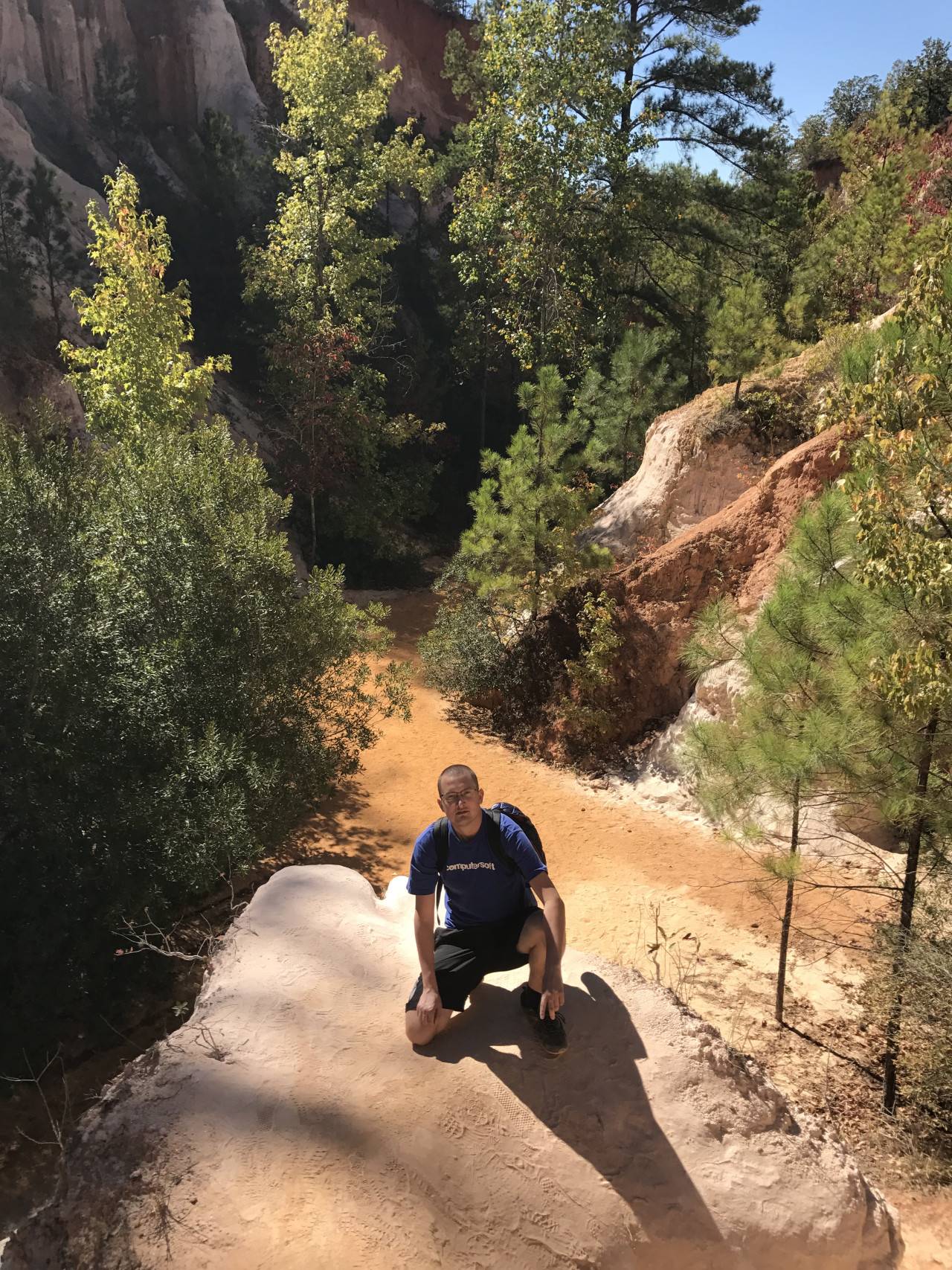
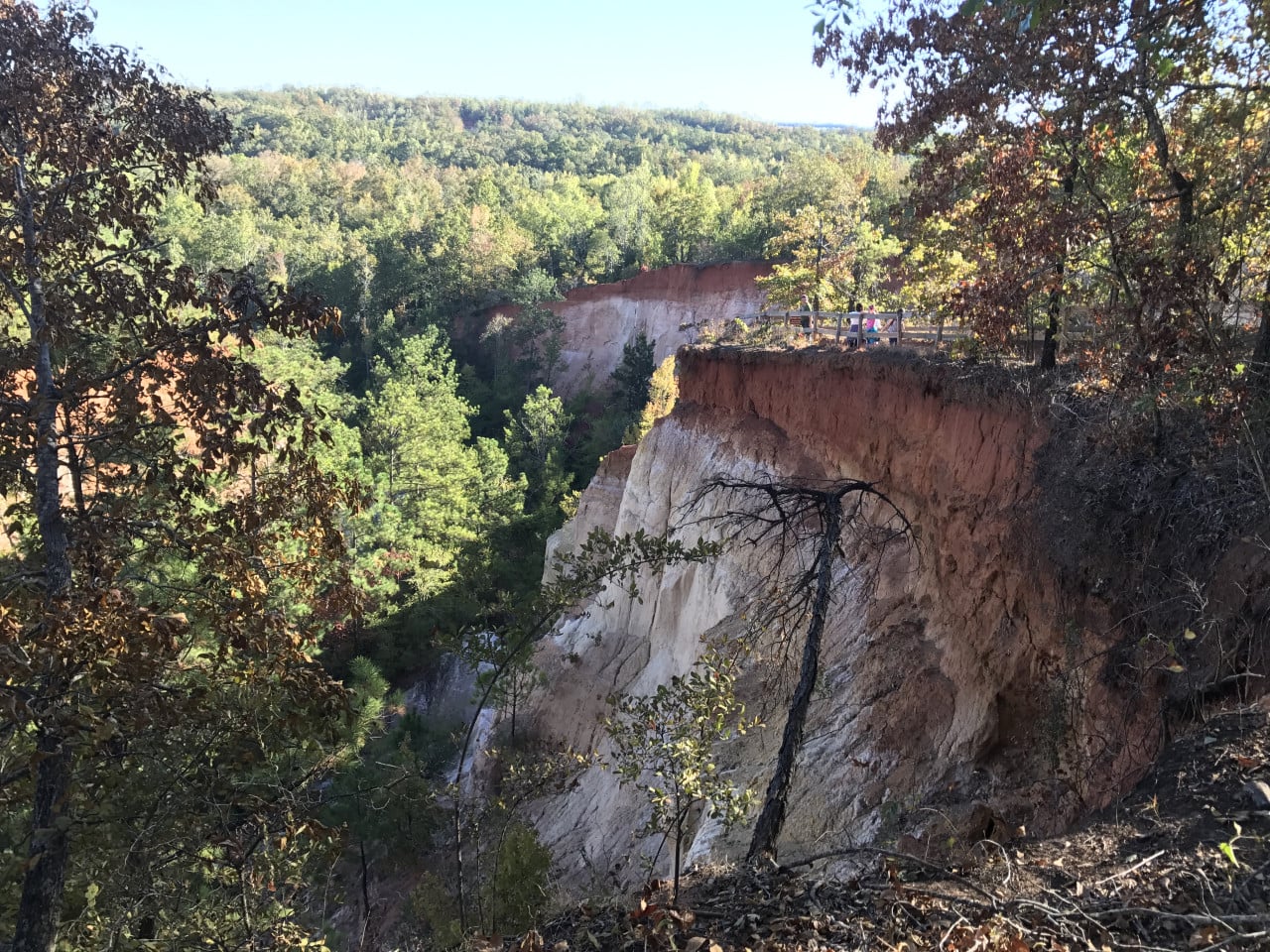
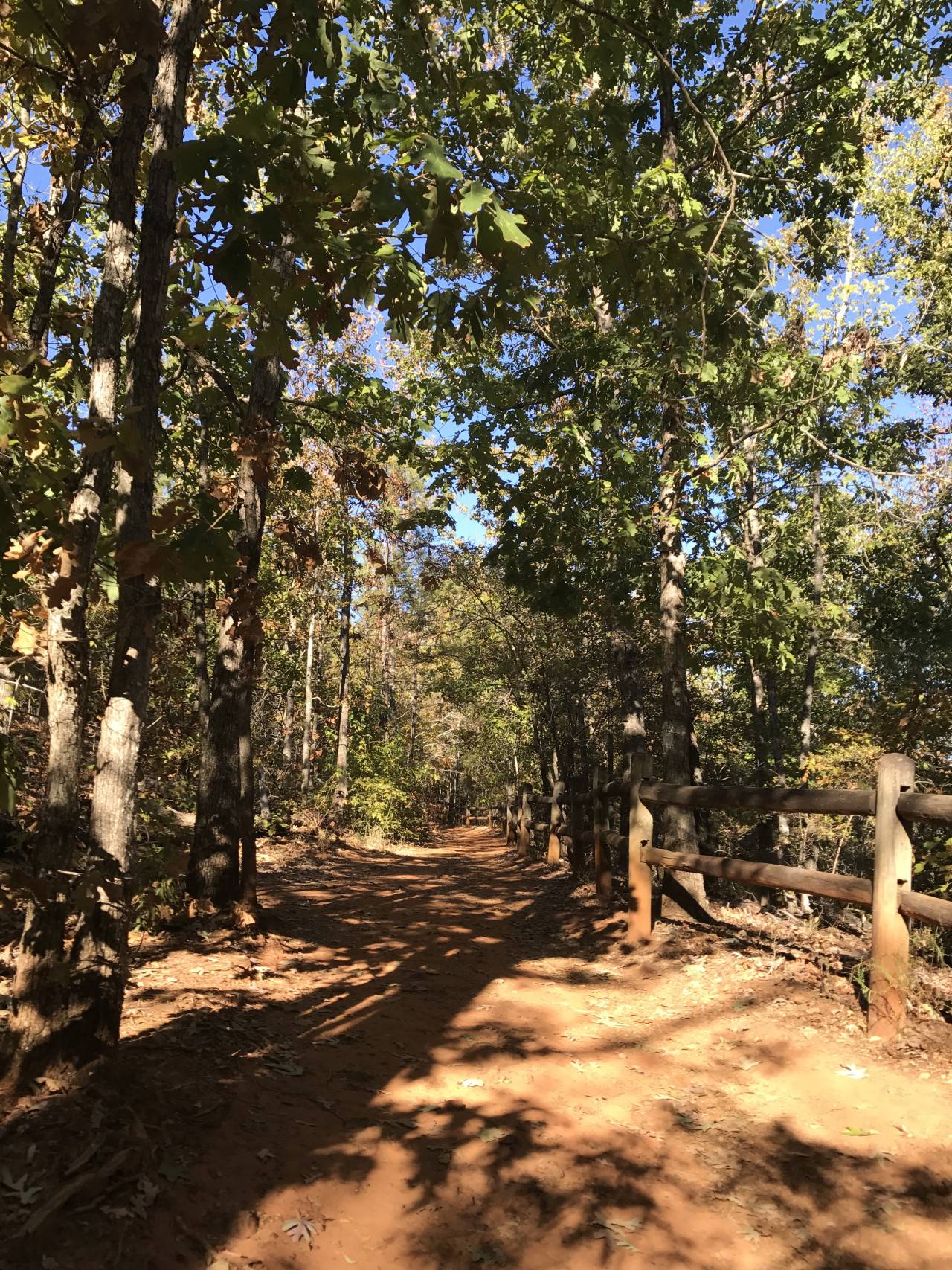
When you follow the Canyon Loop Trail (a roughly 4-kilometer loop), you will see the entire park from different angles—first from the overlooks above, then as you descend to the canyon floor itself and walk between the towering, colorful walls.
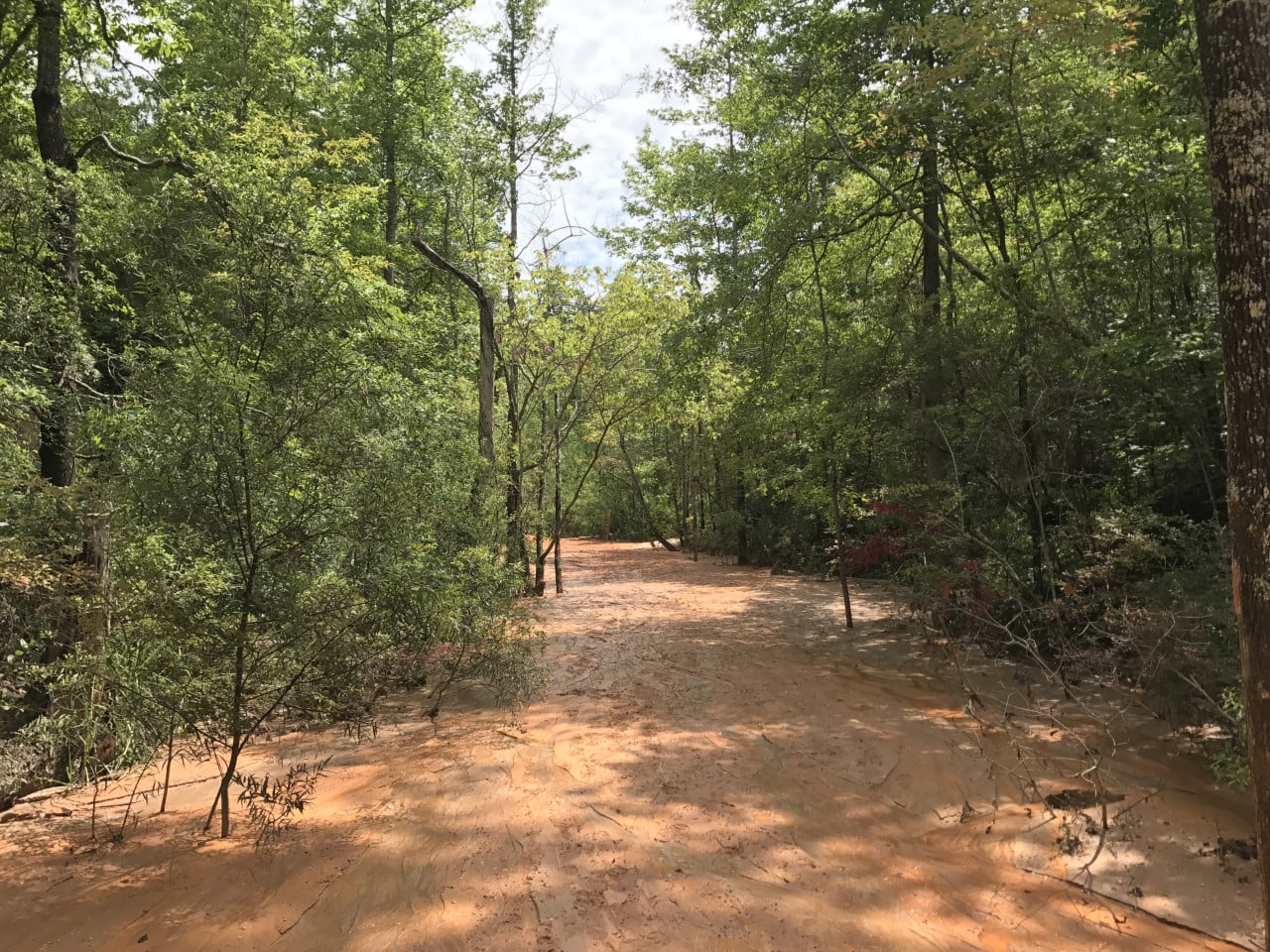
Walking along the canyon floor
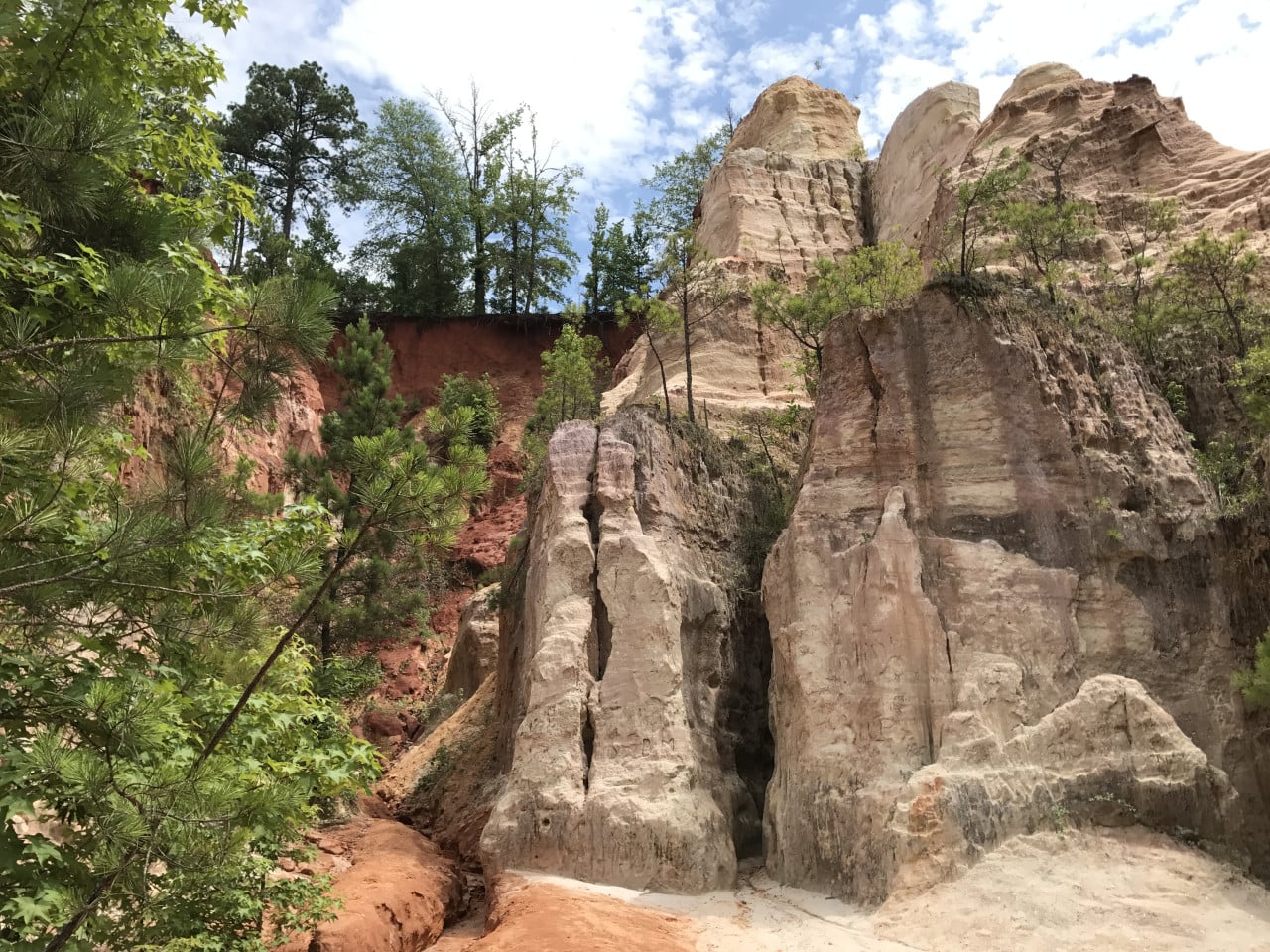
For me, being on the canyon floor was probably the most memorable experience. When you stand between those 30–45-meter-high walls in various shades of red and white, it almost feels like you are on another planet.
After rain, however, it gets quite wet and muddy—that typical red-orange muddy water gets practically everywhere. I therefore recommend older or waterproof shoes, not clean sneakers.
Abandoned cars in the forest
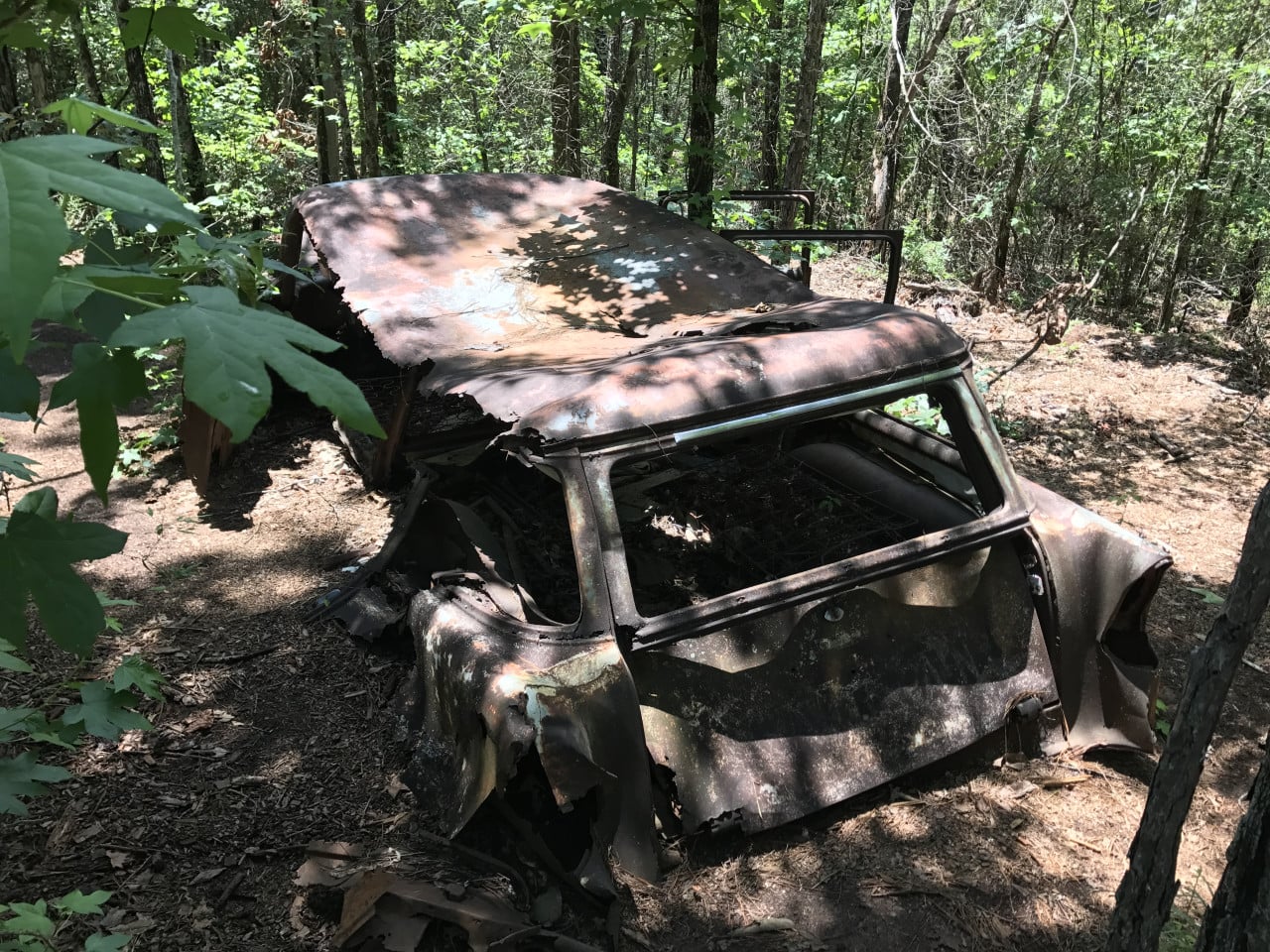
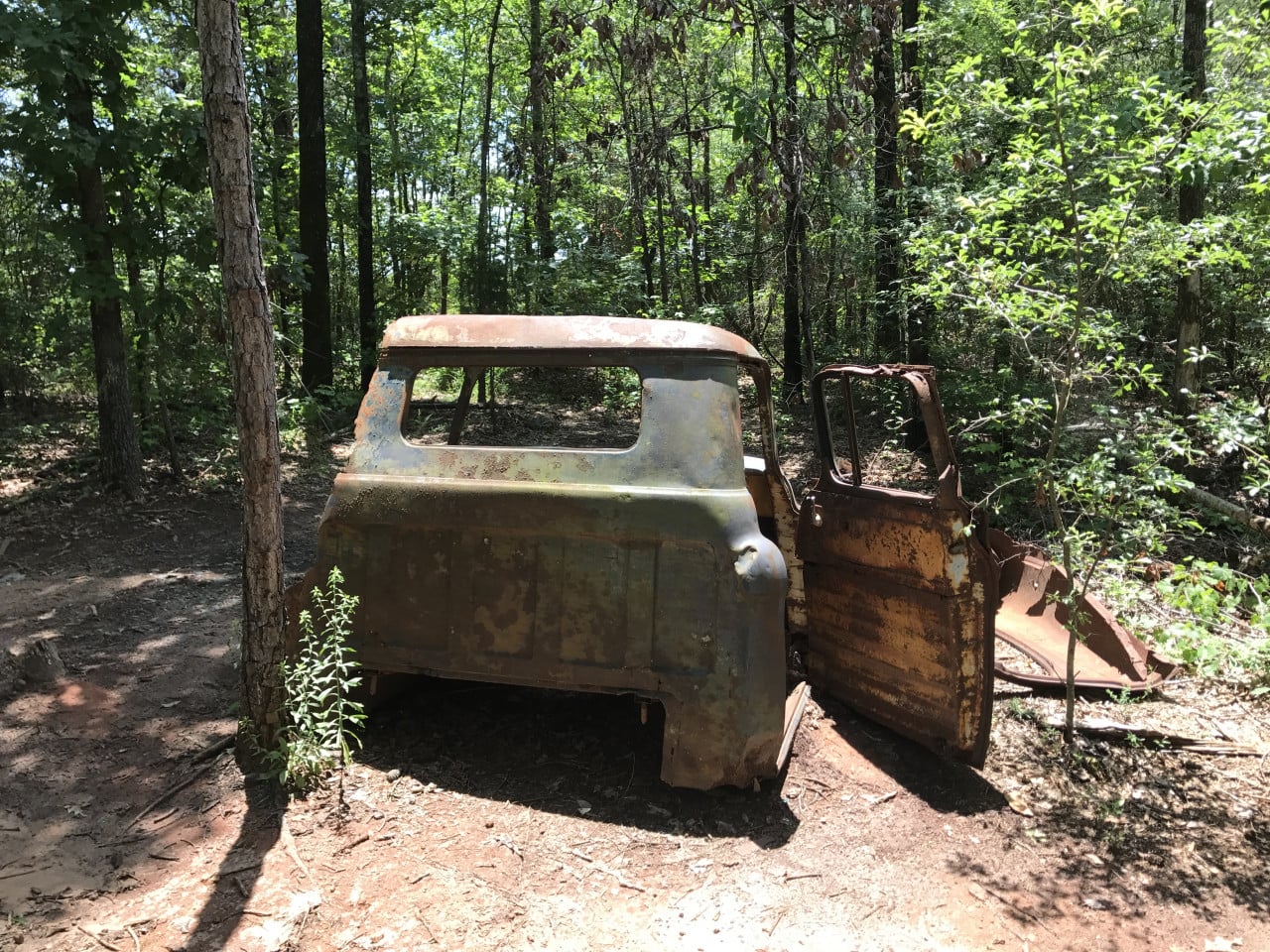
Probably the most unusual things you will come across in the park are the abandoned old cars from the 1940s and 1950s, left behind by the original farmers and settlers. They sit practically in the middle of the forest, slowly rusting and becoming overgrown with the surrounding vegetation.
They serve as silent reminders of how people once lived here—and how quickly nature can recover once people leave.
Overlooks from above
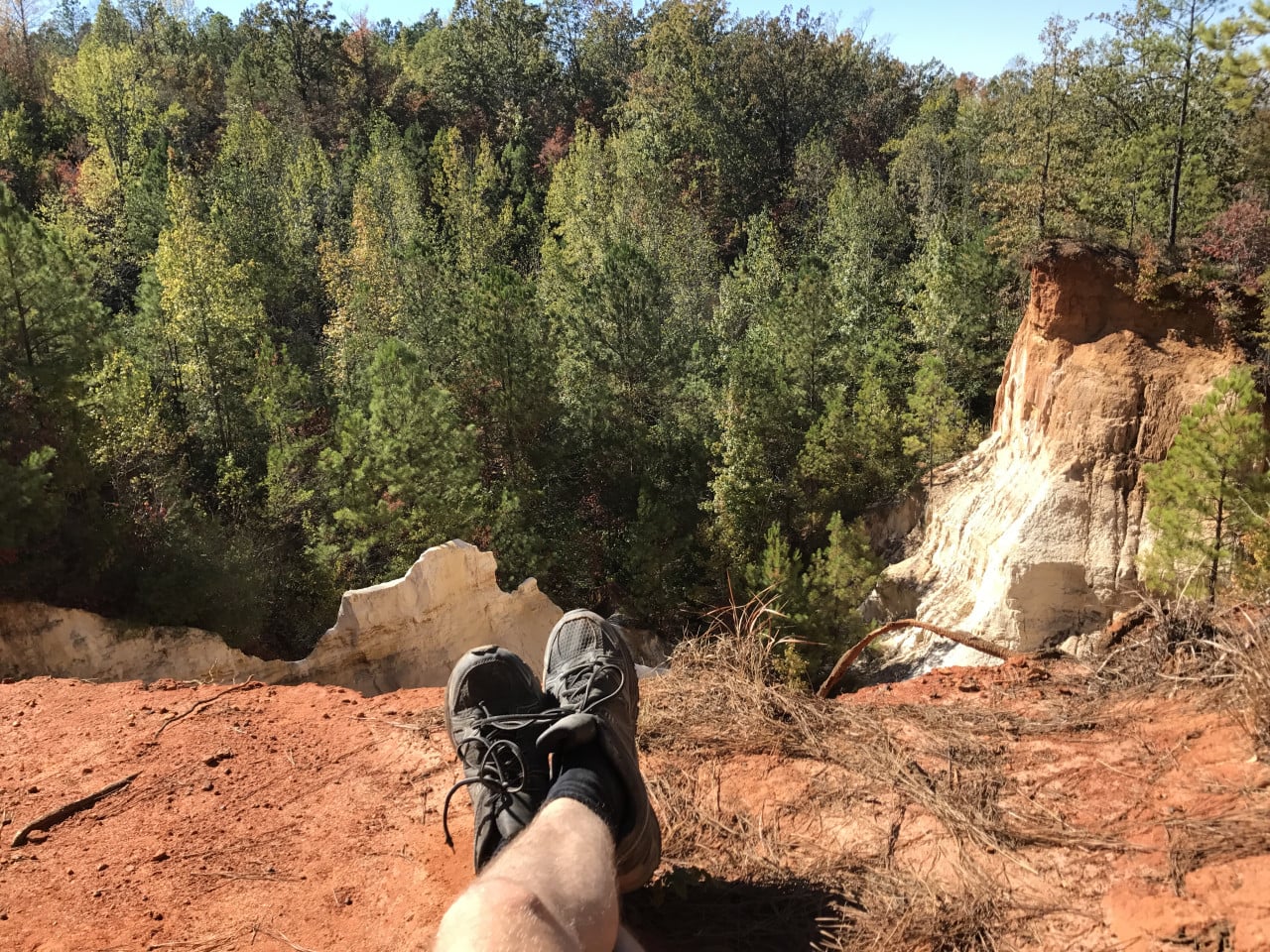
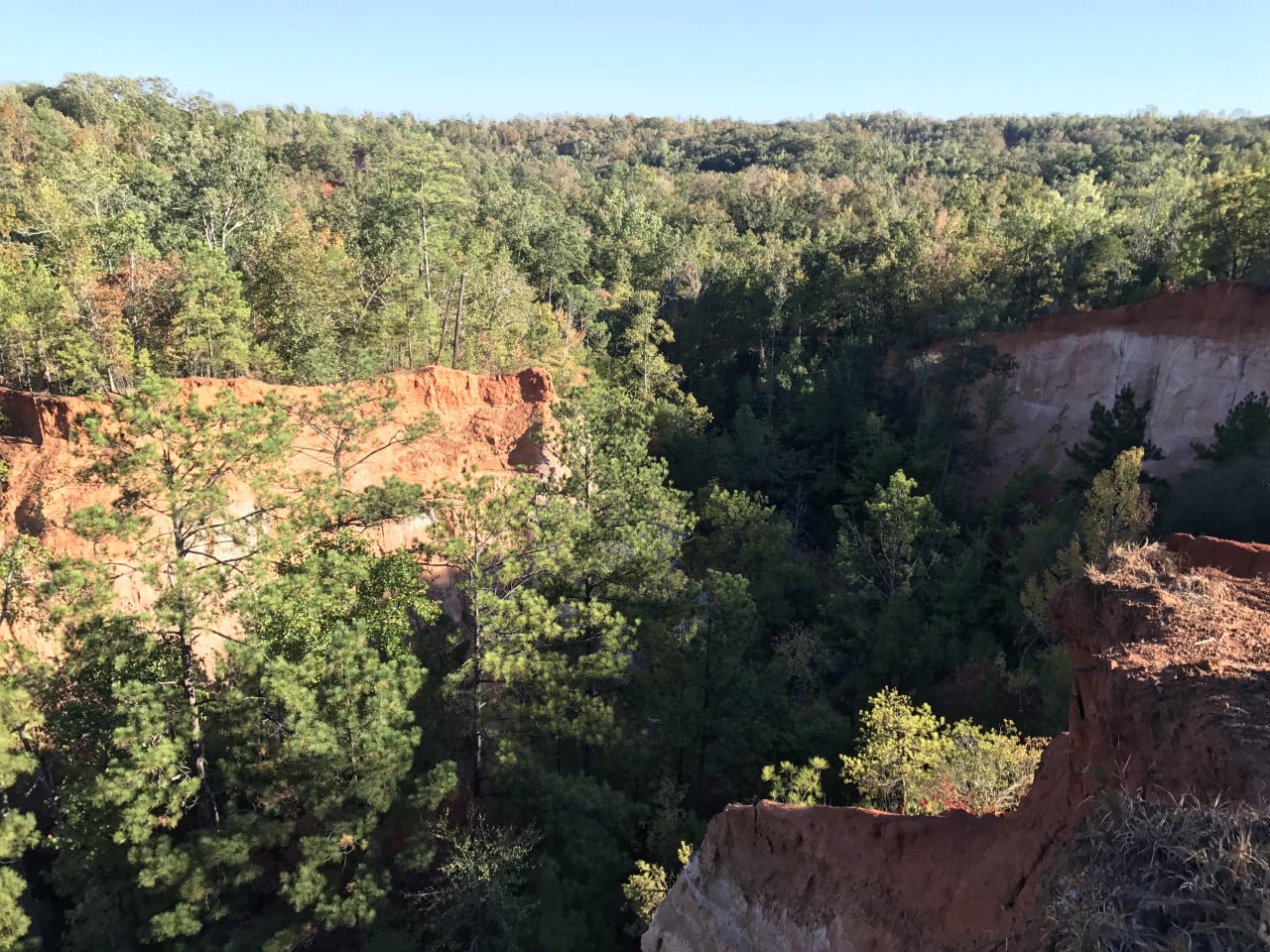
The park has several overlooks from which you can see the entire canyon system from above. These views are probably what people remember most about Providence Canyon—the contrast between the deep green pine trees and the raw red and white rock formations is truly exceptional.
Rare plants
One more interesting fact that I only discovered later: the rare Plumleaf Azalea (Rhododendron prunifolium), which blooms in July and August, grows in the park. Providence Canyon is one of only a few places in the world where this plant grows naturally.
Practical tips from my visits
If you are planning a visit, here are a few things worth mentioning:
-
The entrance fee is very modest—just a few dollars per vehicle. The park is operated by the state of Georgia.
-
The best times to visit are spring (March–May) and fall (October–November). Summers in Georgia are extremely hot and humid, and this is even more noticeable on the canyon floor. I visited during different seasons, and fall definitely had the most beautiful colors.
-
Bring water and a snack. There is no restaurant in the park, and there is not much in the surrounding area.
-
Wear shoes that can get dirty. Seriously. That red-orange clay sticks to everything.
-
Do not climb the canyon walls. The park prohibits it, but not because of the risk of falling—every such movement accelerates erosion and causes the canyon to expand more quickly. If we want this place to remain for future visitors, we need to stay on the marked trails.
-
Dogs are welcome, but they must be kept on a leash.
What always surprised me whenever I returned
When I first arrived at Providence Canyon, I was simply expecting a beautiful natural viewpoint. It was only later that I realized how unusual the story behind the park's creation really is.
It is actually a paradox—a place that people now admire for its natural beauty was created by an ecological disaster. It shows how quickly a landscape can change when we mistreat it. At the same time, however, it also shows how nature can find its way back and gradually “return”—today, the park is covered in forest, protected plant species live there, and the entire area feels peaceful and balanced.
Final thoughts
If you are ever in Georgia and want to see something out of the ordinary, I highly recommend Providence Canyon. It is not as monumental as the Grand Canyon in Arizona, but it has a certain charm—the contrast of colors, the peaceful surroundings, and above all, the unusual history behind its formation.
As a trip from Atlanta, it is an ideal full-day excursion, and children will enjoy it as well. Outdoor activity, an adventure in the canyon, abandoned cars, overlooks—something for everyone.
And if you like these kinds of “hidden” attractions that do not appear in every travel guide, Providence Canyon fits perfectly into that category. A place created by accident that is now among the most beautiful sights Georgia has to offer.