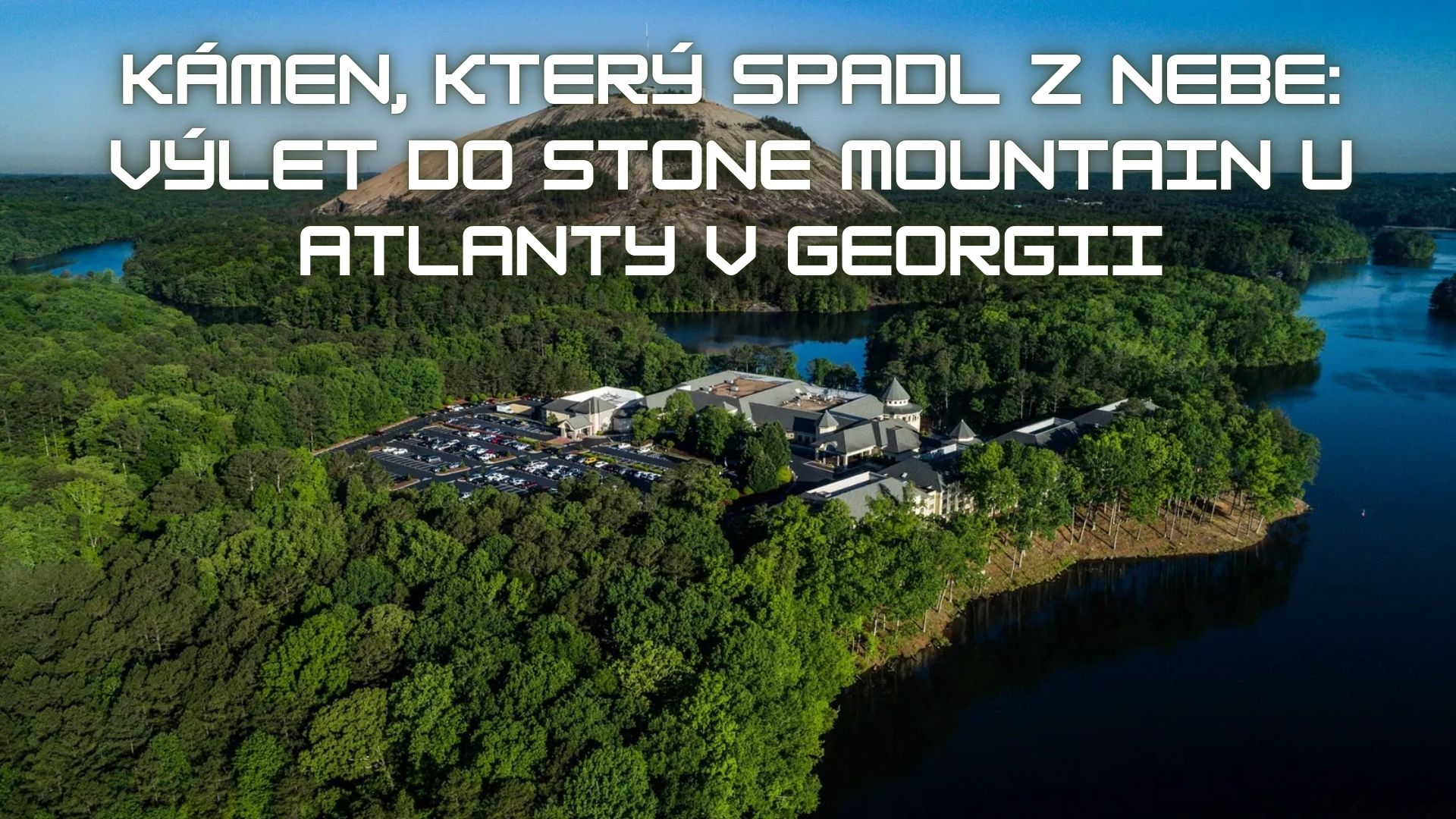
When I first visited Atlanta, a friend of mine – originally from the Czech Republic – took me on a trip to Stone Mountain Park, one of the most visited parks in the state of Georgia. It lies roughly 20 kilometers east of downtown Atlanta, and the journey there alone suggests that this place will be something special.
When you approach Stone Mountain for the first time, it is easy to get the impression that this enormous piece of rock does not belong here at all. In the middle of Georgia's flat, green landscape, a solitary granite colossus suddenly rises, with no mountain range around it. It almost looks as though someone dropped the rock here from above – or as if it came from another planet.
In reality, however, Stone Mountain did not fall from the sky; it only looks that way. It is the remnant of ancient geological processes that took place hundreds of millions of years ago deep underground. An enormous mass of granite formed beneath the surface and remained hidden under layers of other rock for millions of years.
Time, water, wind, and erosion then did their work. The softer rocks around it gradually disappeared, while the hard granite remained standing – isolated, exposed, and now visible in all its beauty. What we see today is actually just the top of an enormous body of rock that extends deep beneath the Earth's surface.
And that is precisely why Stone Mountain looks so out of place. Not because it fell from the sky, but because everything around it disappeared over time.
The entire surrounding area is typical Georgia flatland. Expansive forests, very few hills, and long horizons. This makes it all the more surprising when the enormous granite massif appears before you. At first glance, Stone Mountain looks as though it does not belong here at all – almost as if it had fallen from the sky or been deliberately “placed” in the landscape afterward.
The mountain gave the park its name and also dominates it. It is one of the largest exposed granite massifs in the world, rising about 250 meters above the surrounding landscape. Its smooth, occasionally cracked surface resembles an enormous stone slab that you can literally walk across.
There are three lakes around the mountain, attracting anglers during the warmer months. Fishing – like hunting – is a very popular local pastime in Georgia, so it is easy to soak up the authentic atmosphere of the American South here. The entire park is designed as a place for relaxation, sports, and family outings, and it gets really busy on weekends.
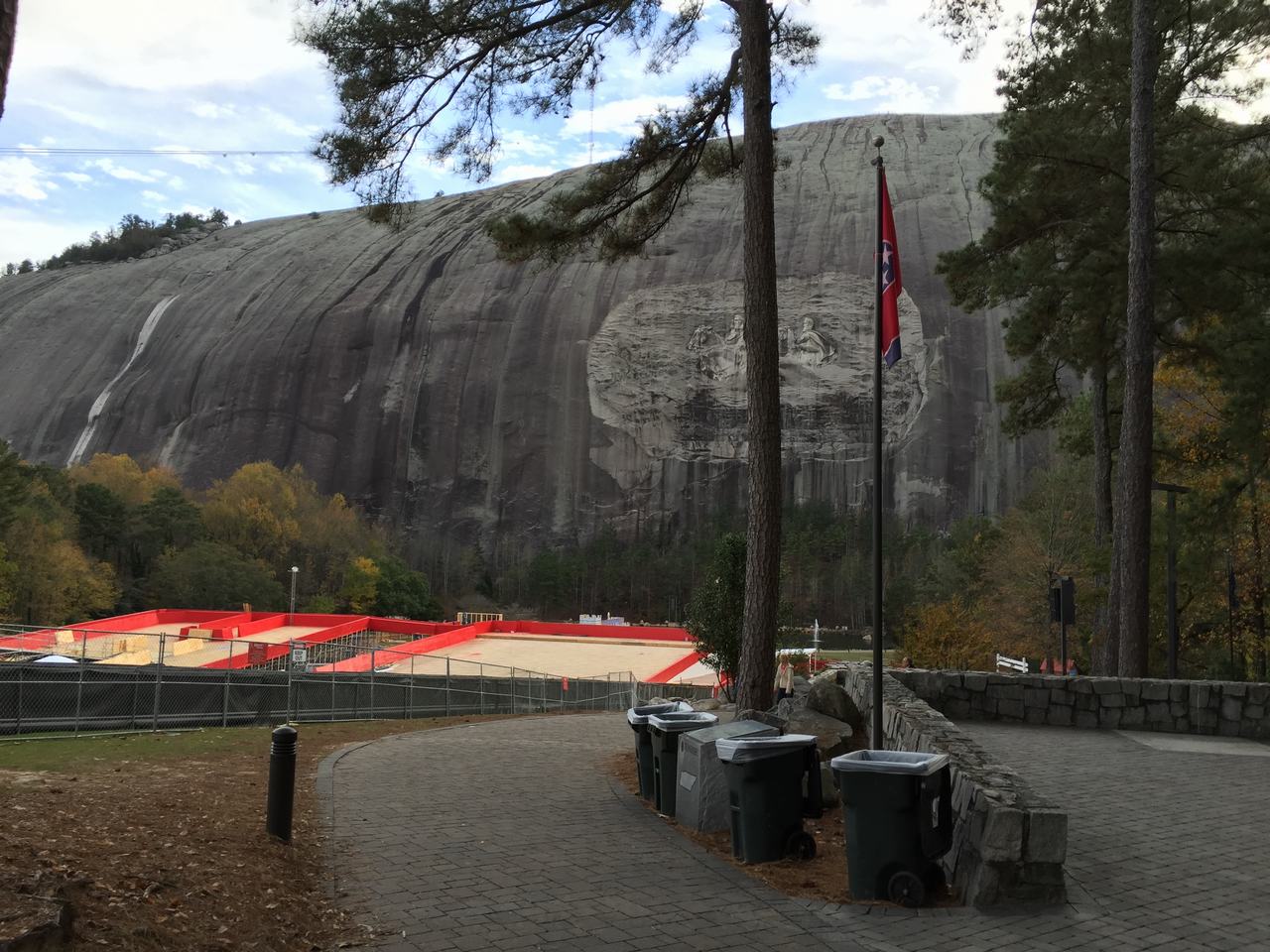
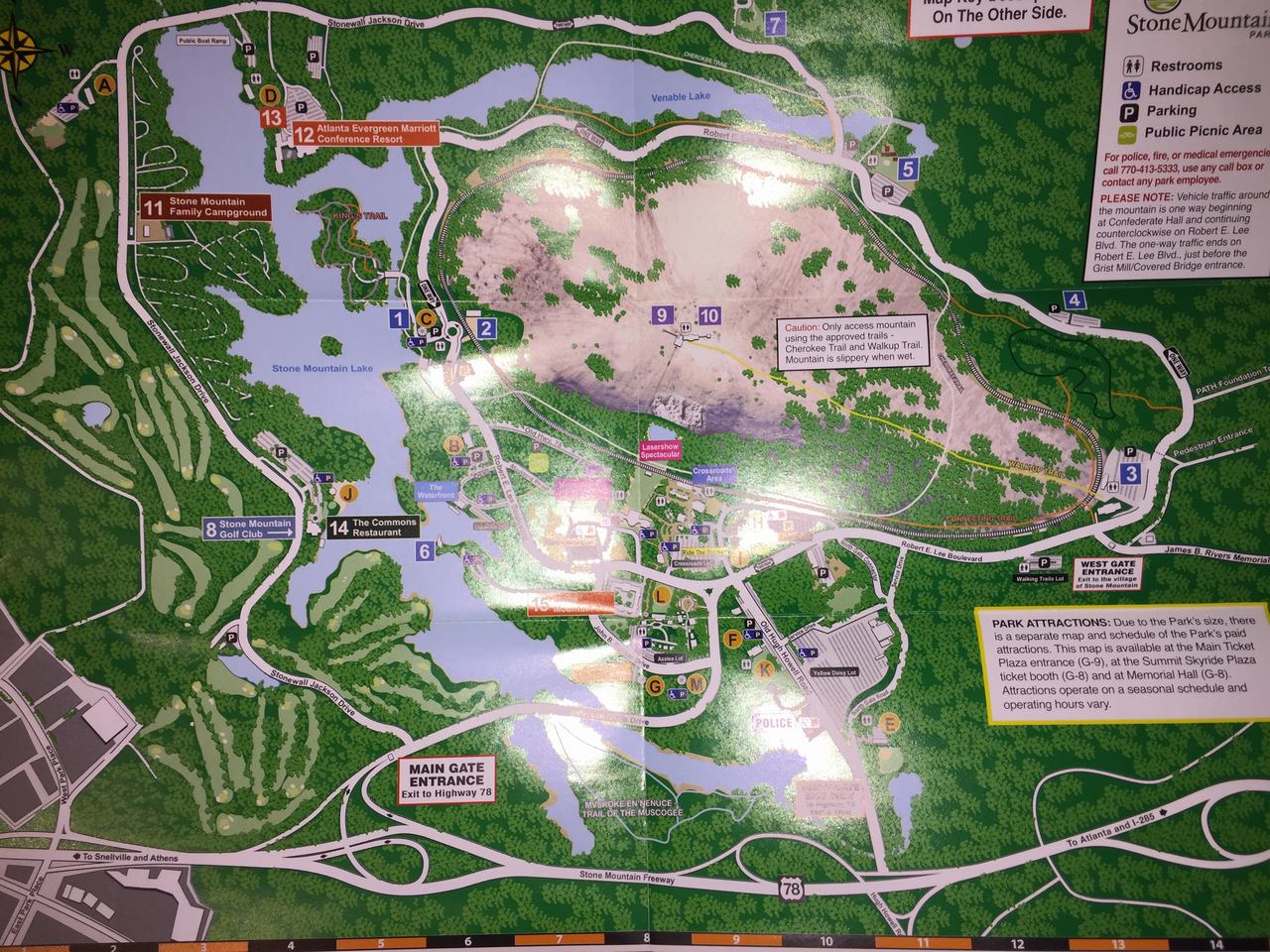
At the entrance, you pay an admission fee – either for a single visit or for an annual pass. You receive a map, and signs inviting you to the so-called attraction village greet you right at the entrance. There is almost always something happening here. During my last visit in November, the Christmas atmosphere was already in full swing – a Santa village, decorations, and even a snow tubing slope where people ride inflatable rubber “torpedoes.”

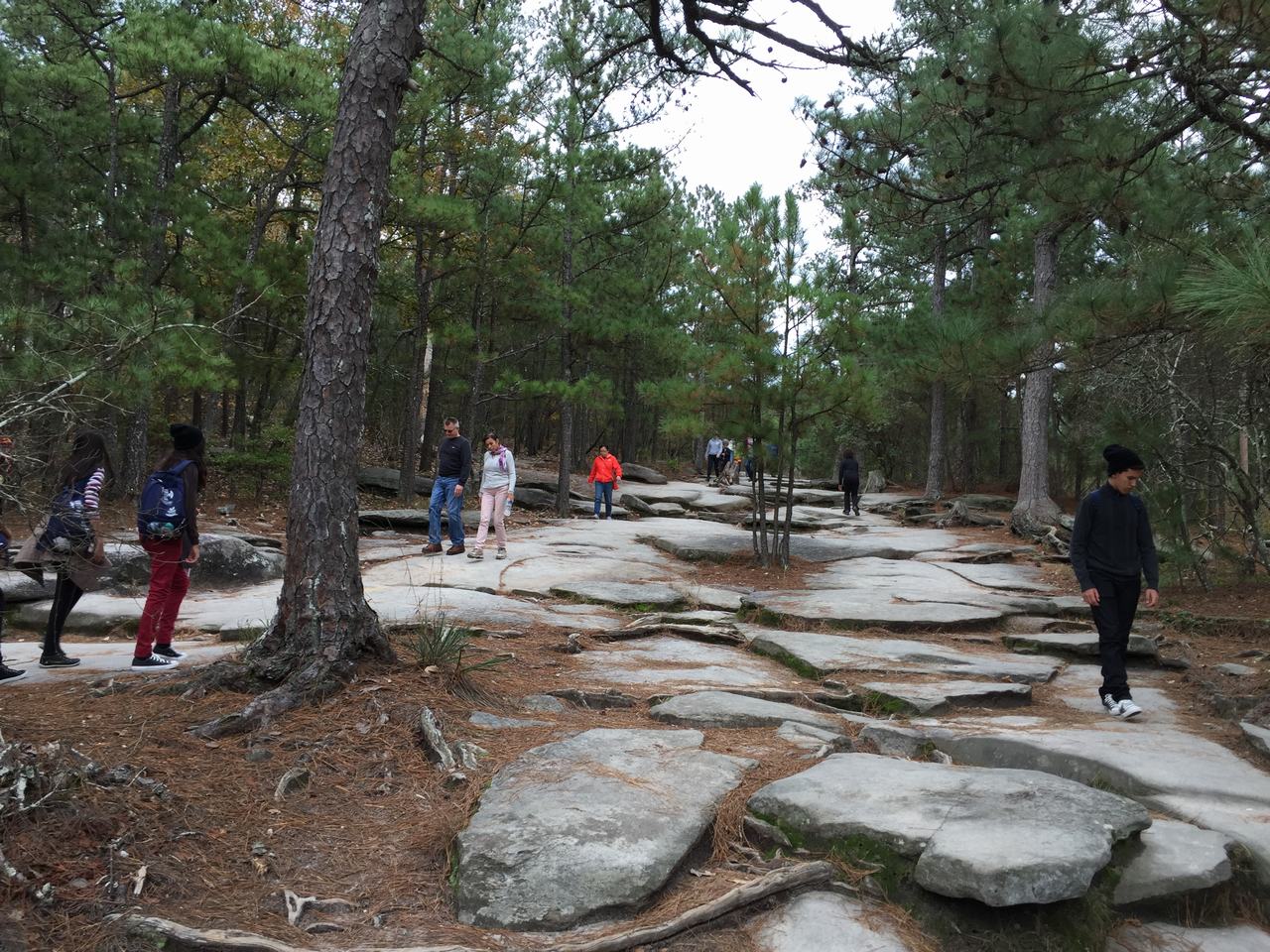
This time, I left the village to the children and headed straight to the parking lot, where the trail to the summit begins. The so-called Walk-Up Trail is not a traditional forest path, but rather a gradual ascent across bare granite. The entire time, you feel as though you are walking across an enormous rock. The trail is well marked and technically easy, so even families with children can manage it; you just need to be careful when it is wet – the rock can be slippery.
But first, a little history and some information about the rock relief: the Confederacy's largest stone “monument”
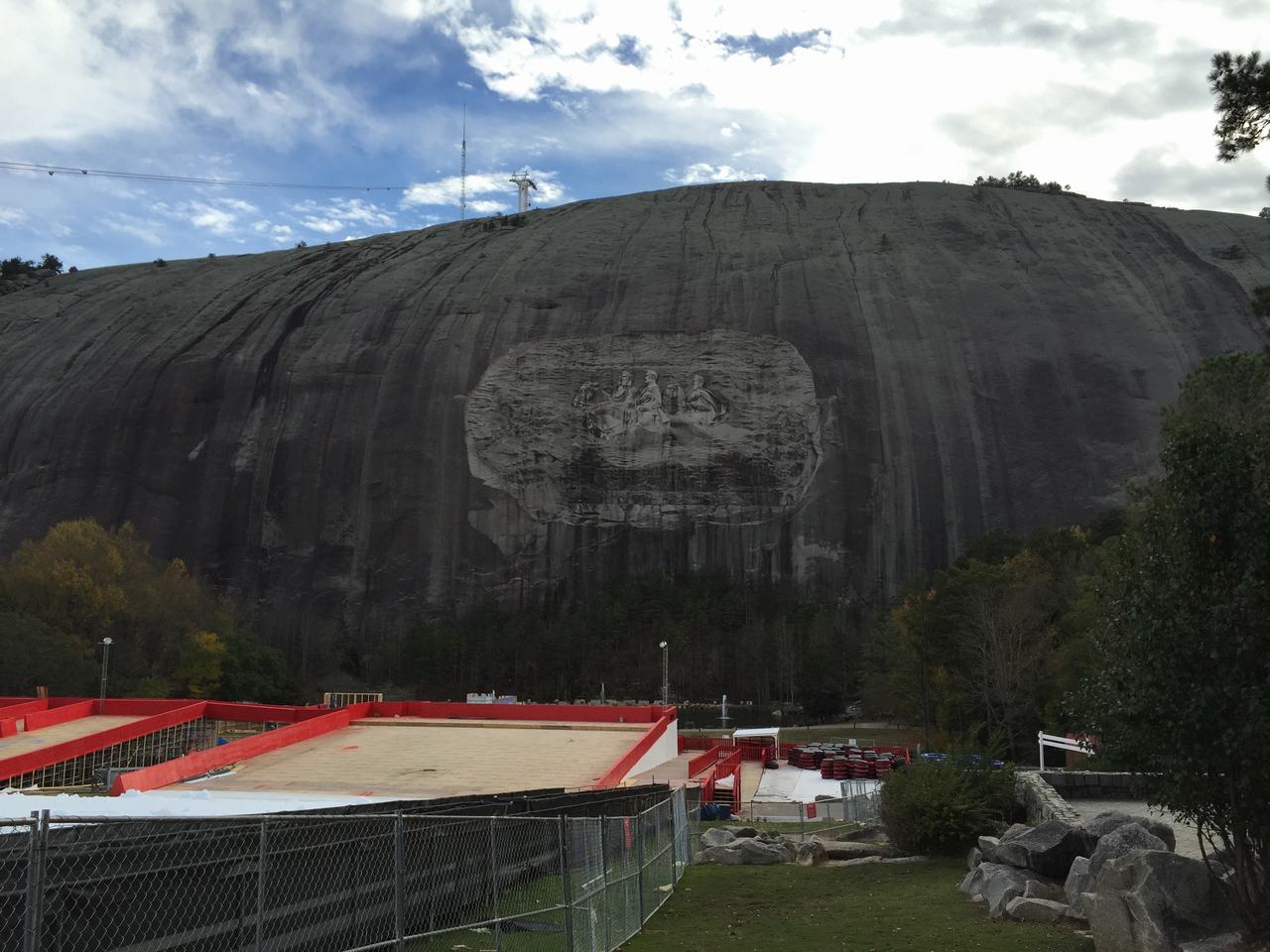
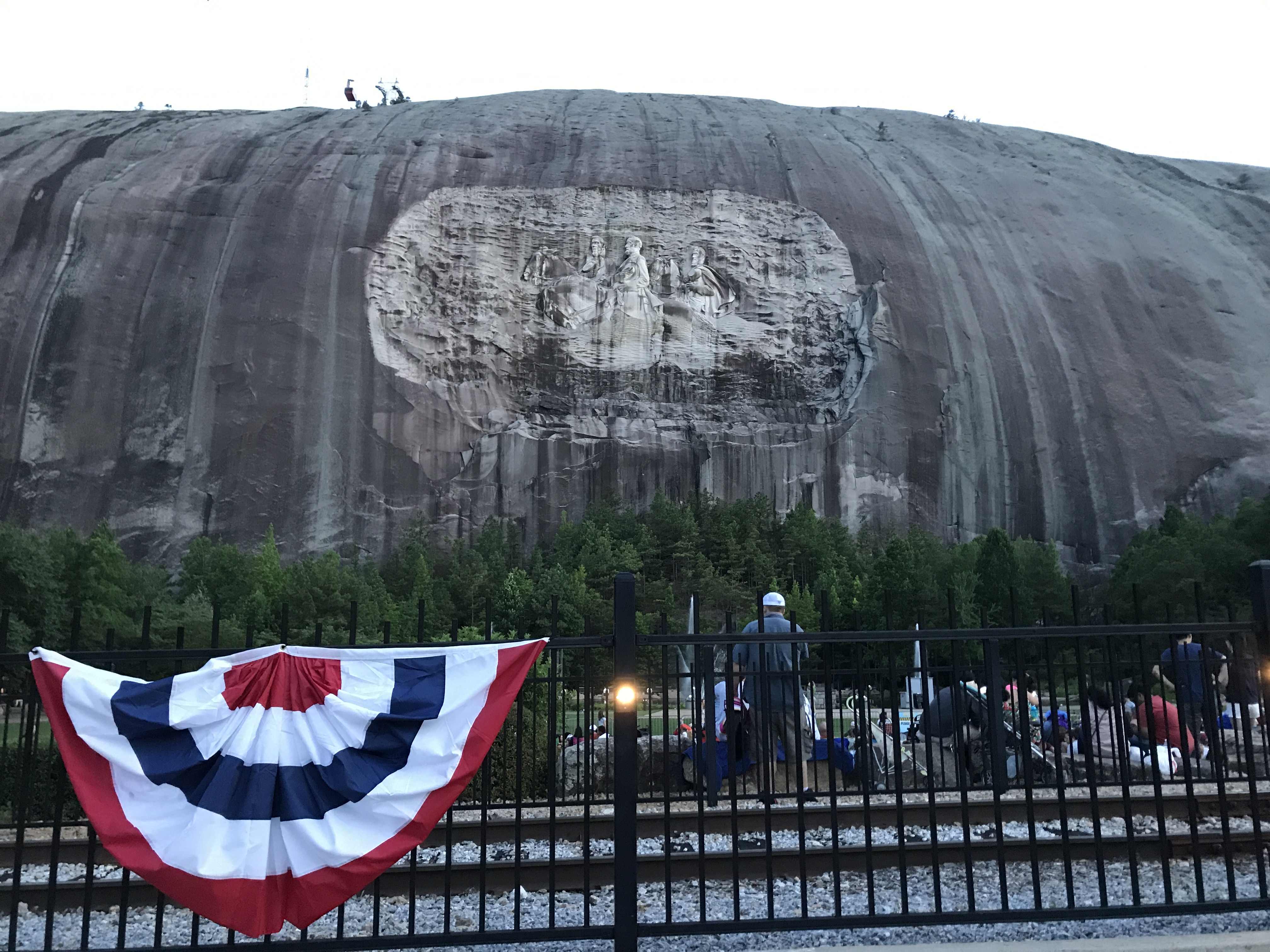
One of the things that is impossible to miss at Stone Mountain is the enormous carving directly in the rock. At first glance, it looks somewhat inconspicuous – especially from a distance or in poor light – but once you take a closer look, you realize its true scale. It is the largest relief carved into rock in the world.
The relief depicts three prominent figures of the Confederacy from the American Civil War: Confederate States President Jefferson Davis, General Robert E. Lee, and the legendary commander nicknamed “Stonewall,” Thomas J. Jackson. All three are depicted on horseback, and the entire scene is carved directly into the massive granite face.
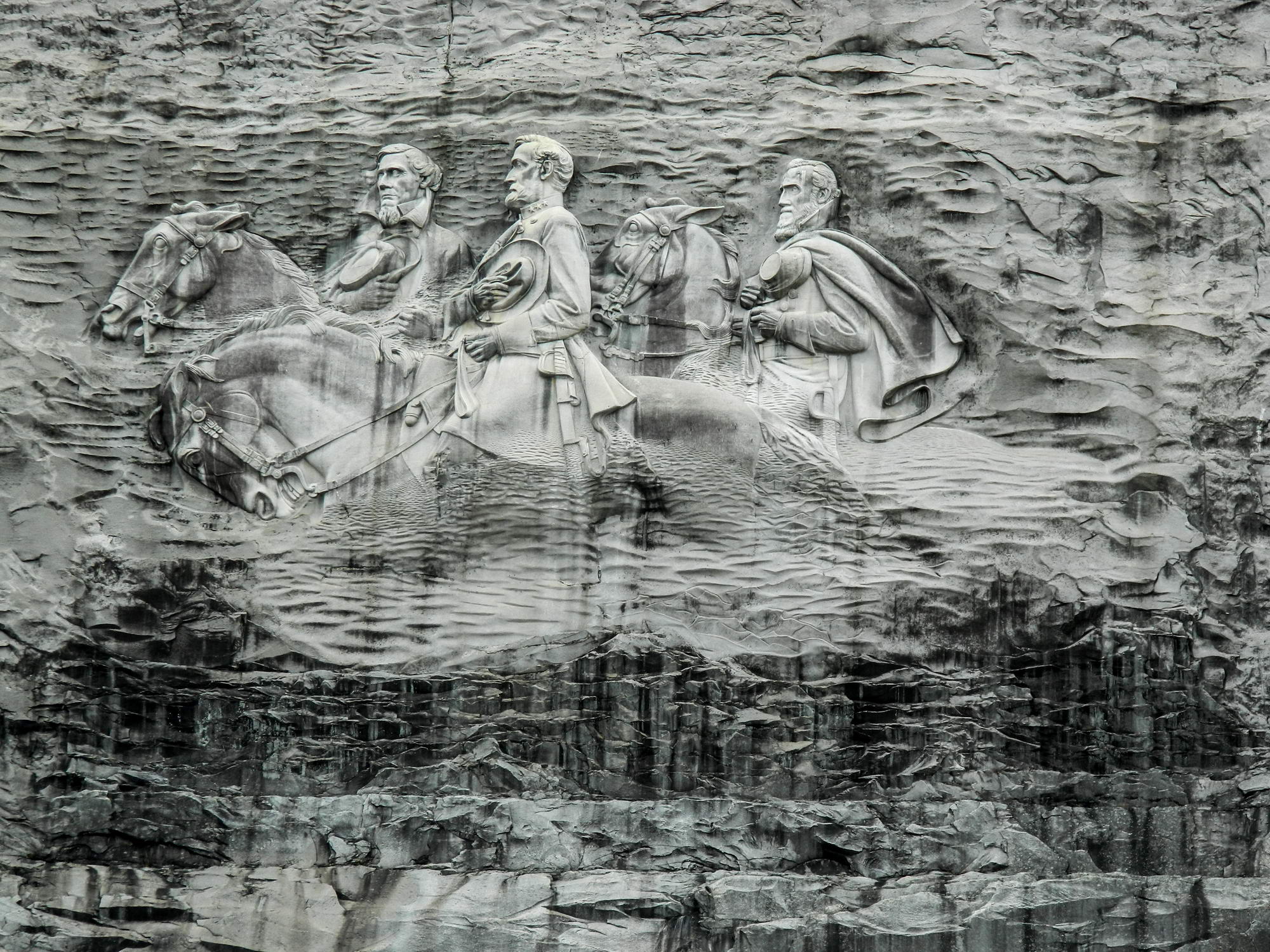
The dimensions are truly staggering – the relief is approximately 27 meters high and 58 meters wide. To put that into perspective, the carved figures are larger than the sculptures on Mount Rushmore. Up close, you can see how much detail the sculptors managed to carve into the stone, and it is difficult to imagine how demanding the work must have been on such a scale.
The first attempts to create the relief began as early as 1915, but the project was halted several times over the years – due to a lack of funding, technical problems, and changing public attitudes. The relief was not finally completed until 1972. That is also why it now feels somewhat like a relic from another era.
And this is where we come to the more sensitive side of Stone Mountain. The relief and the mountain itself have long been associated with the Confederacy and later also, as I mentioned, with the Ku Klux Klan, which symbolically revived its activities here. For some, it is a historical monument; for others, a controversial symbol. Today, the park tries to present itself primarily as a recreational area and a place for families, but this chapter of history is still clearly visible here – literally carved in stone.
Personally, I found this tension between nature and history particularly interesting. On one side, peaceful forests, views, and a place to relax; on the other, a powerful and far from simple story of the American South. Stone Mountain is therefore not just a pleasant destination for a day trip, but also a place that makes you stop and reflect for a moment.
How do you get to the summit?
And now back to the climb up Stone Mountain
It is an experience in itself. This is not a traditional mountain trail through a forest, but rather a gradual ascent across bare granite, smooth in some places and cracked with age in others. The entire time, you feel as though you are walking across an enormous stone slab. With every step, the surrounding landscape gradually opens up, and the trees remain farther and farther below you.
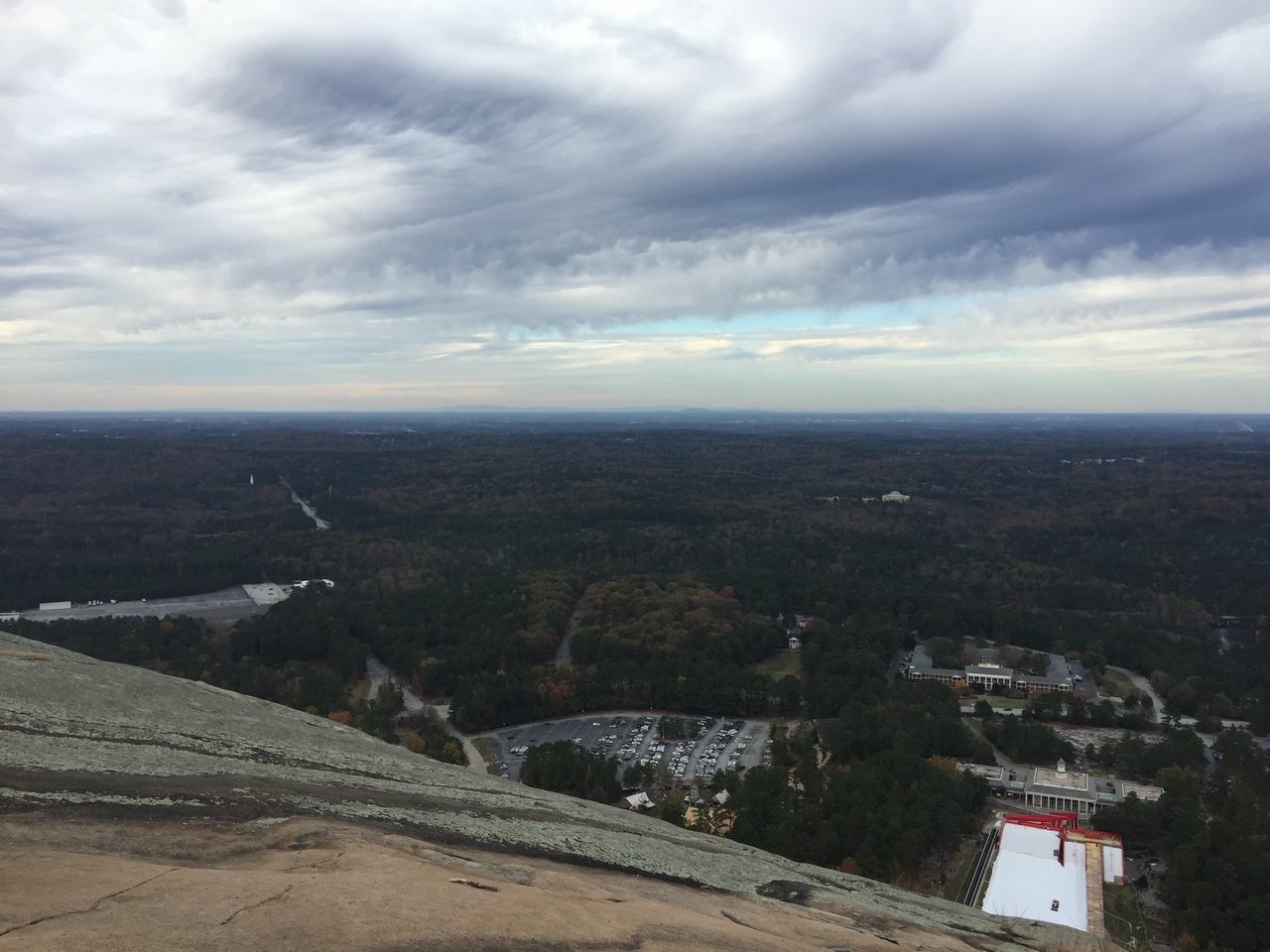
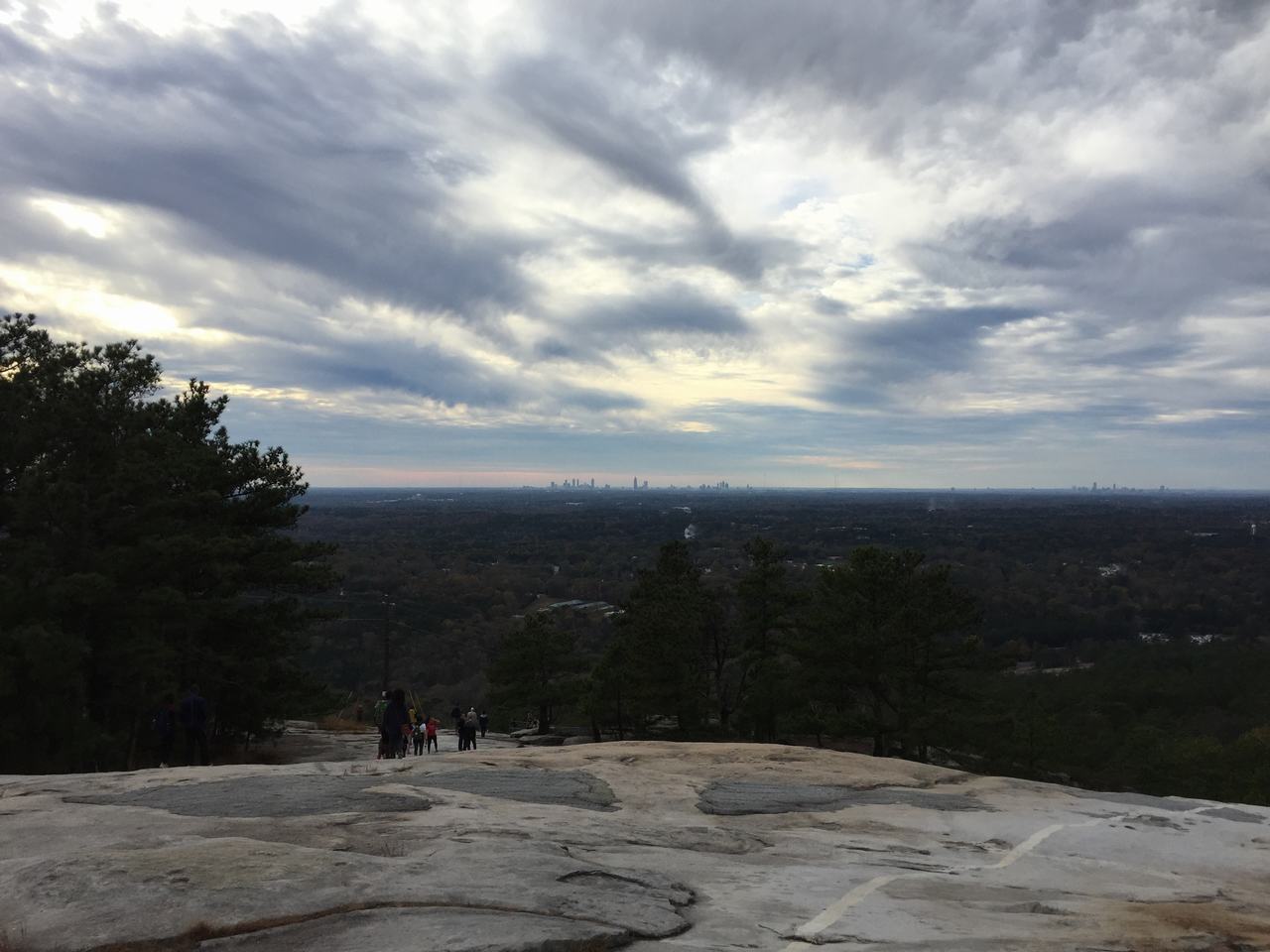
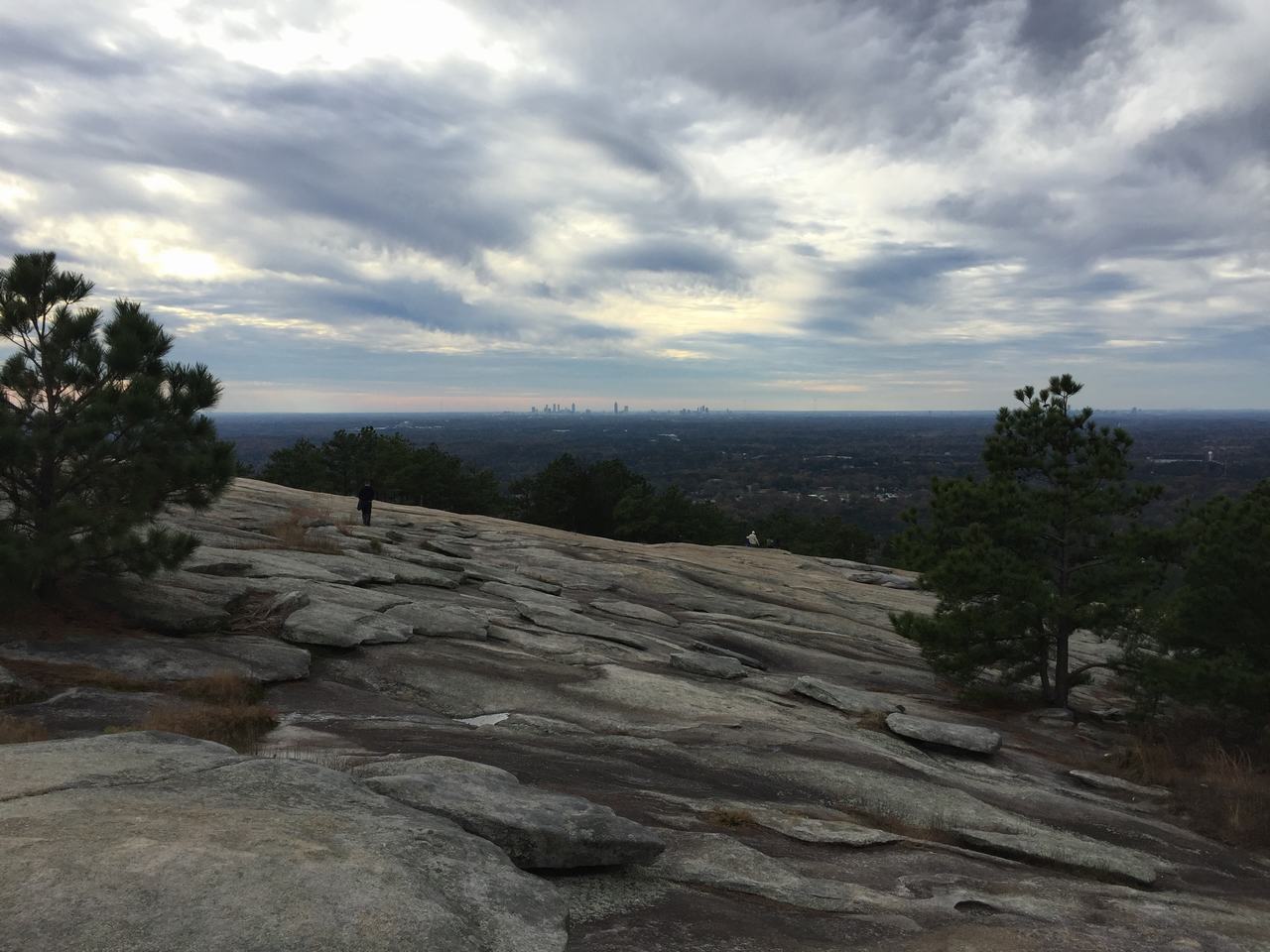
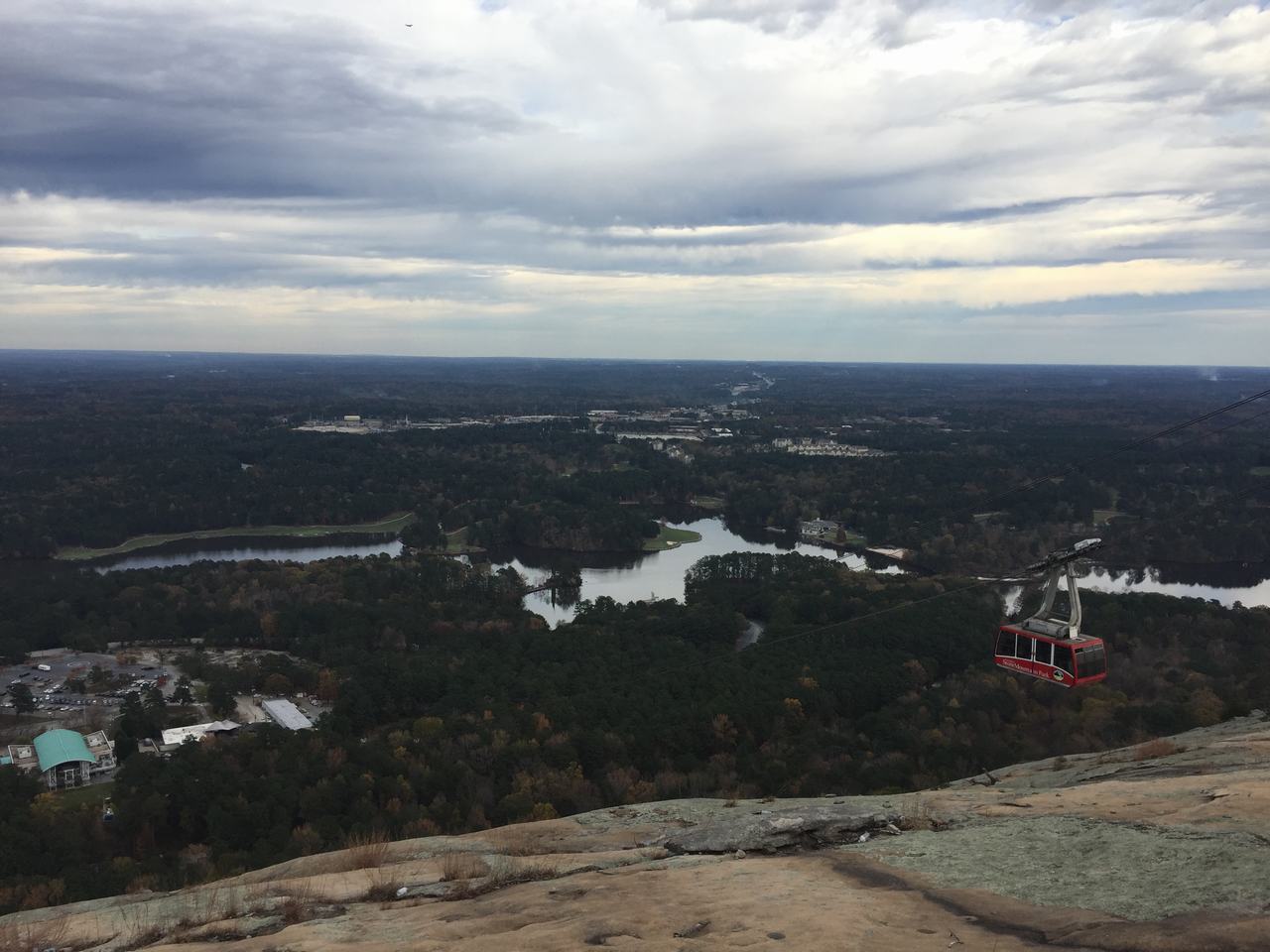
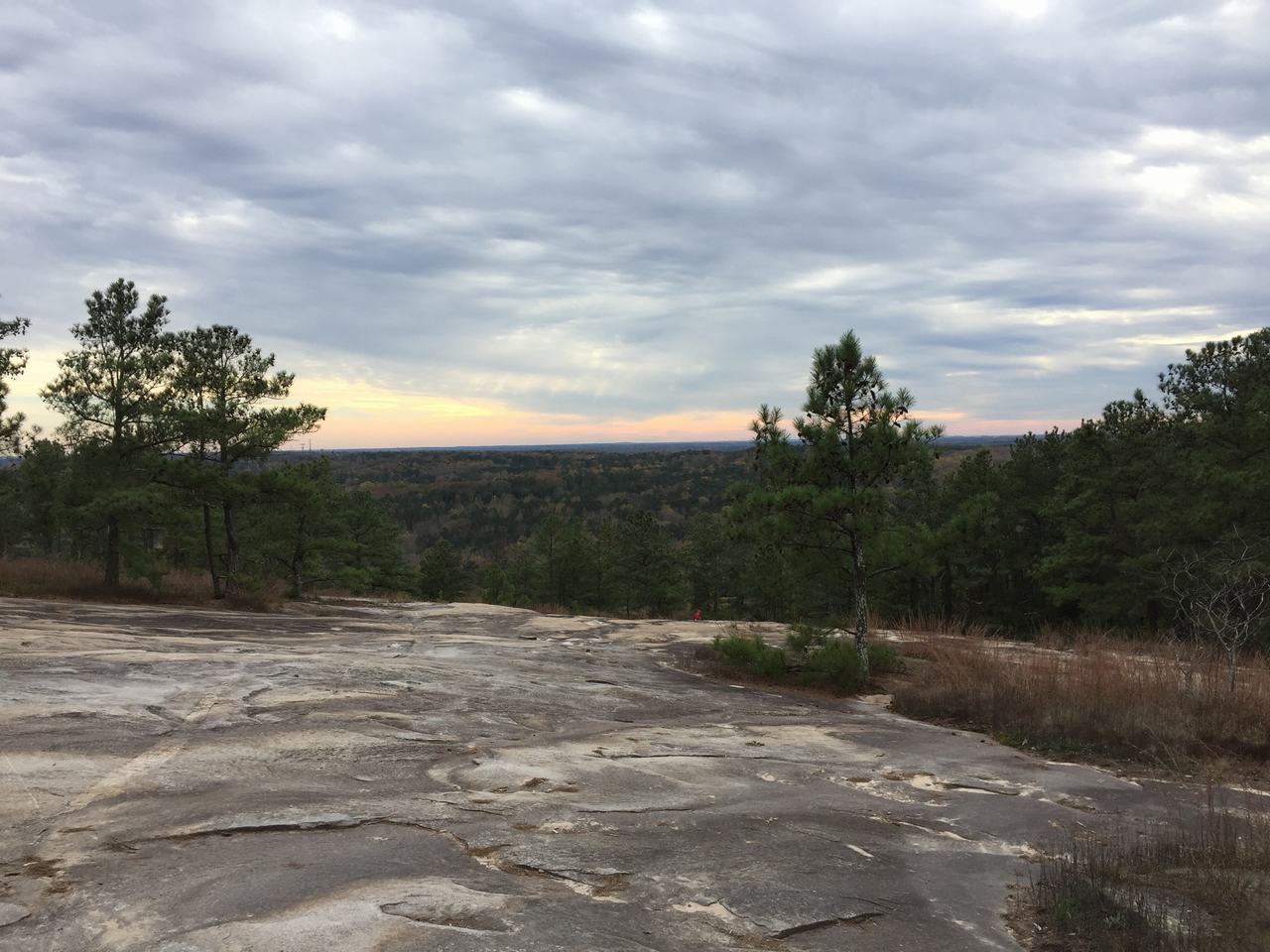
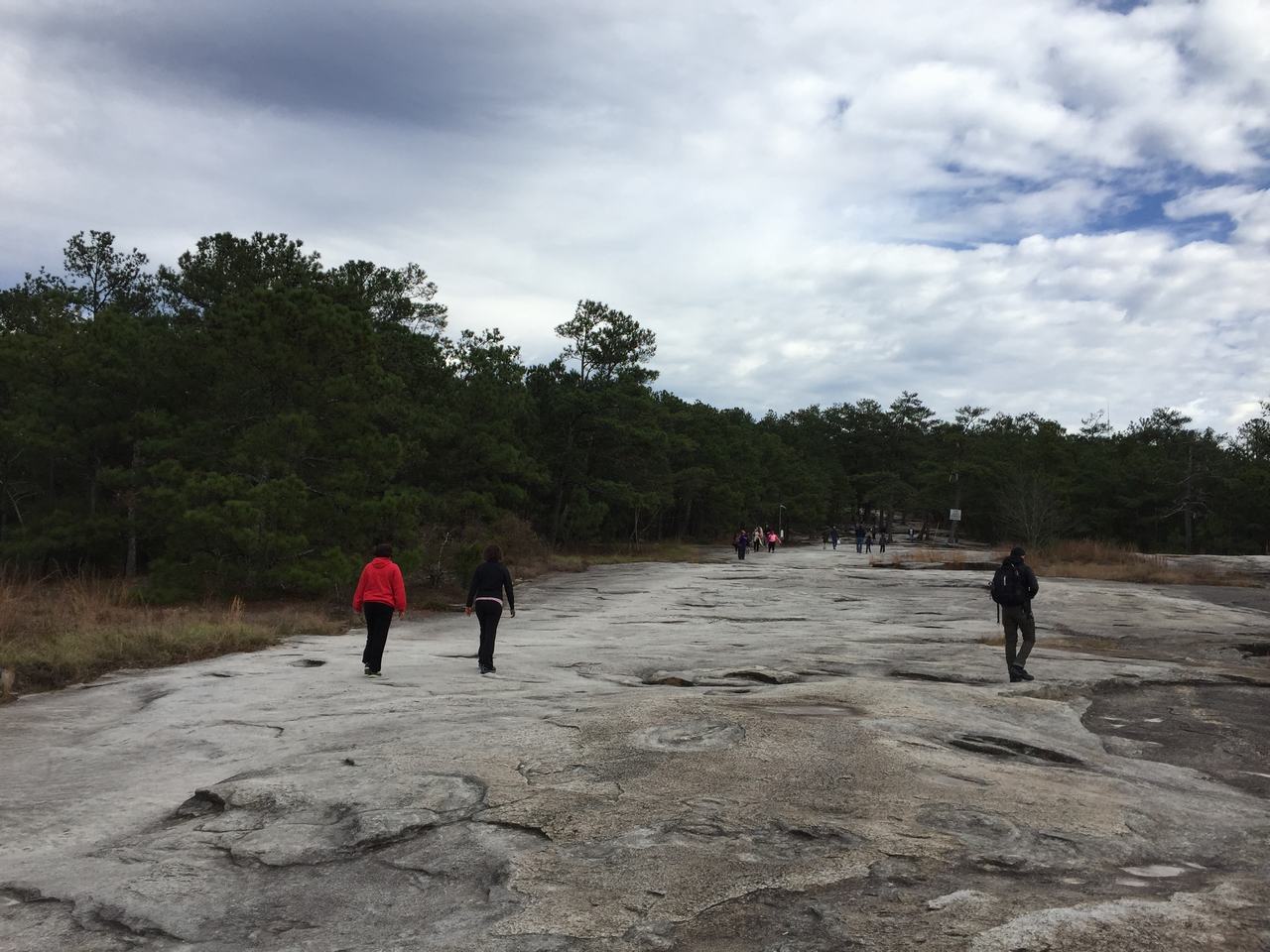
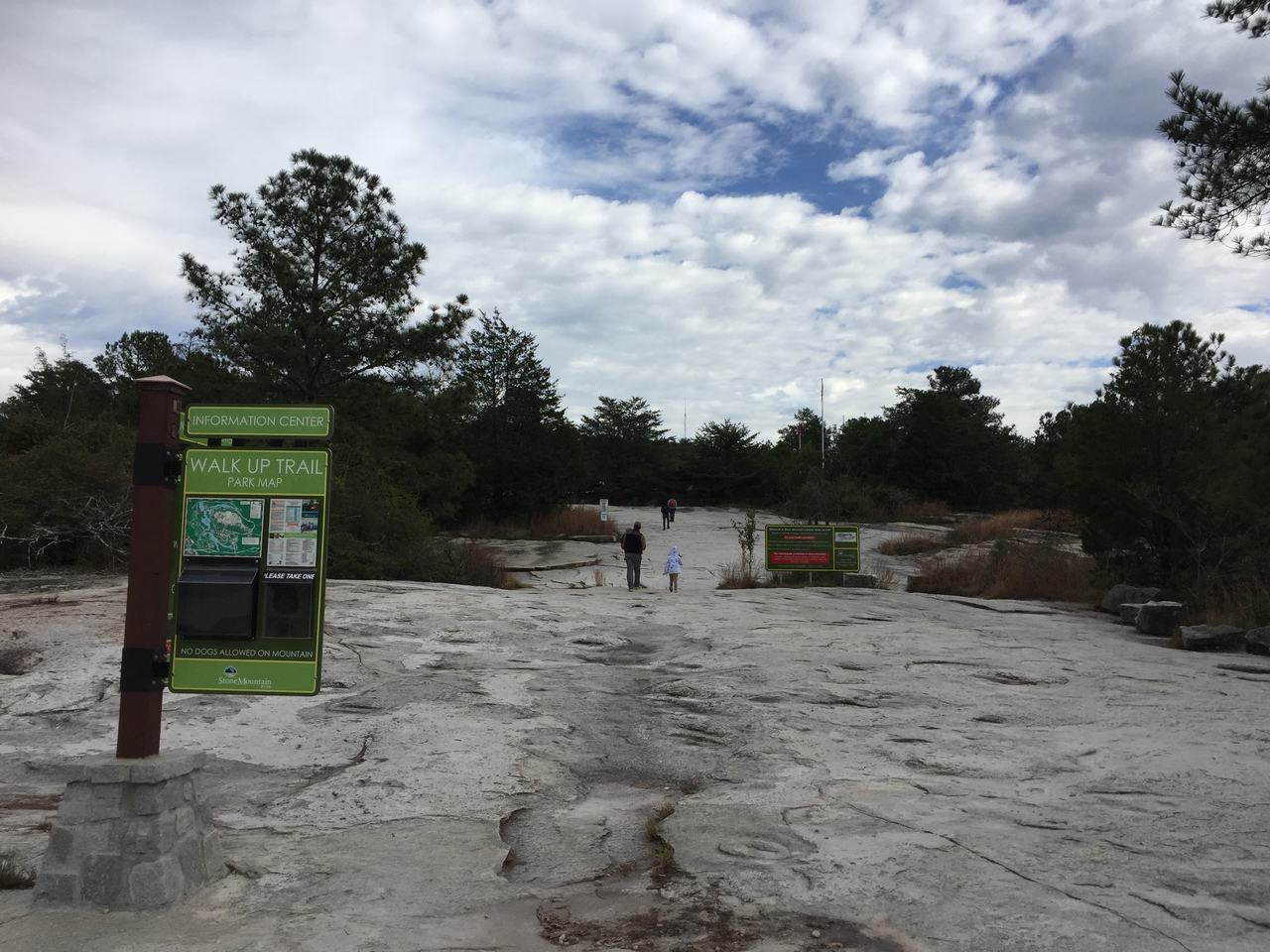
The trail is well marked and technically easy, so even families with children can manage it; you just need to bear in mind that the surface can be slippery in the rain or early in the morning. There are places where you can stop, catch your breath, and simply look around. And this is where you begin to realize just how incredibly green Georgia is. The forests stretch in every direction and seem almost endless.
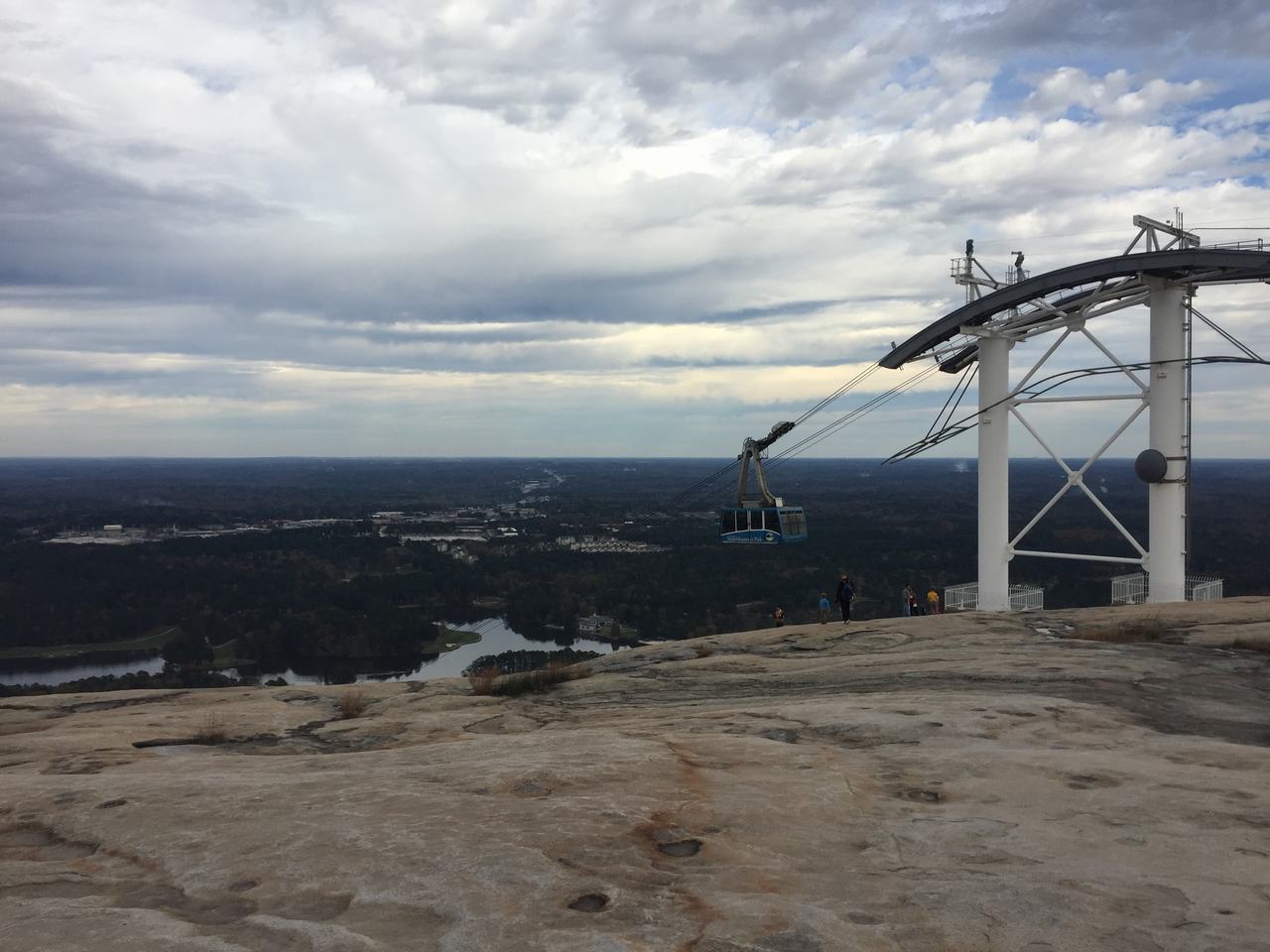
The higher you climb, the more expansive the views become. And then comes that moment at the top – the reward for the climb. When visibility is good, the downtown Atlanta skyline appears before you, with the skyscrapers on the horizon looking almost as if they were cut out of another world. The city is far away, yet still clearly visible, creating a beautiful contrast with the nature all around.
The view down into the green sea of trees is equally beautiful. Georgia truly is a “green state,” and that is doubly true here. No dramatic mountains, no sharp peaks – just a peaceful landscape, forests, and an endless horizon. It is no wonder that many people simply sit down on the rock, take out a snack, and silently gaze into the distance.
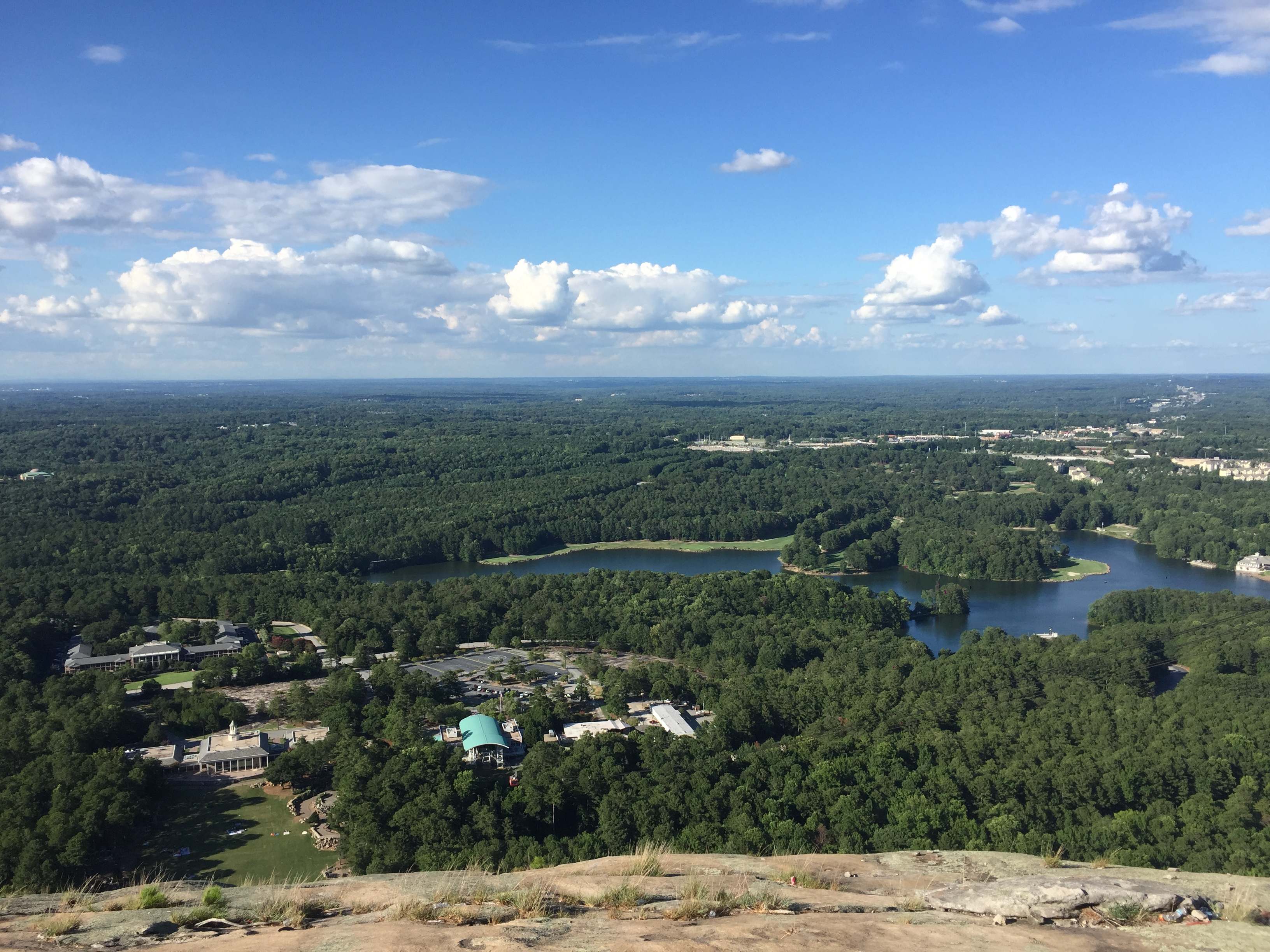
There is a special sense of calm at the top, even when plenty of people are around. Everyone finds their own spot here – some take photos, some relax, and others simply sit and enjoy the view. And that may be the most beautiful thing about Stone Mountain. It is not just a “tourist attraction,” but a place where you can pause for a moment and simply be.
And a few more photos to finish off :).