OpenAI in Chaos: Former Engineer Describes Internal Turmoil
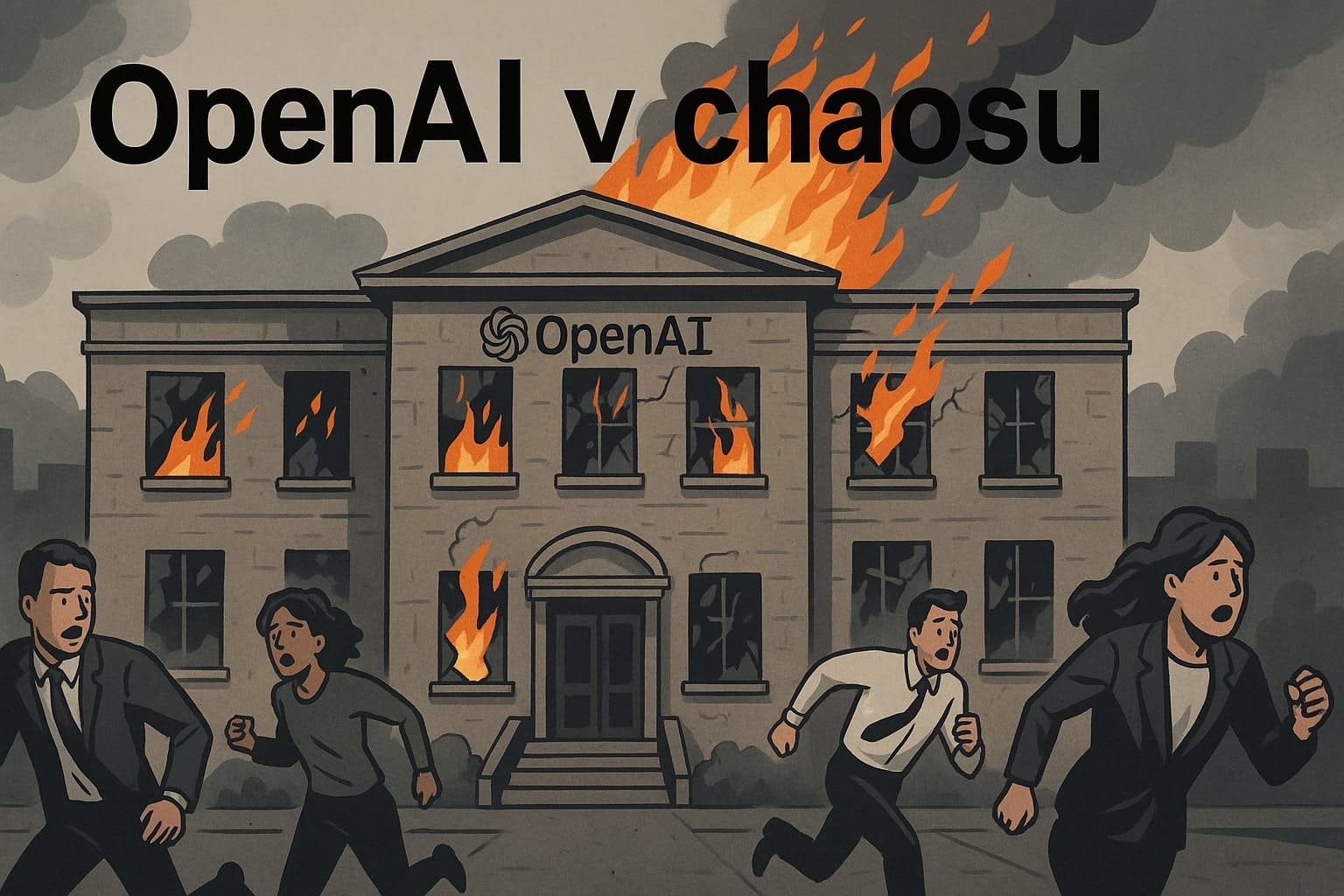
Imagine a company that transformed from a small nonprofit project into an artificial intelligence giant in just a few years. That is the story of OpenAI, where rapid growth has brought not only success but also considerable confusion. Former engineer Calvin French-Owen, who helped build the new coding agent Codex, decided to share his experiences in a blog post. It was not a dramatic personal departure—he simply wanted to describe what things are like inside the company. And the word "chaos" is no exaggeration here. Let us examine the details that reveal why OpenAI is a place full of rapid decisions, duplicate systems, and constant change.
Rapid Growth and Chaotic Leadership
Calvin French-Owen describes how OpenAI grew so quickly that nearly everyone in leadership is now doing a completely different job than they were two or three years ago. The workforce expanded many times over, causing fundamental things to break down: company-wide communication, organizational structures, methods for delivering products, people management, and even hiring processes. "Everything breaks when you scale this quickly," French-Owen writes. Employees were encouraged to "just do things," but the company changes direction at a moment's notice, echoing the famous approach of Meta's Mark Zuckerberg—move fast and break things. OpenAI makes decisions quickly, and when it commits to a direction, it goes all in. This leads to an intense pace, with features released one after another to keep the billion-dollar train moving.
This chaos is nothing new. According to related information online, such as the events of November 2023, when Sam Altman was suddenly fired as CEO, the internal turmoil became fully apparent. Engineer Nathan Lambert, who witnessed the aftermath, recalls receiving the news during a conference and immediately feeling shocked: "I got a text or a Slack message, and I was stunned." OpenAI employees had to retreat to a glass-walled room for an emergency call. The incident triggered panic, strong emotions, and a threat that hundreds of employees would leave unless Altman was reinstated. Approximately 500 of the 700 employees signed an open letter containing this threat. This shows how quickly internal tensions can erupt into a full-blown crisis.
Problems with Code and Decision-Making
One of the key details French-Owen mentions is the absence of a central architecture or planning committee. Decisions are made by the teams planning the work, which leads to a strong focus on action but also to duplicate sections of code. "I saw half a dozen libraries for things like queue management (task scheduling) or agent loops," he writes. This means that instead of a unified system, repetitive components are created, complicating maintenance and efficiency. The company focuses on speed, but that creates confusion in its code and processes.
Another interesting aspect is the influence of social media. OpenAI pays close attention to Twitter (now X, Elon Musk's platform). If someone tweets something related to OpenAI and it goes viral, there is a good chance that someone at the company will read and consider it. This shows how external feedback influences internal decisions, adding another layer of unpredictability. From available information, we know that Altman's dismissal was followed by several leadership changes within just a few days—including the appointment and replacement of interim CEOs. Microsoft, the main investor, was informed only shortly before the public and quickly hired Altman and former president Greg Brockman for a new AI (artificial intelligence) research team. This move revealed deep divisions within OpenAI, described as a clash between "ambitious optimists" and "cautious realists."
High Stakes for the Future
French-Owen describes OpenAI as a place that has become "very secretive" and "more serious" than before because the stakes are truly high. The company introduced security measures such as fingerprint scanners, indicating growing paranoia. Nevertheless, he says it retains its "startup spirit"—the energy of its early days. But what does that mean for the rest of the world? People outside the company can only watch as this chaos affects their lives and careers through technologies such as ChatGPT.
From other sources, we know that the crisis following Altman's dismissal was described as one of the most dramatic moments in recent tech history. Regardless of whether Altman stayed or left, OpenAI faced 6–12 months of chaos, talent losses, and restructuring. Microsoft's role showed how the turbulence spread throughout the AI industry. This story demonstrates that behind the shiny facade of innovation lies the reality of rapid growth: chaos that tests the limits of both the company and its people. If you are interested in artificial intelligence, keep an eye on OpenAI—their story is a roller coaster that has not ended yet.