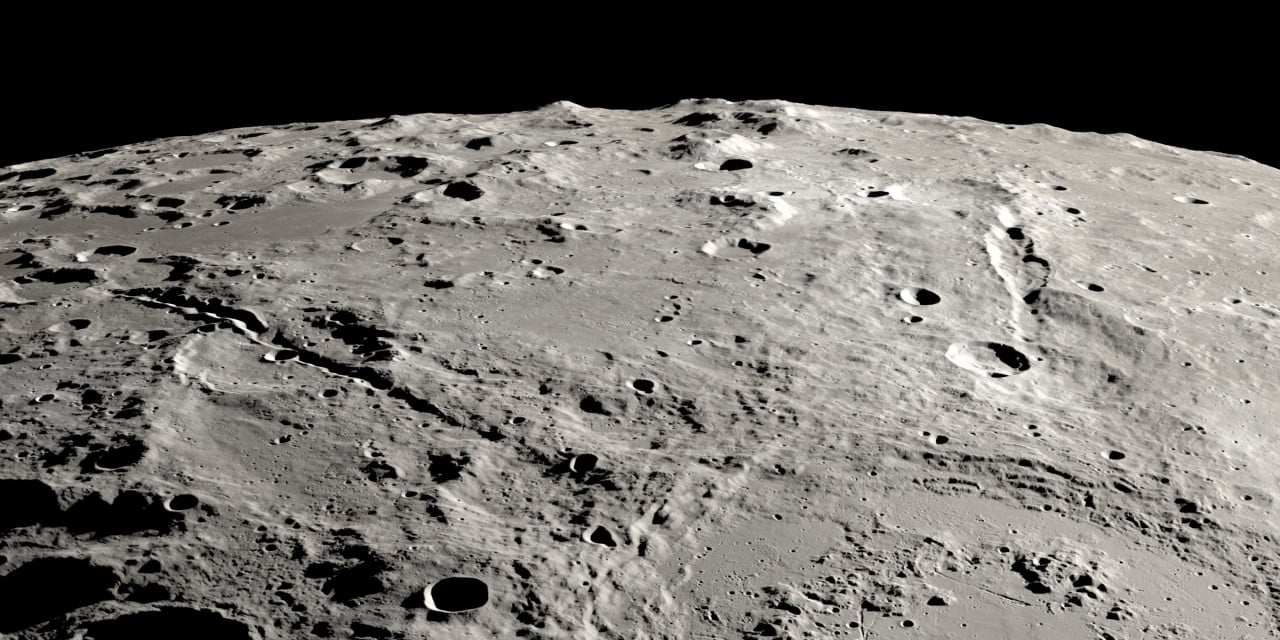
Nvidia is expanding the list of places where its chips operate, now reaching beyond Earth’s orbit. American startup Lunar Outpost, which builds robots for constructing infrastructure in space, has announced that its next lunar rover will use Jetson chips to control its lidar. It will most likely be the first graphics processor ever to operate on the surface of the Moon. The launch is scheduled to take place before the end of the year aboard a Falcon 9 rocket.
The rover will learn to understand its surroundings
Jetson is not among Nvidia’s best-known products. Data center powerhouses such as Blackwell and Vera Rubin attract more attention, while Jetson forms the foundation of a range of so-called physical AI systems. It is small, energy-efficient, and allows robots to process sensor data on-site, enabling them to understand the world around them and respond much faster.
That is exactly what the lunar rover needs. Lidar scans the terrain, but the data itself has no value until it is evaluated. When the calculations take place on board, the rover does not have to consult Earth about every step or wait for a response.
Lunar Outpost CEO Justin Cyrus explains that the company is directly comparing Jetson with its own flight computing platform, which has a longer track record in space. It wants to find out what the new setup does better and where it falls short, while working to bring more powerful graphics-chip solutions into an environment where technology commonly fails.
AI joins deterministic models
Cyrus says that five years ago, their autonomous decision-making system was far more deterministic, whereas today it combines fixed rules with physical AI. For now, both operate in parallel, and the engineers’ task is to identify where artificial intelligence genuinely adds value.
It may sound boring, but this is precisely what determines how much a robot on the Moon can afford to improvise. Hard-coded logic is predictable and can be tested on Earth. A model that makes decisions based on what it sees can handle situations no one anticipated. After all, the crater a rover finds itself in rarely resembles a simulation.
Hostile conditions
Operating graphics chips in space is difficult in itself. Most of those currently working in space are in low Earth orbit, where they are relatively protected from radiation and extreme temperature fluctuations. The Moon offers no such luxury: cosmic radiation strikes it directly, and temperatures change dramatically over the course of its phases. The technology must survive the lunar night, even with very low power consumption. A night on the Moon lasts roughly two weeks, can freeze electronics, and leaves solar panels with nothing to collect.
If the chips pass this stress test, engineers expect their rovers to be capable of more, particularly evaluating their surroundings faster and making decisions more independently.
The rover’s mission
The new rover will travel aboard a lander from Intuitive Machines, another company focused on the Moon. The rover is intended to carry a suite of sensors into craters and to places that cannot be explored from orbit. A subsequent mission will then head to an area called Reiner Gamma, where a magnetic anomaly has long puzzled scientists.
The entire program operates under the auspices of NASA, which pays private companies to explore the surface before humans return to the Moon. That could happen as early as 2028. The agency is taking an approach similar to its collaboration with SpaceX, commissioning technology companies to build machines capable of delivering scientific instruments to the Moon, mapping the terrain, and searching for substances such as water that could potentially be put to practical use.
The rover is not the only place Nvidia is sending its chips. It recently announced a partnership with Firefly Aerospace, the first private company to successfully land a robot safely on the Moon. Jetson will operate there aboard a satellite in lunar orbit and process images. The data is intended to help scientists with mapping, while also tracking the growing number of robots moving across the surface.
A robotic workforce to prepare the ground for humans
NASA has ambitious plans for a permanent human presence on the Moon, but it cannot achieve them without autonomous machines to handle the hardest part of the work. And that is exactly the role Lunar Outpost sees for itself.
Cyrus explains that the company is now addressing the transition from exploration to permanent settlement—in other words, how to actually build a base on the Moon. According to him, combining fixed models with a layer of physical AI is what will make it possible to sustain a long-term human presence in space, because doing so will require a robotic workforce.
Over the next few years, the company plans to send several smaller autonomous rovers to the Moon, along with one large vehicle named Pegasus, which is intended to transport astronauts. Pegasus, however, is waiting for a rocket from Jeff Bezos’s space company Blue Origin, which had an accident this summer, so it is unclear when it will return to service.
Cyrus adds that things appear to be going well on the launch pad. He cannot comment on Blue Origin’s or NASA’s schedules, but according to the information his company is receiving, 2028 remains the target. The vision of data centers in orbit and robots working on the Moon therefore depends on the same thing: a larger rocket.
Source: techcrunch.com