Recently, I was looking through a list of honorary Texans. It is quite a long list. Only about a tenth of them would be known to most Texans.
John Wayne—no surprise there; the only surprise is that it took until 2015 for him to be named one. Chuck Norris, born in Oklahoma, became an honorary Texan in 2017. Governor Rick Perry granted honorary Texan status to many of his favorite political allies, including Rush Limbaugh, Sean Hannity, Sarah Palin, and Glenn Beck. On the other hand, George W. Bush named Bob Dylan an honorary Texan. Ann Richards honored Don McLean, Bob Hope, and Arnold Schwarzenegger, among many others. Alan Shivers granted honorary Texan status to General Douglas MacArthur.
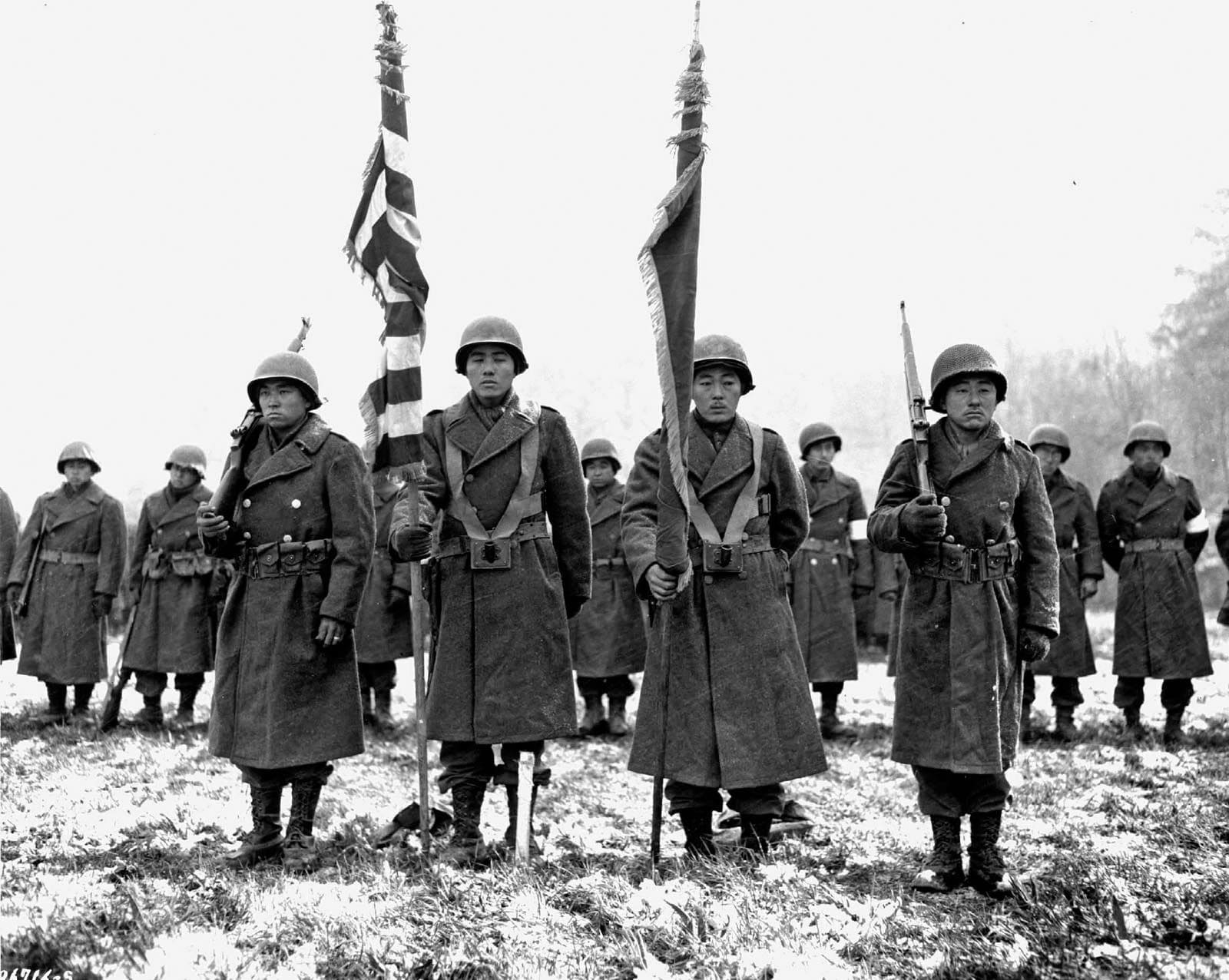
One instance strikes me as the most surprising and, in my opinion, the most deserved of these honors: when Governor John Connally granted honorary Texan status to thousands of men at once in 1962. He named the entire 442nd Regimental Combat Team and the 100th Infantry Battalion, Company C, of the U.S. Army during World War II honorary Texans. With the help of Scott McGaugh's book Honor Before Glory, I decided to tell the story of how this came about.
Our story must begin with the First Battalion of the 141st Infantry Regiment, which originated in the Texas National Guard. They came to be nicknamed the “Alamo Regiment.” In 1944, they were at the forefront of the campaign to drive the Germans out of France. They had plenty of support during the campaign, but they advanced so quickly through the Vosges Mountains that they found themselves cut off and surrounded behind enemy lines.
The only good thing for the Texans was that they were on top of a mountain and had the classic advantage of higher ground and a good view. Even so, the Germans shelled them with artillery. It was foggy, rainy, and cold. They quickly dug fighting positions in the wet, muddy ground and covered themselves with tree branches, rocks, and earth. They did everything they could to protect themselves from splinters from trees struck by artillery and shrapnel from exploding shells. But they were also running out of food and water. Several exceptionally brave pilots managed to fly through the rain and fog and drop supplies of water-purification tablets, canned C-rations, and ammunition, but most of the drops missed their target and ended up with the Germans.
The Army redirected its advance toward the Rhine to focus on rescuing the First Battalion from the Germans. American forces shelled the German lines with their artillery, but the forest was so dense that it had little effect. Two different infantry battalions were deployed to break through the German lines, but each was driven back by a hail of bullets from German machine guns that the soldiers called Hitler's buzz saws.
That was when the 442nd Regimental Combat Team and the 100th Infantry Battalion were called in. They had a reputation for succeeding in precisely such situations. Their motto was “Go for Broke” (meaning “risk everything”). It took them five days of brutal close-quarters combat over muddy terrain in freezing weather to reach the Texans. They fought from tree to tree and yard by yard to reach the top of the mountain. The 442nd began with 3,000 men and suffered 1,000 casualties: 800 wounded and 200 killed in action.
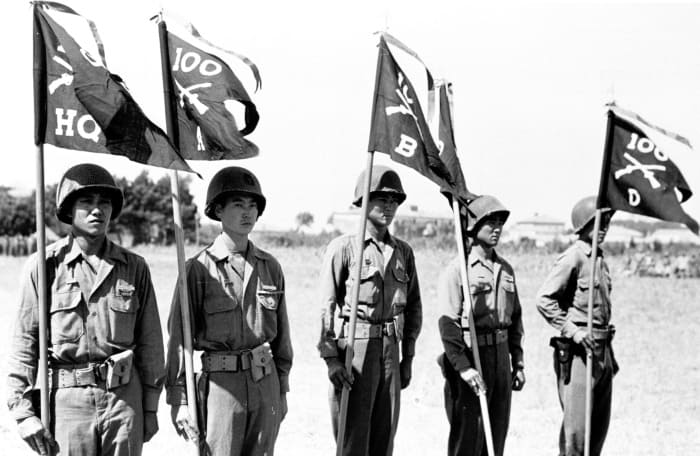
By the time the two units reached them, the Texans' numbers had also been severely depleted. More than 20% of them had been killed, wounded, or captured. Thanks to the ferocity of the 442nd and the 100th, however, they were rescued from the German onslaught after nearly a week of being surrounded. It is said that the first soldier from the 442nd to reach them simply walked up to their commander, Lieutenant Marty Higgins, casually pulled out his Lucky Strike cigarettes, and said, “Cigarette?”
What makes this story even more surprising is not just the ferocity with which the 442nd fought or the casualties it suffered to save its brothers in arms: The real surprise is that the 442nd was a Nisei regiment, composed of second-generation Japanese Americans, volunteers from Hawaii and the mainland. Most of them, along with their families, had been placed in internment camps at the beginning of the war or feared that they would soon be sent to such camps. The men of the 442nd, however, chose to enlist rather than sit out the war. The 100th Infantry Battalion, by contrast, was composed primarily of Japanese American members of the Hawaii National Guard; it went through heavy fighting before merging with the 442nd into a single combat unit.
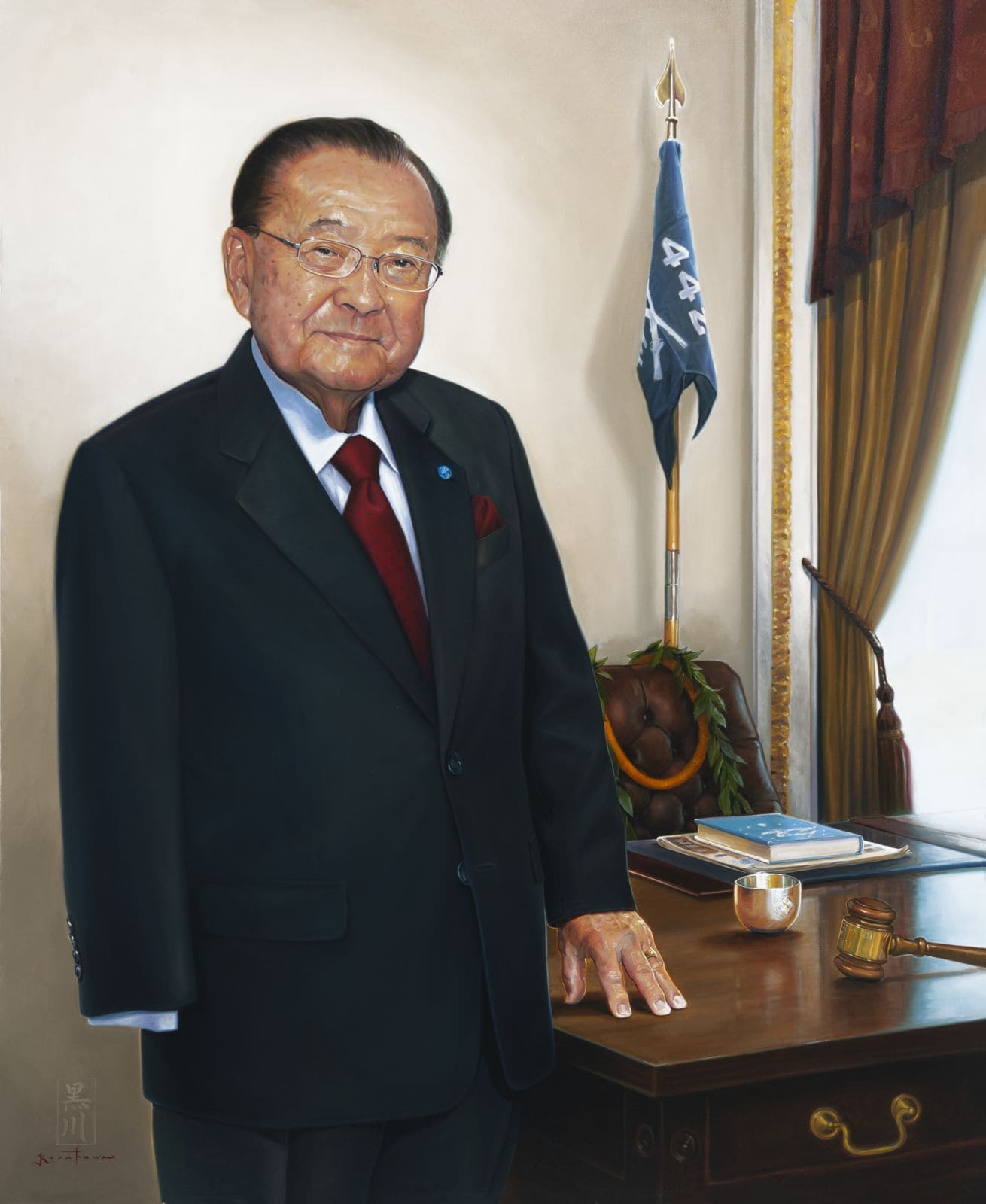
These men were exceptional fighters. The 442nd was called the “Purple Heart Battalion” because its members received more Purple Hearts than any other unit of comparable size in World War II. During the war, soldiers of the 442nd were awarded 5,200 Bronze Star Medals, 588 Silver Stars, 52 Distinguished Service Crosses, seven Distinguished Unit Citations, and 21 Congressional Medals of Honor. The late Senator Daniel Inouye was one of the Nisei who fought to rescue the Texans, and he later earned his Medal of Honor when he lost an arm while taking out a German machine-gun nest in Italy.
When the 442nd returned from Europe, President Truman addressed the soldiers in Washington, D.C. He said, “You fought not only the enemy, but you fought prejudice—and you have won. Keep up that fight, and we will continue to win—to make this great Republic stand for just what the Constitution says it stands for: the welfare of all the people all the time.”
Many years after the war, President Clinton upgraded a number of military decorations for the 442nd. Clinton noted that some Nisei had not received what they deserved precisely because they were Nisei, and said, “Rarely has a nation been so well-served by a people it has so ill-treated.”
And that is why Governor Connally paid tribute to the 442nd and the 100th by naming them all honorary Texans. It was his way of showing these soldiers and their descendants the profound gratitude of the state of Texas, which will forever be grateful for their ultimate sacrifice in rescuing our men.