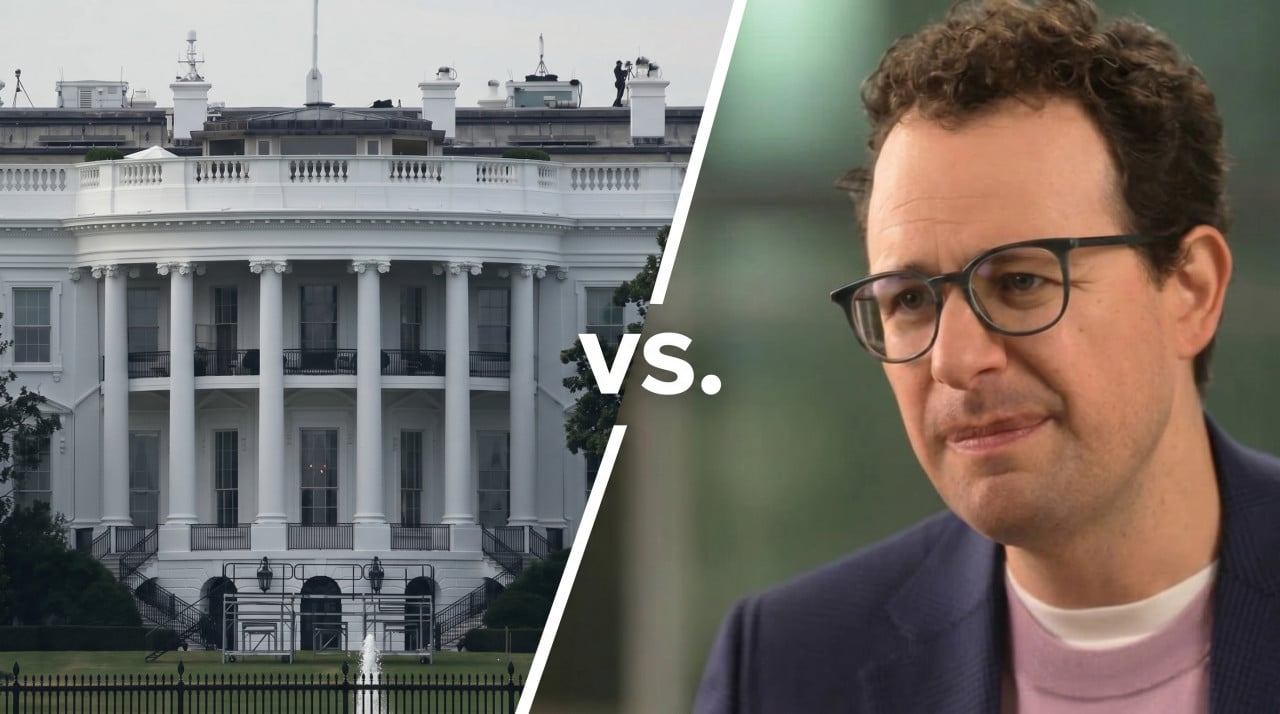
Just a few weeks ago, Donald Trump publicly described Anthropic as a company full of “left-wing lunatics” and contemptuously dismissed its approach to artificial intelligence as “woke” ideology. He ordered all government agencies to immediately stop using its technologies. The Pentagon placed the company on its list of security risks. In the meantime, Anthropic released its most powerful model, Mythos, changing the mood in the White House.
The new artificial intelligence model, which can autonomously detect and exploit software security weaknesses, forced Washington to quickly reconsider its stance toward one of America’s most advanced AI companies. Just days after its unveiling, Anthropic CEO Dario Amodei found himself at the White House for a meeting that both sides described as “productive and constructive.”
What sparked the dispute
The dispute between Anthropic and the U.S. government erupted in full in February 2026, when negotiations between the company and the Department of Defense reached a definitive impasse. The department wanted unrestricted access to all models for any legal purpose, with the government always having the final say. CEO Amodei refused. His company insisted that its technology must not be used for fully autonomous weapons or the mass surveillance of American citizens.
The result? The Pentagon designated Anthropic a supply-chain security risk. This is a label normally applied to foreign adversaries, not domestic technology companies. Trump wrote on Truth Social that his administration “does not need, does not want, and will never do business with them again.”
The $200 million Pentagon contract was put on hold, and Anthropic took the matter to court.
The Mythos model changed the game
Everything began to change after Anthropic unveiled the Mythos model in early April. This is no ordinary chatbot. According to an internal company report, Mythos can autonomously identify and exploit complex software vulnerabilities, including so-called zero-day flaws that only the best human experts can fix. The model can also carry out cyberattacks from start to finish, move through corporate networks, and chain together different intrusion techniques. According to Anthropic, it can even cover its tracks in certain situations.
The company did not release the model to the public. It launched Project Glasswing, a cybersecurity initiative through which only dozens of selected companies, including JPMorgan, Amazon, and Apple, received limited access to Mythos. This very step caused nervousness on both sides of the Atlantic. Federal agencies began quietly circumventing Trump’s ban and trying to gain access to the model simply to understand what kind of risk it posed. Among them was the Commerce Department’s Center for AI Standards and Innovation.
Better late than never
Treasury Secretary Scott Bessent and Federal Reserve (FED) Chair Jerome Powell met with executives from the largest U.S. banks to discuss the model’s cybersecurity implications. Canadian Finance Minister François-Philippe Champagne, who met with Bessent and other global financial leaders, said that Mythos “requires our full attention” in order to preserve the integrity of global financial institutions.
Sean Cairncross, director of the National Cyber Office, convened a conference call with private-sector representatives while also indicating that he had the backing of Chief of Staff Susie Wiles and Vice President JD Vance. During the call, he simultaneously praised Mythos as proof of American technological strength and warned of the risks it poses to corporate networks.
The Office of Management and Budget then informed federal agencies internally that it was working on a “modified version” of Mythos that could be made available to them. “We are working closely with model providers, other industry partners, and the intelligence community to ensure appropriate safeguards and security measures,” Gregory Barbaccia, the office’s chief information officer, wrote in an email sent to multiple government agencies.
The White House meeting
On April 17, Dario Amodei arrived at the White House. He met with Wiles, Bessent, and Cairncross. Both sides issued statements using nearly identical language. The meeting was “productive,” and they discussed cybersecurity, American leadership in AI, and the safe development of technology. Anthropic added that it looked forward to continuing the discussions.
What was missing? Any mention of the ongoing lawsuits. And also any mention of Mythos in Anthropic’s own statement.
The White House indicated that it intended to hold similar meetings with other leading AI companies. Dean Ball, a former Trump AI adviser and now an associate fellow at the conservative Institute for American Innovation, welcomed the rapprochement as a much-needed step. “I hope this heralds a productive relationship between all of America’s leading laboratories and the U.S. government, because the national security issues here are truly extraordinarily serious,” he said.
And what did Trump have to say? When reporters at the airport in Phoenix, Arizona, asked him about Amodei’s visit to the White House, the president first responded with the question “Who?” and then added that he had “no idea whatsoever” about it.
A split within the administration
The curious thing about the whole story is that Washington never actually spoke with one voice. A source familiar with the situation told Axios that every government agency except the Pentagon wants to use Anthropic’s technology. Although the Department of Defense is continuing the process of designating the company a security risk and the court cases are still ongoing, paradoxically, even the department itself has not stopped using the Calude models, including in the context of military operations.
Meanwhile, Anthropic added Ballard Partners, whose ties to the Trump administration are notorious, to its lobbying portfolio. That alone suggests that the U.S. government has found itself in an uncomfortable position: the company that the president branded an enemy and ordered everyone to ignore has developed a tool so powerful that Washington cannot afford to overlook it. And so they are sitting at the same table.
Sources: yahoo.com nytimes.com bbc.com