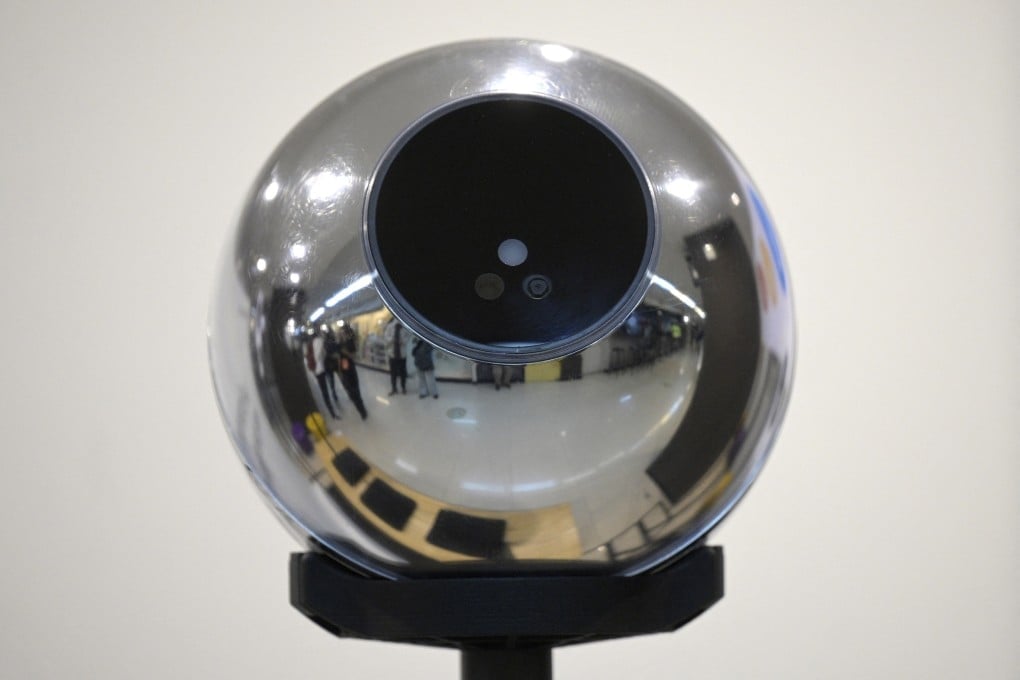
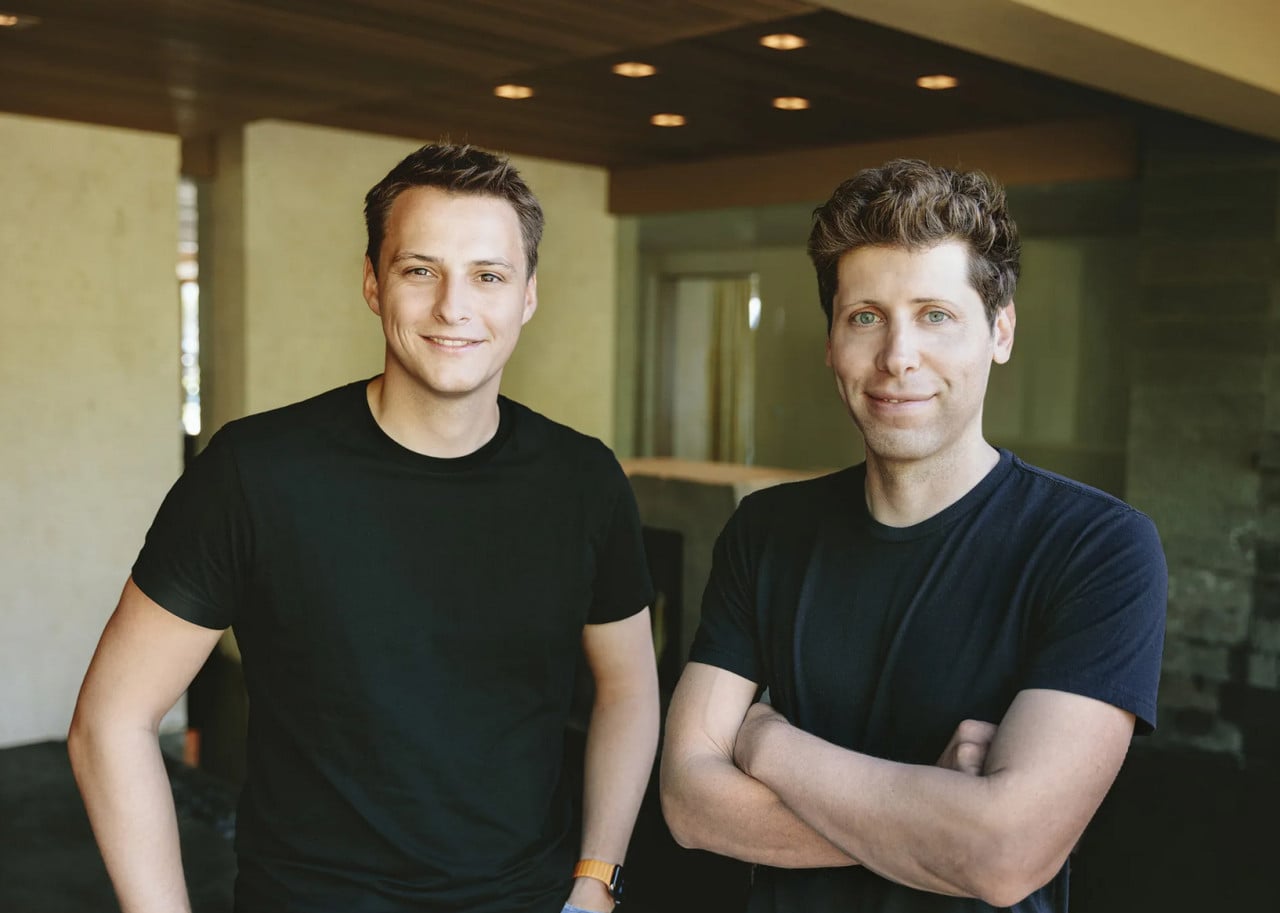
World, formerly known as Worldcoin, is a project by Tools for Humanity, which Altman co-founded in 2019 with German physicist Alex Blania. The basic idea is clear: to create a system capable of verifying that a given online action was performed by a real, living person without revealing their identity.
How does it work? A device called the Orb, a shiny white sphere, scans the user's irises. It uses them to create a unique encrypted identifier known as a World ID. This then serves as proof for various platforms and applications that the user is a real person. Behind the scenes, the entire system is powered by a technology called a "zero-knowledge proof," which confirms that you are a unique person without storing your biometric data anywhere in readable form. The scanned images are deleted after processing.
Altman, who also heads OpenAI, has an obvious motivation for such a project. He himself admits that the AI tools his companies are developing are exacerbating the entire problem. “We are moving toward a world where AI generates more content than people," he said at an event in San Francisco, adding, “Do you know when you are talking to a person and when you are talking to artificial intelligence?" World’s verification project is thus, in a way, his own answer to a problem of his own making.
Tinder will be the first test
The biggest news from the April event is the global rollout of World ID on Tinder. It was not a shot in the dark: World and Match Group first launched a pilot program in Japan, which was successful according to available information. Following the Japanese test, the service is now launching worldwide, including in the United States.
What does this look like in practice? Tinder users who complete verification through World ID will receive a visible badge on their profile confirming that they are real people. As a bonus for verification, they receive five free "boosts," a paid feature that normally costs money and temporarily increases profile visibility by up to ten times.
Dating is a natural fit for such a system. Fake profiles, romance scams, and AI-generated personas have long undermined trust on platforms built around human contact. Traditional verification methods, such as email or a photo, are simply not enough.
Zoom and the fight against deepfakes at work
But Tinder is far from the whole story. World also announced a partnership with Zoom, where a feature called "Deep Face" is being developed. It will allow meeting hosts to require participants to verify their identity before joining a call. The goal is to eliminate deepfakes from corporate videoconferences, an issue that is receiving increasing attention in the cybersecurity world.
Similarly, Docusign will add the option to require World ID verification when signing digital contracts. The aim is to ensure that a real person, rather than an agent or fraudster, is signing the contract.
For those following the world of enterprise authentication: World has also partnered with Okta. Together, they are developing a system, currently in beta, that can verify whether a specific verified person is actually behind the behavior of an AI agent. The principle is to link a World ID to a specific agent, so websites will know who sent it.
Tickets for humans only
One of the most interesting announcements is Concert Kit. It is a tool that allows musical artists to reserve a portion of tickets exclusively for verified people. The system directly targets scalpers and automated bots that buy up tickets and resell them at many times the original price. Concert Kit works with both Ticketmaster and Eventbrite.
Bruno Mars and 30 Seconds to Mars will be the first to test this feature on their upcoming tours. A concert exclusively for verified people was also planned in San Francisco for Anderson .Paak, who performs under the name DJ Pee .Wee.
Three levels of verification
Until now, the biggest obstacle for the World project has been the verification process itself. The gold standard, the Orb scan, required a physical visit to one of the verification locations. That is not exactly convenient for most people. World is therefore introducing three levels of verification based on the degree of security.
Orb verification remains at the top. Below it is a mid-level option that uses an anonymous scan of an identity document via its NFC chip. And the lowest tier, called Selfie Check, requires only a selfie. Processing takes place directly on the user's device, and the photos are not sent to servers.
Chief Product Officer Tiago Sada acknowledged that selfie verification has limitations. “It is one of the best systems you will see, but it has its limitations," he said. Developers can choose the level of security their application requires. To make the Orb more accessible, World is significantly expanding its physical network in New York, Los Angeles, and San Francisco. In addition to permanent locations, it also offers the option of bringing the Orb directly to the user.
26 million users alongside numerous bans
Since its launch in 2023, World has amassed more than 26 million users, with 18 million of them having completed iris verification, up from 12 million a year earlier. The company has raised more than $240 million from investors such as Andreessen Horowitz, Khosla Ventures, and Bain Capital.
The journey has not been easy. The governments of Kenya, Spain, Portugal, and other countries temporarily suspended the project over suspected violations of data protection laws. The bans in Brazil and Hong Kong remain in place to this day. In the US, the project does not operate in New York State, although World has not publicly explained why.
Critics point to a fundamental tension: World is both an identity verification company and a cryptography company that issues its own digital currency, formerly called Worldcoin. Although it has now backed away from aggressively offering cryptocurrency in exchange for an eye scan, it still offers rewards to new users, as well as trial access to Netflix or Apple TV.
Chief Product Officer Sada believes the resistance stems from a misunderstanding of the technology: “The idea that World ID is not only private, but is one of the most private things you have ever used, is not obvious at first glance." He compared the situation to the days when people covered the Face ID sensor on their iPhones with tape. Then they got used to it.
Sources: techcrunch.com wired.com coindesk.com