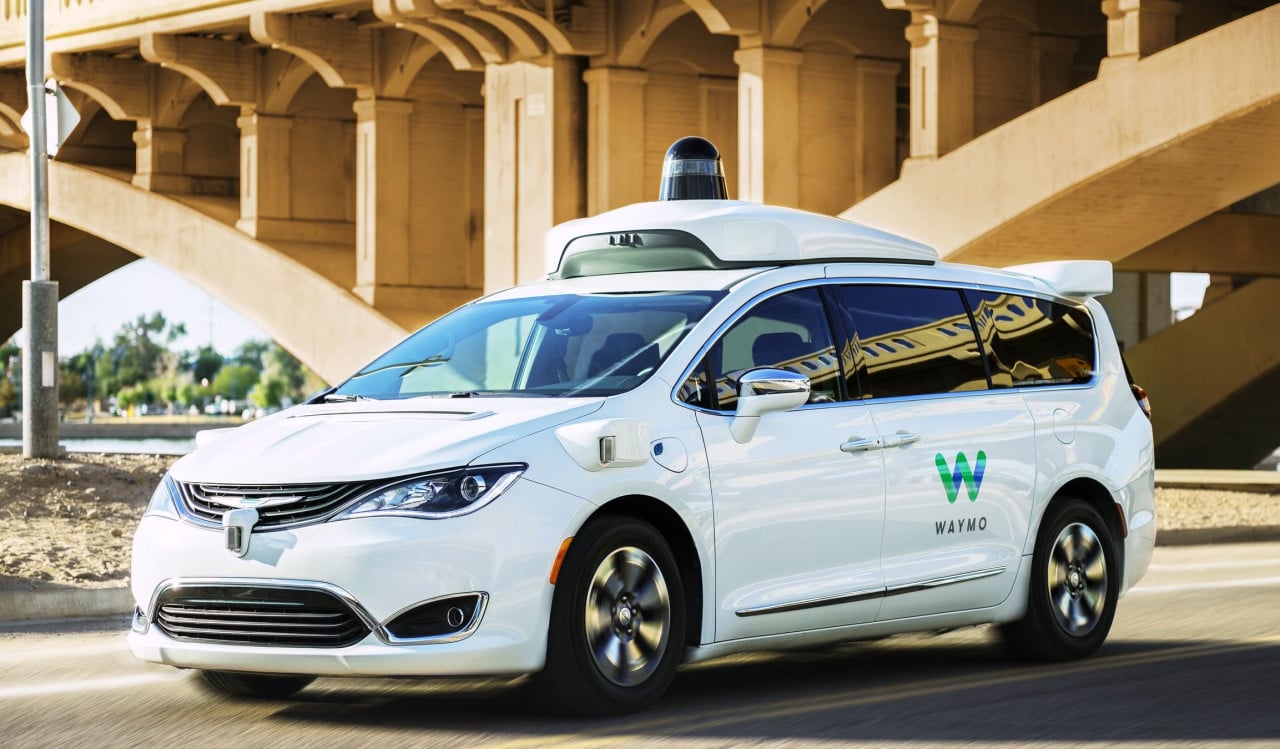
Autonomous vehicles were supposed to change the way we move around cities. Fewer accidents, fewer cars on the roads, smoother traffic. Waymo, a subsidiary of Alphabet, became a symbol of this promise. But a new study published in the academic journal Transport Findings casts the whole picture in a somewhat different light.
Researcher Awad Abdelhalim of the MIT Transit Lab spent months reviewing data that Waymo is required to submit to the California Public Utilities Commission (CPUC). He found that approximately 44 percent of all kilometers traveled by Waymo vehicles in California are driven without a single passenger on board. Abdelhalim analyzed data covering roughly one thousand days of commercial operation, specifically from August 2023 to December 2025. During that time, Waymo completed more than 13.8 million trips for 19.3 million passengers and traveled more than 86 million kilometers in total. Operations grew at an average rate of around 15 percent each month.
The researcher tracked one specific metric: what proportion of these kilometers the vehicles traveled without a passenger. The industry uses the term "deadheading" for this phenomenon, meaning driving empty. CPUC data distinguishes between three types of operation. The first type includes kilometers driven while the vehicle is waiting to be assigned a customer. The second type consists of kilometers traveled on the way to pick up a passenger. The third type consists of kilometers traveled with a passenger inside. The study counts the first two types together as empty driving.
A troubling finding
At the beginning of the period studied, in August 2023, Waymo vehicles carried a passenger only 36 percent of the time. That is a surprisingly low figure. The situation gradually improved, and by the end of 2025, the share of kilometers traveled with a passenger had climbed to 55 to 57 percent. But it then stopped growing and leveled off. In other words, nearly half of all kilometers are still traveled by empty cars.
Abdelhalim also tracked how empty kilometers per trip changed over time. They fell from approximately 8 kilometers in August 2023 to around 4.5 kilometers at the end of 2025. This is partly due to the expansion of highway routes, which make each passenger trip longer. Meanwhile, the average number of passengers per trip fluctuated around 1.4 people throughout the study, meaning shared rides remain the exception at Waymo.
Abdelhalim's result was not an isolated one. Matthew Raifman, a researcher at UC Berkeley, conducted a similar analysis of CPUC data for the period from January 2024 to September 2025. He reached the same conclusion: Waymo travels 44 percent of its kilometers without a passenger. Raifman also clarified what lies behind this figure. Two-thirds of these empty kilometers are driven by vehicles that are simply cruising and waiting for the system to assign them a customer.
In his analyses, Raifman also calculated how much time the vehicles spend with no task at all. In March 2025, California's Waymo vehicles collectively logged more than 304,000 hours in a single month during which they were in operation but had no assigned trip. Assuming one thousand active vehicles, that works out to approximately 12 days of waiting per vehicle per month.
Perhaps the biggest problem for Waymo is not the 44 percent figure itself, but what a comparison with conventional ride-hailing services reveals. For Uber and Lyft, the share of empty kilometers is around 40 percent. In other words, practically the same.
Cities' new problem: empty cars
So far, the data does not support the promise that autonomous vehicles will ease the burden on roads more efficiently than human drivers. In its commentary on the study, Ars Technica recalls a comparison with 2014, when MIT researchers claimed that shared rides would reduce the number of cars in cities. Two of those authors later withdrew their claims after it became clear that Uber and Lyft had instead increased traffic congestion. A 2018 study attributed nearly half of the increase in vehicle kilometers traveled in San Francisco to ride-hailing services. Experts warned at the time that autonomous vehicles would likely fall into the same trap.
Urban planners and local residents are also beginning to notice the phenomenon. In San Francisco, sensor-laden Jaguar I-Paces can be seen everywhere, but rarely with anyone inside. In one Atlanta neighborhood, dozens of empty Waymo vehicles even began converging on a dead-end street before dawn, until local residents put up a children's traffic sign that confused them.
The denser the fleet, the more visible the secondary costs of vehicles that never switch off become. Planetizen, which tracks CPUC data, points out that vehicles spend a significant portion of their operating time driving between locations and repositioning rather than transporting people.