

The Abdul Latif Jameel Poverty Action Lab (J-PAL) at MIT has announced the launch of Project AI Evidence (PAIE) – an ambitious initiative designed to answer a question that more and more people are asking: Can artificial intelligence truly help the poorest people on the planet, or is it just more technological hype?
Eight new research studies conducted around the world are seeking the answer – from Kenyan schools to the Italian Ministry of Education. And this time, it is not just about testing new applications. It is about finding out what works, who it works for, and what might actually cause harm.
AI is everywhere, but evidence of its benefits is lacking
Artificial intelligence is spreading at lightning speed. Chatbots advise patients, algorithms assist teachers, and machine learning predicts floods. Sounds great, right? The problem is that almost no one really knows whether these tools actually work – especially in poor communities, where every penny counts.
"AI has enormous potential, but we need to maximize its benefits and minimize possible harms," says Iqbal Dhaliwal, J-PAL's global executive director. That is precisely why the PAIE project was created, bringing together governments, technology companies, nonprofit organizations, and leading economists from MIT and other universities. The funding? Google.org, Community Jameel, Canadian and British development agencies, Amazon Web Services, and a grant from Eric and Wendy Schmidt. Altogether, millions of dollars are being invested in a single goal: finding out the truth about AI.
Eight studies that could change millions of lives
PAIE's first round of funding is already underway, and the projects are certainly intriguing. Let us take a look at some of them:
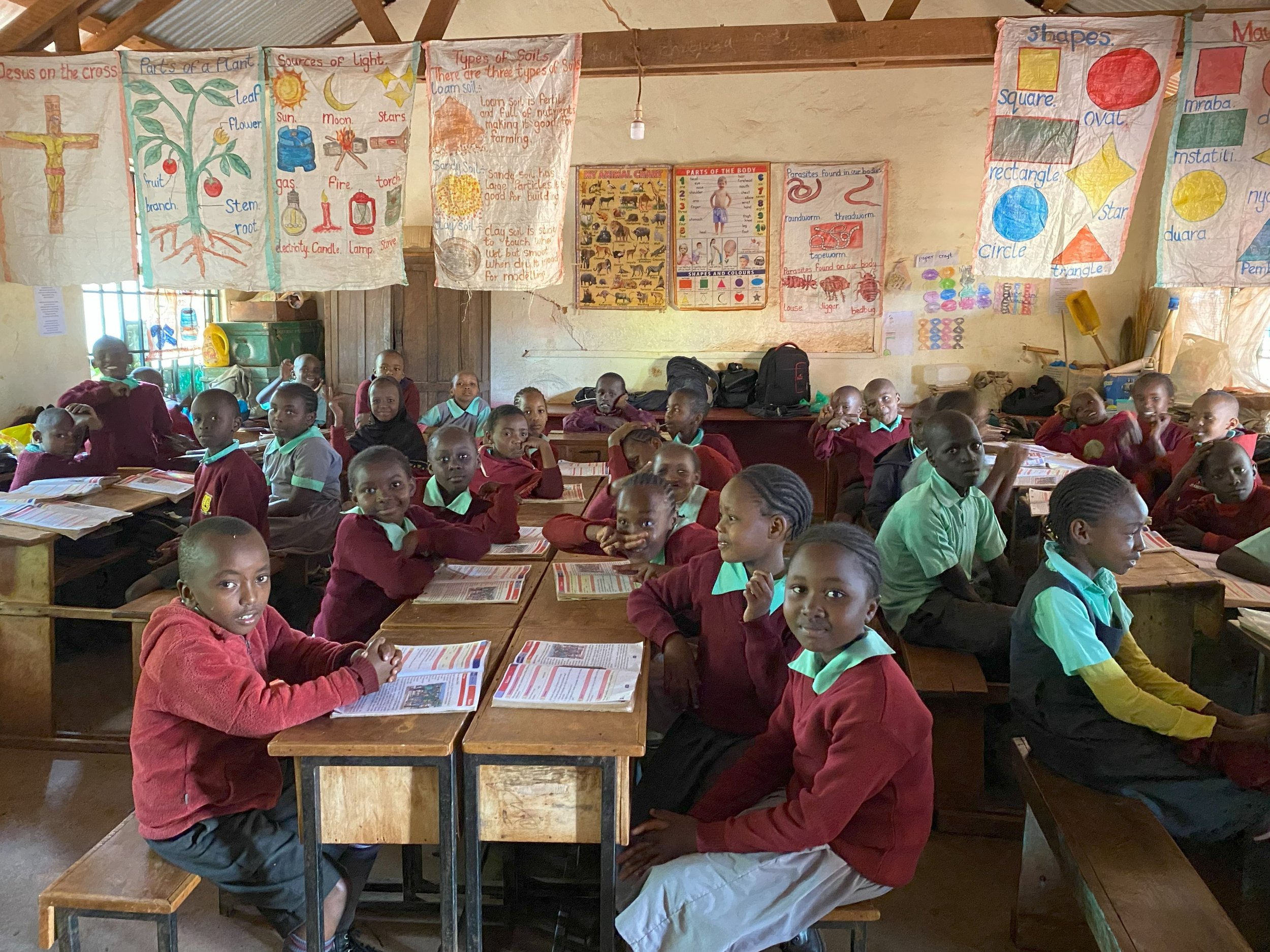
Can AI help teachers in Kenya?
Kenyan schools are testing a tool developed by the social enterprise EIDU. It uses AI to identify gaps in students' knowledge and helps teachers adapt their daily lesson plans. In India, meanwhile, the nonprofit Pratham is developing an AI version of the proven "Teaching at the Right Level" approach – personalized learning that adapts to each child's pace. Economists Daron Acemoglu, Iqbal Dhaliwal, and Francisco Gallego will measure its impact on teacher productivity and student outcomes.
Can AI reduce gender bias in schools?
In Italy, researchers are working with the Ministry of Education on a bold experiment. They are testing two AI tools: one predicts student performance, while the other gives teachers immediate feedback on the diversity of their decisions. The goal? To find out whether technology can detect and correct teachers' unconscious biases against girls.
AI as a career counselor for young people in Kenya
What if an algorithm could identify hidden talents overlooked by human counselors? In Kenya, researchers are testing a tool designed to uncover overlooked skills and open up employment opportunities for young people, women, and those without formal education. Researchers Jasmin Baier and Christian Meyer want to demonstrate that AI can be a complement to human expertise, not a replacement for it.
And that is just the beginning. Other studies are exploring AI for flood prediction in India, the detection of illegal mines in Colombia using satellite imagery, and automated essay grading in Brazil, which has enabled teachers to provide students with more frequent, higher-quality feedback.
It is not just about technology. It is about people
While MIT launches its studies, doctors in Missouri are grappling with a new phenomenon: patients are arriving for appointments with printed diagnoses from AI chatbots. Dr. Andrew Godbey of St. Francis Healthcare System is seeing it firsthand. "AI is the future, and it is happening right now," he says. His colleague, Dr. Jehan Murugaser of Mercy Southeast, appreciates that people are taking a greater interest in their health. But both doctors warn: AI does not know your history, cannot see what you look like, and does not know what medications you take. "I don't want AI to discourage them from seeking care," Godbey emphasizes.
Nevertheless, AI is helping in medicine. Dr. Murugaser uses tools such as Dax to write notes and AiDoc to quickly flag urgent findings on X-rays. He devotes the time saved to his patients. And that is exactly the kind of use PAIE wants to identify and expand.
AI can predict wars and floods
Meanwhile, researchers from the Peace Research Institute Oslo (PRIO) have published a study on how AI can contribute to peace. According to Håvard Hegre, artificial intelligence can improve conflict forecasting, scenario modeling, and decision-making. Visual perception, text recognition, risk analysis – all of these can help monitor and anticipate armed conflicts, thereby reducing human suffering.
In India, J-PAL is already funding the first randomized study of a flood early-warning system in collaboration with Google Flood Forecasting. It is measuring the effects on people's behavior, health, and economic well-being.
What comes next?
PAIE is planning further funding rounds and inviting governments, social enterprises, and nonprofits that want to adopt AI responsibly to collaborate. It is also creating a practical guide called "Evaluating AI" – a manual for the entire research ecosystem covering new methods and best practices. Alex Diaz of Google.org sums it up aptly: "We are collaborating with MIT and J-PAL, who are already leaders in this field, on Project AI Evidence. AI has great potential to benefit everyone, but we urgently need to study what works, what does not, and why if we are to realize that potential."
Maggie Gorman-Velez of IDRC adds: "Artificial intelligence has extraordinary potential, but only if the tools, knowledge, and power to shape it are accessible to everyone – including context-specific research and evidence about what works and what does not."
The question, then, is not whether AI will change the world. It is already doing so. The question is: Will it change it for the better or for the worse? And that is precisely what MIT and its partners are preparing to answer.
Source: news.mit.edu


