

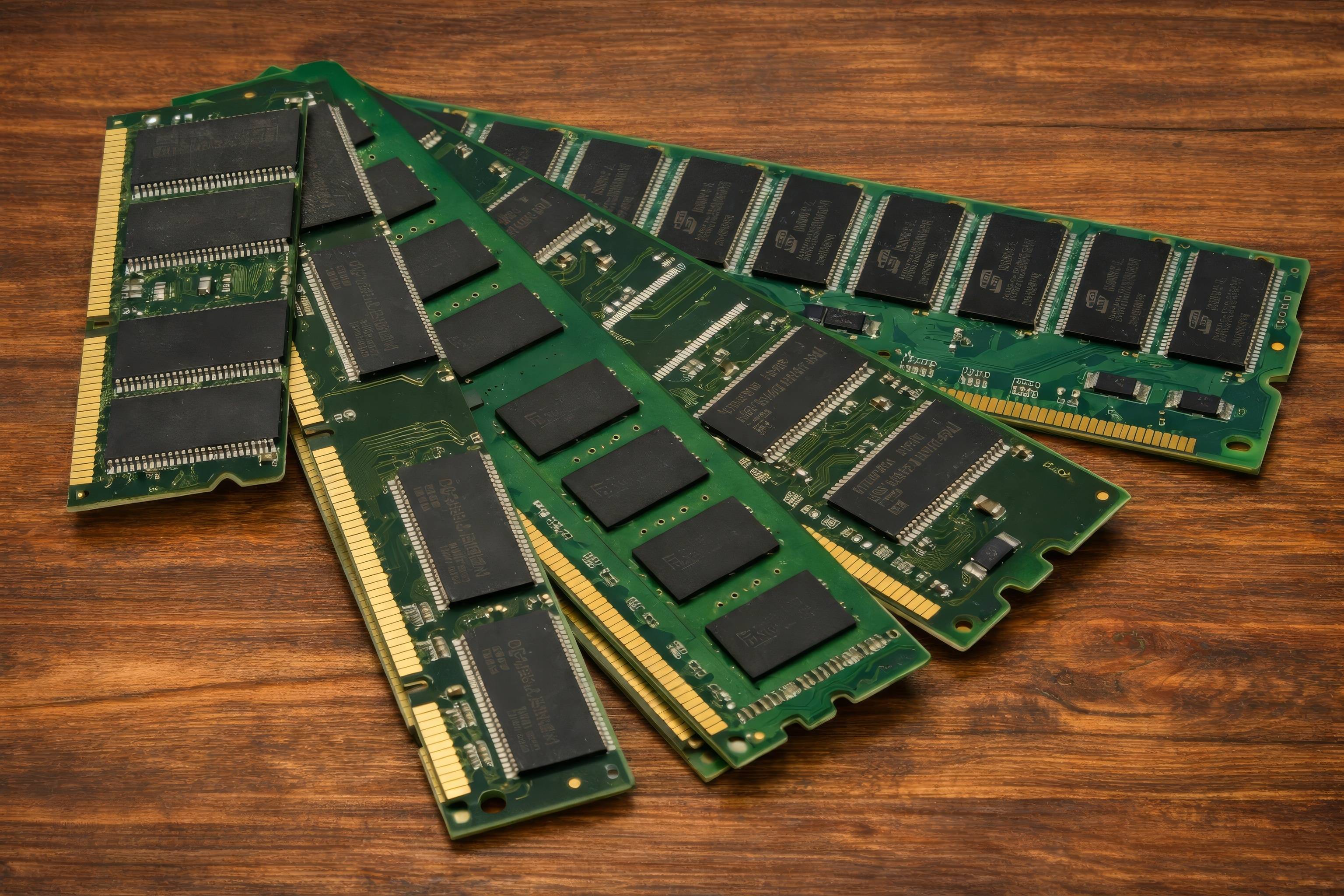
Elon Musk said it bluntly: Tesla may have no other choice but to build its own memory chip factory. Tim Cook is warning of pressure on iPhone margins. And Micron's CEO is talking about an "unprecedented" shortage. What the hell is going on? The world is plunging into a memory crisis unlike anything the technology industry has experienced in decades. DRAM chips – those invisible pieces of silicon that power virtually every modern device – are becoming scarcer than gold. And we know the culprit: artificial intelligence.
Since the beginning of 2026, a number of technology companies, from Tesla and Apple to dozens of other corporations, have faced the fact that they simply cannot obtain enough memory chips. Production is stalling, prices are soaring, and the entire industry is tearing its hair out.
Data centers are swallowing memory for PCs and mobile devices
The root of the problem lies in the explosive growth of AI data centers. Companies such as Alphabet, OpenAI, Microsoft, and Amazon are buying millions of AI accelerators from Nvidia, each packed with enormous amounts of cutting-edge memory. These systems power chatbots, generative AI, and other applications that literally devour memory resources.
Consider this: An Nvidia Blackwell chip contains 192 gigabytes of RAM – roughly six times more than a high-performance computer. An entire NVL72 rack-scale system, which connects 72 of these chips, contains 13.4 terabytes of memory. That is enough to equip a thousand premium smartphones or several hundred high-performance PCs. And hyperscalers are buying these systems by the thousands. The result? Global memory supplies are evaporating faster than they can be replenished.
Prices have soared by 170%, and in some cases even 500%
The price shock is brutal. One category of DRAM jumped by 75% between December and January, only accelerating the trend toward daily price adjustments among retailers and intermediaries. The industry has begun using the term "RAMmageddon" – and it is no exaggeration.
Taiwan Commercial Times reports that DRAM contract prices have jumped by more than 170% in a year. Circular Technology, a Massachusetts-based retailer, says DDR5 chip prices have risen by nearly 500% since September. Memory prices for smartphones have tripled over the past nine months, while those for broadband products have risen nearly sevenfold.
Routers (an intelligent control system that analyzes user prompts), once a commodity product, now have memory accounting for more than one-fifth of total manufacturing costs – compared with just 3% a year ago.
Micron is investing $200 billion
Micron Technology is making one of the boldest industrial moves in modern history. The largest memory chip manufacturer in the US plans to invest $200 billion in expanding domestic production of the silicon chips that quietly power AI systems, smartphones, laptops, vehicles, and massive data centers.
In Boise, Idaho, where Micron is headquartered, the company is investing $50 billion to more than double the size of its 1.8-million-square-meter campus. Two massive manufacturing facilities are under construction. The first, known as ID1, is expected to begin producing its first silicon wafers in mid-2027 and manufacture DRAM for high-bandwidth memory (HBM) chips, which are essential for advanced AI computing.
Each facility will cover 600,000 square feet – making them among the largest cleanrooms ever built in the US. Construction crews have erected what resembles a temporary city so that work can continue around the clock.
Samsung, SK Hynix, and the battle for HBM dominance
While Micron builds new factories, its competitors are not far behind. SK Hynix is building a $13 billion factory in South Korea and a $4 billion complex in Indiana. Samsung is redirecting massive capacity toward HBM production. Why? Because HBM is a gold mine. These specialized memory chips, consisting of up to 12 layers of thinned DRAM chips stacked vertically, offer unrivaled bandwidth for AI workloads. And their margins are much higher than those of standard DRAM.
TrendForce estimates that demand for HBM will jump by 70% this year. By then, HBM will account for 23% of total DRAM wafer production, up from 19% last year. SK Hynix's revenue doubled in 2025 and is expected to double again this year. Micron's revenue is expected to more than double this fiscal year.
Who is bearing the brunt? Virtually everyone else
While memory manufacturers and Nvidia reap the profits, the rest of the technology ecosystem is suffering. Sony is considering delaying the launch of its next PlayStation console until 2028 or 2029 – a major disruption to its carefully planned hardware roadmap. Nintendo is considering a price increase for its Switch 2 device. Smartphone manufacturers including Xiaomi, Oppo, and Transsion are lowering shipment targets, with Oppo reportedly cutting its forecast by as much as 20%. Lenovo, Dell, HPE, and other enterprise hardware manufacturers face potential production delays.
Cisco cited the memory shortage when it issued a weak earnings outlook that triggered its steepest stock decline in nearly four years. Qualcomm and Arm have also warned of further disruptions. At Sunin Plaza, Seoul's DIY PC hub, the usual weekday bustle has disappeared. "It is wiser to suspend business today because prices will almost certainly be higher tomorrow," said Suh Young-hwan, who operates three PC stores in the area.
This is not just a temporary fluctuation
What concerns analysts is that the crisis is emerging even before the AI giants have fully ramped up their infrastructure plans. Alphabet and Amazon have announced record capital expenditures for 2026 – $185 billion and $200 billion – the largest annual corporate spending commitments in history. As these data center projects accelerate, demand for memory is expected to soar even further. Bernstein analyst Mark Li warns that DRAM prices are going "parabolic".
Lenovo CEO Yang Yuanqing said the imbalance between supply and demand is structural, not cyclical, and will last at least until the end of the year. Economists and industry leaders agree that relief will not come until late 2027 or 2028.
Everyone except data centers will be left empty-handed...
The memory crisis carries unpleasant echoes of the Covid-era semiconductor shortage that paralyzed global supply chains. Back then, an unexpected surge in demand for home-office equipment and contactless technology overwhelmed production of basic automotive and power-management chips, forcing automakers from Ford to Volkswagen to halt assembly lines.
This time, the disruption is rooted not in a temporary demand shock, but in a structural shift toward AI. Meta, Microsoft, Amazon, and Alphabet are investing unimaginable sums in data centers capable of training and hosting AI models. Their combined capital expenditures jumped from $217 billion in 2024 to approximately $360 billion last year and are expected to reach an extraordinary $650 billion this year.
The race is existential: every company is spending aggressively to outpace its rivals and secure the infrastructure that will define its future. Few industries have been reshaped more dramatically by this arms race than the global memory industry. In the three years since ChatGPT was launched, Samsung, SK Hynix, and Micron have redirected most of their manufacturing capacity, research and development, and capital expenditures toward high-bandwidth memory (HBM).
This shift has come at the expense of conventional DRAM production – the basic memory used in phones, PCs, cars, and countless everyday devices.
High prices will persist for several years
The years of cheap and abundant memory are over – at least for the medium term. Although new factories from Micron, Samsung, and SK Hynix are under construction, their output will not significantly affect supply for several years.
Tim Archer, CEO of Lam Research, captured the scale of the moment: "We are on the cusp of something bigger than anything we have faced before. What lies ahead between today and the end of this decade will dwarf all other sources of demand."
For investors, this means continued strength for companies directly benefiting from HBM demand, such as Nvidia and the major memory manufacturers. For consumers? Prepare for higher prices and potential delays for everything from laptops to smartphones.
The memory crisis highlights the critical importance of supply-chain resilience and strategic planning in the technology sector. As Micron's Chief Business Officer Sumit Sadana put it: "Memory has transformed from a system component into a strategic asset. The promise of AI lies entirely ahead of us."
Sources: bloomberg.com and thestar.com


