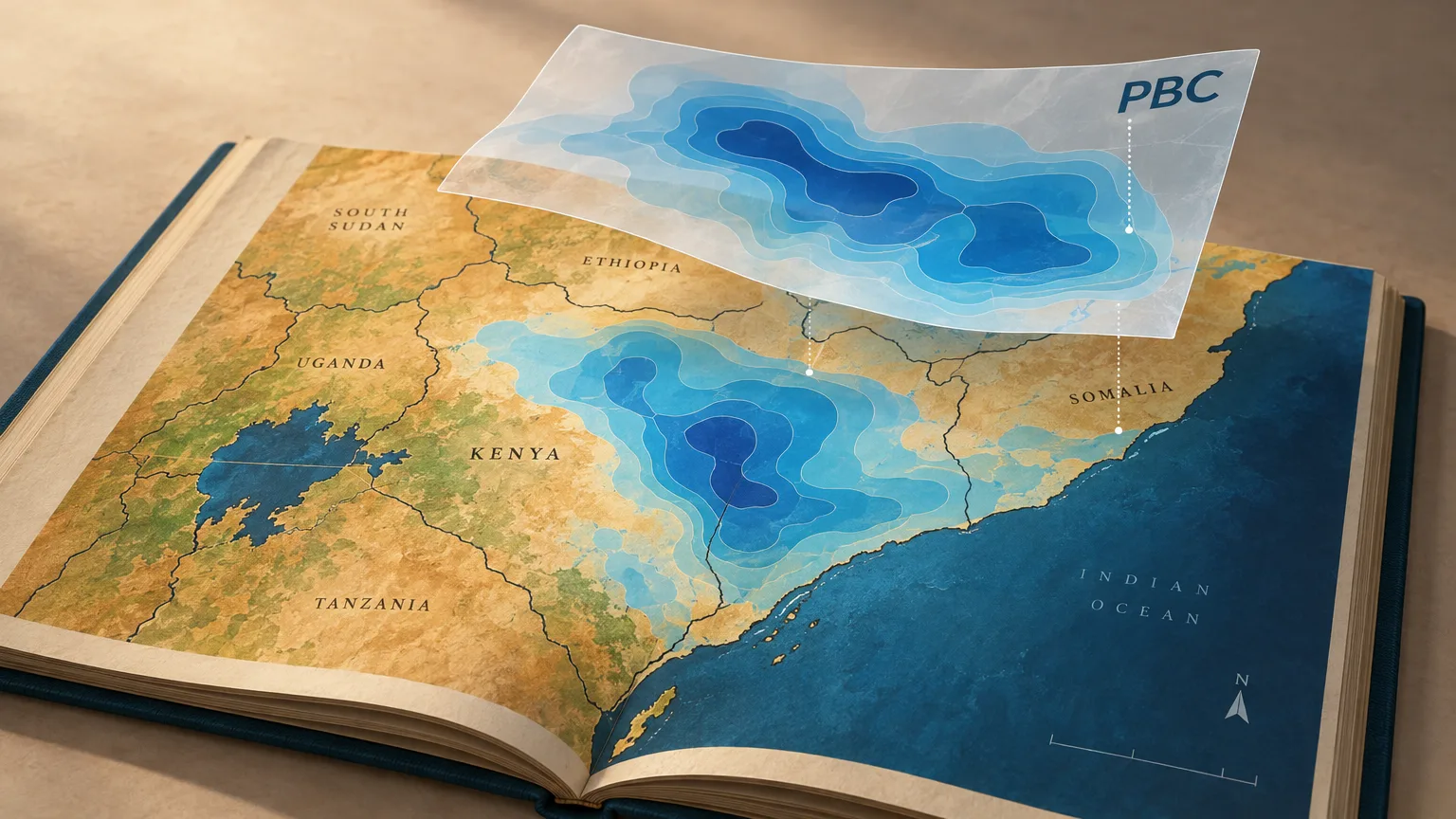
Microsoft Research has developed Probabilistic Bias Correction (PBC), a machine-learning framework designed to improve weather forecasts two to six weeks ahead. Rather than building another weather model, it focuses on correcting existing models’ outputs. Microsoft says initial evaluations show benefits for forecasts of temperature, precipitation and atmospheric pressure.
Learning from past errors rather than replacing the model
The approach starts with a model’s historical forecasts. According to Microsoft Research, PBC uses a lightweight machine-learning system to identify systematic biases, then applies the corrections it has learned to the forecast output. The original weather model remains part of the process; the researchers described the method in a recent paper in Nature.
Phillip Okello, a meteorologist at the Kenya Meteorological Service Authority (KMSA), describes a distinction from conventional rainfall corrections: those typically adjust the predicted amount of rain, whereas PBC adjusts the probabilities themselves. Microsoft also says its sub-seasonal forecasts are trained to improve performance at individual locations, helping local forecasters make better use of global model outputs.
Results for two ECMWF systems
Microsoft Research reports further improvements to an operational sub-seasonal model from the European Centre for Medium-Range Weather Forecasts (ECMWF) that already incorporated bias correction. PBC improved results for 98% of precipitation targets, 92% of temperature targets and 91% of pressure targets.
Separately, Microsoft Research reports that applying PBC doubled the accuracy of ECMWF’s AI Forecasting System (AIFS). That is a different measure from the percentages reported for the preceding model, which describe the share of targets that improved rather than the size of the accuracy gain.
MicroDuet combines corrections with dynamical and hybrid models
For the AI Weather Quest competition, MicroEnsemble—a team of Microsoft researchers and external collaborators—developed an entry called MicroDuet. Microsoft says it used PBC to correct both ECMWF’s dynamical model and PoET. The latter combines AI with dynamical modelling and uses transformers to improve probabilistic forecast ensembles.
According to Microsoft, MicroDuet finished first across every evaluated weather variable and forecast lead time in the inaugural three-month season. It outperformed six leading operational forecasting centres and systems from 34 teams worldwide. The company also reports that it produced the most accurate results over a full year of real-time forecasting.
As a concrete example, Microsoft points to two severe winter storms that struck the United States in early 2026. The company says MicroDuet predicted them 19 to 26 days in advance.
Helping forecasters assess rainfall in Kenya
PBC is also part of AI-model testing and pilot use in Kenya as one of the country’s two rainy seasons begins. It is helping the KMSA team identify the likelihood of very heavy or very light rainfall when preparing weekly forecast updates.
Okello says PBC improved forecasts across the Greater Horn of Africa more than any other method his team tested. He identifies sharper forecasts of heavy rain and dry spells—important to farmers—as the next step.
Open-source framework and private testing for S2S
PBC itself is already available as open-source software. Researchers and developers can examine, evaluate and build on the framework.
Microsoft also gave an update on the Microsoft Weather sub-seasonal-to-seasonal (S2S) model. It runs in real time and provides weekly probabilistic outlooks up to six weeks ahead. Unlike the open-source framework, S2S is in private preview, with testing available to selected customers.