Nadella's View of AI in 2026
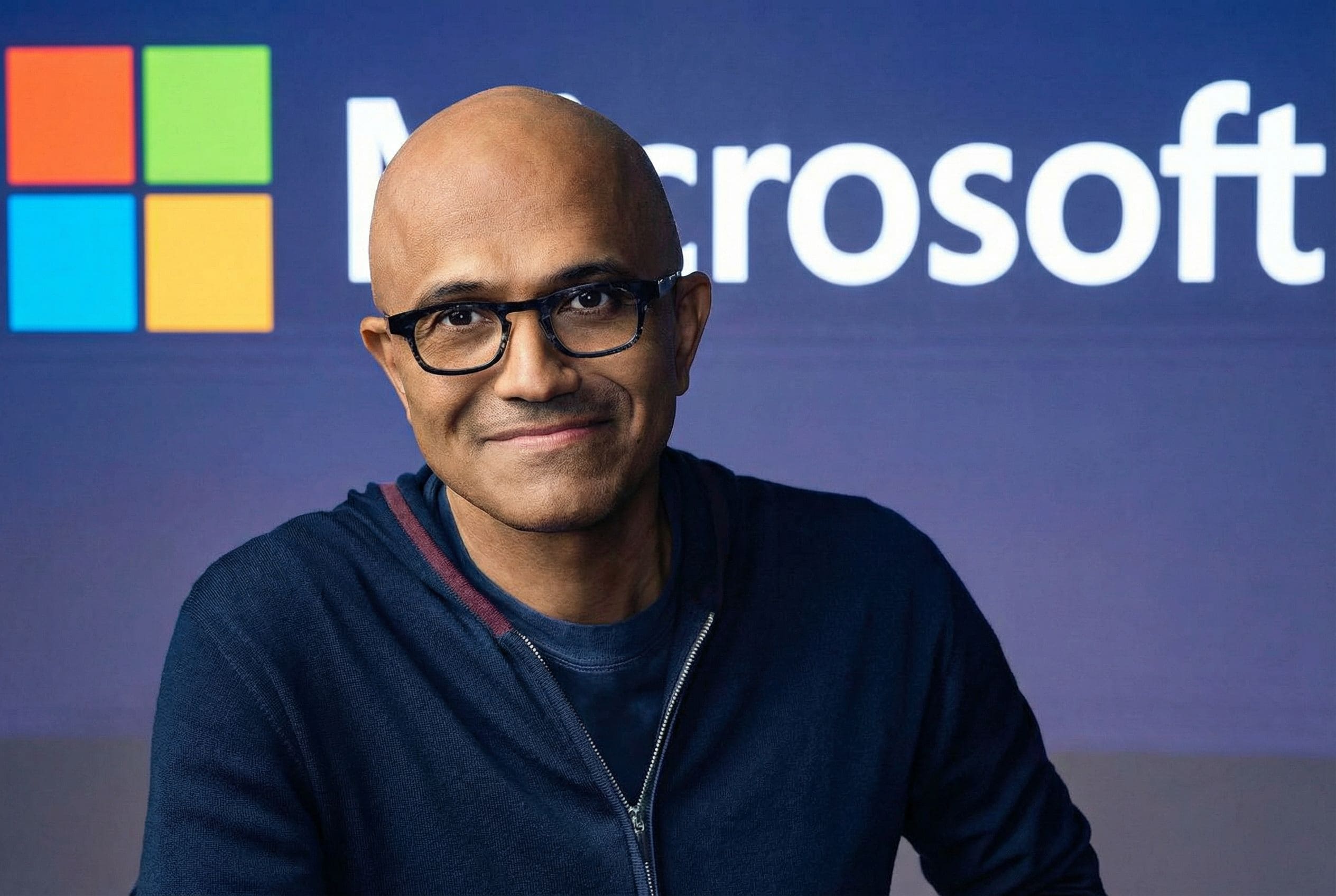
Satya Nadella, CEO of Microsoft, reflects on his personal blog about what 2026 will bring for artificial intelligence (AI). According to him, we have moved beyond the discovery phase and are now entering a period in which AI is spreading everywhere. Nadella emphasizes that it is important to distinguish between mere "spectacle" and real value. He says that AI is still at the beginning of a long journey, where the capabilities of technology exceed our current ability to fully utilize them in the real world.
Nadella proposes a new concept that builds on the idea of a "bicycle for the mind"—AI should serve as a means of supporting human potential, not replacing it. In his words, the key is what people do with the performance of AI models to achieve their goals. He wants us to move beyond ideas of "slop" versus sophistication and find a new balance in how we understand the mind equipped with these new tools for enhancing cognition.
Nadella explains that we are moving from individual models to complete systems that deliver real-world impact. According to him, we have learned how to continue expanding model capabilities despite their "jagged" edges. We are now building complex structures that connect multiple models and agents, take memory and permissions into account, and enable tools to be used safely. According to Nadella, this is the engineering layer we must develop for AI to deliver genuine value.
AI's Impact on Employment and Society
In an article for TechCrunch, Julie Bort quotes Nadella and examines how he wants us to stop viewing AI as "slop"—that is, as low-quality, disposable content—and instead see it as a tool that helps people. Nadella compares it to a "bicycle for the mind," meaning that AI should enhance human abilities, not replace them. Bort notes that this comes shortly after Merriam-Webster named "slop" its 2025 Word of the Year.
Bort explains that much of the marketing surrounding AI agents relies on the idea of replacing human labor to justify high prices. For example, Dario Amodei, CEO of Anthropic, warned in May 2025 that AI could eliminate half of entry-level white-collar jobs, raising unemployment to 10–20% within five years.
Nevertheless, the data suggest a different picture. An MIT study called Project Iceberg estimates that AI is capable of handling about 11.7% of paid human labor. Bort explains that this does not mean replacing 12% of jobs, but rather indicates how many parts of a job can be transferred to AI, with the wages associated with those tasks then calculated. Examples include automating paperwork for nurses or having computers write code.
Bort notes that some professions, such as corporate graphic designers and marketing bloggers, are feeling the impact of AI, according to the Substack Blood in the Machine. Computer science graduates are also experiencing high unemployment. But experienced artists, writers, and programmers produce better work with AI than without it because AI is not yet capable of replacing human creativity.
Positive Data Trends for 2026
According to Vanguard's 2026 economic outlook, the roughly 100 occupations most exposed to AI automation are actually outperforming the rest of the labor market in job growth and real wages. Bort interprets this to mean that those who master AI are becoming more valuable, not replaceable.
Ironically, Microsoft itself has contributed to the narrative of AI taking jobs. In 2025, it laid off more than 15,000 people despite reporting record revenue and profits for the fiscal year ending in June. Nadella wrote a public memo about the layoffs in which he mentioned "AI transformation" as one of the company's three priorities, alongside security and quality. But according to Bort and analysts, this was not directly due to AI-driven efficiency, but rather to standard business practices, such as shifting investment from slow-growing areas to expanding ones.
Bort cites research by Challenger, Gray & Christmas, according to which AI caused the loss of nearly 55,000 jobs in the U.S. in 2025, including major cuts at Amazon, Salesforce, and Microsoft. Nevertheless, Bort concludes by noting that "slop" may be one of the most entertaining uses of AI, such as memes and short videos on social media.
Nadella emphasizes that we must make deliberate choices about how to deploy AI as a solution to problems facing people and the planet. According to him, AI needs to earn societal permission by having a real impact. Decisions about where we direct energy, computing power, and talent will be crucial. Nadella believes that if AI empowers people and organizations to achieve more, it will become one of the most significant waves in the history of computing. The process will be messy, as it is with all new technologies, but it must follow a path that empowers people.