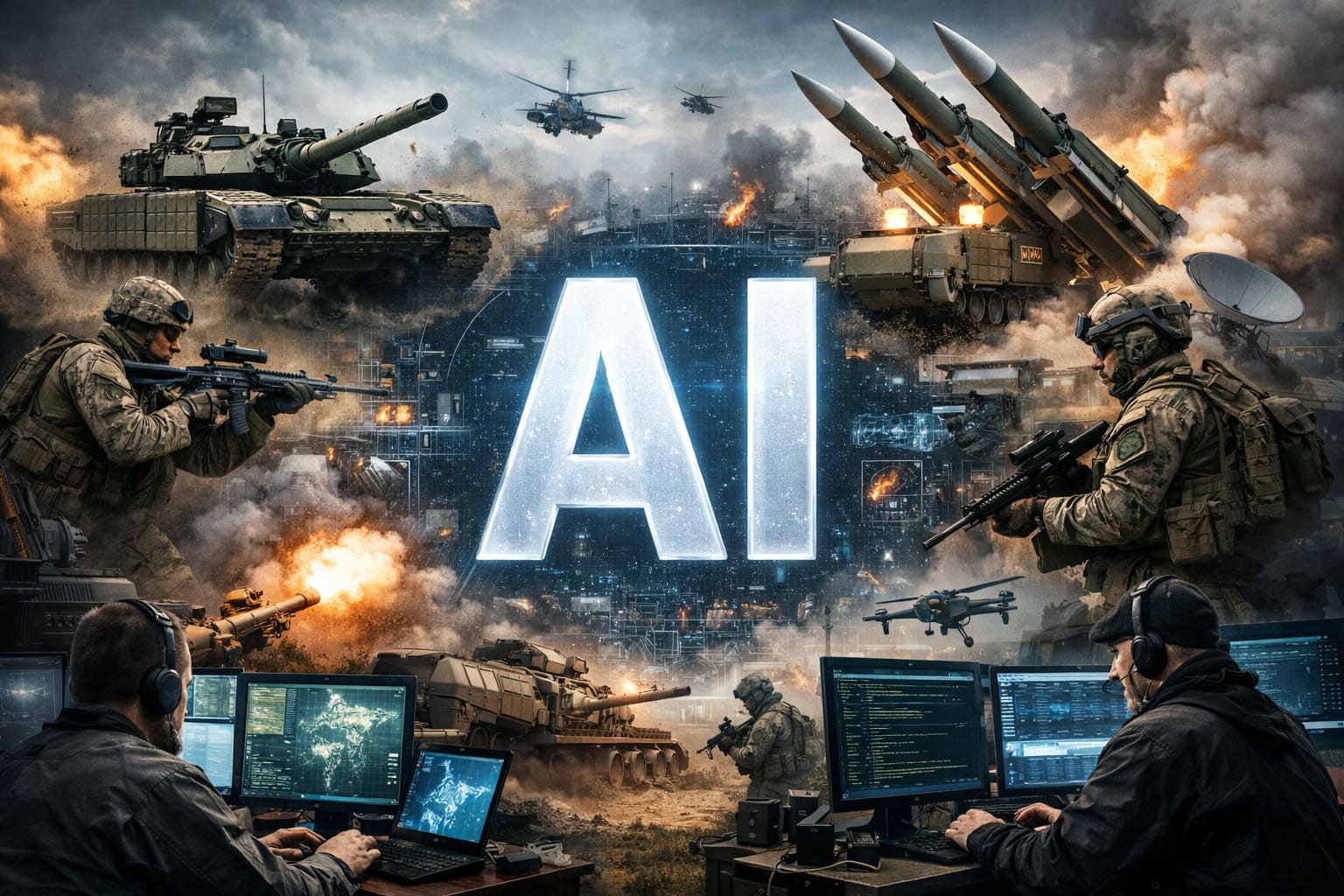
Artificial intelligence is rapidly becoming a key part of national security decision-making. Militaries around the world already use it to examine satellite imagery, assess adversaries’ forces, and recommend when, where, and how to deploy forces. These systems promise to transform how states respond to threats. At the same time, however, they threaten deterrence, which has long formed the basis of the security strategy of countries such as the United States.
Effective deterrence depends on a country’s ability to credibly demonstrate the capability and willingness to inflict unacceptable damage on an adversary. Artificial intelligence strengthens some of the foundations of this credibility. Better intelligence, faster assessments, and more consistent decisions can bolster deterrence by communicating a country’s defensive capabilities and its resolve to use them more clearly to adversaries. But adversaries can exploit artificial intelligence to undermine these goals: they can poison the training data of models that countries rely on, thereby altering their outputs, or launch AI-enabled influence operations to shape the behavior of key officials. In a high-stakes crisis, such manipulation could limit a state’s ability to maintain credible deterrence and distort or even paralyze its leaders’ decision-making.
A China–Taiwan Crisis Scenario
Imagine a crisis in which China has imposed sweeping economic sanctions on Taiwan and launched large-scale military exercises around the island. U.S. defense officials turn to artificial intelligence systems to help formulate the United States’ response—unaware that Chinese information operations have already corrupted these systems by poisoning their training data and underlying inputs. As a result, the models overestimate China’s actual capabilities and underestimate the United States’ readiness, producing skewed assessments that ultimately discourage U.S. mobilization. At the same time, Chinese influence campaigns, amplified by sudden floods of fake AI-generated content on platforms such as Facebook and TikTok, suppress public support in the United States for intervention. Without the ability to interpret intelligence correctly and gauge public sentiment, U.S. leaders may conclude that decisive intervention is too risky.
Sensing an opportunity, China now launches a full blockade of Taiwan and begins drone attacks. At the same time, it floods the island with deepfakes of U.S. officials expressing a willingness to abandon Taiwan, fabricated polls showing declining support in the United States, and rumors of U.S. abandonment. In this scenario, credible signals from the United States indicating an inclination to respond could have deterred China from escalating—and would likely have been sent had U.S. officials not been dissuaded by poisoned artificial intelligence systems and distorted public sentiment. Instead of strengthening deterrence, artificial intelligence undermined U.S. credibility and opened the door to Chinese aggression.
Deterrence in the Age of Artificial Intelligence
For deterrence to work, an adversary must believe that the defender is capable of imposing serious costs and is determined to do so if attacked. Some elements of military power are visible, but others—such as certain weapons capabilities, readiness levels, and mobilization capacity—are harder to assess from the outside. Resolve is even more opaque: only a country’s leaders usually know precisely how willing they are to wage war. Deterrence therefore depends on how effectively a country can credibly signal both its capabilities and its willingness to act.
As artificial intelligence systems become increasingly important to leaders’ decision-making, they may give information warfare new power in coercion and conflict. To strengthen deterrence in the age of artificial intelligence, policymakers, defense planners, and intelligence agencies must account for how artificial intelligence models can be weaponized and ensure that digital defenses against these threats keep pace. The outcome of future crises may depend on it.
(Authors: Brett V. Benson is an associate professor of political science and Asian studies at Vanderbilt University. Brett J. Goldstein is special adviser to the chancellor for national security and strategic initiatives and a research professor at Vanderbilt University’s School of Engineering.)