Miami is located at the southeastern tip of Florida, where the vast wetlands of the Everglades meet the turquoise waters of the Atlantic Ocean. The Miami metropolitan area encompasses Miami-Dade, Broward, and Palm Beach counties and is home to more than 6 million residents—a population larger than that of many entire U.S. states. Nicknamed the “Gateway to the Americas,” the city serves as a bridge between the United States and Latin America, defining its unique character among the world’s major cities.
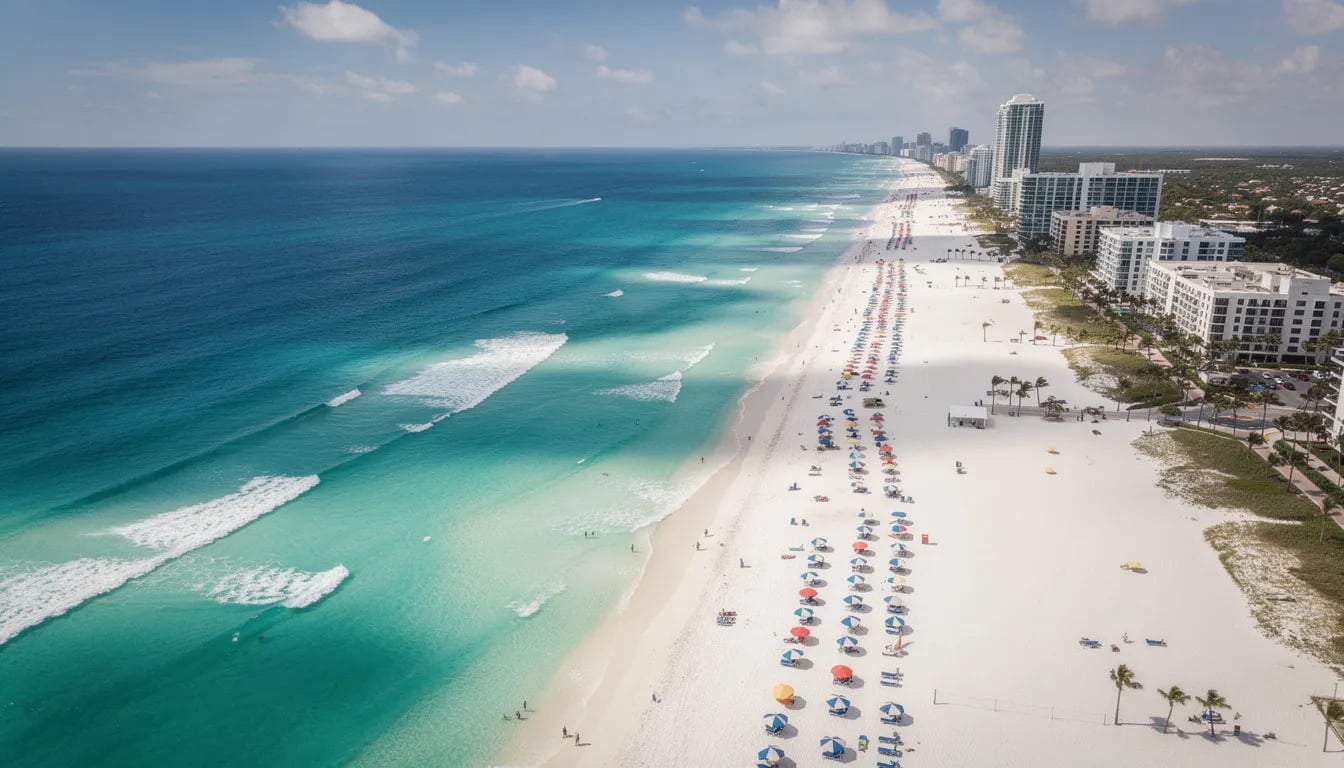
Miami’s main attractions are undeniable: the white beaches of Miami Beach with the iconic Ocean Drive promenade, the architectural gems of the Art Deco Historic District, the vibrant nightlife of South Beach, and the authentic Latin American atmosphere of Little Havana with its famous Calle Ocho. Add PortMiami—the largest cruise ship port in the world—and Miami International Airport as the main gateways for millions of visitors from Europe and across the Americas.
In this article, we will guide you through the city’s history, economy and finances, cultural diversity, education system, and practical tips for getting around. You will also discover which specific places to visit—from the Wynwood arts district and elegant Coral Gables to the peaceful island of Key Biscayne.
History of Miami
The area of present-day Miami was home to Indigenous peoples for thousands of years, particularly the Tequesta tribe, who inhabited the banks of the Miami River and Biscayne Bay. The first European explorer, Spanish conquistador Juan Ponce de León, recorded the area around 1513 during his expedition in search of the legendary Fountain of Youth. The Spanish named the area after its original Indigenous designation, Chequescha.
Julia Tuttle and the founding of the city. The true story of modern Miami begins with businesswoman Julia Tuttle, nicknamed the “Mother of Miami.” In 1891, she purchased extensive land near the mouth of the Miami River and envisioned building a prosperous city there. The key moment came when she persuaded railroad magnate Henry Flagler to extend his Florida East Coast Railway to this remote area. Tuttle reportedly sent Flagler a bouquet of orange blossoms during the harsh winter of 1895, which had destroyed crops in northern Florida, to demonstrate the mild climate of the south. Miami was officially incorporated as a city in 1896.
Real estate boom and hurricane. After 1900, Miami experienced rapid growth. The 1920s brought a massive real estate boom—speculators and investors from across the United States purchased land, while hotels, residential neighborhoods, and the first skyscrapers were built. This growth was violently interrupted by the Great Miami Hurricane in September 1926, which caused enormous damage and hundreds of deaths. Although the hurricane slowed development, it did not stop it.
Postwar expansion. After World War II, Miami experienced a new wave of prosperity. Thousands of veterans moved here for the sunny climate, suburbs such as Kendall and Hialeah expanded, and the tourism industry gained momentum. Communities such as Coconut Grove, with its bohemian atmosphere, and elegant Coral Gables, with its cohesive Mediterranean architecture, were gradually integrated into the broader metropolitan area.
The Cuban Revolution and the transformation of the city. The Cuban Revolution of 1959 marked a turning point. In the following years, tens of thousands of Cuban refugees fleeing Castro’s regime arrived in Miami. During the 1960s, the Freedom Tower in the city center served as a reception center for immigrants and still stands today as a symbol of that era. The Little Havana neighborhood emerged as the heart of the Cuban community, and Spanish remains the predominant language there to this day.
Further waves of immigrants from the Caribbean and Latin America in the 1980s and 1990s—from Haiti, the Dominican Republic, Nicaragua, Venezuela, and other countries—definitively transformed Miami into a multicultural metropolis. Today, Spanish is the dominant language in many neighborhoods, and Hispanic culture permeates the city’s daily life.
Economy and Finance
Miami is considered one of the most important financial centers in the United States, with a particular focus on trade with Latin America. Its geographic position between North and South America, strong Hispanic community, and excellent transportation infrastructure have created ideal conditions for international business.
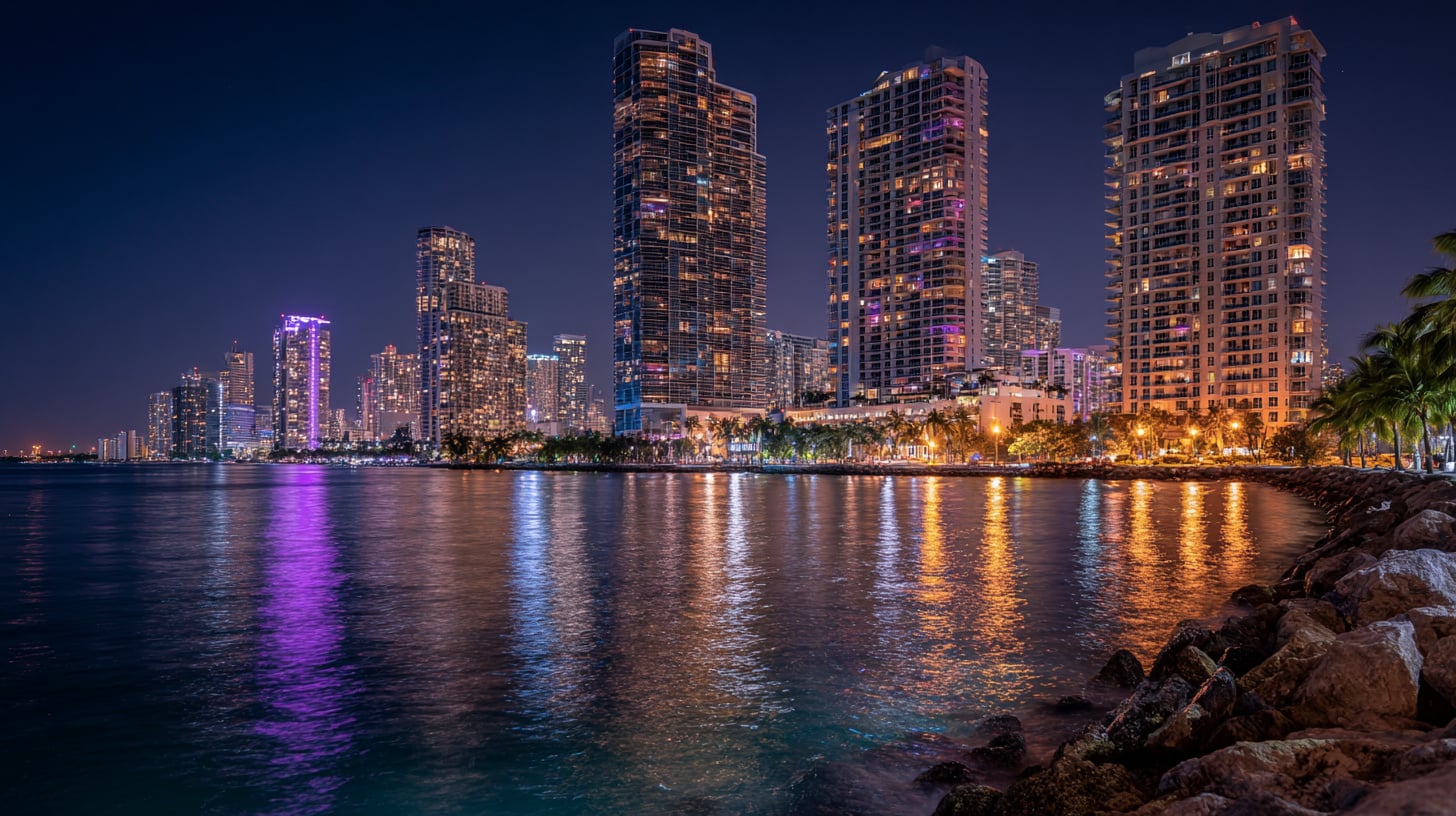
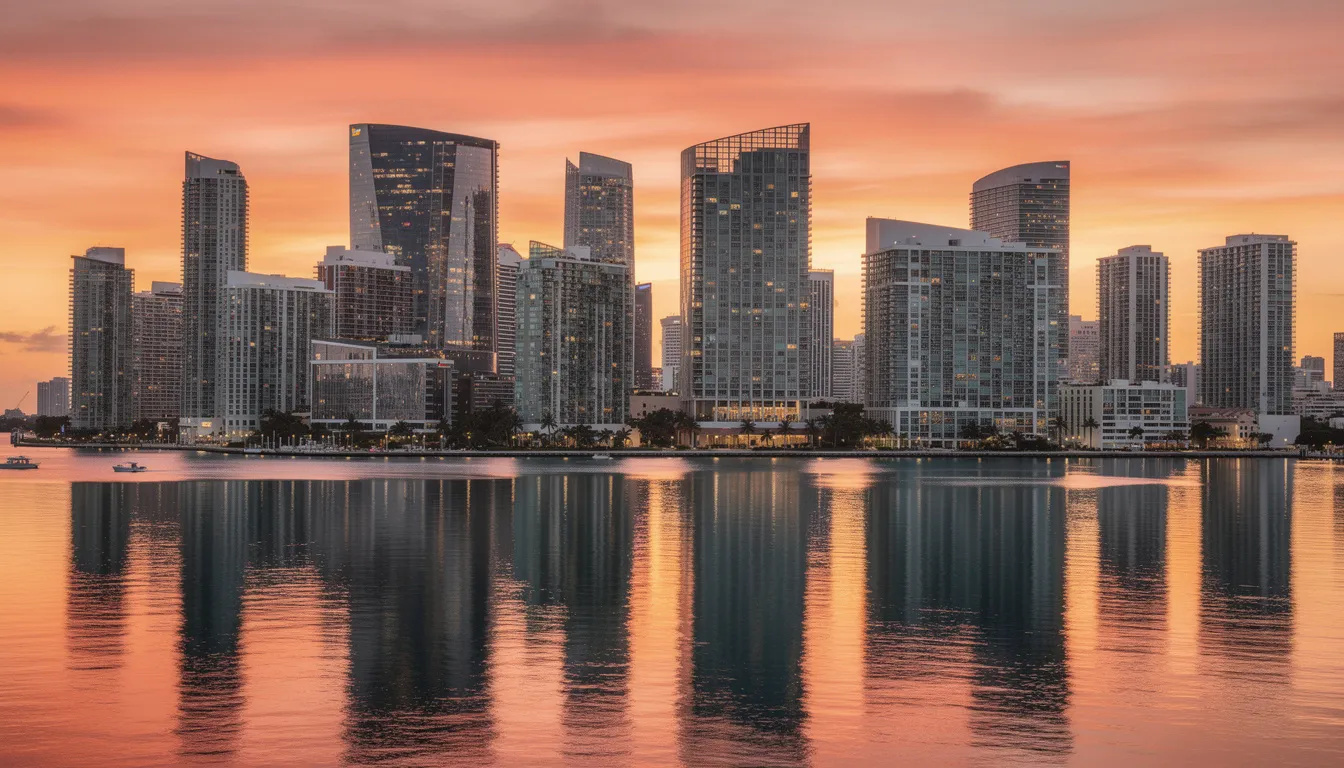
Brickell—Wall Street of the South. The Brickell neighborhood, located south of Downtown Miami along Biscayne Bay, has the largest concentration of international banks in the U.S. outside New York. Its modern skyscrapers house the regional headquarters of global financial institutions that manage operations throughout Latin America from here. Brickell Avenue is lined with luxury residential towers, office complexes, and premium stores, making the neighborhood a symbol of Miami’s economic strength.
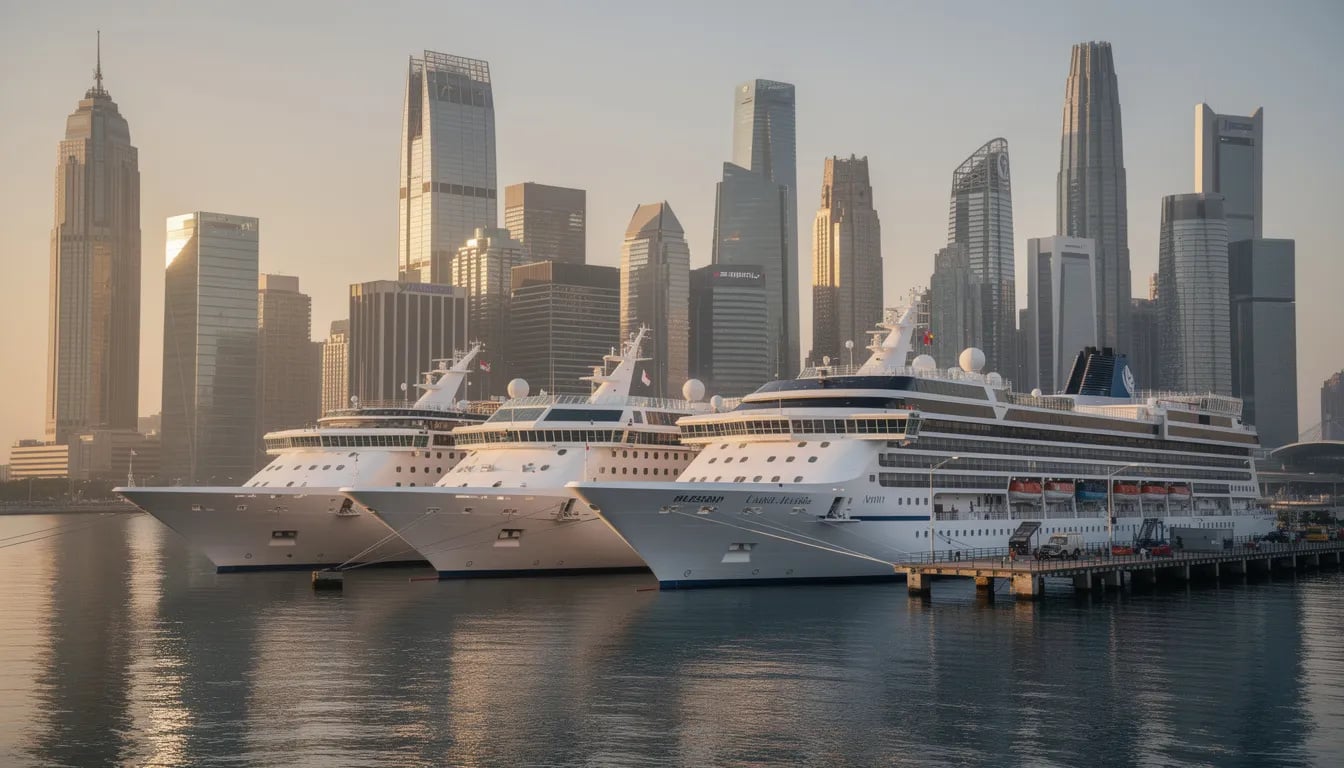
Tourism as an economic engine. Tourism generates billions in revenue and employs hundreds of thousands of people in the region. Visitors head to the beaches of Miami Beach, the nightclubs of South Beach, the art galleries of Wynwood, or the cruise ships departing from PortMiami. The port has long been known as the Cruise Capital of the World—more than 4 million cruise passengers pass through it each year on their way to the Caribbean, Mexico, or the Mediterranean.
International trade and logistics. Miami serves as a major transshipment hub between the U.S. and Latin America. The nickname Cargo Gateway of the Americas reflects the crucial role of its cargo port and airport in global supply chains. Air transportation is another strength—Miami International Airport ranks among the busiest airports for international flights in the Americas.
Corporate presence. Many major companies are headquartered or have significant offices in the metropolitan area. American Airlines operates one of its main hubs at MIA. Bacardi has its North American headquarters in Coral Gables. Burger King, Carnival Cruise Lines, and dozens of other corporations have chosen Miami as a base for operations in Latin American markets.
21st-century construction boom. After 2001, Downtown Miami and Brickell experienced a massive construction boom. Dozens of high-rise buildings transformed the city’s skyline. The Four Seasons Hotel & Tower, opened in 2003, was Florida’s tallest building for many years. Residential and hotel skyscrapers along Biscayne Bay created the iconic skyline that visitors now recognize from photographs and films.
Demographics and Culture
Miami is a city where cultures, languages, and traditions from around the world come together. According to recent estimates, the city itself (excluding the metropolitan area) has around 440,000 residents—for comparison, the population was approximately 360,000 in 2000. Its high population density and relatively young age profile, with an average age of around 37–38, give the city a dynamic energy.
Ethnic composition. Most Miami residents are of Hispanic origin—the Cuban community has historically been the largest group, but communities from the Dominican Republic, Puerto Rico, Venezuela, Colombia, and Central American countries are also significant. African Americans and residents of Caribbean origin, particularly Haitian Americans, represent another important part of the population. Smaller but growing communities come from Europe, Asia, and other parts of the world.
Social contrasts. Miami is a city of pronounced socioeconomic disparities. Affluent areas such as Brickell, parts of Miami Beach, and the island of Key Biscayne contrast with more modest inland neighborhoods. Some families live below the poverty line, while others rank among the wealthiest in the country.
Bilingual culture. Spanish is omnipresent in Miami. Everyday bilingualism (English/Spanish) is not the exception but the norm. Spanish-language television and radio enjoy large audiences, while Latin American cuisine dominates the restaurant scene. In areas such as Little Havana’s famous Calle Ocho or the Westchester neighborhood, you will hear Spanish more often than English.
Festivals and traditions. Miami’s cultural calendar is full of events celebrating Latin American heritage:
-
Calle Ocho Festival—one of the largest Hispanic street festivals in the U.S.
-
Carnivals featuring the rhythms of salsa, reggaeton, and bachata
-
Art Basel Miami Beach—a prestigious contemporary art fair attracting collectors from around the world
-
Miami Fashion Week focused on Latin American designers
Cultural institutions. Major cultural centers and museums include:
|
Institution |
Focus |
|---|---|
|
Pérez Art Museum Miami (PAMM) |
Contemporary art with an emphasis on the Americas |
|
HistoryMiami Museum |
The history of South Florida from prehistoric times to the present |
|
Freedom Tower |
Museum of the Cuban diaspora and a symbol of immigration |
|
MOCA North Miami |
Contemporary art and experimental exhibitions |
This cultural diversity is what makes Miami unique—it is not a typical American city, but rather a cosmopolitan metropolis with a Caribbean heart.
Education in Miami
The education system in Miami-Dade County is among the largest and most diverse in the United States. Miami-Dade County Public Schools is the largest school district in Florida and the fourth largest in the entire U.S.
Primary and secondary education. The district educates more than 350,000 students. Its ethnic composition reflects the region’s demographics—approximately 60% are Hispanic students, around 28% are African American, and the remainder are white students and other minorities. A high proportion of students come from immigrant families, placing an emphasis on bilingual programs and teaching English as a second language.
Prestigious public high schools in Miami offer specialized programs:
-
Design and Architecture Senior High (DASH)—focused on design and architecture
-
MAST Academy—science, technology, and maritime studies on a waterfront campus
-
New World School of the Arts—developing talent in music, dance, and visual arts
-
Coral Reef Senior High—academic excellence with an International Baccalaureate program
Private schools. Miami offers a diverse range of private educational institutions. Catholic schools such as Our Lady of Lourdes Academy have a long tradition. Jewish schools serve the large local community. Renowned secular institutions such as Ransom Everglades School in Coconut Grove rank among the most prestigious preparatory schools in all of Florida.
Colleges and universities in Greater Miami include:
|
University |
Type |
Focus |
|---|---|---|
|
University of Miami |
Private research university |
Medicine, law, business |
|
Florida International University (FIU) |
Public |
International relations, hospitality |
|
Miami Dade College |
Community college |
Wide range of fields |
The University of Miami in Coral Gables is a top research university with an outstanding medical school and a renowned athletic program (Miami Hurricanes). Florida International University, with campuses in the western part of the city, is one of the largest public universities in the country. Miami Dade College is one of the largest community colleges in the U.S. and provides affordable education for students from across the region.
Transportation and Getting Around Miami
Transportation in the metropolitan area is provided by Miami-Dade Transit and the South Florida Regional Transportation Authority. The system offers a combination of rail, buses, and free downtown services connecting key locations throughout the region.
Metrorail. The elevated Metrorail system has approximately 22 stations and carries around 268,100 passengers every weekday. It connects the western suburbs and Miami International Airport with Downtown Miami, continuing south to Coconut Grove, Coral Gables, and the Dadeland shopping district. For tourists, Metrorail is an ideal way to get from the airport to downtown without renting a car.
Metromover. The free automated Metromover system operates in the heart of the city and the Brickell neighborhood. These small trains connect office buildings, shopping centers such as Bayside Marketplace, and the waterfront around Bayfront Park. For visitors to Downtown Miami, Metromover is a practical way to travel between attractions without the cost and stress of parking.
Metrobus network. A dense network of bus routes covers the entire city and Miami Beach. Local routes serve South Beach, Mid Beach, and North Beach. We recommend using mobile apps to track schedules in real time, as service frequency varies depending on the time of day and area.
Tri-Rail. The regional Tri-Rail railway connects Miami with Fort Lauderdale and West Palm Beach. It is suitable for longer journeys around southeastern Florida and for those who want to explore the wider region without a car.
Miami International Airport (MIA). The airport ranks among the busiest in the world, handling more than 30 million passengers annually. It offers extensive connections to Europe (with connecting flights to Prague), Latin America, and the Caribbean. The airport is directly connected to Metrorail, making it easy to reach the city center.
PortMiami. The port is the largest cruise ship port in the world and also a major cargo hub. Ships depart from PortMiami for the Caribbean, Mexico, and the Mediterranean. We recommend that visitors consider a short 1–3-day cruise as an addition to their stay in the city—ships sail to the Bahamas, Key West, or private islands.
Practical tips for getting around the city:
-
Driving remains the most common mode of transportation—major routes include I-95, the Dolphin Expressway, and the MacArthur Causeway to Miami Beach
-
Parking in tourist areas (South Beach, Downtown) tends to be expensive and limited
-
Combining Metrorail with ridesharing (Uber/Lyft) is an efficient way to get around central areas
-
Traffic congestion is worst in the northeast along I-95 during the morning and afternoon rush hours
Top Attractions and Neighborhoods in and Around Miami
Miami offers a diverse array of experiences—from iconic beaches and art galleries to historic gardens and natural parks. The following overview summarizes the most important places that should be included in every visitor’s itinerary.
Miami Beach is a separate island city connected to the mainland by several bridges. It is divided into South Beach, with its vibrant nightlife, colorful Art Deco buildings, and famous Ocean Drive promenade; Mid Beach, with more luxurious hotels and a quieter atmosphere; and North Beach, with its residential character and smaller beaches. Lummus Park along the South Beach waterfront offers iconic views of lifeguard towers and palm trees.
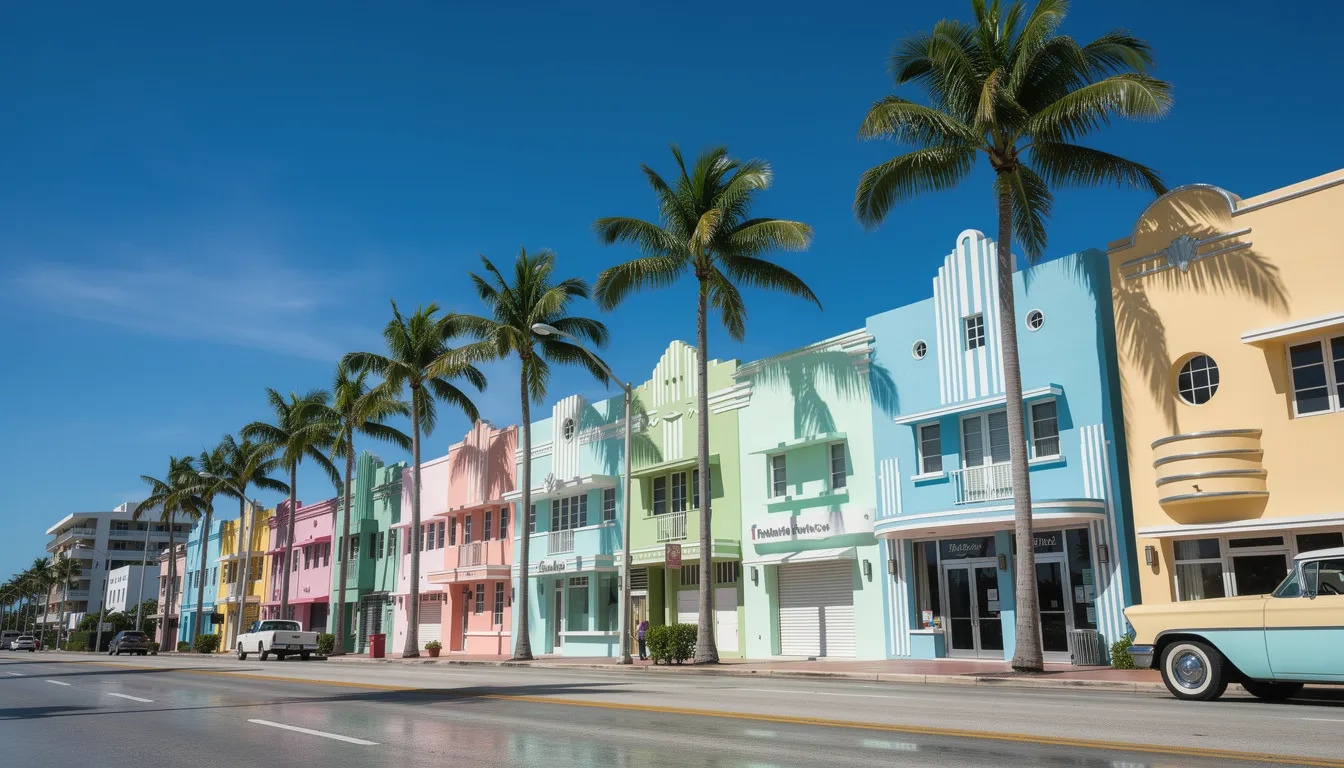
Art Deco Historic District is the largest collection of Art Deco architecture in the world. More than 800 buildings from the 1920s and 1930s form a unique urban ensemble that is also a protected historic landmark. A walk along Ocean Drive and Collins Avenue is like traveling back in time.
Downtown Miami is the city’s commercial heart. Here you will find skyscrapers, museums such as Pérez Art Museum Miami, and Bayside Marketplace, which overlooks the port. The Freedom Tower stands as a symbol of Cuban immigration and now serves as a museum.
Brickell borders Downtown and is the financial district, featuring modern high-rise buildings, luxury stores, and restaurants. Brickell City Centre offers premium open-air shopping.
Little Havana is the heart of the Cuban community. Calle Ocho (SW 8th Street) is filled with cafés serving Cuban coffee, cigar shops, and restaurants offering authentic cuisine. Domino Park (Máximo Gómez Park) is where locals play dominoes and discuss politics.
Wynwood has transformed over the past decade from an industrial district into a center of street art and alternative culture. Wynwood Walls is an outdoor gallery of murals by internationally renowned artists. The surrounding streets are full of galleries, cafés, and breweries.
Coconut Grove is Miami’s oldest continuously inhabited neighborhood and has a bohemian atmosphere. It is home to the Vizcaya Museum and Gardens—an opulent Italian villa dating from 1916, with stunning waterfront gardens that make it one of the most photogenic places in the entire city.
Coral Gables stands out for its cohesive Mediterranean architecture designed in the 1920s. Venetian Pool is a historic swimming pool carved from coral limestone, while the University of Miami gives the neighborhood an academic energy. The Biltmore Hotel is an iconic landmark in the area.
Key Biscayne is a peaceful island south of Miami Beach that offers an escape from the bustle of the city. Bill Baggs Cape Florida State Park has some of the most beautiful beaches in the region and the historic Cape Florida Light. It is an ideal destination for families and those seeking tranquility.
Virginia Key borders Key Biscayne and is home to the Miami Seaquarium and beautiful beaches. It is also a center for water sports and kitesurfing.
Other nearby attractions:
|
Attraction |
Type |
Best for |
|---|---|---|
|
Zoo Miami |
Zoo |
Families with children |
|
Fairchild Tropical Botanic Garden |
Botanical garden |
Nature lovers |
|
Jungle Island |
Amusement park |
Families, interactive experiences |
|
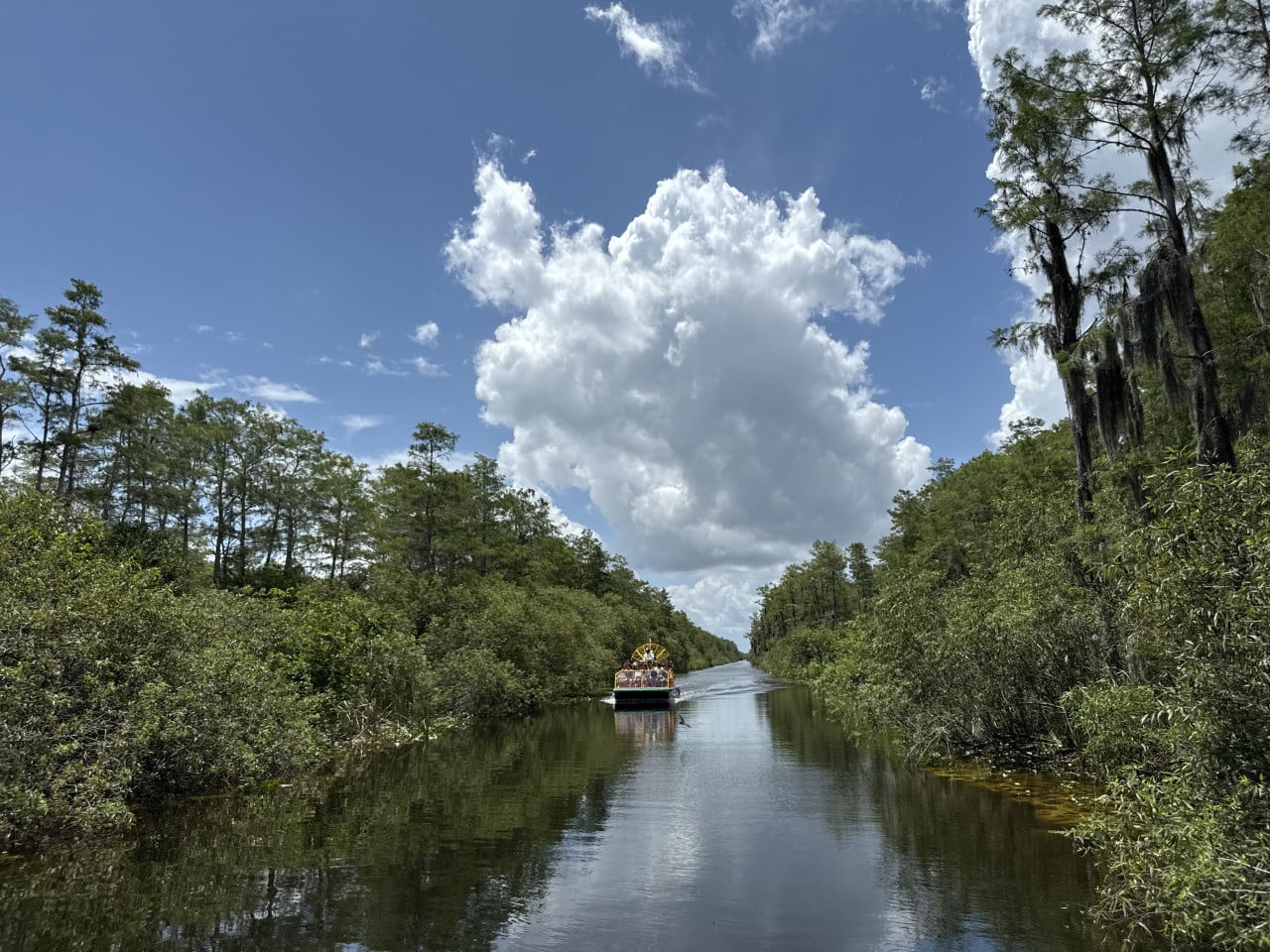
Everglades National Park |
National park |
Adventurers, nature lovers |
Recommended 4-day itinerary:
-
Day 1—South Beach: Ocean Drive, Lummus Park, Art Deco Historic District, a walk along Lincoln Road Mall
-
Day 2—Downtown and Brickell: Bayside Marketplace, Freedom Tower, Pérez Art Museum Miami, Brickell City Centre
-
Day 3—Little Havana and Wynwood: Calle Ocho, Cuban coffee, Wynwood Walls, galleries, and cafés
-
Day 4—Key Biscayne: Bill Baggs State Park, Cape Florida, Crandon Park Beach, and optionally the Miami Seaquarium
Miami is a city that cannot easily be categorized. It is both a financial center and a beach paradise, a Latin American metropolis in the heart of the United States, and a place where luxury meets street culture. Whether you are looking for relaxation on the beaches, cultural experiences in museums and galleries, authentic Cuban cuisine, or business opportunities in one of America’s most dynamic cities, Miami has something to offer.
Plan your trip well in advance, book accommodation in an area that suits your style (South Beach for nightlife, Coral Gables for tranquility, Downtown for business), and remember that the best way to discover Miami is to lose yourself in its diverse neighborhoods. Each has its own story—and yours in Miami is only just beginning.